Last updated: May 6, 2026
In this article
English Pointer Breed Profile: The Graceful Athlete of the Sporting World
The English Pointer is the quintessential sporting dog — an athlete of extraordinary grace, speed, and endurance whose entire being is oriented toward finding and indicating game birds. When a Pointer locks onto a scent and freezes in their iconic stance — body taut, tail rigid, one foot raised, nose aimed at their quarry — it is one of the most beautiful sights in the canine world. But the English Pointer breed offers far more than field performance. They are gentle, loyal companions with an even temperament and a deep desire to please the people they love.
Whether you are an active individual seeking an athletic companion or a family looking for a gentle, energetic dog, this complete breed profile will help you understand what makes the English Pointer such a remarkable breed.
History and Origins of the English Pointer
The English Pointer’s history is inextricably linked to the development of wing shooting in Europe. Before the invention of reliable firearms for shooting birds on the wing, hunters used Pointers to locate game birds, which were then caught by nets or hawks. The Pointer’s job was to find the birds, freeze in position to indicate their location, and hold that position until the hunter was ready — a task requiring extraordinary scenting ability, self-control, and cooperation.
The breed as we know it was developed primarily in England beginning in the late 17th century, drawing on Spanish pointing dogs, Greyhounds, Foxhounds, and Bloodhounds to create a dog that combined exceptional nose, speed, stamina, and a cooperative temperament. By the 18th century, English Pointers had established themselves as the premier bird dog in Britain, and their reputation spread across Europe and eventually to the Americas.
The transition from net hunting to wing shooting in the 18th and 19th centuries only increased the Pointer’s value. Their ability to cover vast amounts of ground at speed, locate birds from great distances, and hold a steady point while the hunter approached and flushed the birds made them indispensable for upland game hunters. Their style — wide-ranging, fast, and stylish — set the standard for pointing dogs.
English Pointers arrived in America in the early colonial period and quickly established themselves as the dominant field trial dog. To this day, the Pointer remains the most successful breed in American field trials, and their ability to perform at the highest levels of competition is a testament to centuries of careful breeding for function.
While field work remains the breed’s primary calling, English Pointers have also earned devoted followings as show dogs, family companions, and increasingly as rescue dogs. Their gentle temperament and striking appearance make them appealing to a wide range of dog lovers.
Appearance and Size
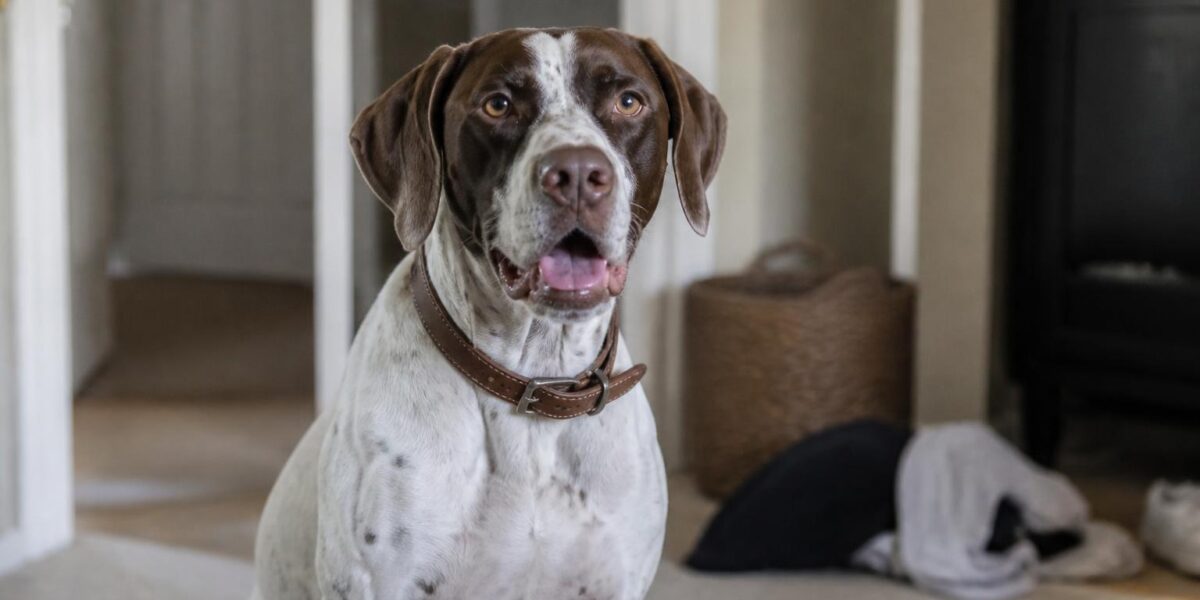
The English Pointer is a picture of athletic elegance. Every aspect of their build serves their function — they are designed to cover ground efficiently, detect scent at distance, and sustain effort over long periods. Males stand 25 to 28 inches tall at the shoulder and weigh 55 to 75 pounds. Females are slightly smaller, at 23 to 26 inches and 45 to 65 pounds. Despite their size, they move with a lightness and grace that belie their substance.
The head is refined and aristocratic, with a moderately long muzzle, a pronounced stop, and a broad nose with well-opened nostrils designed for maximum air intake. The eyes are round, dark, and expressive, conveying an intelligent, kind expression. The ears are set high, are of moderate length, and hang close to the head, framing the face softly.
The body is lithe and muscular, with a deep chest that provides ample lung capacity, a strong back, and powerful hindquarters that generate the driving force for their ground-covering gallop. The tail is long, tapered, and carried level with the back in motion, completing the breed’s streamlined silhouette.
The coat is short, dense, and smooth, lying flat against the body. Common color combinations include liver and white, lemon and white, black and white, and orange and white. Solid colors and tricolors also occur. The coat’s short, fine texture requires minimal grooming but offers limited protection in extreme cold.
Temperament and Personality
The English Pointer breed possesses a temperament that balances intense field drive with remarkable gentleness in the home. In the field, they are all business — focused, driven, and tireless in their pursuit of birds. At home, they transform into sweet, affectionate companions who want nothing more than to be near their family, often curling up on the couch or stretching across their owner’s feet.
Pointers are known for their even, stable temperament. They are rarely aggressive, seldom anxious, and generally approach life with a calm confidence. This emotional stability makes them excellent family dogs and contributes to their success as therapy dogs and in other roles that require a steady, unflappable demeanor.
Their affection for people is genuine and deep. Pointers bond closely with their entire family and are typically friendly with strangers as well. They are not natural guard dogs — while they may alert to an unfamiliar sound, they are more likely to greet a visitor with a wagging tail than a warning growl. Their gentle, non-aggressive nature makes them safe around children, and their patience with kids is often remarkable.
With other dogs, Pointers are generally sociable and easy-going. Their pack heritage means they are accustomed to working alongside other dogs, and they typically integrate well into multi-dog households. Their prey drive for birds does not usually extend to other household pets, though individual dogs may vary.
One aspect of the Pointer personality that surprises many people is their sensitivity. Despite their athletic, tough exterior, Pointers are emotionally aware dogs that respond strongly to their owner’s tone of voice and mood. Harsh treatment or a stressful environment can deeply affect a sensitive Pointer, so a calm, positive home environment brings out the best in this breed. For a comparison with another athletic pointing breed, explore the Vizsla breed profile.
Exercise and Training Needs
The English Pointer’s exercise needs are substantial and should not be underestimated. This is a breed built for sustained physical effort over large distances, and they need a significant amount of daily activity to stay physically and mentally healthy. At least 90 minutes to two hours of vigorous exercise per day is recommended for adult Pointers, including running, long walks, hiking, and opportunities to sprint in safely enclosed areas.
Pointers are among the best dogs for runners and active outdoor enthusiasts. They can easily keep pace with joggers and cyclists, and their endurance means they can accompany hikers on long trail adventures without tiring. For more guidance on activity levels, see our guide on how much exercise your dog needs.
Without adequate exercise, Pointers can become restless, anxious, and destructive. A bored, under-exercised Pointer may pace, whine, dig, chew, or find other creative outlets for their pent-up energy. Ensuring your Pointer receives sufficient physical activity is the single most important factor in preventing behavioral problems.
Training an English Pointer is generally a positive experience. They are intelligent, eager to please, and responsive to positive reinforcement methods. Their cooperative nature means they learn quickly and retain training well. However, their field drive means that distractions — particularly bird scents — can be overwhelming, so building a strong foundation of focus and recall in low-distraction environments before progressing to more challenging settings is important.
Recall training deserves particular attention. A Pointer in full pursuit of a scent can cover ground at remarkable speed, and their focus on the scent can override their response to commands if recall is not thoroughly ingrained. A long line is a useful training tool while building reliable recall, and regular practice in various environments reinforces the behavior.
Socialization is straightforward with Pointers, given their naturally friendly and social temperament. Exposure to diverse environments, people, and situations during puppyhood further develops their already stable temperament and builds confidence in various settings.
Health Issues and Lifespan
The English Pointer is a generally healthy breed with a lifespan of 12 to 17 years, making them one of the longer-lived medium-to-large breeds. Their athletic build and centuries of breeding for function have produced a dog with relatively few hereditary health problems. However, there are conditions that owners should be aware of.
Hip dysplasia can occur in the breed, though at lower rates than in many breeds of similar size. Regular exercise, maintaining a healthy weight, and hip evaluations help manage this risk. Elbow dysplasia is also seen occasionally.
Eye conditions, including progressive retinal atrophy and cataracts, can affect Pointers. Regular eye examinations help detect these conditions early, when management options are most effective. Entropion, a condition where the eyelid rolls inward, can also occur and may require surgical correction.
Epilepsy is reported in the breed, with affected dogs experiencing seizures that can usually be managed with medication. Hypothyroidism, where the thyroid gland does not produce sufficient hormones, is another condition to watch for, with symptoms including weight gain, lethargy, and coat changes.
As active dogs, Pointers can be susceptible to exercise-related injuries, including sprains, strains, and cruciate ligament tears. Warming up before intense activity, maintaining fitness year-round rather than having sporadic bursts of heavy exercise, and being mindful of terrain conditions help reduce injury risk. Bloat, or gastric dilatation-volvulus, is a concern in deep-chested breeds like the Pointer, so feeding multiple smaller meals and avoiding vigorous exercise immediately after eating are recommended precautions.
Grooming Requirements
The English Pointer’s short, smooth coat is one of the easiest to maintain in the dog world. A weekly brush with a rubber curry comb or soft bristle brush removes loose hair, stimulates circulation, and keeps the coat looking sleek and healthy. Shedding is moderate and manageable with regular brushing.
Bathing is needed infrequently — every six to eight weeks or as needed after particularly muddy outdoor adventures. A gentle shampoo preserves the coat’s natural oils and maintains healthy skin. After outdoor activities, a quick wipe-down with a damp cloth removes dirt and debris effectively between baths.
Nail trimming should be performed every two to three weeks. Active Pointers who run on hard surfaces may wear their nails down naturally, but regular checks are still important. Ear care is particularly important given the Pointer’s pendant ears, which can trap moisture and promote bacterial or yeast infections. Check and clean ears weekly, and dry them thoroughly after swimming or bathing.
Dental hygiene, including regular tooth brushing and dental chews, rounds out the grooming routine. The Pointer’s low-maintenance coat makes them an appealing choice for owners who prefer to spend their time on outdoor activities rather than grooming sessions.
Who Is the English Pointer Best For?
The English Pointer is best suited for active individuals and families who can provide ample daily exercise and outdoor time. They are ideal for runners, hikers, cyclists, and anyone who leads a physically active lifestyle and wants a canine partner to share their adventures. Homes with access to large, safely enclosed outdoor spaces are a significant advantage.
Families with children of all ages find Pointers to be wonderful companions. Their gentle, patient nature, combined with their playful energy, makes them excellent family dogs. They are tolerant of childish enthusiasm and rarely show any sign of aggression, making them a safe choice for households with young children.
Pointers can adapt to suburban living if their exercise needs are met, but they are not well-suited to apartment life or sedentary households. A Pointer who does not receive sufficient physical outlet will become unhappy and potentially destructive. Prospective owners should honestly assess their ability to provide 90 minutes to two hours of daily exercise before committing to the breed.
For those who enjoy field activities, the English Pointer is an outstanding hunting companion. Even non-hunters can channel the breed’s natural instincts through pointing breed field tests, rally, and nose work activities that satisfy the Pointer’s need to use their extraordinary scenting abilities.
Adopting an English Pointer from rescue gives a deserving dog a second chance at a fulfilling life. Many rescue Pointers come from hunting backgrounds and transition beautifully into active family life. Their gentle temperament, athletic ability, and eager-to-please nature make them adaptable and rewarding companions for the right home.
Frequently Asked Questions
Can English Pointers live in apartments?
English Pointers are not well-suited to apartment living. Their size, energy level, and need for extensive daily exercise make them better suited to homes with yards and easy access to open spaces for running. A Pointer confined to an apartment without adequate outdoor exercise is likely to become restless, anxious, and destructive. If apartment living is your situation, consider a less active breed that adapts better to smaller spaces.
Are English Pointers easy to train?
Yes, English Pointers are generally responsive and eager-to-please dogs that train well with positive reinforcement methods. Their intelligence and cooperative nature make them quick learners. The main challenge is managing their strong scenting instinct, which can override training in high-distraction environments. Building a solid foundation of basic obedience before introducing distractions, and using high-value rewards, helps develop reliable responses even when tempting scents are present.
Do English Pointers get along with cats?
Many English Pointers can coexist peacefully with cats, especially if introduced properly and raised together. Their prey drive is typically directed at birds rather than mammals, which works in favor of cat compatibility. However, individual dogs vary, and introductions should always be supervised and gradual. Adopting a Pointer that has been tested with cats provides the greatest assurance of a harmonious household.
How much do English Pointers shed?
English Pointers are moderate shedders. Their short, fine coat sheds consistently throughout the year, with slightly increased shedding during seasonal transitions. Regular weekly brushing controls shedding effectively and keeps the coat healthy. While they are not the heaviest shedders, their light-colored hairs can be noticeable on dark furniture and clothing, so regular grooming and household cleaning are recommended.
Looking to adopt a English Pointer Breed Profile?
Browse English Pointer Breed Profile dogs and mixes available for adoption from shelters and rescues near you.
Find English Pointer Breed Profile Dogs for Adoption