In this article
Best Dogs for Runners: 12 Athletic Breeds That Love to Run
If you are a runner looking for a four-legged training partner, few things compare to hitting the trail with a dog that shares your love of movement. The right running companion will match your pace, push you to keep going on sluggish mornings, and make every mile more enjoyable. But not every breed is built for distance, speed, or the sustained effort that regular running demands.
At Walk Me Home Rescue, we help active adopters find dogs that fit their lifestyles every day. We have put together this guide to the best dogs for runners so you can identify breeds with the endurance, build, and temperament to thrive as your running partner. Whether you prefer long trail runs, short sprints, or steady morning jogs, there is a breed on this list for you.
When you are ready to find your next running buddy, visit our adoption page to meet dogs currently looking for active homes.
What Makes a Good Running Companion?
Before choosing one of the best dogs for runners, it helps to understand what physical and behavioral traits separate a natural running partner from a dog that would rather stay on the couch.
Endurance and cardiovascular fitness are the foundation. Breeds developed for hunting, herding, or long-distance work tend to have the heart and lung capacity needed for sustained running. Dogs bred for guarding or companionship often lack the aerobic conditioning to keep up over miles.
Build and joint health matter just as much. Dogs with long, lean legs and moderate weight distribute impact efficiently, reducing the risk of joint injuries over time. Breeds with very short legs, heavy frames, or flat faces are physically unsuited to running and can overheat or injure themselves quickly.
Temperament and focus are equally important. A good running dog stays attentive on the trail, responds to directional cues, and does not lunge after every squirrel or passing cyclist. Breeds with strong prey drive can still make excellent running partners, but they require solid leash training first.
Finally, consider heat and cold tolerance. Some of the best dogs for runners excel in cool climates but struggle in summer heat, while others handle warm weather well but need protection in winter. Matching a breed to your local climate and typical running conditions will keep both of you safe and comfortable. For more on matching exercise needs to your dog, explore our dog breeds directory.
12 Best Dogs for Runners
The following breeds consistently rank among the best dogs for runners based on their physical capabilities, temperament, and real-world performance alongside active owners. Each entry covers what makes the breed stand out on the trail and what to keep in mind.
1. Vizsla
The Vizsla is often called the ultimate running dog, and it is hard to argue. Originally bred as a Hungarian hunting dog, the Vizsla combines tireless endurance with a lean, muscular frame that handles both sprints and long-distance runs with ease. Vizslas typically weigh between 45 and 65 pounds, and their short coat keeps them cool in warm weather. They are deeply bonded to their owners, which means they naturally stay close on the trail rather than ranging far ahead. Vizslas need at least 60 to 90 minutes of vigorous exercise daily, making them ideal for runners who log serious mileage. Learn more in our Vizsla breed profile.
2. Weimaraner
The Weimaraner is a powerful, athletic breed built for speed and stamina. Weimaraners were developed in Germany to hunt large game, and that heritage gives them the drive and conditioning to handle demanding runs. They stand 23 to 27 inches tall and weigh 55 to 90 pounds, with a sleek silver-gray coat that requires minimal grooming. Weimaraners are among the best dogs for runners who prefer longer distances, as they can comfortably maintain a steady pace for miles. They do need firm, consistent training, as their intelligence and energy can lead to stubbornness if left unchallenged. Read our Weimaraner breed profile for the full picture.
3. Dalmatian
Dalmatians were literally bred to run alongside carriages for miles at a time, which makes them one of the most natural running companions in the dog world. Their lean, muscular build and boundless stamina suit runners who enjoy moderate to long distances at a steady pace. Dalmatians typically weigh between 45 and 70 pounds and have a distinctive spotted coat that is short and easy to care for. They are social, energetic, and eager to work, though they can be independent-minded during training. Regular running is one of the best ways to channel a Dalmatian’s considerable energy. Explore our Dalmatian breed profile for more details.
4. Border Collie
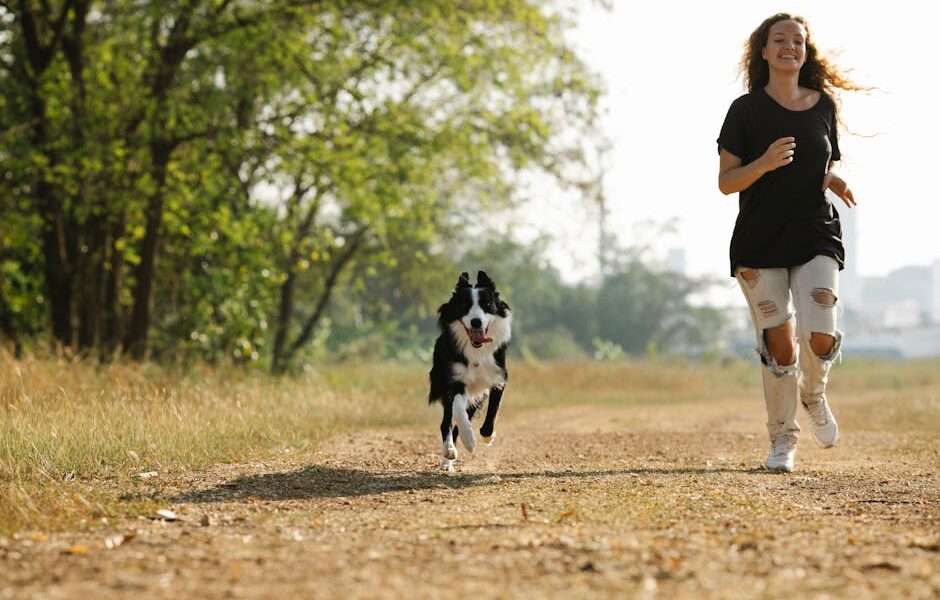
Border Collies are widely regarded as the most intelligent dog breed, and their athletic ability is equally impressive. Bred for herding sheep across rugged terrain all day, Border Collies have the endurance, agility, and mental focus that make them outstanding running partners. They weigh 30 to 55 pounds and handle varied terrain — trails, hills, gravel paths — with remarkable sure-footedness. Border Collies are at their best when both mind and body are engaged, so running provides exactly the kind of structured physical challenge they crave. They excel in cooler climates and should be monitored carefully in hot weather. Visit our Border Collie breed profile to learn more.
5. Australian Shepherd
Australian Shepherds are tireless herding dogs with the stamina to match even the most dedicated runner. They are agile, responsive, and highly trainable, which translates to excellent trail manners once properly leash-trained. Aussies weigh between 40 and 65 pounds and carry a medium-length double coat that provides insulation in cooler weather. Their natural athleticism makes them well-suited to trail running, hill work, and varied terrain. Australian Shepherds thrive on routine and structure, so a regular running schedule fits their temperament perfectly. See our Australian Shepherd breed profile for full breed details.
6. Rhodesian Ridgeback
The Rhodesian Ridgeback was developed in southern Africa to track lions across vast, hot landscapes — a heritage that makes this breed exceptionally well-suited to running in warm climates. Ridgebacks are powerful, muscular dogs weighing 70 to 85 pounds, with a short coat and remarkable heat tolerance. They are calm and composed off the trail but switch on with athletic intensity during a run. Ridgebacks are among the best dogs for runners who live in warmer regions or who prefer longer, slower-paced runs. Their independent streak means they respond best to patient, consistent training. Our Rhodesian Ridgeback breed profile covers this breed in depth.
7. German Shorthaired Pointer
The German Shorthaired Pointer is a versatile sporting breed that thrives on vigorous daily exercise. GSPs are lean, fast, and built for endurance, with a typical weight range of 45 to 70 pounds. Their short, water-resistant coat handles various weather conditions well, and their enthusiastic temperament makes them eager, willing running companions. GSPs excel at both road running and trail running, and many owners report that these dogs can comfortably handle distances of 10 miles or more once properly conditioned. They are social, affectionate, and bond closely with their owners, making them motivated training partners.
8. Jack Russell Terrier
Do not let the small size fool you. Jack Russell Terriers are among the most energetic dogs on the planet, pound for pound. Weighing just 13 to 17 pounds, these compact athletes have the stamina and drive to keep pace with runners over moderate distances. Jack Russells are best suited to runners who prefer shorter, faster-paced runs rather than ultra-distance outings. Their small frame means their legs work harder per stride, so distances of three to five miles are ideal. They are fearless, determined, and remarkably quick, and their short coat makes them easy to maintain. Visit our Jack Russell Terrier breed profile for more on this spirited breed.
9. Siberian Husky
Siberian Huskies were born to run — literally. Bred to pull sleds across frozen Arctic terrain for hours on end, Huskies possess extraordinary endurance and an almost bottomless reserve of energy. They weigh 35 to 60 pounds and carry a thick double coat that makes them ideal running partners in cold weather. In warm climates, however, Huskies overheat easily, and running should be limited to cooler parts of the day or avoided altogether in summer heat. For runners who live in northern climates or who train primarily during fall and winter, the Siberian Husky is one of the best dogs for runners you will find. Learn more in our Husky breed profile.
10. Belgian Malinois
The Belgian Malinois is the elite athlete of the dog world. Used extensively by military and police forces worldwide, this breed combines speed, endurance, intelligence, and unwavering focus in a way few other breeds can match. Malinois weigh 40 to 80 pounds and have a lean, powerful build perfectly suited to running. They can handle both sprints and long-distance runs with equal competence. The Belgian Malinois is best matched with experienced, active owners who can provide not only physical exercise but also the mental stimulation this breed demands. Without adequate outlets, a Malinois can become restless and destructive. Read our Belgian Malinois breed profile for essential ownership guidance.
11. Labrador Retriever
The Labrador Retriever may be best known as a family companion, but Labs are also natural athletes that make excellent running partners. Their sturdy build, strong legs, and love of activity suit them well to moderate-distance running at a comfortable pace. Labs typically weigh 55 to 80 pounds and have the good-natured, eager-to-please temperament that makes them easy to train for trail etiquette. They handle a range of weather conditions well and are particularly strong swimmers, making them great companions for runs that include water crossings. Labs are among the most versatile of the best dogs for runners, suitable for beginners and experienced runners alike. See our Labrador Retriever breed profile for complete information.
12. Standard Poodle
Standard Poodles surprise many people with their athletic ability, but this breed is far more than a show ring contender. Standing over 15 inches tall and weighing 40 to 70 pounds, Standard Poodles are lean, agile, and built for sustained physical activity. They were originally bred as water retrievers, and their endurance translates well to running. Their curly, low-shedding coat is a bonus for runners who prefer a cleaner car and home after workouts. Standard Poodles are highly intelligent and respond exceptionally well to training, making them focused, responsive running partners. They handle moderate heat and cool weather comfortably. Our Standard Poodle breed profile covers this impressive breed in full.
Running Safety Tips for You and Your Dog
Finding one of the best dogs for runners is only the first step. Keeping your running partner safe and healthy requires attention to a few important practices.
Build distance gradually. Just like human runners, dogs need to build their cardiovascular fitness and joint strength over time. Start with short, easy runs and increase distance by no more than 10 percent per week. Puppies should not run long distances until their growth plates have closed, which typically occurs between 12 and 18 months depending on breed size.
Watch for signs of overheating. Dogs cool themselves primarily through panting, which is far less efficient than sweating. Heavy panting, drooling, staggering, or a bright red tongue are warning signs. Run during cooler parts of the day, carry water for your dog, and avoid hot pavement that can burn paw pads.
Protect the paws. Rough terrain, gravel, ice, and hot asphalt can all damage your dog’s paw pads. Check paws after every run for cuts, cracks, or irritation. Dog booties or paw wax can provide additional protection in extreme conditions.
Use proper gear. A hands-free running leash attached to a waist belt gives both you and your dog freedom of movement while maintaining control. Avoid retractable leashes, which offer little control and can cause injuries if they snap taut unexpectedly.
Schedule a veterinary checkup. Before starting any running program with your dog, consult your veterinarian. They can assess joint health, cardiovascular fitness, and overall readiness, and they can advise on breed-specific concerns. For more guidance on keeping your dog healthy and active, explore our dog breeds directory.
Frequently Asked Questions
What is the best dog breed for long-distance running?
The Vizsla, Weimaraner, and German Shorthaired Pointer are among the best dogs for runners who focus on long distances. All three breeds have the cardiovascular endurance, lean build, and mental stamina to handle runs of 10 miles or more once properly conditioned. The Siberian Husky is also outstanding for long distances in cool climates.
How old should a dog be before running with them?
Most veterinarians recommend waiting until a dog is at least 12 to 18 months old before beginning a running program. This allows growth plates in the bones to fully close, reducing the risk of joint damage. Larger breeds generally need to wait longer than smaller breeds. Always consult your veterinarian before starting.
Can small dogs be good running partners?
Yes, certain small breeds like the Jack Russell Terrier have exceptional energy and stamina for their size. However, their shorter legs mean they work harder per stride, so shorter distances of three to five miles are more appropriate. Always match pace and distance to your dog’s physical capabilities.
How do I keep my dog safe while running in hot weather?
Run during the coolest parts of the day, typically early morning or late evening. Carry water and offer it every 15 to 20 minutes. Avoid running on hot pavement, which can burn paw pads. Watch for signs of overheating such as excessive panting, drooling, or stumbling, and stop immediately if you notice them.
Should I adopt a dog specifically for running?
Running ability should be one factor in your decision, not the only one. Consider the dog’s overall temperament, grooming needs, health profile, and compatibility with your household. Many athletic breeds available for adoption make wonderful running partners and loving family members. Visit our adoption page to find active dogs looking for homes.
Find Your Perfect Running Partner
The best dogs for runners are the ones that match your pace, your mileage, and your lifestyle. Whether you need a tireless trail companion like the Vizsla or a versatile all-rounder like the Labrador Retriever, the breeds on this list have the physical ability and willing temperament to make every run better.
At Walk Me Home Rescue, we regularly have athletic, high-energy dogs looking for active homes. If you are ready to find a running partner who will keep you motivated mile after mile, browse our adoptable dogs today. Your next personal best might come with four legs and a wagging tail.
Looking to adopt a Best Dogs for Runners?
Browse Best Dogs for Runners dogs and mixes available for adoption from shelters and rescues near you.
Find Best Dogs for Runners Dogs for Adoption