
Last updated: May 23, 2026
In this article
- Why Enrichment Still Matters in Cognitive Decline
- What Changes in a Cognitively Declining Pet
- Principle One: Simplify the Puzzle
- Principle Two: Preserve Scent Enrichment
- Principle Three: Shorten and Repeat
- Principle Four: Social Enrichment Is Cognitive Enrichment
- Principle Five: Move the Body, Gently
- What to Avoid
- Building a Weekly Rhythm
- When to Step Back and Re-Evaluate
- Frequently Asked Questions
Why Enrichment Still Matters in Cognitive Decline
A senior dog or cat diagnosed with cognitive dysfunction syndrome is not a pet who has aged out of mental engagement. Enrichment continues to matter for cognitively declining seniors — perhaps more than for any other group — because environmental and cognitive stimulation appears to slow the trajectory of decline, supports sleep architecture, reduces sundowning behaviors, and preserves the daily interactions that give the pet a recognizable quality of life. The mistake is not “should we still do enrichment.” The mistake is doing the wrong kind of enrichment for a senior who has changed.
This article walks through how to modify enrichment for a pet with cognitive decline. It builds on our foundational coverage of mental enrichment for dogs and is intended as the CCD-specific overlay; the same modification principles apply to cats with feline cognitive dysfunction syndrome. Your primary veterinarian and a board-certified veterinary behaviorist (DACVB) can help tailor the approach to your individual pet’s stage of change.
What Changes in a Cognitively Declining Pet
The senior pet with cognitive dysfunction shows a recognizable shift in how they engage with mental challenge: complex puzzle feeders that previously kept them happily occupied now produce frustration; novel toys may be ignored or generate anxiety; multi-step problem solving (find the treat, push the lever, slide the panel) becomes difficult; sessions that previously lasted twenty minutes now hold attention for two or three; familiar games are tolerated better than new ones; the dog or cat may “forget” a game mid-session.
The mental energy of a senior with CCD is not gone — it is more easily depleted and less efficient at problem solving. The goal of modified enrichment is to give engagement and stimulation without producing frustration, distress, or sleep-cycle disruption.
Principle One: Simplify the Puzzle
Replace multi-step puzzle feeders with single-step puzzles. A snuffle mat (treats hidden in fabric tabs that the dog noses through) is single-step and uses preserved scent processing. A simple slow-feeder bowl or licki mat replaces complex sliding-panel toys. For cats, food balls with one or two adjustable openings replace complex multi-chamber toys.
For dogs who previously enjoyed shaped puzzle feeders (Outward Hound, Nina Ottosson lines), step down to the simplest tier of the brand’s product range. Many senior dogs do best with what amounts to a beginner-level puzzle, even if they were puzzle-master experts five years ago. There is no graduation requirement.
Principle Two: Preserve Scent Enrichment
Olfactory processing is the last cognitive function to decline in many senior dogs and cats. Scent-based enrichment plays to a preserved strength. For dogs: scatter feeding on grass or in low-pile rugs, scent-treat hunts in the home, simple nose-work with food at hidden locations, herb gardens to investigate, novel safe scents introduced on rotating objects. For cats: silver vine and catnip rotation, scent-loaded cardboard scratchers, hunting-style food-scattering, herb pots (cat-safe varieties).
Scent is also less visually demanding than puzzle work, which matters for the substantial overlap of vision decline and cognitive decline in senior pets. A scent-led activity adapts to a pet whose visual processing has declined and whose working memory has narrowed, because olfaction is processed through different brain pathways that often remain more functional.
Principle Three: Shorten and Repeat
Two five-minute sessions are better than one twenty-minute session for a cognitively declining pet. Repeat familiar games rather than rotating in new ones. Familiar puzzles, familiar scent games, familiar enrichment routines tap into stored experience and produce less working-memory load. A senior dog who plays the same simple hide-the-treat game in the same three locations every day is getting real cognitive engagement; novelty pressure is not the goal here.
Repetition also stabilizes the day’s rhythm, which supports the predictable routine that helps with sundowning and overnight wake cycles.
Principle Four: Social Enrichment Is Cognitive Enrichment
Quiet petting sessions, hand feeding, grooming sessions, and brief calm interactions with familiar household members are cognitive enrichment for a senior with CCD. They engage social recognition, tactile processing, and the affective system. Senior pets benefit from more social contact, not less — read our senior pet socialization: do not isolate piece for the binding framing.
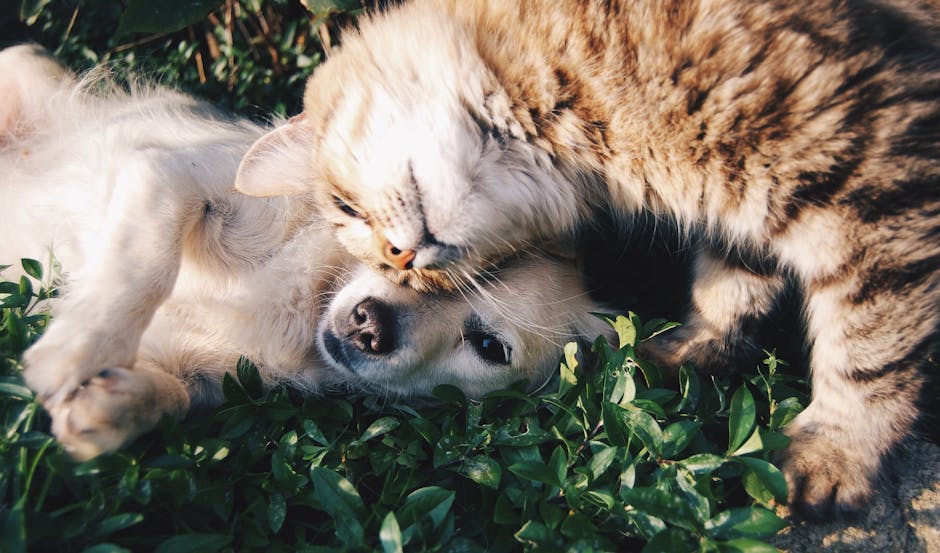
For multi-pet households, the cognitively declining pet may benefit from supervised, calm contact with other household pets in small doses — and from clear separation when the energy level of younger pets becomes overstimulating. A short calm presence with a familiar resident dog or cat can be enriching; an enthusiastic play attempt from a younger pet often is not. The household manager’s job is to read the senior’s signals and adjust the offering.
Principle Five: Move the Body, Gently
Low-impact physical movement is mental enrichment. Sniff walks (slow, scent-led, no pace pressure) are gold-standard enrichment for a senior dog with cognitive change. Brief, predictable yard time. Indoor short walks at the pet’s pace. For cats, a feather toy moved slowly with frequent breaks, or a laser Pointer used briefly and always ending with a real treat to avoid frustration. The mobility-cognitive overlap matters: pets with both arthritis and cognitive change benefit from short, low-impact, predictable movement sessions rather than long single outings.
What to Avoid
Avoid high-novelty environments (new dog parks, busy pet stores, large social gatherings) for cognitively declining pets — they often produce overwhelm rather than engagement. Avoid puzzle toys that the pet cannot solve; visible frustration is the cue to step it down or step it out. Avoid sudden environmental rearrangement; furniture changes are disorienting for a senior with CCD. Avoid evening enrichment sessions that activate the pet right before bedtime; align the timing with the rest of the sundowning protocol — late-day inputs should be calming rather than stimulating.
Building a Weekly Rhythm
A workable enrichment week for a cognitively declining senior might look like: morning brief sniff walk or scent scatter, mid-morning licki mat or snuffle mat as a quiet engagement, afternoon brief social grooming session, late afternoon short play before the evening calming wind-down, evening predictable bedtime routine with comfort objects. Sessions are short, predictable, familiar, and reward-loaded. The rhythm is the same every day. Predictability is the medicine; novelty is reserved for occasional, calm, brief introductions when the pet seems in good form. Track the day in a simple journal so you can spot when a session is being well-received versus tolerated, and adjust the calendar to match what the pet actually engages with rather than what you wish they engaged with.
When to Step Back and Re-Evaluate
If you notice that any specific enrichment activity now produces agitation, withdrawal, or increased sundowning-style restlessness rather than engagement, retire that activity or simplify it further. Some games that worked at one stage of decline will no longer be appropriate at a later stage; the goal is the pet’s calm engagement, not adherence to a previous menu.
Talk with your veterinarian or DACVB if you are uncertain. They can help calibrate enrichment intensity to the dog’s or cat’s current functional stage and adjust the broader CCD protocol — diet, medication (see Anipryl and selegiline protocol), or environmental measures — accordingly. Enrichment is a moving target across the trajectory of cognitive decline; what worked at diagnosis often needs simplification six months later.
Frequently Asked Questions
My senior dog used to love complex puzzle feeders and now ignores them. Why?
Cognitive change reduces problem-solving capacity. The puzzle that was previously rewarding now exceeds the dog’s working memory and is frustrating rather than engaging. Step down to simpler puzzles or scent-based games.
How much enrichment time per day is realistic for a senior with CCD?
Several short sessions across the day (two to four sessions of five to ten minutes each) generally work better than longer single sessions. Pace to the pet’s engagement signals.
Is it okay for my cognitively declining cat to just sleep most of the day?
Increased sleep is part of the CCD picture, but complete withdrawal is not optimal. Aim for several short engagement moments — brief scent enrichment, a few minutes of feather play, a grooming session — to maintain interaction.
Should I keep introducing new toys to keep my pet’s brain active?
For a cognitively declining pet, familiar games are generally preferable to novel ones. Introduce new items occasionally and only briefly, watching for the pet’s response. Familiarity reduces working-memory load.
Does enrichment slow cognitive decline?
Mental and environmental engagement appears to support cognitive function and slow progression in some pets, paralleling human cognitive-aging evidence. It is not curative; it is part of multimodal support that also includes diet, medication where appropriate, and environmental adaptation.


