Last updated: May 6, 2026
In this article
- History and Origin of the German Wirehaired Pointer
- Appearance and Physical Characteristics
- Temperament and Personality
- Exercise and Training Needs
- Health Issues and Lifespan
- Grooming and Coat Care
- Who Is the German Wirehaired Pointer Best For?
- Frequently Asked Questions About the German Wirehaired Pointer
German Wirehaired Pointer Breed Profile: The Ultimate Versatile Gundog
If you could design the perfect all-around hunting dog from scratch, you would likely end up with something very close to the German Wirehaired Pointer. Developed in Germany in the late 19th century by dedicated sportsmen who wanted a single breed capable of pointing, retrieving, tracking, and working in every type of terrain and weather, the GWP is the Swiss Army knife of the sporting dog world. But this breed is far more than a hunting machine — it is also a fiercely loyal, deeply affectionate companion for those active enough to keep up with it.
History and Origin of the German Wirehaired Pointer
The german wirehaired pointer, known in its homeland as the Deutsch Drahthaar, was deliberately engineered in the late 1800s by German hunters who were tired of needing multiple specialized dogs for different types of game. The breeders drew from a carefully selected gene pool that included the Griffon, the German Shorthaired Pointer, the Stichelhaar, and the Pudelpointer, among others. The goal was to produce a single versatile gundog that could handle any hunting task with equal competence.
What set this new breed apart was its signature wiry coat, which provided protection against cold water, dense brush, and harsh weather that would stop smoother-coated sporting dogs. Combined with an exceptional nose, strong pointing instinct, natural retrieving ability, and tireless work ethic, the wire coat made the GWP the ultimate utility hunting dog.
The breed quickly became the most popular hunting dog in Germany, a distinction it still holds today. Recognition by the American Kennel Club came in 1959. Though less widely known in the United States than its cousin the German Shorthaired Pointer, the GWP has earned a passionate following among serious hunters and active families who appreciate a dog that can truly do it all.
Appearance and Physical Characteristics
The german wirehaired pointer is a medium to large sporting dog built for endurance and agility. Males stand 24 to 26 inches at the shoulder and weigh 50 to 70 pounds; females are slightly smaller at 22 to 24 inches and 45 to 60 pounds. The body is slightly longer than tall, conveying power and balanced, efficient movement.
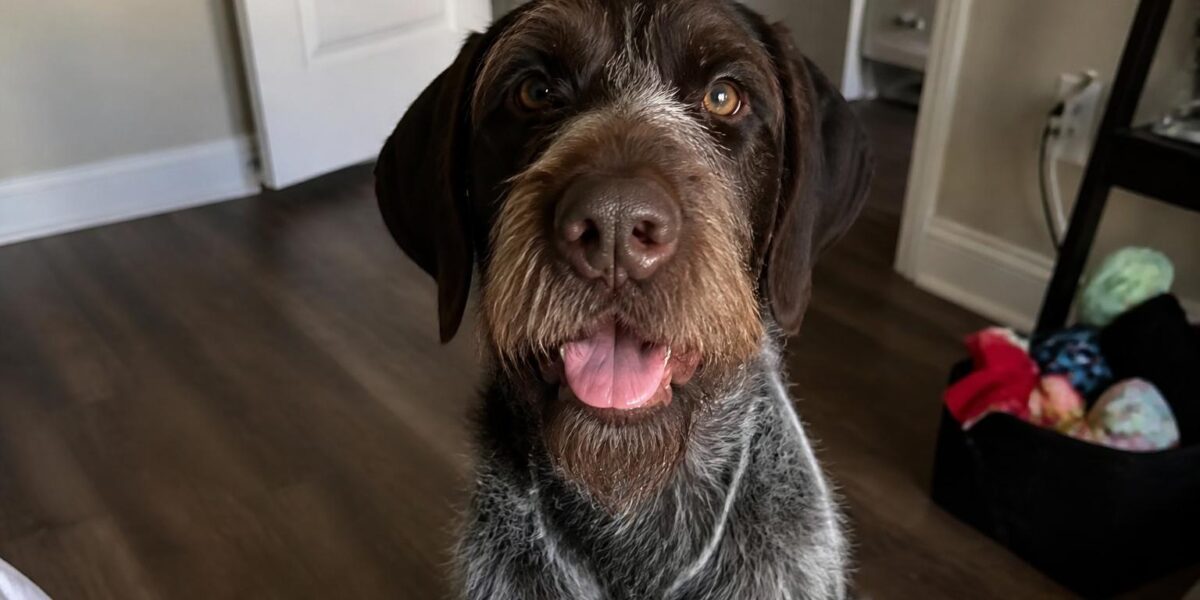
The breed’s defining feature is its distinctive double coat. The outer coat is wiry, flat-lying, and weather-resistant, typically one to two inches in length, with a dense undercoat that provides insulation in cold conditions and thins during warm months. The face sports a characteristic beard and bushy eyebrows that protect the eyes and muzzle when working through thorny cover, lending the dog an expression that is simultaneously serious and slightly amused.
Coat color is typically liver and white in various patterns — ticked, spotted, or roaned — with solid liver also common. The ears are rounded and hang close to the head. The eyes are medium-sized, oval, and brown, conveying keen intelligence. The overall impression is of a rugged, no-nonsense working dog designed entirely for function.
Temperament and Personality
Living with a german wirehaired pointer means living with a dog of intense personality. These dogs are loyal, energetic, intelligent, and determined, with a work ethic that can be both inspiring and exhausting. They form exceptionally deep bonds with their families, particularly with one chosen person, and their loyalty can border on possessiveness if not managed through training and socialization.
With strangers, the GWP tends to be aloof and watchful, making it a natural watchdog. Early and extensive socialization helps ensure that reserve does not tip into excessive suspicion. Within the family, these dogs are affectionate and often surprisingly silly, with a playful energy that persists well into adulthood.
The defining reality of daily life with a GWP is energy. These dogs have seemingly inexhaustible stamina. A bored or under-exercised german wirehaired pointer will find creative and destructive ways to entertain itself. If you enjoy hiking with dogs, the GWP will be your most enthusiastic trail partner. Their strong prey drive means caution is needed around small animals, and their exuberance may be too much for very young children, though they are generally patient and playful with older kids.
Exercise and Training Needs
If there is one thing you take away from this breed profile, let it be this: the german wirehaired pointer needs a tremendous amount of exercise. Plan for at least 60 to 90 minutes of vigorous activity daily, and many GWPs will happily take more. Ideal activities include long hikes, swimming, running alongside a bicycle, retrieving games, field trials, hunt tests, agility, dock diving, and tracking. Swimming is a particular favorite — most GWPs take to water with enthusiasm from a young age.
Mental stimulation is equally important. Puzzle toys, scent work, advanced obedience, and interactive games help satisfy the breed’s active mind. A GWP that is both physically tired and mentally satisfied is a calm, content companion at home. One lacking in either department becomes a creative force of household disruption.
Training is rewarding for experienced owners. The breed’s intelligence and eagerness to work make it highly trainable, but its independence can produce a stubborn streak. Positive reinforcement works best, with varied, engaging sessions that avoid the repetitive drills that bore this breed into non-cooperation. Recall training is particularly important and particularly challenging — a GWP that catches a scent may tune out everything else. Off-leash exercise should only happen in safely enclosed areas until a reliable recall is established.
Sporting dog enthusiasts will find interesting comparisons with the English Pointer and the athletic Vizsla, which share some traits but bring their own unique personalities to the field.
Health Issues and Lifespan
The german wirehaired pointer is generally a robust breed with a lifespan of 12 to 14 years. Decades of selection for working ability have maintained strong overall health, but several conditions merit attention.
Hip and elbow dysplasia are the most common orthopedic concerns. Reputable breeders screen their stock with radiographic evaluations, and maintaining a healthy weight helps manage these conditions. Von Willebrand’s disease, a bleeding disorder caused by a clotting protein deficiency, has been identified in the breed, and a DNA test is available for screening.
Eye conditions including entropion and cataracts are documented, making annual ophthalmic exams advisable. Hypothyroidism and certain cancers, particularly mast cell tumors, are also seen. Ear infections can be a recurring issue due to the hanging ear structure that restricts airflow. Regular ear cleaning and thorough drying after swimming are essential preventive measures.
Regular veterinary checkups, a balanced diet, and maintaining a healthy body condition are the foundations of long-term health for this active breed.
Grooming and Coat Care
The GWP’s functional wire coat is one of its greatest assets and, fortunately, is relatively low-maintenance compared to many long-coated breeds. The wiry texture naturally resists dirt and does not hold odor the way softer coats do.
Weekly brushing with a slicker brush or grooming mitt removes loose hair and keeps the coat in good condition. During spring shedding, when the dense winter undercoat is released, more frequent brushing is needed. The beard and eyebrows may need occasional tidying with scissors.
Hand-stripping — pulling out dead outer coat hairs by hand or with a stripping tool — is the preferred maintenance method, typically done two to three times yearly. This encourages new, healthy coat growth and preserves the coat’s correct wire texture. Clipping is an option for pets but may soften the texture over time. Bathing should be done only as needed, usually every six to eight weeks, to preserve the coat’s natural weather-resistant oils. After swimming, rinsing with fresh water and drying the ears thoroughly prevents skin irritation and ear infections.
Regular dental care, nail trimming every two to three weeks, and weekly ear checks complete the grooming routine.
Who Is the German Wirehaired Pointer Best For?
The german wirehaired pointer is an exceptional companion for active, experienced dog owners who can match the breed’s energy and appreciate its intelligence. This is emphatically not a breed for couch potatoes, apartment dwellers, or people away from home for long hours. The GWP needs a job — whether that is hunting, competing in dog sports, or being an active partner for an outdoor-loving family.
Hunters will find the GWP a supremely talented and versatile partner whose ability to point, retrieve on land and water, track wounded game, and work in all terrain and weather makes it a one-dog hunting team. Active families with older children can also be an excellent match, provided the family is committed to meeting the breed’s substantial exercise needs. A large, securely fenced yard is highly recommended, and access to swimming is a significant bonus.
If you are considering a german wirehaired pointer, please explore rescue organizations first. Many GWPs need new homes when their original owners underestimate the breed’s energy requirements. Walk Me Home Rescue is always here to help connect dogs in need with loving, active families.
Frequently Asked Questions About the German Wirehaired Pointer
What is the difference between a German Wirehaired Pointer and a German Shorthaired Pointer?
Both are versatile German sporting breeds, but they have different coats and somewhat different temperaments. The GWP has a wiry, weather-resistant double coat with distinctive beard and eyebrows, while the GSP has a short, smooth coat. GWPs tend to be slightly more reserved with strangers and more independent, often bonding more strongly with a single handler. Both require substantial exercise and thrive with active owners.
Are German Wirehaired Pointers good apartment dogs?
No, this extremely active breed is not suited to apartment living. GWPs need space, a yard, and significant daily exercise. A confined GWP is likely to develop behavioral problems including destructiveness and excessive barking. Homes with large fenced yards and access to open spaces for running and swimming are ideal.
Do German Wirehaired Pointers bark a lot?
GWPs are not excessive barkers under normal circumstances but will alert to visitors, unusual sounds, or perceived threats. Boredom and insufficient exercise can trigger problem barking. Adequate exercise, mental stimulation, and training prevent most barking issues while the breed’s natural alertness makes it a good watchdog.
How long can a German Wirehaired Pointer be left alone?
GWPs do not do well left alone for extended periods. These social dogs thrive on family interaction, and prolonged isolation leads to separation anxiety and destructive behavior. Most should not be left alone for more than four to six hours. Doggy daycare, a dog walker, or a canine companion can help during longer absences.
Looking to adopt a German Wirehaired Pointer Breed Profile?
Browse German Wirehaired Pointer Breed Profile dogs and mixes available for adoption from shelters and rescues near you.
Find German Wirehaired Pointer Breed Profile Dogs for Adoption