
Last updated: April 27, 2026
In this article
Greyhound Dog Breed Profile
Few dogs carry themselves with the quiet dignity of the Greyhound. Sleek, gentle, and surprisingly calm indoors, this ancient breed has captured human hearts for thousands of years — and today, thousands of retired racing greyhounds are waiting in shelters and foster homes for a second chance at a loving life. If you have ever considered adopting a large, low-maintenance dog with an affectionate soul and a royal bearing, the greyhound may be exactly the companion you have been looking for.
Despite their reputation as elite racing athletes, greyhounds are among the most laid-back dogs you will ever meet. They thrive in calm households, bond deeply with their families, and spend the majority of their day curled up on the nearest soft surface. This breed profile covers everything you need to know — from temperament and exercise requirements to health considerations and adoption advice.
Quick Facts
| Attribute | Details |
|---|---|
| Breed Group | Hound |
| Size | Large |
| Weight | 60 – 88 lbs (27 – 40 kg) |
| Height | 27 – 30 inches at the shoulder |
| Lifespan | 10 – 14 years |
| Coat | Short, smooth, low-shedding |
| Colors | Fawn, brindle, black, white, blue, red, and combinations |
| Energy Level | Low to moderate (sprinter, not endurance runner) |
| Good With Kids | Yes, with supervision for young children |
| Good With Other Dogs | Generally yes |
| Good With Cats/Small Pets | Depends on individual prey drive |
| Hypoallergenic | No |
| Trainability | Moderate — sensitive, responds to positive reinforcement |
| Common Source | Retired racing dogs, breed-specific rescues |
Personality and Temperament
The greyhound is often called the “45-mph couch potato,” and there is real truth to that nickname. These dogs are gentle, quiet, and deeply affectionate with their families. They tend to be calm and undemanding indoors, preferring to lounge on a comfortable bed rather than patrol the yard or demand constant activity. Many owners are astonished to discover just how low-key their greyhound is after bringing one home.
Despite their athletic build, greyhounds are sensitive dogs with a soft, almost delicate emotional nature. They do not respond well to harsh words or heavy-handed handling. They form strong bonds with their people and can be surprisingly cuddly for a large breed — many will lean against you, rest their head on your lap, or follow you quietly from room to room.
Greyhounds are generally not excessive barkers, which makes them well-suited to apartment living as long as their modest exercise needs are met. They can be reserved with strangers at first but rarely show aggression. Their sweet, even-tempered disposition is one of the most compelling reasons so many families fall in love with this breed. Once a greyhound settles into a home, it becomes a calm and devoted companion.
Appearance
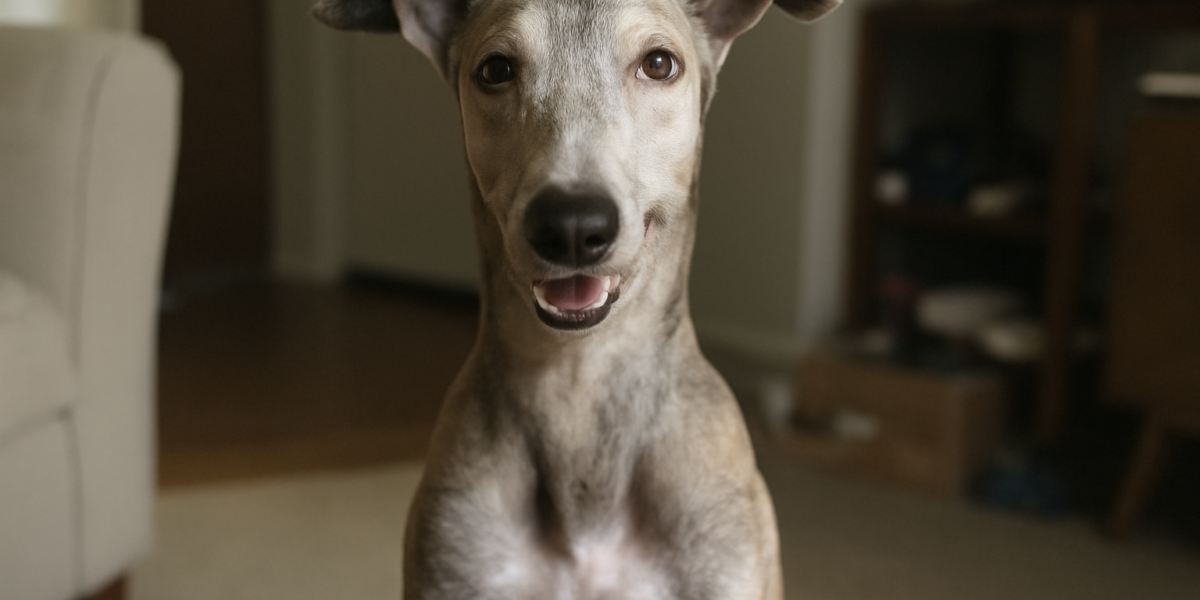
The greyhound’s body is one of nature’s most efficient designs. Everything about its build is shaped for speed: a long, narrow head that tapers into a strong jaw, a deep chest that houses an outsized heart and lungs, a tucked-up abdomen, and long, powerful legs built for explosive acceleration. The spine is slightly arched — a feature called a “roach back” — which allows the hind legs to reach forward past the front legs during a full gallop, giving the greyhound its characteristic double-suspension stride.
The coat is short, smooth, and close-lying, showing off the musculature underneath. The ears are small and folded back in a characteristic “rose ear” position when the dog is relaxed, though they prick forward when the dog is alert. The eyes are large and dark, with a soft, intelligent expression. Greyhounds carry almost no body fat, which means their bones and muscles are visible even in healthy individuals — this is completely normal for the breed and should not be mistaken for malnourishment.
Exercise Needs
One of the most common misconceptions about the greyhound is that it requires hours of exercise each day. In reality, the opposite is true. Greyhounds are sprinters, not distance runners. Their bodies are built for short, intense bursts of speed rather than sustained aerobic effort. A greyhound that is given the chance to run flat-out in a safely fenced area for 15 to 20 minutes will typically be content to spend the rest of the day resting.
Two moderate walks per day, each lasting 20 to 30 minutes, plus occasional off-leash runs in a securely fenced yard or dog park, are usually sufficient to keep a greyhound happy and healthy. This makes them surprisingly manageable for owners who live in apartments or who have limited mobility, provided safe opportunities for occasional free running are available.
A critically important note: greyhounds must always be kept on a leash or inside a securely fenced area when outdoors. Their prey drive and speed make them extremely difficult to recall once they have locked onto a moving target. A greyhound can reach 45 miles per hour in seconds, and no amount of training will reliably override that instinct in the open environment. For more general dog care guidance, visit our dog care blog.
Grooming Needs
The greyhound is one of the easiest large breeds to groom. Their short, smooth coat requires minimal maintenance — a weekly wipe-down with a soft cloth or rubber grooming mitt is usually all that is needed to remove loose hair and keep the coat looking its best. They shed, but modestly, and they do not develop the heavy seasonal blow-outs seen in double-coated breeds.
Bathing is needed only occasionally, perhaps once a month or when the dog gets noticeably dirty. Because they have very little body odor, they are often described as “clean” dogs by their owners. Their nails grow quickly and should be trimmed every two to three weeks, as overgrown nails can affect their gait and cause discomfort. Ears should be checked weekly for debris or signs of infection and cleaned gently as needed.
Dental hygiene is particularly important for this breed (see Health section below), so daily tooth brushing or regular use of dental chews is strongly recommended. Beyond these basics, the greyhound’s grooming routine is refreshingly simple — a major advantage for busy households.
Health and Common Issues
Greyhounds are generally a healthy breed with a good lifespan, but there are several health considerations that every owner should be aware of.
Bloat (Gastric Dilatation-Volvulus): Like other deep-chested breeds, greyhounds are at elevated risk for bloat, a life-threatening condition in which the stomach fills with gas and may twist. Feeding smaller meals, avoiding vigorous exercise immediately after eating, and knowing the warning signs can be life-saving.
Osteosarcoma: Bone cancer occurs at a higher rate in greyhounds than in many other breeds. Early detection — paying attention to lameness or swelling — gives the best chance of intervention.
Anesthesia sensitivity: Greyhounds have very low body fat and an unusual metabolism of certain drugs, making them sensitive to standard anesthetic doses. It is essential to work with a veterinarian who has experience with sighthounds.
Dental disease: Greyhounds are prone to periodontal disease, so consistent dental care is critical throughout their lives.
Are Greyhounds Good With Kids and Other Pets?
Greyhounds are generally gentle and tolerant with children. Their calm, non-reactive temperament means they rarely snap or growl in response to the noise and energy of kids. That said, because of their size and slender build, interactions with very young or boisterous children should always be supervised — an excited child could accidentally knock a greyhound over, and the dog’s bony frame means collisions can hurt the dog as much as the child.
With other dogs, greyhounds typically coexist peacefully, especially when they have been properly introduced and socialized. Most retired racing dogs are accustomed to living alongside other greyhounds.
The more complex question involves small animals. Greyhounds have a strong instinctive prey drive that was bred into them over millennia. Some individual greyhounds live happily with cats and small dogs; others cannot be safely trusted around them. Rescue organizations that work with retired racers will often conduct careful cat-testing before placement to help match the right dog with the right home. Always ask about an individual dog’s prey drive before adopting if you have small pets.
Training Tips
Training a greyhound requires patience, consistency, and an understanding of how sensitive this breed truly is. Greyhounds do not respond well to corrections, punishment, or raised voices. A single harsh interaction can set back trust significantly and make training more difficult for weeks afterward. Positive reinforcement — praise, treats, and calm encouragement — is the only effective approach.
Because retired racing greyhounds often enter homes having never lived indoors, they may need to learn basic household life from scratch: how to navigate stairs, recognize reflective glass doors, use a dog door, or settle calmly when left alone. This process is usually faster than owners expect, as greyhounds are observant and adaptable once they feel safe.
Recall training is important but should never be fully relied upon off-leash in open spaces. Leash manners, basic cues like sit, stay, and leave it, and crate or settle training are the most practical priorities. Keep training sessions short and positive — greyhounds are intelligent but not motivated by work for its own sake, so ending on a success keeps them engaged.
History and Origin
The greyhound is one of the oldest dog breeds in recorded history. Images resembling greyhounds appear in ancient Egyptian tomb carvings dating back more than 4,000 years, and the breed is mentioned in the Bible and in the writings of ancient Greek and Roman scholars. For most of history, greyhounds were prized as coursing dogs — sight hounds who hunted by sight and speed rather than scent, chasing hares and other game across open terrain.
In the twentieth century, greyhound racing became a major commercial industry, particularly in the United States, the United Kingdom, Ireland, and Australia. At its peak, tens of thousands of greyhounds were bred annually for racing. As the industry has declined in recent decades — and as public awareness of racing conditions has grown — large numbers of retired racing dogs have entered the rescue pipeline.
Breed-specific rescue organizations and adoption programs dedicated to retired racers have found loving homes for hundreds of thousands of these dogs over the past 30 years. Today, the greyhound’s story is one of remarkable reinvention: from the racetrack to the living room couch, these dogs have proven themselves to be extraordinary family companions.
Frequently Asked Questions
Do greyhounds need a large home or yard?
Not necessarily. Because greyhounds are so calm indoors and have modest daily exercise requirements, they adapt well to apartments and smaller homes. The most important requirement is access to a safely fenced area for occasional off-leash running. A large yard is helpful but not mandatory if you are willing to take your dog to a fenced dog park or enclosed field regularly.
Are retired racing greyhounds already house-trained?
Racing greyhounds are typically kept in kennel environments and have not been house-trained in the traditional sense. However, most adapt quickly to a home routine. Because they are clean by nature and have been crate-trained from early puppyhood, many retired racers pick up house-training within a few weeks with a consistent schedule and patient guidance.
How long do greyhounds typically live?
Greyhounds generally live between 10 and 14 years, which is a solid lifespan for a large breed. With attentive veterinary care, good nutrition, appropriate exercise, and the breed-specific health awareness described above — particularly around anesthesia sensitivity and dental health — many greyhounds remain active and healthy well into their senior years.
Is a greyhound the right dog for a first-time owner?
Yes, in many cases. The greyhound’s gentle temperament, low grooming demands, and calm indoor manner make it an approachable choice for first-time dog owners. The most important thing to understand is the breed’s prey drive and the absolute necessity of leash safety. First-time owners who are willing to learn about sighthound-specific care and commit to positive, patient training often find that a greyhound is one of the most rewarding breeds they could have chosen.
Adopt a Greyhound
If everything you have read here resonates with you, a greyhound may be the perfect addition to your family. Thousands of retired racers and surrendered pet greyhounds are in rescue every year, waiting for calm, caring homes where they can finally rest, be loved, and simply be dogs.
Walk Me Home Rescue works to connect adoptable dogs — including greyhounds and other large breeds — with qualified adopters who are ready to make a lifetime commitment. Our adoption process is designed to match the right dog with the right family, and our team is here to support you every step of the way.
Browse adoptable dogs and start your application today. Your next best friend may already be waiting for you.


