
Last updated: May 4, 2026
In this article
Learning how to groom a dog at home saves money, strengthens your bond, and gives you the chance to check your dog’s body for lumps, irritation, or parasites that might otherwise go unnoticed between vet visits. The process is more approachable than you might think, and once you build a routine, most dogs learn to tolerate or even enjoy it.
This guide covers every step of a complete at-home grooming session, from choosing the right tools to knowing when it is time to hand things over to a professional.
Essential Dog Grooming Tools and Supplies
Before you begin, gather the right tools. Having everything within arm’s reach makes the process smoother for you and less stressful for your dog. Here is what a well-stocked home grooming kit looks like:
- Slicker brush — the workhorse of dog grooming, effective on nearly every coat type
- Bristle brush — best for short and smooth coats
- Undercoat rake or deshedding tool — essential for double-coated breeds
- Steel comb — for working through tangles and checking that brushing is thorough
- Dog-specific shampoo — never use human shampoo, which disrupts canine skin pH
- Conditioner or detangling spray — helpful for long and curly coats
- Nail clippers or a nail grinder — guillotine-style clippers for small dogs, plier-style for larger breeds
- Styptic powder — to stop bleeding if you accidentally cut the quick
- Ear cleaning solution — vet-approved, alcohol-free formula
- Cotton balls or gauze pads — for ears and eyes
- Dog toothbrush and enzymatic toothpaste — never use human toothpaste
- Absorbent towels and a blow dryer — a dryer with adjustable heat settings is ideal
- Grooming table or non-slip mat — keeps your dog secure and your back comfortable
- Treats — the single most important tool for building positive associations
If you are just getting started, prioritize a slicker brush, dog shampoo, nail clippers with styptic powder, and an ear cleaning solution. You can build from there as you get more comfortable with the process. Many of the breeds listed in our dog breeds directory have specific grooming notes that can help you choose the right tools for your dog’s coat type.
Brushing Your Dog by Coat Type
Brushing removes loose hair, distributes natural oils, prevents mats, and gives you the opportunity to inspect your dog’s skin. How often you brush — and what tool you use — depends on your dog’s coat.
Smooth and short coats (Beagles, Boxers, Dachshunds). A bristle brush or rubber curry brush once a week is sufficient. Brush in the direction of hair growth. These coats shed but rarely mat.
Double coats (Golden Retrievers, Huskies, German Shepherds). Use an undercoat rake two to three times per week, daily during seasonal shedding. Follow with a slicker brush. Never shave a double-coated dog — the undercoat insulates against both heat and cold.
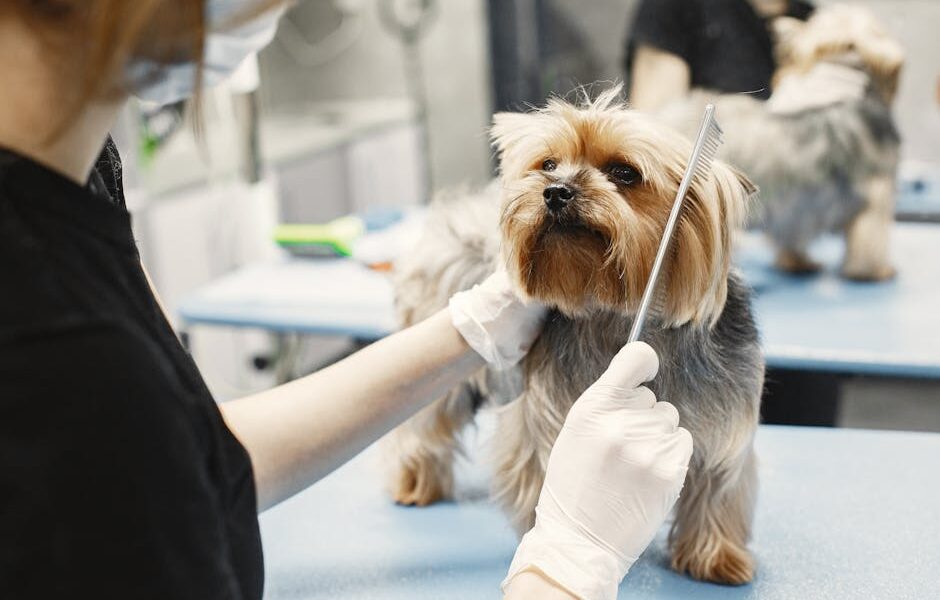
Long and silky coats (Yorkshire Terriers, Maltese, Afghan Hounds). These tangle easily and need daily brushing. Work in small sections from the ends upward toward the skin with a slicker brush, then check with a steel comb.
Curly and wavy coats (Poodles, Bichon Frises, Doodle mixes). Brush daily with a slicker brush all the way down to the skin — surface brushing pushes mats deeper. A steel comb is essential for checking your work.
Wire and rough coats (Schnauzers, Border Terriers). Use a slicker brush two to three times per week, followed by a stripping knife if you want to maintain the coat’s correct texture.
Bathing Your Dog: Step by Step
Most dogs need a bath every four to six weeks, though active dogs, dogs with skin conditions, or dogs that spend a lot of time outdoors may need more frequent baths. Overbathing strips natural oils and can lead to dry, flaky skin.
Step 1: Brush before bathing. Always brush your dog thoroughly before the bath. Water tightens mats, making them nearly impossible to remove once they are wet. If your dog has significant matting, address it with a detangling spray and comb before the water touches their coat.
Step 2: Prepare the bathing area. Use a bathtub, shower, or outdoor hose in warm weather. Place a non-slip mat in the tub and have all supplies within reach before bringing your dog in.
Step 3: Wet your dog thoroughly. Use lukewarm water. Start at the shoulders, work toward the tail, and wet the head last. Ensure the water reaches the skin, especially on thick coats.
Step 4: Apply shampoo and lather. Work the shampoo down to the skin using your fingers or a rubber bath brush. Pay attention to commonly missed areas: behind the ears, under the armpits, between the toes, and around the base of the tail.
Step 5: Rinse completely. Shampoo residue causes itching, flaking, and irritation. Rinse until the water runs clear, then rinse again.
Step 6: Condition if needed. Long, curly, and silky coats benefit from a light conditioner applied to the ends of the hair rather than the skin.
Step 7: Towel off. Let your dog shake, then wrap them in an absorbent towel. Blot rather than rub, as rubbing creates tangles in longer coats.
Drying Your Dog Properly
How you dry your dog matters more than many owners realize. A damp coat left to air dry can develop mildew odor, hotspots, or matting — especially in thick and curly coats.
Towel drying works well for short-coated breeds. Use an absorbent microfiber towel and blot rather than rub.
Blow drying is recommended for medium, long, double, and curly coats. Use a pet dryer or a human blow dryer on low or cool heat, keeping it moving constantly at least six inches from the skin. Brush the coat as you dry to prevent tangles from setting. If your dog is anxious about the dryer, introduce it gradually over multiple sessions, pairing it with treats.
Nail Trimming
Overgrown nails affect your dog’s posture, gait, and comfort. They can also curve into the paw pads, causing pain and infection. Most dogs need their nails trimmed every two to four weeks.
Choose your tool. Guillotine-style clippers work well for small to medium dogs. Plier-style (scissor) clippers handle larger, thicker nails. Nail grinders are a good option for dogs who dislike the sensation of clipping — they file the nail down gradually and leave a smoother edge.
Identify the quick. The quick is the blood vessel and nerve inside the nail. On light-colored nails, it is visible as the pink area within the nail. On dark nails, you cannot see it — trim in very small increments, stopping when you see a chalky white ring appear on the cut surface, which indicates you are approaching the quick.
Trim at a 45-degree angle. Hold your dog’s paw firmly but gently. Trim just the tip of the nail at a slight angle, following the natural curve. Take off less than you think you need to. Multiple small cuts are far safer than one aggressive clip.
If you hit the quick, stay calm. Apply styptic powder or cornstarch immediately and apply gentle pressure for 30 seconds. The bleeding will stop quickly. Your dog may yelp and pull away — offer a treat and a break before continuing, or finish the remaining nails another day. One painful experience can create lasting anxiety about nail trimming, so it is worth being cautious.
Do not forget the dewclaws. These nails, located higher on the inner side of the leg, do not contact the ground and never wear down naturally. Left untrimmed, they can grow in a full circle and embed in the skin.
Ear Cleaning
Dogs with floppy ears — Basset Hounds, Cocker Spaniels, Labrador Retrievers — are especially prone to ear infections because the ear flap traps moisture and limits airflow. But all dogs benefit from regular ear checks and occasional cleaning.
Inspect first. Look inside the ear. Healthy ears are pale pink, odor-free, and have minimal wax. Redness, swelling, dark or foul-smelling discharge, or excessive scratching are signs of infection — see your vet rather than trying to clean at home.
How to clean. Fill the ear canal with a vet-approved ear cleaning solution. Gently massage the base of the ear for 20 to 30 seconds — you will hear a squishing sound as the solution loosens debris. Let your dog shake their head (this is the messy part), then use a cotton ball or gauze pad to wipe away the loosened debris from the visible parts of the ear. Never insert anything into the ear canal. Cotton swabs push debris deeper and can damage the eardrum.
Clean your dog’s ears every two to four weeks, or more often if they swim regularly. If your dog is prone to recurring infections, talk with your vet about a cleaning schedule.
Teeth Brushing
Dental disease is one of the most common health issues in dogs, affecting the majority of dogs over the age of three. Regular teeth brushing is the single most effective thing you can do to prevent plaque buildup, gum disease, and the systemic health problems that follow.
Use the right products. Dog-specific enzymatic toothpaste comes in flavors like poultry and beef, which makes the process easier. Never use human toothpaste — it contains fluoride and foaming agents that are toxic to dogs if swallowed. A finger brush works well for beginners and small dogs; a long-handled dog toothbrush gives better reach for larger breeds.
Build up gradually. Start by letting your dog lick the toothpaste off your finger. Over a few days, begin rubbing the toothpaste along the gum line with your finger. Once your dog is comfortable, introduce the brush. Focus on the outer surfaces of the teeth — this is where plaque accumulates most — and brush using small circular motions along the gum line.
Aim for daily brushing, but even two to three times per week provides significant benefit. Each session only needs to take about two minutes. Reward your dog afterward so they associate the routine with something positive.
Eye Cleaning
Some dogs, particularly brachycephalic breeds (Pugs, Bulldogs, Shih Tzus) and white or light-coated breeds, are prone to tear staining and eye discharge. Regular cleaning keeps the area around the eyes healthy and comfortable.
What to use. A soft, damp cloth or a gauze pad moistened with warm water is usually all you need. For stubborn tear stains, a vet-approved eye cleaning solution can help. Avoid anything with peroxide or harsh chemicals near the eyes.
How to clean. Gently wipe from the inner corner of the eye outward, using a fresh area of the cloth for each eye to avoid transferring bacteria. Remove any crust or discharge that has accumulated. If you notice excessive tearing, discolored discharge (yellow or green), squinting, or redness, these may indicate an eye infection or irritation that needs veterinary attention.
Make eye cleaning part of your daily routine — a quick wipe during morning greetings takes only seconds and prevents buildup from becoming a problem.
Sanitary Trim
A sanitary trim — sometimes called a hygiene clip — involves trimming the hair around your dog’s rear end, belly, and genital area to keep those areas clean and free of matting. This is particularly important for long-haired and curly-coated breeds where fecal matter and urine can become trapped in the fur.
Tools needed. Use blunt-tipped grooming scissors or a quiet set of clippers with a number 10 blade. Blunt tips are critical for safety in sensitive areas.
How to do it. With your dog standing on a non-slip surface, carefully trim the fur around the anus, under the tail, and along the inner thighs. You are not going for a close shave — just shortening the hair enough to prevent soiling and matting. Work slowly and deliberately. If your dog is restless or anxious, have a second person offer treats and gentle restraint, or break the task into multiple shorter sessions.
A sanitary trim every four to six weeks, between full grooming sessions, keeps things hygienic and reduces the need for emergency bath situations that no one enjoys.
When to Go to a Professional Groomer
Home grooming handles the majority of a dog’s maintenance needs, but there are situations where a professional groomer is the better choice:
- Severe matting. Mats that are tight to the skin can cause bruising and restrict blood flow. Removing them requires experience and often professional-grade clippers. Attempting to cut out severe mats at home risks cutting the skin.
- Breed-specific haircuts. Poodle clips, Schnauzer patterns, and other breed-standard cuts require trained technique and professional tools. If your dog’s breed has a specific style you want to maintain, a professional groomer is the way to go.
- Aggressive or extremely anxious dogs. Some dogs become fearful or reactive during grooming. Professional groomers have training and equipment to handle these situations safely. In severe cases, a veterinary groomer who can administer mild sedation may be appropriate.
- Anal gland expression. If your dog is scooting or showing signs of full anal glands, this is best handled by a groomer or veterinarian. It requires specific technique and is unpleasant to learn by trial and error.
- First-time grooming for puppies. A professional first grooming experience can set a positive foundation. Many groomers offer “puppy introduction” sessions that focus on building comfort with the process.
- Medical skin conditions. If your dog has active infections, open wounds, or dermatological conditions, consult your vet before grooming at home. A professional can work around medical issues with appropriate care.
There is no shame in outsourcing parts of the grooming process. Many owners handle brushing, ear cleaning, and teeth care at home while leaving baths and haircuts to a professional every six to eight weeks. Find the balance that works for your household and your dog.
If you are considering adding a dog to your family and want to understand the grooming commitment involved, browsing our dog breeds directory can help you find breeds that match your lifestyle. And when you are ready, we would love for you to explore our adoptable dogs — many of them would be happy to let you practice your new grooming skills.
Frequently Asked Questions
How often should I groom my dog at home?
The answer depends on your dog’s coat type, but a general schedule looks like this: brushing two to three times per week (daily for long and curly coats), bathing every four to six weeks, nail trimming every two to four weeks, ear cleaning every two to four weeks, and teeth brushing daily or at least three times per week. Build up to this schedule gradually rather than trying to do everything at once.
Can I use human shampoo on my dog?
No. Human shampoo is formulated for human skin, which has a different pH level than canine skin. Using it on your dog disrupts their skin’s acid mantle, leading to dryness, irritation, and increased vulnerability to bacteria and parasites. Always use a shampoo specifically formulated for dogs.
My dog hates being groomed. How do I make it easier?
Start small and pair every step with high-value treats. If your dog panics at the sight of nail clippers, spend a week simply leaving the clippers near their food bowl, then another week touching the clippers to their paw without trimming. Desensitization takes time but produces lasting results. Keep sessions short — five minutes of calm grooming is better than twenty minutes of struggling. If your dog’s anxiety is severe, consult a professional trainer or veterinary behaviorist.
What is the best way to remove mats from dog fur?
For minor tangles, hold the base of the mat close to the skin with your fingers (to avoid pulling) and gently work through it with a slicker brush or dematting comb, starting at the outer edge and working inward. A detangling spray helps considerably. For tight mats, carefully split them lengthwise with blunt-tipped scissors, then brush out the sections. Never pull a mat away from the skin or cut across it — you risk cutting the skin beneath. If mats are extensive or tight against the body, see a professional groomer.
Do I need to groom a short-haired dog?
Yes. Short-haired dogs still shed, produce oils, grow nails, and accumulate wax in their ears. They need regular brushing (though less frequently), periodic baths, and all of the same nail, ear, teeth, and eye care that any dog requires. The grooming sessions are simply shorter and less involved.
How do I know if I cut the nail quick?
You will know immediately — the nail will bleed, and your dog will likely yelp or pull their paw away. Apply styptic powder or cornstarch directly to the nail tip and hold gentle pressure for 30 seconds. The bleeding usually stops within a minute or two. Offer your dog a treat, take a break, and do not worry too much. It happens to everyone, including professional groomers. The key is having styptic powder on hand before you start.


