
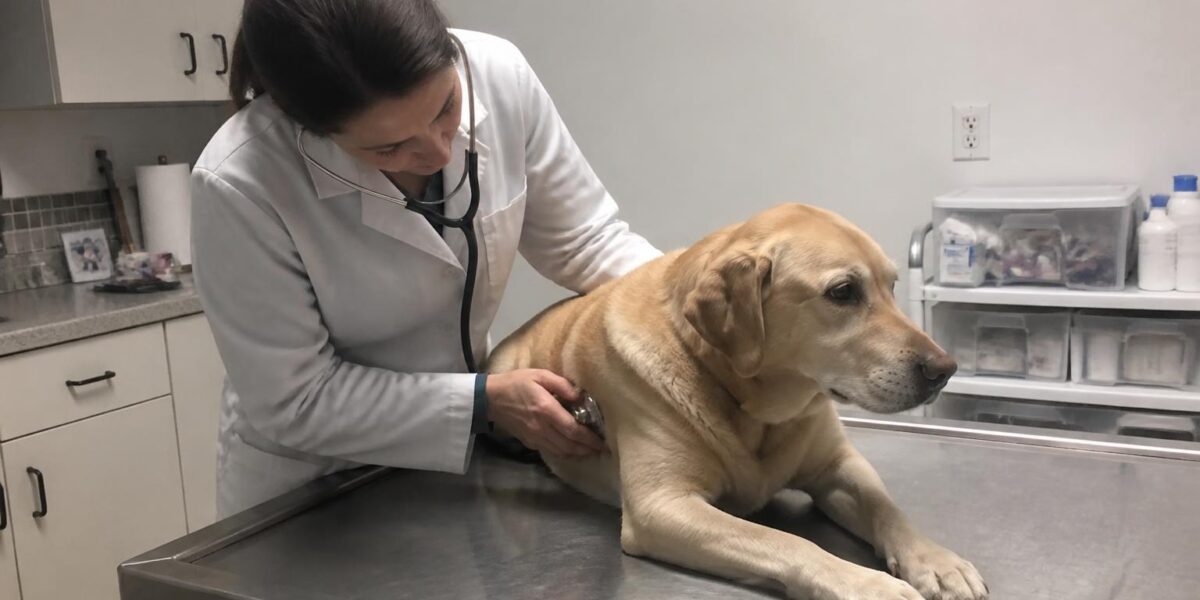
Hypercalcemia of malignancy is high blood calcium caused by a cancer, and it is the single most common reason a dog develops persistently elevated calcium. Rather than the tumor pressing on something, the cancer releases a hormone-like protein, most often parathyroid-hormone-related protein (PTHrP), that tricks the body into pulling calcium out of the bones and into the bloodstream. The result can be increased thirst and urination, weakness, and, if left unchecked, kidney damage.
In this article
This is one of the more urgent paraneoplastic problems in dogs, because dangerously high calcium can injure the kidneys quickly. The encouraging part is that when the underlying tumor is identified and treated, the calcium often comes back down. This article explains what causes hypercalcemia of malignancy, the warning signs at home, how the emergency and the cancer are managed, and what to expect during the diagnostic workup.
What Hypercalcemia of Malignancy Is
Calcium in the blood is normally held within a tight range by the parathyroid glands, the kidneys, the gut, and the bones working together. In hypercalcemia of malignancy, a tumor disrupts that balance by secreting PTHrP, which mimics the body’s own parathyroid hormone and drives calcium upward. The kidneys, faced with too much calcium, struggle to concentrate urine, which is why excessive thirst and urination are such common early signs.
Not all high calcium is caused by cancer. Other causes include primary parathyroid disease, certain toxins, kidney disease, and Addison’s disease. The job of the veterinary workup is to distinguish hypercalcemia of malignancy from these other possibilities, because the treatment and prognosis differ completely.
Which Tumors Cause It
A handful of cancers account for most cases of hypercalcemia of malignancy in dogs:
- Lymphoma — the most common cause overall; high calcium can be the first clue to the disease.
- Anal-sac (apocrine gland) adenocarcinoma — a tumor near the anus, often found on a rectal exam, that frequently secretes PTHrP.
- Thymoma — a chest tumor with several paraneoplastic associations.
- Multiple myeloma — a systemic plasma-cell cancer.
Because lymphoma and anal-sac tumors top the list, the search for a cause usually includes a careful rectal exam, lymph node assessment, chest and abdominal imaging, and bloodwork. Our articles on dog lymphoma and on anal gland cancer in dogs describe the two leading culprits in depth, and our piece on thymoma in dogs and cats covers another classic cause.
Warning Signs at Home
The signs of hypercalcemia of malignancy can be subtle and easy to attribute to aging. Watch for:
- Markedly increased thirst and a need to urinate more often or in larger volumes
- Lethargy, weakness, and reduced exercise tolerance
- Poor appetite, sometimes with vomiting or constipation
- In advanced cases, signs of kidney trouble or a noticeable decline in overall condition
None of these signs is specific to high calcium on its own, which is exactly why routine bloodwork that flags an elevated calcium is so valuable. If your dog shows increased drinking and urination, ask your veterinarian to check calcium as part of the workup.
How the Workup Proceeds
Confirming hypercalcemia of malignancy is a step-by-step process. The first step is to measure ionized calcium, the biologically active form, because total calcium alone can be misleading. If ionized calcium is genuinely high, the next step is to measure parathyroid hormone (PTH) and PTHrP. In hypercalcemia of malignancy, PTH is typically low (suppressed) while PTHrP may be elevated, a pattern that points away from primary parathyroid disease and toward a tumor.
From there, the hunt is for the responsible cancer: lymph node aspirates, a rectal exam for an anal-sac mass, chest radiographs or CT for a thymoma, abdominal ultrasound, and sometimes a bone marrow evaluation. A board-certified medical oncologist (DACVIM-Oncology) often guides this search, and a board-certified pathologist (DACVP) confirms the tumor type once a sample is obtained.
It is worth understanding why ionized calcium is measured rather than relying on the total calcium that appears on a standard chemistry panel. A large fraction of blood calcium is bound to proteins like albumin and is not biologically active. Total calcium can read high simply because of dehydration or lab factors, or it can read deceptively normal when the active fraction is actually elevated. Ionized calcium measures only the active form, giving a far more accurate picture and avoiding both false alarms and missed cases. This is a small but important point that explains why your veterinarian may recommend a specialized calcium test rather than acting on the routine panel alone.
Emergency Management of Severe Hypercalcemia
When calcium is high enough to threaten the kidneys, stabilization comes before anything else. The cornerstone is intravenous fluids to dilute the calcium, restore hydration, and help the kidneys excrete the excess. A board-certified emergency and critical care specialist (DACVECC) may add further therapies in severe cases.
Among those options are bisphosphonate drugs, which reduce the release of calcium from bone and are sometimes used for stubborn or severe hypercalcemia. We describe this drug class and its role in our article on pamidronate and zoledronate for bone metastasis and pain palliation. Importantly, all dosing is determined by the prescribing specialist; we never list specific doses here. A vital caution applies: corticosteroids should not be given before lymphoma is ruled out, because they can partially treat (and therefore mask) the cancer and make a diagnosis much harder.
Treating the Underlying Cancer
Fluids and bisphosphonates buy time, but lasting control of hypercalcemia of malignancy comes from treating the tumor itself. If the cause is lymphoma, chemotherapy directed by an oncologist often brings calcium down quickly. If it is an anal-sac adenocarcinoma, surgery, sometimes combined with radiation and medical therapy, is the path. The treatment plan is always individualized.
This dual approach, managing the syndrome while attacking the cancer, is the theme of our broader overview of paraneoplastic syndromes in pets. Calcium often serves as a useful monitoring marker: a fall toward normal suggests the cancer is responding, while a rise can signal recurrence.
Protecting the Kidneys
The kidneys are the organ most at risk from prolonged high calcium, so a major goal of treatment is preventing or limiting kidney injury. Persistently elevated calcium can cause mineral to deposit in the kidney tissue and impair its ability to concentrate urine, which is why so many affected dogs drink and urinate excessively. The longer the calcium stays high, the greater the risk of lasting damage.
This is one reason your veterinary team treats severe hypercalcemia urgently rather than waiting for the full cancer workup to be complete. Aggressive intravenous fluid therapy not only lowers calcium but also protects the kidneys by maintaining good blood flow and urine output. Once the underlying tumor is controlled, kidney function often stabilizes, though dogs that arrived with significant kidney compromise may need ongoing monitoring.
What This Means for You at Home
For owners, the most actionable message is to take increased drinking and urination seriously, especially in an older dog. It is a sign that warrants a veterinary visit and bloodwork, not something to wait out. Catching high calcium early, before the kidneys are damaged, gives the best chance for a smooth recovery once the underlying cancer is addressed.
If your dog is diagnosed with hypercalcemia of malignancy, expect a coordinated plan: stabilize the calcium, find and treat the tumor, and monitor calcium over time as a gauge of how treatment is working. Lean on your veterinary team’s guidance, ask questions about each step, and remember that for some causes, particularly a treatment-responsive lymphoma, the outlook can be considerably better than the frightening initial lab value might suggest.
Prognosis and Cost Realism
Prognosis depends entirely on the underlying cancer rather than on the high calcium itself. Hypercalcemia caused by a chemotherapy-responsive lymphoma carries a different outlook than one caused by an aggressive anal-sac tumor, and survival is best discussed as a median with wide individual variation, grounded in your dog’s specific diagnosis. Your oncologist can give you realistic figures and will never predict an exact outcome for an individual dog.
Costs include emergency stabilization, diagnostic imaging and pathology, and then cancer treatment, which varies widely by tumor type. Our guide to pet cancer treatment cost realism walks through budgeting, grant programs such as the Magic Bullet Fund, and financing options, all of which vary by program, region, and specialist and are current as of 2024 to 2025.
Frequently Asked Questions
What is the most common cause of hypercalcemia of malignancy in dogs?
Lymphoma is the most common cause, followed by anal-sac (apocrine gland) adenocarcinoma, thymoma, and multiple myeloma. Identifying which one is present is the central goal of the diagnostic workup.
Is high blood calcium an emergency?
It can be. Severely elevated calcium can damage the kidneys, so stabilization with intravenous fluids and sometimes other therapies takes priority before the cancer itself is addressed.
Why shouldn’t my dog get steroids before the cancer is diagnosed?
Corticosteroids can partially treat lymphoma, which lowers calcium temporarily but masks the disease and makes a definitive diagnosis much harder. Your veterinarian will usually want to confirm the tumor type first.
Will the calcium come back to normal?
Often, yes, once the underlying tumor is treated. Calcium is a useful monitoring marker, and a return toward normal suggests the cancer is responding, while a later rise can signal recurrence.
Which specialists are involved?
A board-certified emergency and critical care specialist (DACVECC) may manage the acute high calcium, a medical oncologist (DACVIM-Oncology) guides the cancer workup and treatment, and a pathologist (DACVP) confirms the tumor. Your primary veterinarian is the first stop and can refer or arrange a telemedicine consult where specialists are far away.


