Last updated: May 6, 2026
In this article
Irish Water Spaniel Breed Profile: The Clown Prince of Sporting Dogs
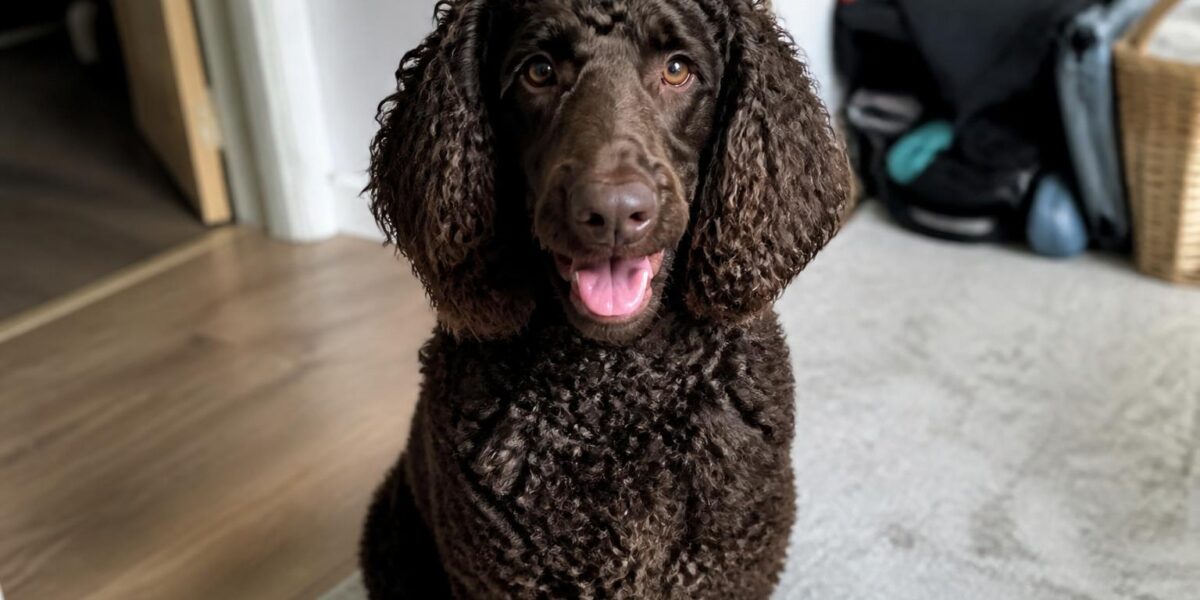
With its tightly curled liver-colored coat, distinctive “rat tail,” and perpetually amused expression, the Irish Water Spaniel is one of the most visually unique breeds in the sporting group. Standing as the tallest of all spaniels, this breed has been retrieving waterfowl from icy Irish waters for well over a century, and its combination of athleticism, intelligence, and irrepressible humor has earned it a loyal following among hunters and companion dog owners alike. If you are looking for a dog that can work hard all day and make you laugh all evening, the Irish Water Spaniel deserves a spot on your list.
History and Origins
The Irish Water Spaniel’s exact origins are shrouded in the misty history of Ireland’s sporting traditions. Water spaniels of various types have existed in Ireland for centuries, with references appearing in manuscripts dating back to the 1100s. However, the modern breed as we know it today is largely credited to one man: Justin McCarthy of Dublin, who developed and refined the breed during the 1830s and 1840s.
McCarthy was famously secretive about his breeding program, and he took the details of his crosses to the grave. The most common theory is that he combined the South Country Water Spaniel, now extinct, with the North Country Water Spaniel, Poodles, and possibly Portuguese Water Dogs. The result was a tall, curly-coated spaniel with exceptional swimming ability, a keen nose, and a biddable yet spirited temperament. McCarthy’s most famous dog, Boatswain, born in 1834, is considered the foundation sire of the modern breed.
The Irish Water Spaniel quickly became a favorite among waterfowl hunters on both sides of the Atlantic. It was one of the first nine breeds recognized by the American Kennel Club in 1884, reflecting its popularity among American sportsmen of that era. While the breed has since been eclipsed in popularity by Labrador Retrievers and Golden Retrievers, it remains a capable and enthusiastic working dog that excels in both field trials and hunt tests. The breed shares some interesting traits with Poodle-derived breeds; for a comparison, see our Standard Poodle breed profile.
Appearance and Size
The Irish Water Spaniel is the tallest spaniel breed, with males standing 22 to 24 inches at the shoulder and females measuring 21 to 23 inches. Weight ranges from 45 to 68 pounds, giving the breed a solid, athletic build that belies its graceful movement in water. The overall impression is one of a strong, compact, well-balanced sporting dog built for endurance.
The coat is the breed’s most defining characteristic. Dense, tightly curled ringlets cover the body, legs, and the top of the head, where the curls form a prominent topknot that falls over the eyes in a charmingly disheveled manner. The face, below the topknot, is smooth and covered in short, fine hair, creating a striking contrast with the curly body coat. The throat is also smooth, and the tail is perhaps the breed’s quirkiest feature: thick and covered with curls at the base, it tapers to a thin, smooth “rat tail” that looks like it was borrowed from a completely different dog.
The only acceptable color is a rich, dark liver, sometimes described as “puce liver,” which has a distinctive purplish hue. The curly coat has a natural water-repellent quality that allows the dog to work in cold water for extended periods without becoming waterlogged. The dense undercoat provides insulation, while the oily outer coat sheds water quickly after the dog emerges.
Temperament and Personality
The Irish Water Spaniel is a study in contrasts. In the field, it is a serious, focused worker with the drive and stamina to retrieve all day in challenging conditions. At home, it transforms into one of the most entertaining and comedic breeds you will ever encounter. IWS owners universally agree that this breed has a keen sense of humor and a talent for making people laugh, whether through deliberate antics or simply by being its endearingly quirky self.
Loyalty is another hallmark of the breed. The Irish Water Spaniel bonds deeply with its family and can be a devoted, affectionate companion. It tends to be a one-family dog that may take time to warm up to strangers, displaying a reserved and watchful demeanor around people it does not know. This aloofness is not hostility; rather, it is a measured caution that reflects the breed’s intelligence and discernment.
The breed is generally good with children, especially older children who can appreciate and participate in its playful nature. Its size and exuberance may be overwhelming for very young children, so supervision is recommended during interactions with toddlers. Irish Water Spaniels can get along with other dogs, though some individuals may be selective about their canine companions. Their compatibility with cats and small animals varies by individual, but their sporting instincts mean caution is warranted. For another curly-coated option with a similar water-loving temperament, explore our Labradoodle breed profile.
Exercise and Training
As a sporting breed developed for demanding physical work, the Irish Water Spaniel needs substantial daily exercise. Plan on at least 60 to 90 minutes of vigorous activity, including long walks, swimming, retrieving games, and free running in a secure area. Swimming is the IWS’s great passion, and access to safe water for swimming can make a tremendous difference in this breed’s happiness and fitness. If you are an outdoor enthusiast who enjoys hiking, camping, or water sports, the IWS will be an eager and tireless partner. For more outdoor-loving breeds, see our guide to the best dogs for hiking.
Mental stimulation is equally important for this intelligent breed. Puzzle toys, scent work, training sessions, and interactive games help keep the IWS’s active mind engaged. A bored Irish Water Spaniel can become creative in destructive ways, so providing adequate mental enrichment is both a kindness to the dog and an investment in the integrity of your home furnishings.
Training the Irish Water Spaniel can be immensely rewarding for the right owner. The breed is intelligent, eager to work, and quick to learn new skills. However, it also has an independent streak and a mischievous nature that can manifest as stubbornness or creative reinterpretation of commands. The IWS does not respond well to repetitive drills or heavy-handed training methods. Instead, it thrives with varied, engaging training sessions that use positive reinforcement, including food, toys, and praise.
Early socialization is particularly important for this breed due to its natural reserve with strangers. Exposing puppies to a wide variety of people, places, sounds, and experiences during the critical socialization window helps build confidence and prevents excessive wariness or shyness in adulthood.
Health and Lifespan
The Irish Water Spaniel has an average lifespan of 10 to 12 years. While the breed is generally healthy, there are several conditions that prospective owners should be aware of.
Hip dysplasia is a concern in the breed, and responsible breeders screen their stock through the Orthopedic Foundation for Animals or similar programs. Hypothyroidism, which affects the thyroid gland’s ability to produce hormones, is relatively common in the breed and is typically managed with daily medication. Eye conditions, including cataracts, distichiasis, and entropion, have been documented and should be screened for regularly.
Drug sensitivity is an important consideration for the Irish Water Spaniel. Some individuals react adversely to certain medications, including sulfonamide antibiotics and ivermectin. Owners should inform their veterinarian of the breed’s potential drug sensitivities before any medications are prescribed. Epilepsy has also been reported in some lines, though it is not considered a widespread problem.
As with all deep-chested breeds, the Irish Water Spaniel is at risk for gastric dilatation-volvulus, or bloat. Feeding smaller, more frequent meals, avoiding vigorous exercise immediately before and after eating, and using a slow-feeder bowl can help reduce the risk. Allergies, both environmental and food-related, are relatively common in the breed and may manifest as skin irritation, ear infections, or digestive issues.
Grooming the Irish Water Spaniel
The Irish Water Spaniel’s curly coat is low-shedding, which is a welcome trait for owners who prefer a cleaner home. However, low shedding does not mean low maintenance. The coat requires consistent care to prevent mats, maintain its distinctive texture, and keep the dog comfortable.
Brushing two to three times per week with a slicker brush and a wide-toothed comb is essential to work through the curls and prevent tangles. Pay particular attention to areas where friction occurs, such as behind the ears, under the legs, and where a collar or harness sits. Mats that are allowed to develop close to the skin can cause discomfort and skin irritation.
The coat should be trimmed every six to eight weeks to maintain its shape and manageability. Many IWS owners learn to do basic trimming at home, while others rely on a professional groomer familiar with the breed’s specific needs. The topknot should be kept long enough to frame the face characteristically, and the rat tail should be left natural. Bathing every four to six weeks with a moisturizing dog shampoo helps keep the coat clean and healthy without stripping its natural oils.
Ear care is particularly important for this breed. The long, heavily feathered ears can trap moisture after swimming, creating an ideal environment for bacterial and yeast infections. Dry the ears thoroughly after every water exposure and clean them weekly with a gentle ear cleanser. Nail trimming every two to three weeks and regular dental care complete the grooming routine.
Who Is the Irish Water Spaniel Best For?
The Irish Water Spaniel is best suited for active, experienced dog owners who enjoy outdoor activities and have the time and patience for consistent grooming and training. Hunters and outdoor enthusiasts who spend time near water will find the IWS an exceptional field companion, but the breed is equally happy as an active family pet as long as its exercise and mental stimulation needs are met.
Families with older children who can participate in training and activities are a great match. The breed’s playful, comedic nature makes it a delightful family companion, and its loyalty and watchfulness provide a reassuring presence in the home. First-time dog owners can succeed with an Irish Water Spaniel, but they should be prepared for the breed’s independent personality and grooming demands.
The IWS does not do well in sedentary households or with owners who are away from home for extended periods. This is a breed that needs engagement, activity, and companionship. If you can provide those things, the Irish Water Spaniel will reward you with years of devoted companionship, athletic partnership, and guaranteed laughter. Consider checking breed-specific rescues if you would like to give one of these remarkable dogs a second chance at a loving home.
Frequently Asked Questions
Are Irish Water Spaniels hypoallergenic?
No dog breed is truly hypoallergenic, but the Irish Water Spaniel’s low-shedding, curly coat produces less dander than many other breeds, which some allergy sufferers find more tolerable. The breed’s coat traps loose hair and dander within the curls rather than releasing them into the environment, which can reduce allergen exposure. If you have allergies, spending time with an IWS before committing to ownership is the best way to assess your individual tolerance.
How much exercise does an Irish Water Spaniel need?
The Irish Water Spaniel is an active sporting breed that needs at least 60 to 90 minutes of vigorous daily exercise. This should include a combination of walks, swimming, retrieving games, and free running in a secure area. Swimming is especially beneficial, as it provides low-impact cardiovascular exercise that the breed naturally loves. Without sufficient exercise, the IWS can become restless, bored, and prone to developing behavioral issues such as excessive barking or destructive chewing.
Do Irish Water Spaniels get along with other dogs?
Most Irish Water Spaniels get along well with other dogs, especially if they have been properly socialized from a young age. However, some individuals can be selective about their canine companions and may not appreciate pushy or overly dominant dogs. Gradual introductions in neutral territory and supervised initial interactions help set the stage for positive relationships. The breed’s playful nature often makes it an entertaining play partner for dogs with compatible energy levels.
Looking to adopt a Irish Water Spaniel Breed Profile?
Browse Irish Water Spaniel Breed Profile dogs and mixes available for adoption from shelters and rescues near you.
Find Irish Water Spaniel Breed Profile Dogs for Adoption