
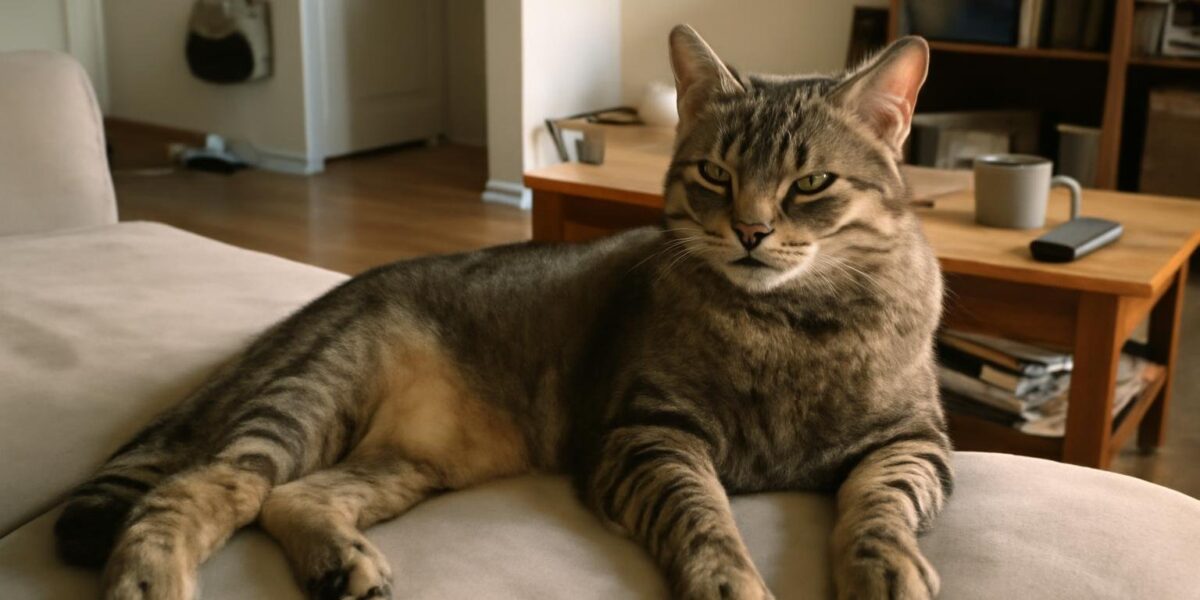
Yes, Twitching in Her Sleep Is Normal
Watching your cat’s paws paddle, whiskers flicker, and ears wiggle while she naps can be both adorable and a little puzzling. If you are wondering, is it normal for my cat to twitch in her sleep, you can relax. In the vast majority of cases, sleep twitching is completely normal and a sign your cat is dreaming.
In this article
Just like humans, cats cycle through deep sleep and an active dream stage called REM sleep. During REM, the brain is busy and the body produces small involuntary movements: twitching paws, flicking tails, fluttering eyelids, and tiny vocalizations.
These little movements are a healthy part of feline sleep. A twitching, dreaming cat is usually a deeply relaxed, comfortable cat. Let’s look at what is normal, what to watch for, and how to tell ordinary dreaming from something that genuinely needs a vet.
Why Cats Twitch While They Sleep
Cats spend a lot of their day asleep, often 12 to 16 hours, and they move through alternating phases of light sleep, deep sleep, and REM dream sleep. The twitching happens during REM, when brain activity is high and the body relaxes but small muscle signals slip through.
Common normal sleep movements include:
- Paw paddling or “running” as if chasing something in a dream
- Whisker and ear twitches
- Tail flicking
- Eyelid flutters with eyes partly open
- Soft chirps, squeaks, or muffled meows
- Occasional full-body jerks as she settles deeper
Kittens and younger cats often twitch more than older cats, partly because they spend more time in REM sleep. To understand the science behind these dream movements in more depth, our guide on why cats twitch while sleeping breaks it down clearly.
What Normal Sleep Twitching Looks Like
Normal twitching is brief, gentle, and happens while your cat is clearly asleep and relaxed. She wakes up easily, stretches, and goes about her day as if nothing happened. The movements come and go with the dream and do not leave her disoriented.
Signs the twitching is the harmless dreaming kind include:
- Movements only during sleep, never while awake
- Your cat is relaxed, with normal breathing
- She wakes easily and acts completely normal afterward
- The twitching is mild and intermittent, not constant or violent
- No drooling, stiffness, or loss of awareness
If your cat curls up, twitches a little, then wakes and strolls off to her food bowl, that is textbook normal dreaming. The position she chooses can also affect how much movement you notice, something our guide to cat sleeping positions explores, since a sprawled cat shows off her twitches far more than one curled into a tight ball.
When Twitching Is NOT Normal
Rarely, twitching can signal a medical problem rather than a dream. The key difference is whether your cat can be woken and whether the movement looks like a violent, uncontrollable episode. Contact your veterinarian promptly if you notice:
- Stiff, rigid, or violent jerking rather than soft paddling
- Inability to wake your cat during the episode
- Drooling, loss of bladder or bowel control, or paddling that lasts minutes
- Disorientation, confusion, or unsteadiness afterward
- Twitching while awake, or skin that ripples and twitches when she is alert
- Repeated episodes, or twitching paired with other illness signs
These can point to seizures, nervous system issues, pain, parasites, or a skin condition such as feline hyperesthesia. If anything looks like a seizure or your cat cannot be roused, treat it as urgent and call your vet right away. Keeping a short video of the episode on your phone gives your vet valuable information for an accurate diagnosis.
How Sleep Cycles Cause the Twitches
To really understand the twitching, it helps to picture how a cat’s sleep is built. Cats do not sleep in one long block like we often try to. Instead, they take many naps and cycle through alternating stages, and the twitching belongs to just one of those stages.
A typical sleep cycle moves through light dozing, deeper slow-wave sleep, and then REM, the active dream stage. During light sleep, your cat stays alert enough to wake at the smallest sound, ears swiveling toward noises. In deep sleep, her body relaxes and restores itself. In REM, the brain lights up with dream activity, and that is when the paws paddle and the whiskers flutter.
Because cats nap so often, totaling 12 to 16 hours a day for adults and even more for the very young, they pass through REM many times each day. This frequency is exactly why you see twitching so regularly. Our guide on why cats sleep so much explains how all this napping fits a predator’s natural rhythm of conserving energy between bursts of activity.
Kittens spend an especially large share of their sleep in REM, which is part of how their developing brains process the flood of new experiences each day. If you have a young cat who seems to twitch constantly, our piece on whether it is normal for a kitten to sleep so much puts that heavy, dream-filled sleep in context. It is a sign of healthy development, not a problem.
How to Help Your Cat Sleep Soundly
You do not need to do anything about normal dream twitching, but you can support healthy, restful sleep:
- Provide a quiet, cozy sleeping spot. A warm bed in a low-traffic area encourages deep, restorative sleep.
- Let sleeping cats lie. Avoid startling a twitching cat awake, which can leave her disoriented or even cause a defensive swat.
- Keep a consistent routine. Regular play and feeding times support healthy sleep cycles.
- Watch for patterns. If you ever suspect more than dreaming, note the time, duration, and what the episode looked like.
- Stay current on vet checkups. Routine exams catch underlying issues early.
For the most part, the best thing you can do is enjoy the cuteness and let your dreaming cat rest. A cat who feels safe enough to reach deep, dream-filled sleep in your home is showing you she is comfortable and content.
What Your Cat Might Be Dreaming About
It is natural to watch those paddling paws and wonder what is playing out in your cat’s mind. While we cannot read a cat’s dreams directly, research on sleep and the brain gives us some delightful clues about what is likely happening behind those fluttering eyelids.
Studies of mammals suggest that during REM sleep, the brain replays and processes the day’s experiences. For a cat, that likely means dreaming about the things that fill her waking hours: stalking and pouncing on prey, chasing a toy, exploring her territory, or interacting with you and other pets. The classic running motion you see in her paws may well be a dream hunt in progress.
This dream activity is not just entertainment for you to watch; it serves a real purpose. Processing experiences during sleep helps with memory and learning, which is one reason kittens, who are absorbing so much about the world, spend so much time in dream-rich REM sleep. The twitching is a visible sign of a busy, healthy brain doing important background work.
So the next time you catch your cat paddling and chirping in her sleep, you can smile knowing she is probably off on a grand imaginary adventure. It is one of the small, endearing windows into your cat’s inner life, and a reassuring sign that she feels safe enough in your home to sleep deeply and dream.
Interestingly, a cat will only reach the deep, dream-filled REM stage when she feels genuinely secure. Cats in unfamiliar or stressful environments tend to stay in lighter sleep, ready to spring awake at any moment. So a cat who twitches and dreams regularly is paying you a quiet compliment: she trusts her surroundings enough to let her guard fully down. For a newly adopted cat, the first time you spot those dreaming twitches can be a heartening sign that she is finally relaxing into her new home.
Frequently Asked Questions
Do cats dream when they twitch in their sleep?
Yes. Twitching usually happens during REM sleep, the dream stage, when the brain is active and produces small involuntary movements like paw paddling and whisker flicks.
Should I wake my cat if she is twitching?
No, it is best to let her sleep. Normal twitching is harmless, and startling her awake can leave her disoriented. Only intervene if she seems to be having a violent, uncontrollable episode you cannot rouse her from.
Do kittens twitch more than adult cats?
Yes. Kittens and young cats spend more time in REM sleep, so they often twitch and move more during naps. This is completely normal and tends to ease as they mature.
How can I tell a dream from a seizure?
Dreaming is soft, brief, and your cat wakes easily and acts normal. A seizure is stiff or violent, she cannot be woken, and she may drool or seem disoriented afterward. If it looks like a seizure, contact your vet right away.
Is it normal for my cat to twitch her skin while awake?
Occasional skin rippling can be normal, but frequent skin twitching while awake, especially with frantic grooming or biting, may signal a skin condition or feline hyperesthesia and should be checked by a vet.


