Last updated: May 4, 2026
In this article
Overview
This Kuvasz breed profile is for the rescue-curious reader who has seen a large white dog labeled “Great Pyrenees mix” and wondered whether it might be a Kuvasz. The Kuvasz is a Hungarian livestock guardian, ancient and royal, with a striking pure-white double coat and a temperament that almost always surprises pet owners. The Kuvasz is not a softer Great Pyrenees. It is a more intense, more suspicious, more handler-bonded version of an LGD, with a long history of guarding Hungarian royalty before the breed was reassigned to flocks.
Kuvaszok (the proper plural) bond hard to family and treat strangers as a problem to be managed. They are athletic, fast for their size, and capable of significant force when they decide the situation calls for it. In a working home with sheep, acreage, and a handler who understands LGDs, they are exceptional. In a typical pet home, they are usually a bad fit, and a kuvasz that ends up in rescue often does so because a previous owner did not understand what the breed was selected to do.
Quick facts: Group: livestock guardian (working). Origin: Hungary. Size: large to giant, typically 26–30 inches and 70–115 pounds. Coat: medium to long double coat, always white. Energy: moderate, with bursts of athleticism. Lifespan: giant-breed range, typically shorter than small dogs. Grooming: weekly to twice-weekly brushing, heavy shedding. Best for: working farms, experienced LGD homes, owners who want one dog and one job.
History and Origin
The Kuvasz arrived in Hungary with the Magyars more than a thousand years ago and was for centuries a guard dog of nobility — King Matthias I famously kept Kuvaszok and reportedly trusted them more than his courtiers. The breed shifted to livestock guardian work later, protecting flocks across the Hungarian plains. World War II nearly wiped out the breed; modern Kuvaszok descend from a small surviving population, which has both narrowed the gene pool and preserved a strong working temperament.
That double history — palace guard plus flock guardian — shows up in the modern dog. Kuvaszok bond more intensely with a single household than some other LGDs. They are also more handler-aware than the most independent guardian breeds, which is sometimes mistaken for biddability. It is not. They are still LGDs. They still make their own decisions when they believe their people or property are at risk.
Temperament and Personality
Expect serious, watchful, deeply loyal, and selectively affectionate. With family, the Kuvasz is warm, playful in private, and protective in a way that feels personal. With strangers, the Kuvasz is reserved at best and openly suspicious at worst. They do not warm up to new people quickly, and they do not pretend to.
Kuvaszok are sensitive to handler tone. Harsh methods damage trust and are counterproductive — a Kuvasz that has lost trust in its person is genuinely difficult to bring back. Force-free training fits the breed, but with the same caveat that applies to all LGDs: they are not motivated by treats and praise the way Labradors and Golden Retrievers are. They cooperate when they trust you and when the request makes sense to them.
Same-sex dog aggression is common in adults. Kuvaszok raised with cats and other pets generally accept them; introducing new animals to an adult Kuvasz is harder. They are typically excellent with children in their family, often patient and gentle, but visiting children should be supervised and not allowed to invade the dog’s space.
Size and Appearance
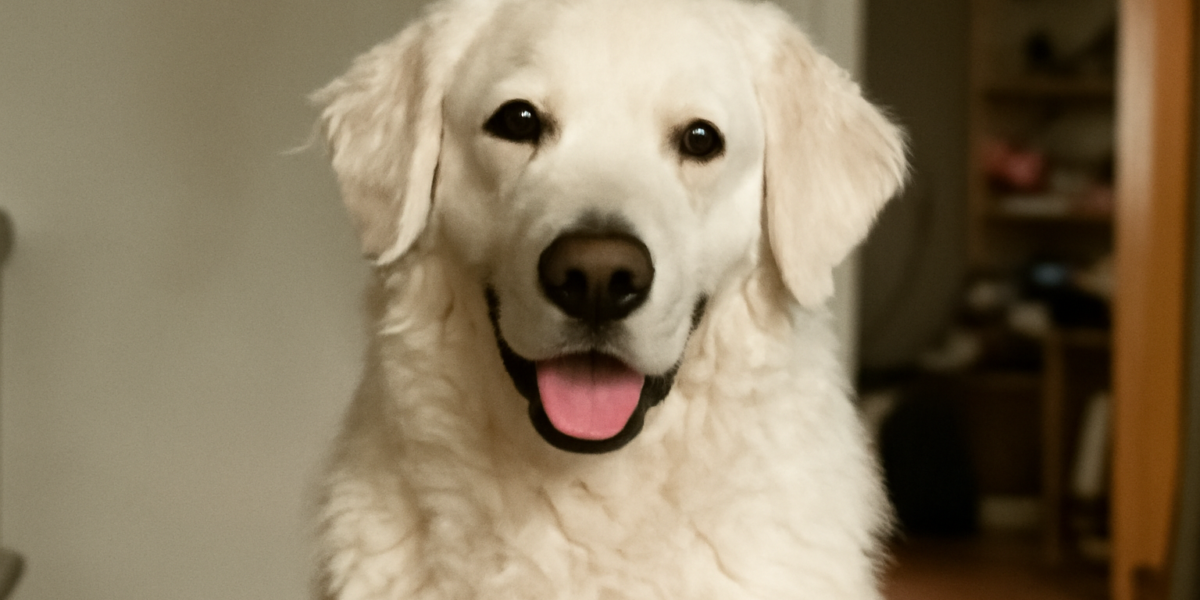
Kuvaszok are large, athletic, and unmistakably white. Males stand 28–30 inches and weigh 100–115 pounds; females run smaller. The build is more refined than the Great Pyrenees — leaner, faster, more wolfhound in silhouette and less bear in body type.
The coat is medium to long, always white, with a dense undercoat and an outer coat that can be wavy or slightly curled. The skin is pigmented dark, which shows on the nose, lips, and eye rims and contrasts strikingly with the white coat. Eyes are dark brown.
Exercise and Activity Needs
Kuvaszok need space more than they need structured exercise. A securely fenced acreage where they can patrol and observe meets the daily activity baseline. Add a long walk or two, some scent work or trail time, and you have a content adult Kuvasz. Without enough space, they get frustrated, and frustration in an LGD shows up as fence-running, hyper-vigilant barking, and reactivity to anything passing the property line.
Off-leash work in unfenced areas is a poor idea. LGDs roam, recall is unreliable under distraction, and a Kuvasz that decides the field across the road needs investigating will go investigate. Solid six-foot fencing minimum, with attention to digging.
Grooming and Care
The white double coat is dramatic but high-maintenance. Plan on weekly brushing, twice weekly during heavy seasons, and full coat-blow management twice a year. The coat sheds substantially. White hair on dark furniture, dark clothing, and dark cars is a fact of life with this breed.
Never shave a Kuvasz. The double coat insulates against both cold and heat, and shaving damages that system. The coat is also relatively self-cleaning when properly maintained — many Kuvaszok dry to a clean white after rolling in mud, which is one of the small joys of the breed. Bathe a few times a year unless the dog actively gets into something. Standard ear, nail, and dental care otherwise.
Health and Lifespan
Hip and elbow dysplasia are the most common skeletal concerns; reputable breeders screen, and adult dogs in rescue can be x-rayed if there are signs. Other concerns include bloat, hypothyroidism, and certain skin and immune issues. Cardiac screening is reasonable in adults. Cancer risk is in the giant-breed range.
Giant breeds generally live shorter lives than smaller dogs. Plan for a meaningful but compressed timeline and budget for giant-scale veterinary care. The narrow gene pool from postwar reconstruction means health information from breed clubs is worth reading.
Living With a Kuvasz
The functional home is rural, acreage-based, with a livestock job or a quiet household where a single watchful dog has a clear role. Suburban half-acre lots are a stretch — Kuvaszok bark at boundary disturbances, including delivery trucks, kids on bikes, and neighbors in their own yards. This is the breed working as designed.
Visitors require management. Most Kuvaszok can be taught to accept invited guests if introductions are calm and the dog is given time to assess. They will not become friendly with these guests; they will tolerate them. Pushing physical contact is a mistake. Plan your home so the Kuvasz has a space to retreat to when company is unwelcome.
Training and Socialization
Start early and work consistently through the first two years. Puppy class is for exposure to people, surfaces, sounds, and other dogs in controlled, positive ways. The window for this socialization is real and short — a Kuvasz that misses early exposure becomes a much harder adult.
Through adolescence, expect testing. The young Kuvasz, like most LGDs, develops independence around 12–24 months and starts making its own calls about what counts as a threat. This is when consistency in handling, calm correction, and force-free training pay off. Heavy-handed correction at this stage damages the relationship for years. Reading canine body language closely helps you catch escalation cues early.
Is the Kuvasz Right for You?
For most pet households, no. The Kuvasz is a serious working breed that asks for space, handler experience, and a household structured around the dog’s needs rather than dropping the dog into an existing setup. If you are looking for a large white family dog, a Great Pyrenees with the right setup is closer to a pet temperament, and breeds like the Bernese Mountain Dog are genuinely better-suited to family life.
If you have the right home — acreage, fencing, willingness to brush a heavy double coat weekly, and tolerance for protective barking — the Kuvasz is one of the most loyal companions you will ever have. Going through breed-specific rescue is the responsible path. Read the rescue decompression guide before you bring one home, because adult Kuvaszok in particular need quiet and predictability while they decide the new home is theirs. Start at the adopt a dog hub.
Frequently Asked Questions
Are Kuvaszok and Great Pyrenees the same breed?
No. Both are large white LGDs but they are distinct breeds with different histories — Kuvasz from Hungary, Great Pyrenees from the Pyrenees mountains between France and Spain. Kuvaszok are typically more athletic, more handler-bonded, and more reserved with strangers.
Are Kuvaszok good with children?
With children in their family, generally yes — patient and protective. Visiting children are a different category and should always be supervised.
How much grooming does a Kuvasz need?
Weekly brushing in normal seasons, daily during coat blow, occasional baths. The coat is mostly self-cleaning between baths if properly maintained. Never shave the double coat.
Are Kuvaszok aggressive?
Not aggressive in a reactive sense, but they are protective and willing to escalate when they perceive a threat. With proper socialization and handling, they are deliberate rather than impulsive. Without it, they are more reactive than the breed should be.
Can a Kuvasz live in an apartment?
No. The breed needs space, has a strong territorial instinct, and is vocal in defense of perceived boundaries. Apartments do not work.
Looking to adopt a Kuvasz Breed Profile?
Browse Kuvasz Breed Profile dogs and mixes available for adoption from shelters and rescues near you.
Find Kuvasz Breed Profile Dogs for Adoption