Last updated: May 4, 2026
In this article
Overview
This lapinporokoira breed profile is for the rare adopter in North America who has heard of the Lapponian Herder — sometimes called the Lapinporokoira or the Lapland Reindeer Dog — and wants to understand what they would actually be living with. The breed is genuinely uncommon outside Finland, and the dogs that turn up in rescue here are usually mislabeled or partial-pedigree dogs that look the part. If you are reading this because you saw a black-and-tan herding-spitz mix at a shelter and the rescue called it a “Lapponian Herder,” start by adopting the dog you actually meet, not the breed you read about.
The Lapponian Herder is a Sami working dog developed alongside the Finnish Lapphund for the same job — herding semi-wild reindeer across Lapland — but the two breeds were formally separated in the 1960s. The Lapinporokoira is the leaner, smoother-coated, faster-moving sibling. Less couch dog, more working dog. Higher drive, more vocal in motion, and more reliant on a job than the warmer-tempered Lapphund.
Quick facts: Group: herding (FCI). Origin: Finnish Lapland (Sami people). Size: medium, typically 17–21 inches and 50–60 pounds. Coat: medium-length double coat, mostly black with tan or white markings. Energy: moderate to high. Lifespan: roughly 10–14 years. Grooming: weekly brushing, seasonal heavy shed. Best for: experienced spitz owners with active outdoor lifestyles and meaningful work for the dog.
History and Origin
Sami herding dogs are old — older than written records — and the modern Lapponian Herder is one of three Finnish breeds that descend from those working lines, alongside the Finnish Lapphund and the more distantly related Karelian Bear Dog. For most of their history these dogs were not separated by paperwork; they were separated by job and by the family that owned them. The split into recognizable Finnish Lapphund and Lapponian Herder breeds happened in the 1960s, when Finnish kennel clubs decided the heavier-coated and lighter-coated working types should be registered separately.
The Lapinporokoira was the working partner that stayed closer to the original job after snowmobiles arrived. Some Sami herders kept dogs to manage corral work, separating animals, and moving herds in deep snow where machines struggled. That selection pressure kept the breed leaner and more athletic than the increasingly pet-oriented Finnish Lapphund.
Temperament and Personality
Calm with the family, alert with strangers, and intensely focused at work. Lapponian Herders are not unfriendly, but they are more reserved than the cheerful Lapphund. They take a beat to size up a new person before deciding whether the visitor is worth engaging. With family, they are warm and devoted; with the world, they are professional.
The breed barks at work — specifically, at livestock to move them — and that vocalization carries into pet life. Pet Lapinporokoira owners report a dog that announces visitors, alerts on neighborhood sounds, and complains when bored. It is not constant barking, but it is more than average. Force-free training and meeting the dog’s mental needs reduces nuisance barking; nothing eliminates it.
Independence shows up in training. Lapinporokoira will learn quickly and will also weigh whether a cue is worth following in the moment. They do best with handlers who treat training as a two-way conversation rather than a series of commands. Harsh corrections damage the relationship and rarely improve compliance.
Size and Appearance
The Lapponian Herder is medium-sized and built like a working dog: rectangular, athletic, longer than tall, with a deep chest and well-set tail. Males stand 19–21 inches and weigh around 55–60 pounds; females are slightly smaller. Compared with the Finnish Lapphund, the Lapinporokoira looks leaner, faster, and more agile.
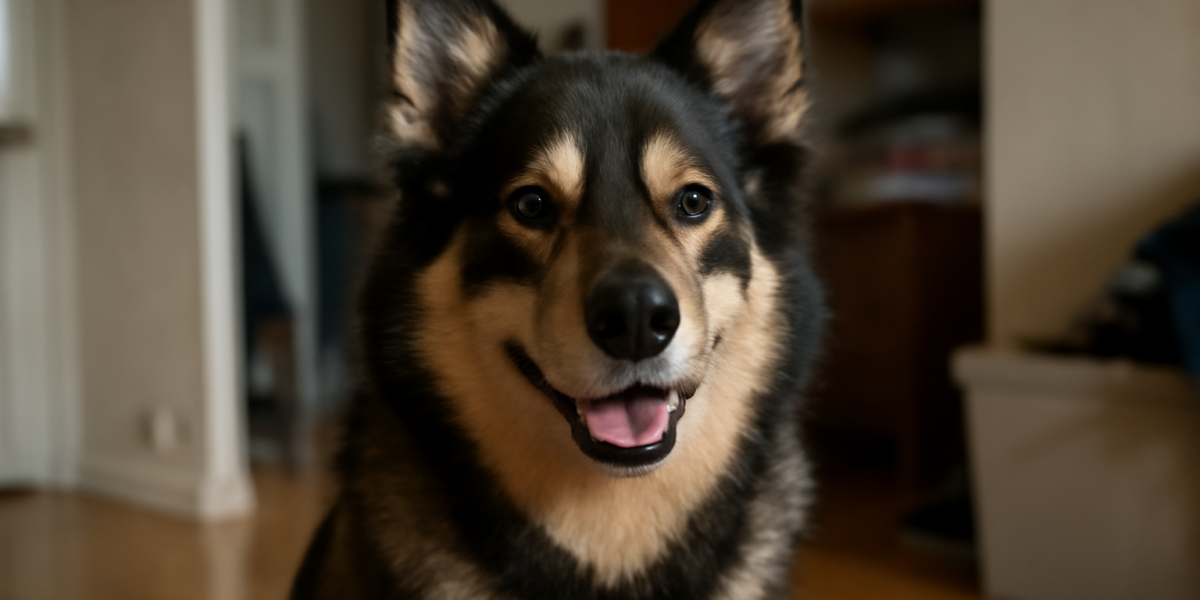
The coat is medium-length and double-layered but smoother and shorter than a Lapphund’s. The most common color is black with tan markings, often with some white on the chest, paws, or tail tip. Brown-and-tan also exists. The face is alert and intelligent rather than smiling — there is a working seriousness to a Lapponian Herder that the Lapphund usually does not show.
Exercise and Activity Needs
Plan for an hour and a half to two hours of varied daily exercise plus serious mental work several times a week. Lapponian Herders thrive with hiking, running, agility, herding trials, scent work, or any structured activity that uses both body and brain. They do not do well as yard dogs or dogs that get only walks; under-exercised Lapinporokoira develop barking habits, destructive behaviors, and stress signs.
The breed is built for cold and tolerates Arctic temperatures comfortably. Heat is harder. In warm climates, exercise should shift to early morning and late evening, with attention to ground temperature and signs of overheating. The coat insulates but the dog still struggles in real heat.
Grooming and Care
Easier than a Lapphund, harder than a Lab. Weekly brushing keeps the coat in shape during normal months, with daily brushing during the seasonal coat blow when the undercoat releases. The shorter outer coat is naturally fairly clean and dries quickly; bathing is occasional rather than routine.
Otherwise standard care: nails, ears, teeth, and weight. Diet should be a quality medium-breed formula. The breed does not have unusual maintenance demands beyond the seasonal shed.
Health and Lifespan
Lapponian Herders are a small, working-line breed with a generally healthy gene pool. Reputable breeders test for hip and elbow dysplasia and eye conditions, and the breed has a low rate of the catastrophic conditions that plague more popular dogs. Average lifespan is in the low double digits, with many dogs reaching 13 or 14 with good care.
Because the breed is rare, reliable breed-specific health data is limited. Adopters should make sure any rescue or breeder shares health-testing results and family history, and that vet care follows standard advice for a medium-active working dog.
Living With a Lapinporokoira
The functional setup is an active rural or semi-rural household with secure fencing, time for daily exercise, and ideally a job for the dog. Suburban homes can work for committed owners. Apartments are a poor fit because of the barking, the activity needs, and the dog’s preference for being able to move and observe.
Lapponian Herders are usually fine with cats they have grown up with, although the herding drive can show up as nipping or chasing. They generally do well with other dogs but reserve real warmth for their family. Children inside the family are usually safe; the breed tolerates kid noise better than some primitive spitzes but is not a babysitter dog.
Training and Socialization
Start early and keep going. Puppy classes, varied environments, and many calm meetings with strangers and other dogs give a Lapinporokoira the social foundation to be confident as an adult. Keep training sessions short and engaging. Reward-based methods work; the breed responds to play, food, and access to interesting environments as reinforcers.
Recall takes work. Like other spitzes, Lapinporokoira can ignore a recall in favor of investigating something more interesting. Build recall systematically and use a long line in unfenced areas until the dog is reliably proofed in distractions. Many adopters skip this step and end up with a dog that runs the perimeter of a property they cannot follow.
Is the Lapinporokoira Right for You?
The honest fit: experienced active owners who want a working partner and have meaningful outdoor activity to share. Most pet adopters in North America will have a better experience with the Finnish Lapphund or with a more common active breed like an Australian Shepherd. The Lapinporokoira is a working dog first; its pet adaptability is real but secondary.
If you are committed and the home matches, breed-specific rescue is the right starting point — and you will likely have to wait, because adoptable Lapponian Herders are uncommon outside Finland. Many rescues offering “Lapland Reindeer Dogs” in the United States are placing mixes that look the part rather than registered Lapinporokoira; that is fine if you are ready to adopt the dog in front of you. Read the 3-3-3 rule, look at the adopt a dog hub, and consider whether a more available breed like the Finnish Lapphund or Swedish Vallhund could meet your needs sooner.
Frequently Asked Questions
Are Lapponian Herders good pet dogs?
For active, experienced owners with a real job for the dog, yes. For typical pet homes, the Finnish Lapphund is a better fit.
What is the difference between a Lapinporokoira and a Finnish Lapphund?
Both are Sami reindeer herders, but the Lapinporokoira is leaner, smoother-coated, and more working-oriented; the Lapphund is heavier-coated, friendlier, and better suited to family life.
Are Lapponian Herders rare?
Yes — they are uncommon even in Finland and very rare in North America. Most “Lapland Reindeer Dogs” in U.S. rescues are mixes.
How much do Lapponian Herders bark?
More than average. They were bred to vocalize at reindeer, and pet dogs use the same voice for visitors, sounds, and complaints.
Do Lapponian Herders need cold weather?
They tolerate cold easily and struggle in heat. They can live in warmer climates with adjustments to exercise timing and care, but Arctic-adjacent climates are their natural home.
Looking to adopt a Lapinporokoira Breed Profile?
Browse Lapinporokoira Breed Profile dogs and mixes available for adoption from shelters and rescues near you.
Find Lapinporokoira Breed Profile Dogs for Adoption