
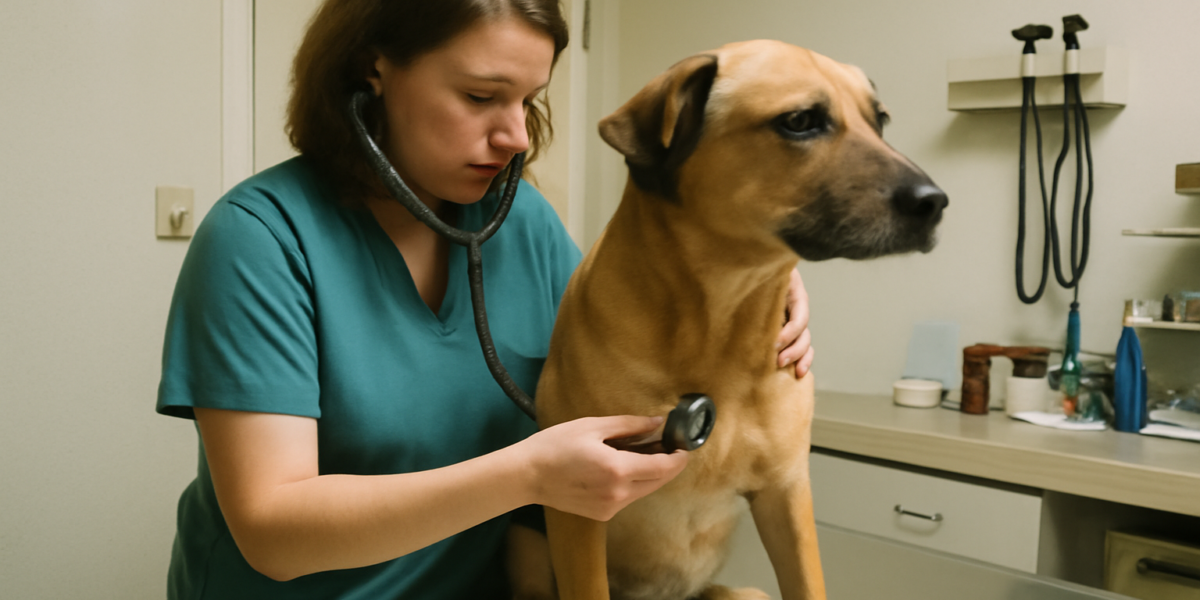
What Laryngeal Paralysis Is
Laryngeal paralysis in dogs is a condition where the muscles that open the cartilages of the voice box, the larynx, stop working properly. Normally those cartilages, called the arytenoids, swing open during a breath in to let air pour into the windpipe. When the nerves controlling those muscles fail, the cartilages stay partially closed, and the dog has to work much harder to move air past them. The result is the loud, raspy breathing many owners describe as their first warning sign.
In this article
- What Laryngeal Paralysis Is
- Why It Happens
- Early Symptoms Owners Notice
- How Veterinarians Diagnose It
- Acute Crises and Emergency Care
- Tieback Surgery
- Conservative Management
- Living With a Dog Who Has Laryngeal Paralysis
- Related Conditions and Long-Term Outlook
- When to Call Your Veterinarian
- Frequently Asked Questions
The condition is most often seen in older large-breed dogs, especially Labrador Retrievers, Golden Retrievers, and Saint Bernards, although it can affect any breed. There is also a rarer form seen in young dogs of certain lines, often called congenital laryngeal paralysis, which appears within the first year of life. Most of the dogs your veterinarian will discuss this disease with, however, are senior pets whose owners noticed something odd during walks.
Understanding laryngeal paralysis dogs face matters for two reasons. First, the disease is progressive, which means it usually worsens over months to years rather than improving on its own. Second, severe episodes can be life-threatening if a dog overheats or panics and cannot move enough air. Catching it early gives you the most options.
Why It Happens
Laryngeal paralysis is most often caused by degeneration of the recurrent laryngeal nerve, the long nerve that runs from the brain down into the chest and back up to the larynx. As the nerve loses function, the muscles it controls weaken, and the arytenoid cartilages can no longer pull open during breathing.
In many older dogs, this nerve degeneration is part of a wider problem now called geriatric onset laryngeal paralysis polyneuropathy, or GOLPP. Affected dogs may also develop weakness in the back legs and trouble swallowing, because other long nerves in the body are degenerating at a similar pace. The breathing changes are usually the most obvious because they affect daily life so directly.
Less common causes include trauma to the neck, tumors pressing on the nerve, severe hypothyroidism, and certain inherited conditions in young dogs of breeds like the Bouvier des Flandres and Siberian Husky. Your veterinarian will often run thyroid testing and other bloodwork to rule out treatable underlying causes before assuming age-related degeneration.
Early Symptoms Owners Notice
The earliest sign is usually a change in the bark. Owners describe it as raspier, weaker, or more hoarse than usual. The dog may also start panting heavily on walks that used to be easy, or take longer to recover after exercise. A very subtle stridor, the high-pitched whistling sound on inhalation, often appears first during exertion and only later at rest.
Heat and excitement make the disease worse. A dog who breathes quietly inside the air-conditioned house may sound dramatically labored on a warm afternoon walk. Some dogs gag or cough after drinking water, because the dysfunctional larynx is also part of the swallowing pathway. Episodes of acute respiratory distress, where the dog seems suddenly unable to catch a breath, are the most frightening warning sign and usually prompt an emergency visit.
Because progression is gradual, families sometimes adjust to the noisy breathing without realizing how far it has advanced. Friends and visitors often notice the change before the people who hear it every day. If your dog sounds different to a guest or you find yourself avoiding walks on warm days, it is time for a veterinary look.
How Veterinarians Diagnose It
Diagnosis usually begins with a careful history and physical exam. Your veterinarian will listen to the breathing pattern at rest and, when safe, with a little gentle activity. Stridor heard most loudly on inhalation, combined with the typical signalment of an older large-breed dog, raises strong suspicion right away.
Definitive diagnosis requires looking directly at the larynx while the dog is under light sedation. A respiratory stimulant called doxapram is sometimes used to encourage a forceful breath so the cartilages move visibly. In a healthy dog the arytenoids swing wide open with each inhalation. In a dog with laryngeal paralysis they remain still or move very little.
Chest X-rays are part of a thorough workup because aspiration pneumonia is a common complication of this disease and changes treatment urgency. Bloodwork, thyroid testing, and a neurologic exam help your veterinarian decide whether the paralysis is isolated or part of the broader GOLPP pattern. A CT scan may be added if a mass or trauma is suspected.
Acute Crises and Emergency Care
An acute laryngeal crisis is a true emergency. The dog becomes severely distressed, the gums may turn blue or muddy, and body temperature can climb dangerously high as the dog struggles to cool itself through panting that is no longer effective. Hyperthermia compounds the problem because heat causes the laryngeal tissues to swell, narrowing the airway further.
If you suspect a crisis, get to a veterinary emergency hospital immediately. On the way, keep the car cool, place a wet towel between your dog’s belly and a cool surface if you can, and try to keep your dog calm. Avoid restraint that adds stress, and do not muzzle a dog who is struggling to breathe.
At the hospital, dogs are typically sedated to break the cycle of panic and labored breathing, given oxygen, and cooled gradually. Some dogs need a temporary tracheostomy or even emergency surgery. Stabilizing through the crisis is usually the priority before any longer-term decisions are made.
Tieback Surgery
The most common definitive treatment is a procedure called unilateral arytenoid lateralization, often shortened to “tieback” surgery. A board-certified surgeon places a permanent suture that holds one of the arytenoid cartilages in an open position. Only one side is tied back, because opening both would leave the dog unable to protect the airway during swallowing.
Most dogs improve dramatically after surgery. The noisy breathing eases, exercise tolerance returns, and the immediate risk of a fatal crisis drops significantly. Recovery typically involves activity restriction for several weeks, soft food, and slow reintroduction of exercise. Many dogs who could barely walk to the mailbox are back to gentle hikes within a couple of months.
The main long-term complication of tieback surgery is aspiration pneumonia. Because the larynx no longer fully closes during swallowing on one side, food and water can occasionally enter the airway. Owners learn to feed in a calm setting, raise the food bowl, and watch for any cough or fever that suggests pneumonia is developing. The trade-off is usually worthwhile for dogs whose quality of life was compromised by severe breathing trouble.
Conservative Management
Not every dog needs surgery. For mild cases, or for dogs whose owners decide against surgery for medical or financial reasons, careful conservative management can offer meaningful comfort and time. The cornerstone is environmental control: avoid exercise in heat and humidity, use a harness rather than a neck collar, and limit excitement that triggers heavy panting.
Sedatives or anti-anxiety medications are sometimes prescribed for dogs who panic easily, because anxiety drives faster breathing and worsens airway turbulence. Anti-inflammatory medications can ease laryngeal swelling during flares. Your veterinarian may also recommend weight loss for overweight patients, because excess body weight increases the work of breathing.
Conservative management works best in cooler climates and calmer households, and it requires owner vigilance. If your dog deteriorates despite these measures, revisiting the surgery decision is reasonable. Many families opt for surgery once the disease starts dictating their daily routine, and they are glad they did.
Living With a Dog Who Has Laryngeal Paralysis
Daily life with a dog who has laryngeal paralysis becomes about managing triggers. Walks shift to early mornings or late evenings during warm months. The car is air conditioned before the dog gets in. Outdoor visits are short, with shade and water always available. A cooling mat at home helps a dog who runs hot, and trimming a thick coat can make a real difference for breeds with heavy fur.
Feeding adjustments help reduce aspiration risk. Soft, easily swallowed food is often kinder than hard, dry kibble that requires forceful swallowing. Some dogs do better with a slightly elevated bowl. After meals, a quiet rest period rather than immediate play gives the airway time to settle.
Watch for swallowing trouble, coughing during meals, or any new lethargy or fever. These are red flags for aspiration pneumonia, which is a treatable complication if caught early but dangerous if missed. Many families also share resources from our dog care blog that cover senior dog wellness, since most dogs with this disease are also navigating other age-related changes.
Related Conditions and Long-Term Outlook
Because laryngeal paralysis is often part of GOLPP, your veterinarian will also keep an eye on hind-end weakness and swallowing function. The progression of those neurological changes varies widely. Some dogs maintain stable function for years after a tieback, while others develop noticeable weakness or megaesophagus and need additional support.
Other respiratory conditions can overlap with or mimic laryngeal paralysis. Reading about aspiration pneumonia in dogs and chronic bronchitis in dogs can help you recognize when a new symptom is part of the larynx problem or something separate. If your dog has heart disease, conditions like pulmonary hypertension can also affect breathing and need different management.
Senior pets often live with more than one chronic issue, and good outcomes come from coordinated care. Your veterinary team will adjust medications, recheck breathing, and watch for changes that signal a new problem. Adopting a senior dog with this kind of condition is genuinely possible, and resources at our adopt-a-dog hub can guide families thinking about welcoming an older pet home.
When to Call Your Veterinarian
Call promptly if your dog develops new noisy breathing, exercise intolerance, a hoarse bark, or coughing after drinking. These signs deserve a professional look even when the dog seems otherwise comfortable. Earlier diagnosis means more options.
Seek emergency care for sudden severe breathing distress, blue or pale gums, collapse, or overheating that does not resolve quickly with rest in a cool place. Bring along a brief written history of symptoms and timing if you can, because that information helps the on-call team make fast decisions.
If your dog has had tieback surgery and develops a wet cough, fever, or lethargy, contact your veterinarian the same day. Aspiration pneumonia caught early usually responds well to antibiotics and supportive care, while a delayed diagnosis is harder to treat. Your veterinary team is your best partner in managing this disease for the long run.
Frequently Asked Questions
How quickly does laryngeal paralysis progress?
Most cases progress gradually over months to a couple of years, with the typical pattern being noisier breathing first and exercise intolerance later. Acute crises can punctuate that gradual decline, often triggered by heat or excitement.
Is tieback surgery safe for older dogs?
Most senior dogs in otherwise reasonable health tolerate the surgery well. Pre-anesthetic bloodwork and imaging help your surgical team minimize risks. Recovery is generally quicker than many owners expect.
Will my dog still bark normally after surgery?
The bark usually changes after a tieback. It may sound softer or hoarser permanently. Most owners feel this is a small price for the dramatic improvement in breathing comfort.
Can my dog swim or play in water after surgery?
Swimming is usually discouraged because the airway no longer fully closes on the operated side, increasing the risk of inhaling water. Many surgeons recommend avoiding immersion play, though brief shallow wading is sometimes acceptable.
What is the lifespan after diagnosis?
Many dogs treated with tieback surgery live for years afterward, often passing from unrelated old-age issues. Without surgery, life expectancy depends heavily on disease severity and the family’s ability to manage triggers safely.
Should I see a veterinary specialist?
Yes, when possible. A board-certified surgeon performs tieback procedures most often, and a veterinary internist or neurologist can help if GOLPP-related issues like swallowing trouble or hind-end weakness develop. Your primary veterinarian can coordinate referrals.


