Last updated: May 4, 2026
In this article
Overview
This Maremma Sheepdog breed profile is for the reader weighing whether a beautiful white Italian livestock guardian could work as a family dog. The Maremma Sheepdog (Maremma-Abruzzese, technically) has been protecting flocks across Italy’s Maremma and Abruzzo regions for thousands of years and remains a working breed first. The dog is calm, observant, and serious about its job, which is to live with livestock and prevent predators from harming them. Many of the same things that make Maremmas exceptional working dogs make them poor pets in conventional homes.
Maremmas have made headlines in recent decades for an unexpected use: they have been deployed in Australia to protect endangered little penguin colonies on Middle Island and in the United States in research using LGDs to protect threatened species. Those programs underline what Maremmas do best — they bond to a flock, pattern their world around it, and defend the flock from the threats most likely to harm it. They are not, fundamentally, family-yard dogs.
Quick facts: Group: livestock guardian (working). Origin: central Italy (Maremma and Abruzzo regions). Size: large, typically 23.5–28.5 inches and 65–100 pounds. Coat: medium to long double coat, white. Energy: moderate, with calm working baseline. Lifespan: large-breed range, typically shorter than small dogs but longer than the giants. Grooming: weekly brushing, seasonal heavy shed. Best for: working farms, hobby farms with livestock, experienced LGD owners with acreage.
History and Origin
The Maremma is one of the oldest documented livestock guardian breeds in Europe, with depictions and references stretching back to ancient Rome. The breed protected sheep in the Apennine and Maremma regions of Italy from wolves, bears, and human predators across centuries. The Italian breed standard officially merged two regional types — the Maremmano (lowland) and the Abruzzese (mountain) — into the modern Maremma-Abruzzese in the 1950s.
The breed’s recent role in conservation work is genuinely notable. In Australia, the Middle Island Project deployed Maremmas to protect a colony of little penguins after foxes nearly wiped them out. In the United States, university research has used Maremmas and similar LGDs to protect threatened bird populations and free-range poultry. These programs work because Maremmas bond to whatever they grow up with — penguins, chickens, sheep, goats — and treat that population as their flock.
Temperament and Personality
Calm, watchful, gentle with their flock and family, reserved with outsiders. Maremmas tend to be less intense than the most powerful LGDs (Kangals, Caucasian Shepherds), but they are still working dogs with deep independence and strong territorial instincts. They are not biddable in the herding-breed sense and will not perform obedience drills for treats.
The Maremma’s bond to family includes children, with whom they are typically patient and gentle. The same dog that lets the family toddler crawl over it will treat the unfamiliar delivery driver as an immediate concern. Force-free training is the right approach, but expect cooperation rather than enthusiasm. The breed is independent because the breed needed to be — a Maremma in the field has historically made its own calls about wolves long before any human could intervene.
Same-sex dog aggression is moderate compared to other LGDs but still present. With cats and small pets the dog has been raised with, Maremmas are usually safe. With unfamiliar dogs entering their territory, expect serious territorial defense.
Size and Appearance
Maremmas are large but not giant — typically lighter and more athletic than Great Pyrenees, although the two are sometimes confused. Males stand 26–28.5 inches and weigh 75–100 pounds; females run 23.5–26 inches and 65–85 pounds.
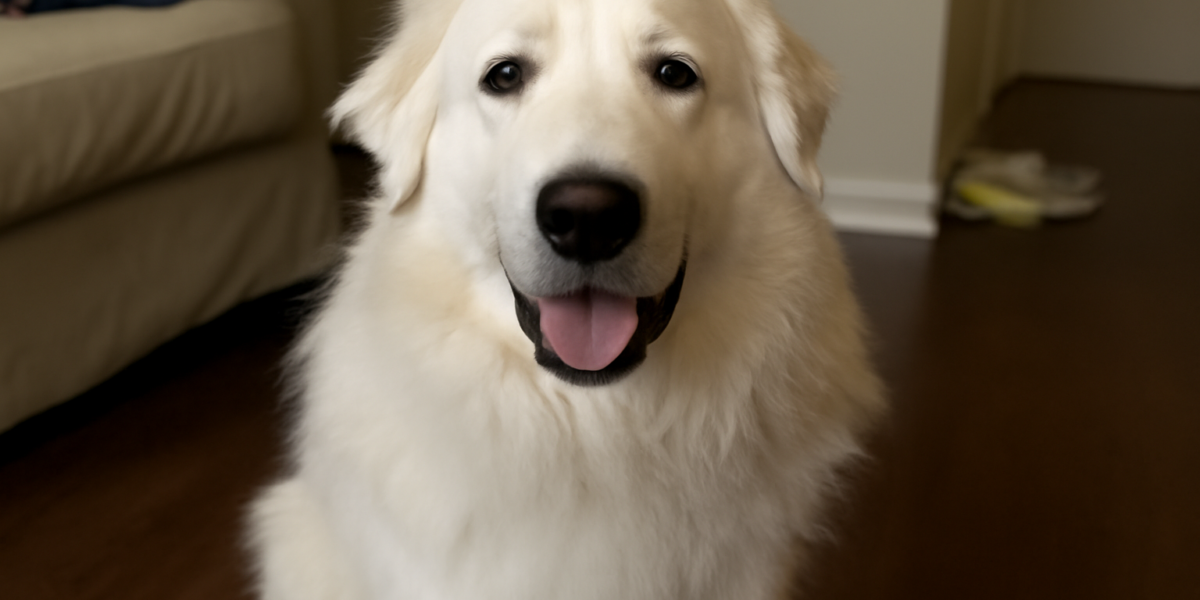
The coat is medium to long, dense, white, sometimes with light shadings of ivory, lemon, or pale orange around the ears. The skin is pigmented dark, particularly on the nose, lips, and eye rims. Eyes are dark. The build is athletic and well-balanced rather than heavy or coarse.
Exercise and Activity Needs
Maremmas need space, a job, or both. A working Maremma on a farm needs little structured exercise because the work itself meets the activity baseline. A pet-home Maremma without livestock needs daily walks, access to a securely fenced large yard or acreage, and acceptance that the dog will spend significant time patrolling and observing rather than playing.
Off-leash work outside fenced areas is risky. Like other LGDs, Maremmas roam to expand their perceived territory and will follow scent or sound across roads. Solid fencing, six feet preferred, with attention to gates and digging. The breed is athletic enough to scale poorly designed fencing.
Grooming and Care
The double coat sheds year-round and blows heavily twice a year. Weekly brushing in normal seasons, daily during coat blow, occasional baths. Maremma coats are mostly self-cleaning when properly maintained — the dog often dries to a clean white after rolling in mud — and over-bathing strips the natural oils that make the coat work.
Never shave. The double coat regulates temperature in both directions, and shaving disrupts it. Standard ear, nail, and dental care otherwise. Watch weight; large-breed dogs benefit from staying at a lean working weight throughout life.
Health and Lifespan
Maremmas are generally a healthy breed by large-dog standards. Hip and elbow dysplasia are the most common skeletal concerns. Bloat is a real risk in any deep-chested breed and worth understanding before adoption. Other concerns are typical large-breed issues — eye conditions, allergies, hypothyroidism in adults.
Lifespan tends to fall in the upper end of the large-breed range, generally longer than the giants but shorter than smaller dogs. A working Maremma kept lean, active, and joint-protected through life often does well into older age. Plan for large-breed veterinary costs and budget appropriately.
Living With a Maremma Sheepdog
The functional home is a working or hobby farm with livestock. Sheep, goats, chickens, alpacas — anything the dog can bond to and protect — give the breed its purpose. Without livestock, the home needs to substitute meaningful patrol territory and a quiet household. Suburban half-acre lots are usually too small and too stimulating; the dog will treat the entire neighborhood as a flock and bark at every disturbance.
Visitors require management. Most Maremmas can be taught to accept invited guests, but they will not be friendly. Plan a setup where the dog can retreat or be calmly contained when company arrives. Children in the family are typically safe; visiting children should be supervised. Other dogs entering the property is a serious territorial event for an adult Maremma.
Training and Socialization
Early socialization is critical. Puppy class for exposure, controlled introductions to people and environments, consistent handling through adolescence. The Maremma’s adolescent phase brings out independence and territorial behavior, usually between 12 and 24 months. This is the window where calm, force-free correction and clear household structure matter most.
Realistic obedience expectations: solid sit, down, stay, leave-it, recall under low distraction. Trial-level obedience is not the breed’s strength. Reading canine body language well matters more than any heel-on-leash drill, because Maremmas signal before they escalate, and missing those signals is how preventable incidents happen.
Is the Maremma Sheepdog Right for You?
For most pet households, no. Maremmas are working dogs, less intense than some LGDs but still LGDs, and asking one to live as a suburban pet is asking the dog to suppress most of what it is. If you have a hobby farm with chickens, goats, or sheep, this is one of the best breeds for the work. If you have rural acreage and want a calm, watchful guardian companion, a Maremma can fit. If you want a family dog without the working drive, the Great Pyrenees or a Bernese Mountain Dog are closer matches.
If the home is right, breed-specific rescue is the responsible path. Many Maremmas in rescue are there because owners imagined a fluffy white family dog and got a working LGD instead. Read the 3-3-3 rule before bringing one home and start at the adopt a dog hub.
Frequently Asked Questions
Are Maremmas the same as Great Pyrenees?
No. Both are large white European LGDs but they are distinct breeds with different histories. Maremmas are Italian, generally lighter and more athletic; Great Pyrenees are from the French-Spanish border region, generally heavier and bigger.
Do Maremmas need livestock to be happy?
Not strictly required, but the breed thrives with a flock to bond to. Without livestock, you need to substitute meaningful territory, calm routine, and tolerance for protective barking.
Are Maremmas good family dogs?
For families with the right setup — acreage, livestock, experience with LGDs — yes. For typical pet families in suburban homes, generally not.
How much do Maremmas shed?
Substantially. Weekly brushing year-round and daily during seasonal coat blow. White hair on dark surfaces is part of life with this breed.
Are Maremmas hard to train?
Different rather than hard. They are not biddable like herding breeds; they are independent decision-makers. Force-free training works but produces cooperation, not precision obedience.
Looking to adopt a Maremma Sheepdog Breed Profile?
Browse Maremma Sheepdog Breed Profile dogs and mixes available for adoption from shelters and rescues near you.
Find Maremma Sheepdog Breed Profile Dogs for Adoption