
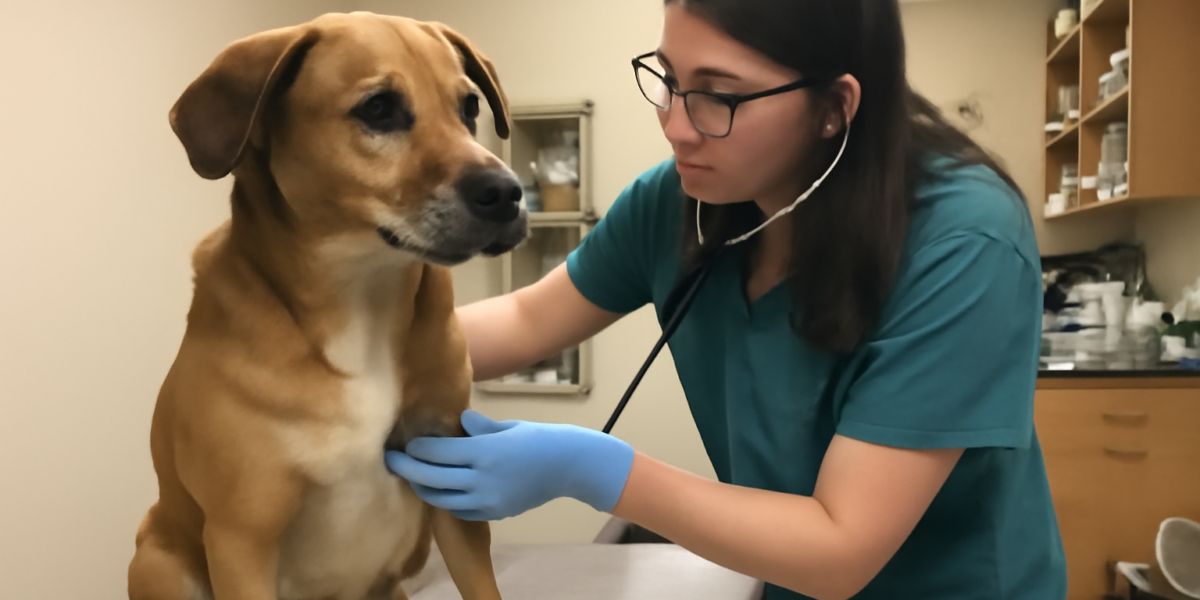
What to Expect From Neuter Recovery for Dogs
Neuter recovery for dogs is generally smoother than spay recovery because the procedure is less invasive — no abdominal entry, smaller incision, less internal tissue disruption. Most dogs are noticeably more comfortable by day two or three and physically healed within ten to fourteen days. That does not mean you can skip the cone or let your dog jump off the couch on day four.
In this article
- What to Expect From Neuter Recovery for Dogs
- Pickup Day and Anesthesia Recovery
- The Scrotal Swelling Question
- Days 1 to 3: Pain Management and Rest
- The E-Collar Battle
- Days 4 to 7: Feeling Better, Still Restricted
- Days 8 to 14: Final Stretch
- Warning Signs That Need a Vet Call
- Behavior Changes After Neuter
- Eating, Drinking, and Bathroom Routine
- Special Considerations: Age and Surgical Variations
- Frequently Asked Questions
The two big risks during neuter recovery dogs face are the same as for spay: licking the incision (causing infection or dehiscence) and overactivity (causing scrotal swelling, bleeding, or wound complications). Both are preventable with the right setup and the discipline to enforce restriction even when your dog feels fine.
This guide walks through day-by-day expectations, normal versus concerning observations, and how to keep your dog comfortable and entertained during the recovery window.
Pickup Day and Anesthesia Recovery
When you bring your dog home from neuter surgery, expect grogginess for the first six to twelve hours. Anesthesia takes time to fully clear, especially in older or larger dogs.
What is normal that first evening:
- Wobbliness, especially when standing up
- Mild whining or restlessness as anesthesia wears off and pain meds take hold
- No interest in food, or interest in only a small amount
- Slow movement, hunched posture
- The scrotum looking somewhat swollen and bruised
Offer a small bland meal (boiled chicken and rice, or about a quarter to half the normal portion) and keep water available. Most dogs are eating normally by the morning after surgery.
Set up a confined recovery space — a crate, exercise pen, or single quiet room. No stairs, no jumping on or off furniture, no play with other pets. Carry small dogs over stairs; help large dogs with a sling or ramp if stairs are unavoidable.
The Scrotal Swelling Question
One thing that often surprises owners is that the scrotum stays in place after neuter — only the testicles are removed. The empty scrotum may look swollen for the first few days as fluid accumulates, then gradually shrinks over weeks.
What is normal:
- Mild to moderate scrotal swelling for the first 2-3 days
- Bruising (purple, blue, or yellow) in the surrounding area
- The scrotum gradually shrinking and tightening over weeks to months
- In adult dogs, the scrotum may remain partially visible long-term — this is normal and not a problem
What is not normal:
- Swelling that grows larger after day three
- Hot, hard, or extremely painful scrotum
- Bleeding from the incision
- Foul-smelling discharge
- The dog repeatedly licking the area despite the cone
Excessive activity in the first week is the most common cause of worsening swelling. Restrict activity even if your dog feels fine.
Days 1 to 3: Pain Management and Rest
The first seventy-two hours are the most uncomfortable. Pain medications prescribed by the vet — typically carprofen, meloxicam, or Onsior, sometimes with gabapentin or trazodone — are usually given for two to five days.
Read up on common options in our carprofen for dogs and gabapentin for dogs guides. Never give human pain medications. Acetaminophen and ibuprofen are dangerous for dogs.
Activity in days 1-3:
- Crate or confined room rest
- Leashed potty breaks only — short and to the point
- No free roaming, no stairs without help, no jumping
- Cone or recovery suit at all times except brief supervised potty trips
Most dogs sleep substantially more during this phase. Let them. Quiet and rest are the body’s healing tools.
The E-Collar Battle
The cone is non-negotiable. The incision area is reachable for nearly every dog, and licking introduces bacteria and breaks down healing tissue. The cone goes on at the clinic and stays on for the full recovery window.
Cone alternatives to consider:
- Standard plastic e-collar: classic, effective. Make sure it extends past the nose by an inch or two.
- Soft fabric cone: easier for the dog to navigate, slightly less rigid block. Good for polite patients.
- Inflatable collar (donut): comfortable but does not always block reach to the lower abdomen and scrotal area. Test by watching the dog try.
- Surgical recovery suit / Boxer-style briefs: snug coverage of the surgical area. Often better tolerated than a cone, especially for breeds with broad chests that struggle with cone navigation.
Whichever you choose, the rule is twenty-four hours a day for ten to fourteen days, removed only under direct supervision. Dehiscence almost always traces back to a “just for a minute” cone removal.
Days 4 to 7: Feeling Better, Still Restricted
By day four or five, most dogs feel substantially better. Energy returns. The dog wants to play. The dog wants to jump on the couch. The dog wants to do zoomies in the yard.
This is the most dangerous phase for compliance. Internal sutures have not built scar tissue strong enough to handle running, jumping, or rough play. Activity rules during this window:
- Leashed walks only, even in a fenced yard
- Five to ten minutes maximum, two to three times a day
- No off-leash time, no fetch, no tug
- No stairs without help, no furniture jumping
- No baths, no swimming
- No dog parks, no rough play with other dogs
Burn mental energy instead. Snuffle mats, food puzzles, slow feeders, frozen Kongs, lickable mats, and short training sessions for skills like “place” or “settle” all help. A dog brain that is engaged is a dog body that stays put.
Days 8 to 14: Final Stretch
By the end of week one, the incision should look noticeably less inflamed. Scrotal swelling is shrinking. Bruising is fading. Pain medications have usually finished. Your dog is bored, you are tired of policing, and the temptation to call it done is strong.
Hold the line through day fourteen. Internal healing continues even after the skin looks closed.
End-of-window expectations:
- Incision is clean, dry, and closed
- Sutures (if non-absorbable) come out at the vet recheck around day 10-14
- Many neuters use absorbable internal sutures with skin glue — no recheck needed for removal but a quick visual check is wise
- Activity gradually returns to normal under vet clearance
If your dog had cryptorchid surgery (one or both testicles undescended), recovery may run a few days longer because the surgery requires abdominal exploration similar to a spay.
Warning Signs That Need a Vet Call
Most neuter recoveries are uneventful. When something goes wrong, early action matters. Call the vet for:
- Bleeding from the incision
- Scrotal swelling that grows after day three
- Hot, hard, or extremely painful scrotum
- Foul-smelling discharge from the incision
- Any opening of the incision
- Vomiting more than once after the first 24 hours
- Not eating beyond 24 hours post-op
- Lethargy beyond 36 hours post-op, or sudden lethargy after improvement
- Difficulty breathing, pale gums, weakness
- Persistent crying or inability to settle
- Fever (rectal temp above 103°F)
Take a clear daily photo of the incision. It makes describing changes to the vet much easier.
Behavior Changes After Neuter
Hormonal shifts after neuter take weeks to fully clear. Testosterone drops sharply within days but residual effects on behavior fade over weeks to months.
What may change over the months following surgery:
- Reduced urge to roam or escape the yard
- Less marking behavior (especially if neutered before the habit was deeply established)
- Reduced mounting behavior
- Less inter-male aggression in some dogs
- Slight reduction in muscle mass and slight tendency toward weight gain — adjust portions over time
What does not change: core personality, anxiety levels, fear-based reactivity. Neuter is not a behavior treatment for these issues — they need behavioral work regardless of hormonal status.
For timing decisions in puppies, see our puppy spay neuter timing guide. Browse adoptable dogs on our adopt a dog hub.
Eating, Drinking, and Bathroom Routine
Most dogs are not interested in food the night of surgery. Offer a small bland meal and free access to water. Normal appetite usually returns by day two.
Bowel movements may be delayed two to three days because of fasting before surgery, anesthesia, and pain medications. A return to normal stool by day three or four is expected. Constipation beyond four days is a vet call.
Urination should be normal within the first 24 hours. Some dogs are reluctant to lift a leg or squat fully because of soreness — a few short leashed potty breaks help.
Special Considerations: Age and Surgical Variations
Neuter recovery follows broadly similar principles across ages, but a few details shift with the dog’s life stage and the type of surgery.
Puppies (under 12 months): heal quickly and return to high energy fast, sometimes too fast for their own healing. Crate enforcement and chew-based enrichment matter more for puppies than for older dogs. See our puppy spay neuter timing guide for the surgery-timing decision.
Adult dogs: standard recovery. Most settle into the rhythm by day three or four and are noticeably more comfortable.
Senior dogs: may need a longer recovery and stronger pain support. The combination of surgery on top of pre-existing arthritis or other senior conditions can extend the comfort timeline. Discuss extended pain plans with your vet.
Cryptorchid surgery (one or both undescended testicles): requires abdominal exploration similar to a spay, with a longer incision and somewhat extended recovery. The activity restriction window typically extends to fourteen days minimum, with closer attention to incision care.
Dogs returning from rescue or transport: if the surgery was performed at a high-volume spay/neuter clinic before adoption, recovery should still follow the same principles. Get the surgical record, follow the discharge instructions, and reach out to your regular vet if anything looks off.
Frequently Asked Questions
How long does neuter recovery take in dogs?
Most dogs are physically recovered in ten to fourteen days, with internal tissue healing finishing over about four to six weeks. The active restriction period is the first two weeks; gradual return to normal activity follows under vet clearance.
Is neuter recovery faster than spay recovery?
Yes, generally. Neuter is less invasive — no abdominal entry. Most dogs feel more comfortable sooner and the recovery is somewhat shorter. The cone and activity restrictions still apply for the full window.
My dog keeps trying to lick the area. What should I do?
Reinforce the cone or switch to a different style — a recovery suit covers the area and is often better tolerated. Persistent licking despite the cone may mean the cone is too short or the cat-shape is wrong; try a longer or stiffer cone.
Is some scrotal swelling normal after neuter?
Yes. Mild to moderate swelling and bruising in the first 2-3 days is expected and resolves over weeks. Swelling that grows after day three, or that becomes hot and hard, needs a vet check — it can indicate bleeding, hematoma, or infection.
When can my dog go back to the dog park?
Wait until your vet clears full activity, usually fourteen days minimum. Internal sutures continue building strength for several weeks even after the skin looks healed.
Will my dog’s personality change after neuter?
Core personality stays the same. Some testosterone-driven behaviors (marking, roaming, mounting, inter-male aggression) may reduce over weeks to months as hormones clear. Anxiety, fear, and reactivity remain unchanged and need behavioral work, not surgery, to address. See our Onsior for dogs guide for one common post-op pain option.


