Last updated: May 4, 2026
In this article
Overview of the Neva Masquerade
The Neva Masquerade is the colorpoint version of the Siberian cat, named for the Neva River in St. Petersburg, Russia, where the variety first developed. They are large, semi-longhair cats with the dense triple coat and sturdy build of the standard Siberian, paired with the contrasting points of color on the face, ears, paws, and tail that defines the colorpoint pattern.
One nuance to understand from the start. Whether the Neva Masquerade is a separate breed or a color variety of the Siberian depends on which registry you consult. Some registries, including TICA and the World Cat Federation, recognize the Neva Masquerade as a distinct breed. Others, including CFA, treat it as a color variety within the Siberian breed. Either way, the cat in front of you is the same animal, just with different paperwork depending on registration choices.
If you are weighing the Neva Masquerade against its parent breed, our Siberian cat breed profile covers the foundation. Most everything that applies to the Siberian applies to the Neva Masquerade, with the addition of the pointed coat pattern and blue eyes.
History and Origins
The Siberian breed itself has a long history in Russia, where forest cats with thick coats survived harsh winters and were eventually formalized as a pedigree breed in the late twentieth century. Within Siberian breeding programs in St. Petersburg, breeders noticed that some cats carried the colorpoint gene, likely from earlier crosses or from points already present in the broader Russian feline population.
Rather than discard the colorpoint kittens, breeders developed them into a distinct line, naming it after the Neva River. The name nods both to the river and to the masked appearance that the colorpoint pattern creates on the face. Recognition followed at varying speeds across registries, with some accepting the Neva Masquerade as its own breed and others folding it into the Siberian standard.
For broader context, our overview of cat breeds from Russia places the Neva Masquerade within the country’s distinctive cat heritage, alongside the Siberian, Russian Blue, and various bobtailed breeds.
Appearance
The Neva Masquerade carries the same body type as the Siberian. Adults are large and powerful, with a barrel chest, strong shoulders, and well-developed hindquarters. The head is rounded and slightly broader than tall, the ears are medium and well-furred, and the paws are tufted between the toes. Adult males can be substantial cats, while females are slightly smaller.
The coat is the second defining trait. It is semi-long with a dense triple-layer structure designed for cold climates, with a soft undercoat, a middle awn layer, and a longer guard layer. The ruff around the neck and the pantaloons on the back legs are pronounced.
The Colorpoint Pattern
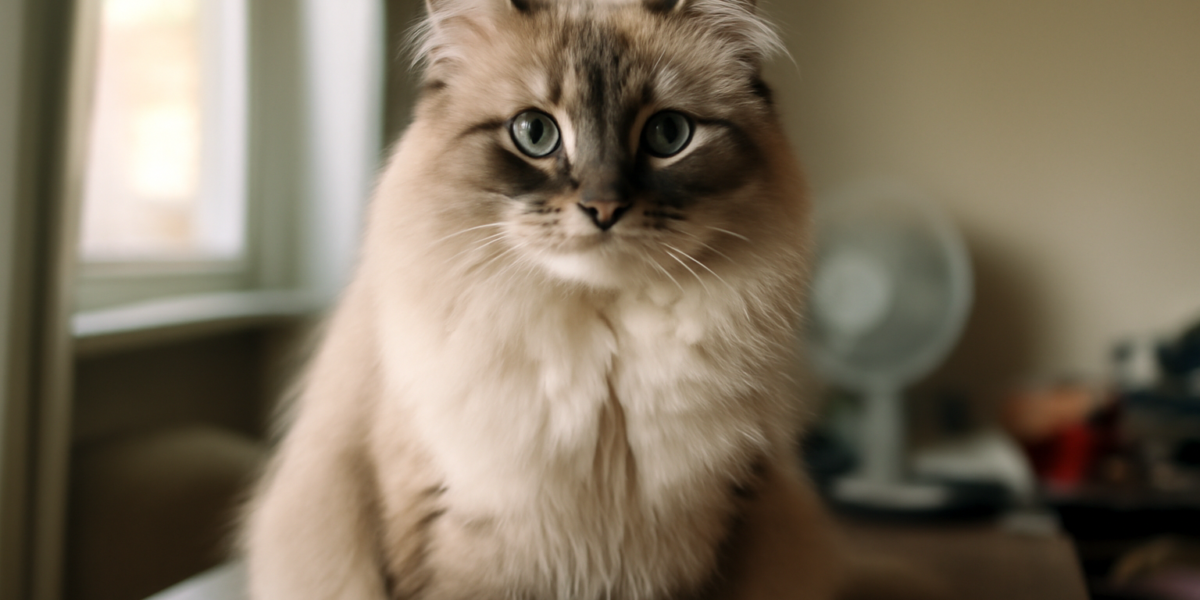
What sets the Neva Masquerade apart visually is the colorpoint pattern. The body is light, often cream or pale fawn, with darker color concentrated on the face, ears, paws, and tail. Eye color is always blue, sometimes a deep sapphire and sometimes a clear ice blue. The combination of the masked face, blue eyes, and large semi-longhair body creates a striking look.
Color variations include seal point, blue point, red point, tortie point, and tabby point. For more on the colorpoint pattern in general, the pointed cat breeds comparison walks through how the colorpoint gene expresses across different breeds and what to expect as kittens grow.
Temperament and Personality
Neva Masquerades inherit the famously balanced temperament of the Siberian. They are friendly, intelligent, and confident, with a notable tolerance for handling that makes them a good fit for families. Many are described as dog-like in their attachment to people, willingness to follow you around, and enjoyment of interactive play.
They are usually social with other pets when introductions are managed thoughtfully. Calm older cats and gentle dogs both tend to coexist well with a Neva Masquerade. The breed is not generally aggressive, though kittens are energetic and need outlets for their playfulness.
If you have considered other large semi-longhair breeds, the comparison reading helps. Our Maine Coon vs Siberian piece outlines how two of the most popular large semi-longhair breeds differ, and most of the Siberian-side observations apply to the Neva Masquerade.
Care and Daily Living
The dense semi-longhair coat needs brushing two or three times per week to prevent matting, with daily brushing during the seasonal heavy sheds in spring and fall. Pay special attention to the ruff, the pantaloons, and behind the ears. Bathing is rarely needed unless the coat gets particularly dirty.
Diet is straightforward. Feed a complete and balanced food appropriate for the cat’s life stage. Large cats benefit from slow, measured feeding rather than free-feeding because portion control is easier when meals are clearly defined. Our adult cat wellness checklist includes the daily and weekly habits that keep large semi-longhair cats in good condition.
Activity and Enrichment
Neva Masquerades enjoy climbing and need vertical space. They are athletic for their size and benefit from sturdy cat trees, window perches, and rotating toys. Many enjoy puzzle feeders that challenge their problem-solving abilities. The best indoor cats resource has setup ideas that suit the breed well.
Health Considerations
The Siberian and the Neva Masquerade are generally robust breeds, with the broad gene pool of a Russian forest cat lineage favoring overall hardiness. The main breed-specific health note involves hypertrophic cardiomyopathy, the most common feline heart disease. While the Siberian and Neva Masquerade are not particularly notorious for HCM, screening of breeding cats is a reasonable precaution given the condition’s prevalence across the wider feline population. Our resource on hypertrophic cardiomyopathy in cats covers what HCM means for any cat.
Standard preventive care otherwise applies. Annual wellness exams, age-appropriate vaccinations through the cat vaccination schedule, dental care from kittenhood, and weight management as your cat ages all support a long healthy life. The senior cat care checklist covers what to monitor in older cats.
Kitten Development
One of the charming features of colorpoint cats is that kittens are born nearly white and develop their points gradually. A Neva Masquerade kitten at birth looks almost solid white or cream, with the dark points emerging on the face, ears, paws, and tail over the following weeks. The full color depth takes months to settle, and the cat’s true adult coat may not be evident until after the first year.
The colorpoint pattern is also influenced by body temperature. Cooler areas of the body produce darker pigment, which is why the points appear at the extremities, where blood flow is slightly cooler than at the body core. A cat living in a particularly cold environment may develop slightly darker overall pigmentation over time, while a cat in a warm environment retains a paler body coat.
Adult Neva Masquerades, like all Siberian-type cats, take three to four years to reach full physical maturity. The cat that arrives in your home as a fluffy kitten will continue to develop coat density, body mass, and the full ruff for several years. Patience is part of the experience.
Adopting a Neva Masquerade
Neva Masquerades and pointed Siberians appear in shelters less often than mixed-breed cats, but they are not impossible to find. Breed-specific Siberian rescues and breeder retirement programs are the most common channels, with general cat-only rescues sometimes receiving owner-surrendered Siberians and Neva Masquerades.
Start with our cat-only rescues overview and the guide to finding a reputable rescue in your state. Read our list of reputable rescue red flags before reaching out to any breeder.
If a true Neva Masquerade is not available, semi-longhair pointed cats from rescue can scratch the same itch. Pointed cats are recognized in many breeds, and shelter cats with pointed coats sometimes carry the temperament and look you are after even without the pedigree paperwork.
Living with a Neva Masquerade
A Neva Masquerade brings a particular kind of presence to a home. They are large enough that you notice them in the room, friendly enough that they often choose to be in the room with you, and dignified enough that they rarely demand attention dramatically. Most owners describe them as confident companions who carry themselves with quiet authority.
The semi-longhair coat means a thoughtful approach to seasonal shedding. Spring and fall heavy sheds produce noticeably more fur than the rest of the year. Daily brushing during these periods, combined with a furminator-style undercoat tool used carefully, makes a real difference. A robot vacuum or regular vacuuming routine handles what gets onto floors.
Multi-pet households often suit the breed well. Neva Masquerades tend to be tolerant of other cats and friendly dogs, especially when introductions are gradual and resources are abundant. They are large enough to hold their own with a medium dog, but they are gentle by nature, so household dynamics should keep play styles compatible.
Children typically do well with the Neva Masquerade because the breed is patient and tolerant. Older children who understand respectful handling are an excellent match. Younger children should always be supervised to ensure they are not pulling on the long coat or handling roughly. The breed’s gentle temperament means a Neva Masquerade rarely retaliates, but that patience should not be tested unnecessarily.
Is a Neva Masquerade Right for You?
The Neva Masquerade suits adopters who want a large, sociable, semi-longhair cat with the visual appeal of a colorpoint pattern. They thrive in family homes, multi-pet households when introductions are gradual, and homes that can give them climbing space and brushing time. They are gentle with children who handle them respectfully.
If you cannot commit to brushing two or three times a week or you live in a tiny space without vertical room to climb, a different breed type might fit better. For everyone else, this is a stunning, balanced cat with a personality to match its impressive coat.
Frequently Asked Questions
Is the Neva Masquerade a separate breed or a Siberian color?
It depends on the registry. Some, including TICA and the World Cat Federation, recognize the Neva Masquerade as its own breed. Others, including CFA, treat it as a colorpoint variety of the Siberian. The cat is the same in either case.
Are Neva Masquerades hypoallergenic?
The Siberian and Neva Masquerade have a reputation for producing less of the Fel d 1 allergen on average, but this is not a guarantee. People with cat allergies vary in their sensitivity and should always do a trial visit before adopting.
How much grooming do they need?
Plan on brushing two or three times per week, with daily brushing during heavy seasonal sheds. The triple coat is dense but does not mat as easily as some longhair breeds with finer fur.
Are Neva Masquerades good with families?
Yes. They are sociable, gentle, intelligent, and generally tolerant of respectful children. They tend to bond closely with their humans and adapt well to multi-pet households when introductions are gradual.
What colors do Neva Masquerades come in?
The breed shows the colorpoint pattern, with light bodies and darker concentration on the face, ears, paws, and tail. Variations include seal, blue, red, tortie, and tabby points. Eyes are always blue.
Looking to adopt a Neva Masquerade Cat Breed Profile?
Browse Neva Masquerade Cat Breed Profile cats and mixes available for adoption from shelters and rescues near you.
Find Neva Masquerade Cat Breed Profile Cats for Adoption