Last updated: April 25, 2026
In this article
Maine Coon vs Siberian: Which Large Cat Breed Is Right for You?
When it comes to large, fluffy, and affectionate cat breeds, the Maine Coon and the Siberian sit at the top of most people’s wish lists. Both breeds are known for their impressive size, luxurious coats, and dog-like personalities that win over even the most dedicated “dog people.” But despite their surface similarities, these two gentle giants have distinct origins, temperaments, and care requirements that can make one a significantly better fit than the other depending on your lifestyle.
Whether you’re drawn to the rugged, tufted-ear elegance of the Maine Coon or the round, powerful build of the Siberian, this detailed comparison will help you make an informed decision. For even more breed-specific information, check out our Maine Coon breed profile and our guide to the Norwegian Forest Cat, another large breed often compared to both.
Origins and History
The Maine Coon and the Siberian developed on opposite sides of the world, yet both evolved in cold, harsh climates that shaped their physical characteristics and hardy constitutions.
The Maine Coon is one of the oldest natural breeds in North America, originating in the state of Maine. While fanciful legends suggest they descended from raccoons or were brought to America by Marie Antoinette, the truth is likely more mundane — they probably developed from crosses between domestic shorthairs and longhaired cats brought by sailors and settlers. Maine Coons served as farm cats and mousers, prized for their hunting ability, hardiness, and ability to survive brutal New England winters. They became America’s first show cat in the late 1800s and remain one of the most popular breeds in the world today.
The Siberian, also known as the Siberian Forest Cat, traces its origins to Russia, where it has existed for at least 1,000 years. References to large, long-haired cats appear in Russian fairy tales and folklore, and the breed was a common sight in Russian markets and households for centuries. Siberians are considered a national treasure in Russia, though they didn’t reach Western countries until the 1990s when the end of the Cold War opened international trade routes. Despite being relatively new to the West, they’ve quickly gained a devoted following for their playful personalities and reputed hypoallergenic qualities.
Both breeds are classified as natural breeds, meaning they developed through natural selection rather than selective human breeding programs. This heritage gives both breeds robust health and well-adapted physical characteristics.
Size and Physical Appearance
Both Maine Coons and Siberians are large cats, but their builds and overall appearance differ in subtle and not-so-subtle ways that are worth examining in a maine coon vs siberian comparison.
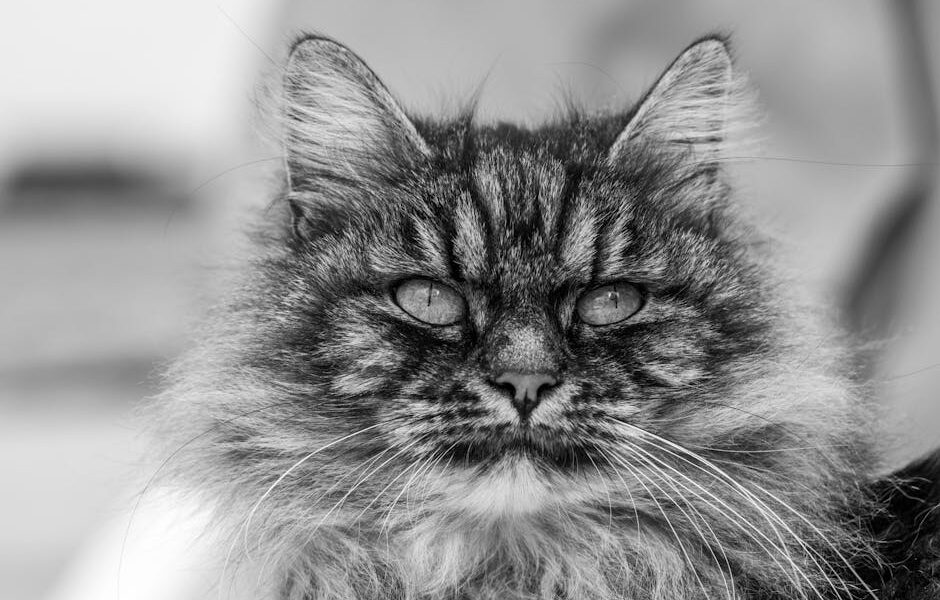
The Maine Coon is one of the largest domestic cat breeds, with males typically weighing 13 to 18 pounds and females ranging from 8 to 12 pounds. Some exceptional males exceed 25 pounds. They have a long, rectangular body with a prominent chest and a muscular, athletic build. Their most distinctive features include large, tufted ears set high on the head, a long bushy tail that can wrap around them like a blanket, and large, expressive eyes. Their face has a strong, square muzzle that gives them a somewhat wild appearance. Maine Coons are slow to mature, not reaching full size until 3 to 5 years of age.
Siberians are also large, with males weighing 12 to 17 pounds and females typically between 8 and 12 pounds. While similar in weight to Maine Coons, Siberians have a distinctly different build — they’re barrel-chested and powerfully muscled with a rounded overall appearance. Their hind legs are slightly longer than their front legs, giving them exceptional jumping ability. Siberians have a rounded head with large, almost circular eyes and medium-sized ears with rounded tips. Their tail is medium-length and bushy but not as dramatically long as the Maine Coon’s. Siberians also mature slowly, reaching full size between 3 and 5 years.
Both breeds have thick, water-resistant double coats designed for cold weather survival. The Maine Coon’s coat is uneven in length, shorter on the shoulders and longer on the stomach and flanks, with a distinctive ruff around the neck. The Siberian’s coat is also triple-layered but tends to be more uniformly dense, with a thick ruff, full britches on the hind legs, and a bushy tail. Both breeds come in nearly every color and pattern combination.
Temperament and Personality
Personality is where many potential owners find the deciding factor in the maine coon vs siberian debate. Both breeds are famously friendly and sociable, but their energy levels and interaction styles differ.
Maine Coons are often called “gentle giants” and for good reason. They’re known for their relaxed, easygoing demeanor and remarkable patience. Maine Coons tend to follow their owners from room to room, wanting to be near the action without necessarily demanding constant attention. They’re social without being clingy, happy to sit beside you on the couch or supervise your cooking from a respectful distance. Many Maine Coons enjoy water — they may paw at their water bowls, join you in the bathroom, or even try to “help” with dishes. They have a distinctive chirping trill that they use to communicate, which is softer and more musical than a typical meow.
Siberians are more overtly playful and adventurous. They retain a kitten-like energy well into adulthood and are known for their acrobatic ability — they can leap impressive heights and love climbing to the highest points in a room. Siberians are deeply affectionate and tend to be more lap-oriented than Maine Coons, often seeking out physical contact and snuggling. They’re also more vocal and communicative, using a variety of chirps, trills, and meows to express themselves. Siberians are sometimes described as having dog-like loyalty, greeting their owners at the door and following them throughout the house. If you’re looking for family-oriented breeds, our best cats for families guide covers both breeds in depth.
Both breeds get along well with children, other cats, and cat-friendly dogs. Neither breed does well left alone for extended periods, as both thrive on companionship and can become bored or anxious without interaction.
Grooming and Coat Care
Owning a large, long-haired cat means committing to regular grooming, but the amount of effort required varies between these two breeds more than you might expect.
The Maine Coon’s coat, despite its impressive length, has a silky texture that resists matting better than many long-haired breeds. Regular brushing two to three times per week is usually sufficient to keep their coat in good condition, with more frequent sessions during seasonal shedding periods in spring and fall. Pay particular attention to the longer fur on the belly and behind the legs, where mats are most likely to form. Many Maine Coon owners find a stainless steel comb and a slicker brush to be the most effective tools. The tufts of fur between their toes should also be trimmed occasionally to prevent litter tracking and improve traction on smooth floors.
The Siberian’s triple coat requires similar maintenance — two to three brushing sessions per week for most of the year. However, Siberians undergo a dramatic seasonal coat change, shedding their heavy winter coat in spring and growing it back in fall. During these transitions, daily brushing may be necessary to manage the volume of loose fur. The good news is that the Siberian’s coat has a slightly oily texture that helps prevent matting, so tangles are less of an issue than with some other long-haired breeds. Some Siberian owners report that the breed needs fewer baths than other cats because the coat’s natural oils keep it relatively clean.
An important note for allergy sufferers: Siberians produce lower levels of the Fel d 1 protein, which is the primary cat allergen. While no cat is truly hypoallergenic, many people with mild to moderate cat allergies report fewer symptoms around Siberians. This has been one of the breed’s biggest selling points, though individual cats vary, and spending time with a Siberian before committing is always recommended if allergies are a concern.
Health and Lifespan
Both breeds are generally healthy thanks to their natural heritage, but each has specific health concerns that prospective owners should understand.
Maine Coons have an average lifespan of 12 to 15 years. Their primary health concern is hypertrophic cardiomyopathy (HCM), a heart condition that causes thickening of the heart walls. HCM is the most common form of heart disease in cats and is more prevalent in Maine Coons than in the general cat population. Genetic testing is available for one mutation associated with HCM in Maine Coons, and responsible breeders screen their cats. Other health concerns include hip dysplasia (unusual in cats but more common in large breeds), spinal muscular atrophy (a genetic condition that affects muscle development), and polycystic kidney disease. Regular cardiac screenings via echocardiogram are recommended throughout a Maine Coon’s life.
Siberians have a similar lifespan of 12 to 15 years and are considered one of the healthier purebred cat breeds. They also face a risk of HCM, though the incidence appears to be lower than in Maine Coons. Siberians can be prone to hereditary cancer and kidney disease in some lines. Their robust, naturally-selected constitution generally means fewer breed-specific health issues compared to more heavily bred pedigree cats. As with all breeds, regular veterinary checkups, a quality diet, and maintaining a healthy weight are the best preventive measures.
Both breeds’ large size means they require more food than average cats, which increases both food costs and the importance of weight management. Obesity can exacerbate joint issues and heart problems in both breeds, so monitoring portions and encouraging activity are essential throughout their lives.
Exercise and Enrichment
Large, intelligent cats need mental and physical stimulation to stay happy and healthy. Both breeds are more active than many people expect from such sizeable felines, but their activity styles differ.
Maine Coons are playful but tend to be less intense in their play than Siberians. They enjoy interactive toys, puzzle feeders, and games of fetch — yes, many Maine Coons will retrieve toys like dogs. They appreciate tall cat trees for climbing and observing their domain from above, and many enjoy playing with water. Maine Coons are adaptable and can adjust their activity level to match their household, making them somewhat easier to manage in calmer environments. They’re intelligent enough to learn tricks and respond to training, which provides excellent mental stimulation.
Siberians are athletes at heart. Their powerful hind legs give them extraordinary jumping ability, and they love to climb, leap, and explore vertical spaces. A Siberian without adequate climbing opportunities will find its own — bookshelves, curtain rods, and the tops of refrigerators are all fair game. They’re more persistently playful than Maine Coons and may demand interactive play sessions well into their senior years. Puzzle toys, agility-style games, and even outdoor access via a secure catio can help channel a Siberian’s energy productively. They’re also highly food-motivated, which makes training and enrichment activities easier to implement.
Both breeds benefit from having a feline companion, especially if their owners are away during the day. A second cat provides social interaction and play opportunities that can prevent boredom-related behavior problems.
Which Breed Suits Your Lifestyle?
After examining all the factors, here’s a summary to help you decide which breed is the better match for your home and lifestyle.
Choose the Maine Coon if: You want a large, easygoing cat that’s social but not overly demanding. You prefer a calmer companion that adapts to your household’s energy level. You appreciate a cat that’s content to sit near you rather than on you. You want an impressive-looking cat with a relatively manageable grooming routine. You enjoy quirky behaviors like chirping, playing in water, and a dog-like personality without the intense athleticism.
Choose the Siberian if: You want a deeply affectionate, lap-loving cat that craves physical contact. You enjoy an energetic, playful companion that stays kitten-like for years. You or a family member have mild cat allergies and want to try a lower-allergen breed. You can provide plenty of vertical space and enrichment for an athletic cat. You want an interactive companion that thrives on engagement and communication.
Both breeds are excellent for: Families with children, households with other pets, people who want a dog-like cat experience, and anyone willing to commit to regular grooming and veterinary care. Both breeds do well in colder climates and both form deep bonds with their families.
Whether you choose a Maine Coon or a Siberian, you’ll be gaining a large, loving companion with a personality that far exceeds even their impressive physical size. Consider checking with breed-specific rescues, as both Maine Coons and Siberians do appear in rescue organizations, giving you the chance to provide a forever home to a cat in need.
Frequently Asked Questions
Are Maine Coons or Siberians better for people with allergies?
Siberians are generally the better choice for allergy sufferers. They produce lower levels of Fel d 1, the protein responsible for most cat allergies. Studies have shown that Siberians produce significantly less of this protein compared to other breeds, including Maine Coons. However, no cat is completely hypoallergenic, and individual cats within any breed can vary in their allergen production. If allergies are a serious concern, spend time with the specific cat you’re considering before making a commitment, and consult with your allergist about management strategies.
Which breed is more expensive to own?
The costs are similar overall, though Siberians can be more expensive to purchase initially due to their relative rarity outside of Russia. Purchase prices for both breeds typically range from $1,000 to $2,500 from reputable breeders. Ongoing costs — food, veterinary care, grooming supplies, and toys — are comparable since both breeds are similar in size. Maine Coons may incur slightly higher veterinary costs over time due to their higher prevalence of HCM and hip dysplasia, which may require screening and treatment. Budget $1,500 to $2,500 annually for either breed’s basic care.
Can Maine Coons and Siberians live together?
Absolutely. Both breeds are social cats that generally do well with feline companions, and their similar size and activity levels can make them excellent housemates. Introductions should still be done gradually, using standard cat introduction protocols — separate rooms at first, scent swapping, supervised meetings, and gradual integration. Many owners of large cat breeds find that having two cats actually reduces behavior problems, as the cats entertain and socialize each other. The key is ensuring you have enough space, resources (litter boxes, food stations, climbing structures), and time for two large cats.
How do these breeds compare to the Norwegian Forest Cat?
The Norwegian Forest Cat is often the third breed considered alongside Maine Coons and Siberians, as all three are large, long-haired, cold-weather breeds. Norwegian Forest Cats share the Maine Coon’s calm demeanor but tend to be more independent and less dog-like in behavior. They’re generally less vocal than Siberians and less playful than either breed in adulthood. In terms of size, they fall between the Maine Coon and Siberian. Their grooming needs are similar, and they’re also generally healthy with a lifespan of 12 to 16 years. All three breeds make wonderful companions, but the Norwegian Forest Cat may suit owners who want a more reserved, self-sufficient feline.
Looking to adopt a Maine Coon vs Siberian?
Browse Maine Coon vs Siberian cats and mixes available for adoption from shelters and rescues near you.
Find Maine Coon vs Siberian Cats for Adoption