Last updated: May 4, 2026
In this article
- Overview of the Ojos Azules Cat
- Origin and History
- Appearance and Distinct Features
- Temperament and Personality
- Living Environment
- Grooming and Coat Care
- Health Considerations and Honest Risks
- Feeding and Nutrition
- Daily Routine and Enrichment
- Multi-Pet Households
- Cost of Ownership Considerations
- Adopting an Ojos Azules
- Is the Ojos Azules Right for You?
- Kitten Care and Early Months
- Frequently Asked Questions
Overview of the Ojos Azules Cat
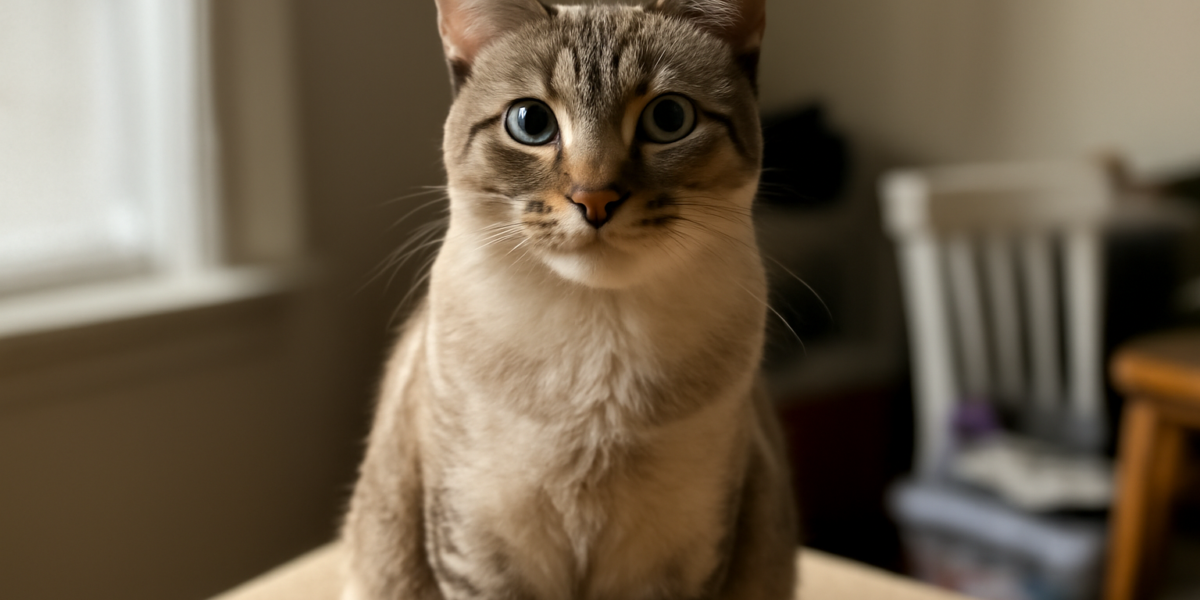
The Ojos Azules cat is named for its eyes — “ojos azules” is Spanish for “blue eyes” — and the breed is built around a single, naturally occurring genetic mutation discovered in feral cats in New Mexico in the mid-1980s. Unlike pointed or white-coated cats whose blue eyes are tied to coat-color genes, the Ojos Azules carries a dominant mutation that produces deep sapphire-blue eyes in cats of any coat color, including solid black or tortoiseshell.
That sounds like a dream breed, and in many ways the cats themselves are lovely. The complication is that the mutation appears to be linked to lethal genetic effects when two copies are present, which means breeding has been deliberately slow and small, the population remains tiny, and you should be cautious about any source claiming to have Ojos Azules kittens readily available.
Origin and History
The first documented Ojos Azules cat was a feral tortoiseshell named Cornflower discovered in New Mexico in 1984. Subsequent breeding revealed that the blue-eye trait was caused by a dominant gene that, when homozygous (two copies present), was associated with severe and often lethal cranial and skeletal defects in kittens. As a result, ethical breeders only produce Ojos Azules by crossing one blue-eyed parent with a non-Ojos partner, ensuring no kitten inherits two copies of the gene.
The breed achieved early recognition with TICA in the 1990s but never developed a large population. Today the Ojos Azules is considered one of the rarest cat breeds in the world, with only a handful of breeders worldwide and very limited availability. The rarest cat breeds roundup includes Ojos Azules among the smallest-population pedigrees.
Appearance and Distinct Features
The eye color is the breed’s signature — a deep, true blue that does not fade with age. The Ojos Azules accepts essentially every coat color and pattern because the eye gene is independent of coat genetics. Most Ojos Azules carry small white markings on the face, paws, or tail tip, which appear to be linked to the blue-eye gene. Body type is medium-sized, balanced, and athletic, without extreme features.
For comparison, breeds whose blue eyes are tied to coat genes (white-coated cats, pointed cats like the Siamese, and white-spotted cats) are listed in the cat breeds with blue eyes roundup. The Ojos Azules is unique in producing blue eyes on a solid black or red coat without any white at all.
Temperament and Personality
Owner reports of Ojos Azules describe an affectionate, gentle, people-loving cat. They tend to be moderately active, sociable with children and other pets, and not especially vocal. With such a small population, breed-wide temperament generalizations should be taken loosely — the cats vary as much as their crossbreed parents do, since most Ojos Azules carry a mix of Domestic Shorthair and longhair backgrounds.
If you find a confirmed Ojos Azules and personality fit matters more than the eye-color trait, ask the breeder or rescue for a detailed temperament description of that specific cat rather than relying on a breed-wide profile.
Living Environment
Ojos Azules are best kept indoors. The blue iris carries a slightly higher light sensitivity than a brown or green iris, and outdoor life adds risks the rare population cannot easily absorb. Indoors they thrive with normal cat enrichment — perches, puzzle play, scratching surfaces, and daily interaction.
If you spend long hours away from home, consider a second cat for company. The Ojos Azules tends to bond closely with both feline and human companions when raised socially.
Grooming and Coat Care
Coat care depends on length. Shorthair Ojos Azules need a weekly comb-through; longhair individuals need two to three brushings a week. Both should have weekly eye checks — not because the eye color requires special handling, but because the eyes are visually striking and any subtle change (cloudiness, increased tearing, third-eyelid prominence) is more noticeable and worth checking with a vet.
Standard nail trims, ear checks, and a regular dental routine round out grooming. There is nothing exotic about the Ojos Azules grooming workload — it is simply a healthy domestic cat with extraordinary eyes.
Health Considerations and Honest Risks
The breeding rule is the most important health consideration: never breed two Ojos Azules together. The homozygous form of the blue-eye gene has been associated with cranial deformities, white skull patches, small curled ears, and stillbirths. A breeder who produces Ojos Azules from two Ojos Azules parents is operating outside the ethical standard, full stop.
Beyond the breeding rule, the Ojos Azules carries no known breed-specific disease load. Wellness care follows the same general path as any domestic cat — routine bloodwork, dental care, vaccinations, and parasite prevention through the adult cat wellness checklist. Cardiac screening for hypertrophic cardiomyopathy is reasonable for any pedigreed cat from middle age onward.
Lifespan varies between individuals. Because the population is small, breed-wide lifespan figures are unreliable, and any source quoting a confident range for Ojos Azules specifically is overstating what the data supports.
Feeding and Nutrition
Feed a complete and balanced diet appropriate to life stage. There is no breed-specific dietary need for the Ojos Azules. Fresh water in multiple locations, measured meals over free-feeding, and routine weight checks at the vet keep the cat in healthy condition.
If you have other pets, the feeding a multi-cat household with different diets guide covers the practical separation of food bowls.
Daily Routine and Enrichment
Ojos Azules cats follow typical domestic-cat routines — morning play, breakfast, a long midday nap, afternoon engagement, dinner, and evening connection time. They tend toward moderate energy levels rather than the intensity of Bengal-derived or Oriental-derived breeds. Two daily play sessions of about ten minutes each, plus passive enrichment like window perches and rotating toys, keep them satisfied.
Because the population is small, training and socialization standards vary between cats. Early handling, exposure to typical household sounds and visitors, and clicker training all help develop a confident adult cat. The most affectionate cat breeds roundup covers other options at similar engagement levels if you want comparison.
Multi-Pet Households
Ojos Azules cats generally adapt well to multi-pet households when introduced patiently. Their moderate temperament works with calmer cats and with cat-savvy dogs; they may find very high-energy or rough-play companions stressful. Slow-burn introductions through scent swapping, separated rooms, and gradual supervised meetings produce the best long-term integration.
The introducing a new kitten to a resident cat guide and the introducing a new cat to a resident dog guide cover the protocols. Because Ojos Azules are rare, you are more likely to be adding one to an existing pet household than building one around the breed; the integration work matters either way.
Cost of Ownership Considerations
Pedigree Ojos Azules cats are expensive when available, and waiting lists are long. Ongoing costs follow standard pedigree-cat budgets — food, litter, veterinary care, occasional emergencies. The breed’s lack of designer-breed structural issues means ongoing veterinary costs tend to fall within typical pedigree ranges.
The first-year cost of owning a cat guide is a useful baseline. The pet emergency fund savings target page covers building a buffer for unexpected veterinary bills. The CareCredit and vet financing options guide covers payment options for larger bills if your emergency fund is still being built.
Adopting an Ojos Azules
This is where the rarity becomes a real obstacle. There are very few active Ojos Azules breeders in the world, waiting lists are long, and most pet seekers will never meet one in person. The realistic adoption paths:
- Contact pedigree registries (TICA) for current, registered Ojos Azules breeders
- Reach out to breed-specific rescue groups for adult surrenders
- If a “deep-blue-eyed” cat appears at your local shelter, enjoy the resemblance but do not assume the cat is an Ojos Azules — confirm with paperwork
Before responding to any classified-style listing, work through the reputable rescue red flags guide and the finding a reputable rescue in your state resource. A claim of “easy availability” for this breed is almost always a red flag. The cat-only rescues overview can connect you to specialty groups.
Is the Ojos Azules Right for You?
The Ojos Azules suits adopters who are patient, willing to wait for an ethical breeder, and committed to the breeding restriction (no Ojos × Ojos pairings). It suits households who can welcome a domestic-cat temperament and who are happy with whatever coat color and pattern the cat presents.
The breed is a poor fit for adopters in a hurry, those expecting reliable show-quality availability, or those who care more about the eye color than the cat behind it. If the deep-blue-eye trait appeals but availability is the obstacle, the cat breeds with blue eyes roundup covers more accessible alternatives, and the heterochromia roundup offers a different striking-eye option.
Kitten Care and Early Months
Ojos Azules kittens are scarce enough that the early-month routines often happen under unusual circumstances — long-distance transport, post-import quarantine, or breeder-supervised early placement. Whatever the path, the standard kittenhood priorities still apply: maintain the existing food for at least the first two weeks, plan for four small meals daily until about four months, and follow the kitten feeding schedule by age guide for transitions. The kitten vaccination schedule covers early veterinary visits, and the kitten parasite prevention guide covers prophylaxis.
Early socialization matters because rare-breed kittens may have had less exposure to typical household environments than commodity-breed kittens. Expose the kitten gradually to household sounds, gentle handling by multiple people, carrier training, and brief car rides. Confidence built early translates to better adult behavior at vet visits and in new environments.
Senior Care for Ojos Azules
Senior Ojos Azules (from about ten years onward) follow standard senior cat wellness routines. Twice-yearly veterinary exams replace annual visits, bloodwork screening for kidney and thyroid function becomes important, and dental care moves from optional to essential. The senior cat care checklist covers the standard adjustments, and the annual bloodwork for cats guide covers what your vet should screen for.
Pay attention to eye health as the cat ages — the breed’s signature deep blue eyes are visually distinctive, and any subtle change (cloudiness, increased tearing, changes in pupil response) is worth a vet visit. The eye structure itself is normal; the color simply makes age-related changes more noticeable.
Frequently Asked Questions
Why are Ojos Azules so rare?
Because the homozygous form of the blue-eye gene causes severe and often lethal kitten defects, breeders cannot pair two Ojos Azules together. Every litter must include a non-Ojos parent, which limits expansion of the breed.
Will the eye color fade with age?
No. The deep blue persists throughout the cat’s life, unlike the kitten-blue eyes seen in many young cats that mature into green or yellow.
Can Ojos Azules have any coat color?
Essentially yes. The eye gene is independent of coat genes, so blue eyes on a solid black, red, or tortoiseshell coat are all possible. Most carry small white markings linked to the gene.
Are they more prone to deafness like white cats with blue eyes?
The Ojos Azules blue-eye mechanism is different from the white-cat blue-eye mechanism that links to congenital deafness. Most Ojos Azules have normal hearing. A breeder should still BAER-test kittens before placement when in doubt.
Where can I see one in person?
Pedigree cat shows in regions with active breeders are your most likely option. Outside of those events, the breed is rarely encountered in pet homes.
Looking to adopt a Ojos Azules Cat Breed Profile?
Browse Ojos Azules Cat Breed Profile cats and mixes available for adoption from shelters and rescues near you.
Find Ojos Azules Cat Breed Profile Cats for Adoption