
What Is Pericardial Effusion?
Pericardial effusion in dogs is the abnormal accumulation of fluid in the pericardial sac, the thin fibrous membrane that surrounds the heart. Normally the sac contains a tiny amount of lubricating fluid that allows the heart to beat without friction. When excess fluid collects, it presses inward on the heart, restricting its ability to fill and pump effectively. The result is a condition called cardiac tamponade, which can be rapidly fatal without intervention.
In this article
The pericardium does not stretch quickly. Even a moderate volume of fluid accumulating over hours or days can dramatically reduce cardiac output, while gradual fluid accumulation over weeks may stretch the pericardium enough that very large volumes accumulate before symptoms appear. Either presentation can become a life-threatening emergency, and prompt veterinary recognition matters.
Pericardial effusion dogs typically present as middle-aged to older dogs with sudden onset of weakness, collapse, or labored breathing. The condition may also cause chronic, intermittent symptoms before reaching the point of acute emergency. Quick recognition and treatment can be life-saving.
Common Causes
The causes of pericardial effusion in dogs vary by age, breed, and presentation:
- Hemangiosarcoma: A malignant tumor that often arises in the right atrium of the heart and bleeds into the pericardial sac. This is one of the most common causes in older dogs, particularly large breeds.
- Heart base tumors: Including chemodectoma (aortic body tumor), often slower-growing and sometimes more amenable to longer-term management.
- Idiopathic pericardial effusion: No identifiable cause despite thorough investigation. Sometimes due to inflammation of unclear origin.
- Congestive heart failure: Right-sided heart failure can produce pericardial effusion.
- Infection: Bacterial or fungal pericarditis is uncommon but possible.
- Trauma: Bleeding into the pericardium following injury.
- Coagulation disorders: Including rodenticide poisoning that disrupts blood clotting.
The cause significantly affects prognosis and treatment. Hemangiosarcoma generally carries a poor prognosis, while idiopathic effusion may resolve entirely after appropriate management.
Recognizing the Symptoms
Symptoms range from subtle exercise intolerance to acute collapse. Gradual onset cases often present with progressive weakness, decreased appetite, abdominal distension from fluid accumulation in the abdomen, weight loss, and exercise intolerance. The dog may seem to slow down over weeks before more obvious signs develop.
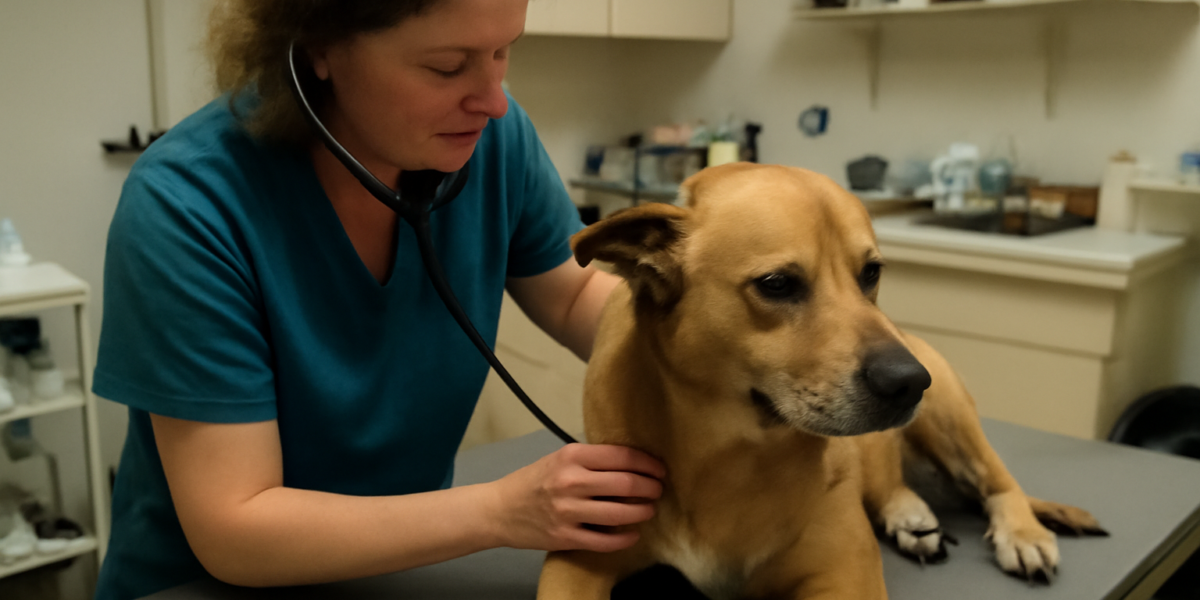
Acute presentations are often dramatic. The dog may suddenly collapse, have pale or bluish gums, breathe with great difficulty, and appear weak. Some dogs collapse and recover briefly, only to collapse again. The pulse may be weak, and the heart sounds muffled when listened to with a stethoscope.
Other recognizable signs include a swollen, drum-tight abdomen from ascites (free fluid in the abdomen), reluctance to lie down (because lying makes breathing harder), and pacing or restlessness. Any of these signs in combination with weakness warrants emergency veterinary care.
Emergency Diagnosis
Diagnosis is usually made quickly with point-of-care echocardiography. A veterinarian places an ultrasound probe on the chest and immediately sees fluid surrounding the heart. The right side of the heart often shows characteristic collapse during diastole when tamponade is present, confirming the urgency of the situation.
Chest radiographs typically show a globoid (rounded basketball) cardiac silhouette in dogs with significant pericardial effusion. Electrocardiography may show electrical alternans (alternating heights of the QRS complexes) caused by the heart swinging within the fluid-filled sac. Blood work and other testing follow once the dog is stabilized.
Detailed echocardiography to look for cardiac masses is usually performed once the immediate emergency is resolved. Identifying a mass on the heart helps establish the cause and guides treatment recommendations and prognosis.
Pericardiocentesis: The Emergency Treatment
The immediate life-saving treatment is pericardiocentesis, the removal of fluid from the pericardial sac. The procedure is performed with the dog lightly sedated or under local anesthesia. The veterinarian inserts a needle or catheter through the chest wall into the pericardial sac and withdraws the fluid.
Most dogs improve dramatically within minutes of fluid removal. Heart function recovers, the dog becomes more alert, and breathing eases. The procedure is generally safe in experienced hands but does carry small risks including arrhythmias, bleeding, and laceration of cardiac structures. Continuous monitoring during and after the procedure is standard.
Pericardiocentesis treats the immediate emergency but does not address the underlying cause. Many dogs require repeat procedures over time, and the long-term plan depends on identifying and managing the cause of the effusion.
Identifying and Treating the Cause
Once the dog is stabilized, attention turns to identifying the cause. Detailed echocardiography looks for cardiac masses, often performed by a veterinary cardiologist for thorough evaluation. The fluid removed during pericardiocentesis may be analyzed cytologically and submitted for culture, though distinguishing between hemorrhage from a tumor and idiopathic bleeding is often difficult on cytology alone.
If a mass is identified, additional staging may be performed. Abdominal ultrasound looks for evidence of metastatic disease, particularly in the spleen, liver, and abdominal lymph nodes. Hemangiosarcoma can arise simultaneously in multiple organs, and the prognosis depends partly on the extent of disease.
Treatment options vary by cause:
- Hemangiosarcoma: Surgery (right auricular appendage tumor removal) when feasible, often combined with chemotherapy. Prognosis is generally guarded.
- Heart base tumors: Pericardiectomy and sometimes radiation therapy. Prognosis can be significantly better than hemangiosarcoma.
- Idiopathic effusion: Pericardiectomy if recurrent, though many cases resolve after one or two pericardiocenteses.
- Infection: Antimicrobial therapy and pericardiectomy.
Pericardiectomy
For dogs with recurrent effusion or specific underlying conditions, surgical pericardiectomy (removal of part or all of the pericardial sac) may be recommended. The procedure prevents future tamponade by eliminating the closed space where fluid would otherwise accumulate.
Pericardiectomy can be performed through open thoracotomy (more invasive) or thoracoscopy (minimally invasive, when available). The choice depends on the underlying disease, surgeon experience, and equipment available. Recovery from open thoracotomy takes several weeks, while thoracoscopic procedures typically allow faster return to normal activity.
The procedure itself does not treat any underlying tumor; it prevents future tamponade. For dogs with cardiac tumors that cannot be removed, pericardiectomy can substantially extend comfortable life by eliminating the recurrent emergencies.
Recovery and Monitoring
After initial pericardiocentesis, dogs are monitored carefully for recurrence of fluid accumulation. Many cases (particularly idiopathic effusion) resolve after one or two procedures, while others recur quickly. Periodic echocardiography monitors for fluid reaccumulation and any progression of underlying disease.
Dogs that have undergone pericardiectomy typically heal well, with normal activity within weeks. Pleural effusion (fluid in the chest cavity around the lungs) can sometimes develop after pericardiectomy in dogs with underlying tumors and may need its own treatment.
Long-term care depends on the underlying cause. Dogs with cancer may need ongoing chemotherapy or palliative care. Dogs with idiopathic effusion that has resolved may simply need periodic monitoring with no medications.
Long-Term Outlook
Prognosis varies dramatically by cause. Idiopathic effusion has the best prognosis; many dogs do well long-term after pericardiocentesis or pericardiectomy. Heart base tumors typically grow slowly and dogs may live many months to years with appropriate management. Hemangiosarcoma, unfortunately, has the most guarded prognosis, with many dogs surviving only weeks to months even with aggressive treatment.
Quality of life is often the central consideration. Many dogs with cardiac tumors have good quality of life between events, and decisions about additional procedures or chemotherapy are individualized based on the dog’s health, the family’s wishes, and the realistic prognosis.
For broader pet health reading, the dog care blog covers many related cardiovascular conditions. If you are caring for a dog with a serious heart condition, the adopt a dog hub includes guidance on understanding chronic disease management.
Related Cardiac Conditions
Pericardial effusion can occur alongside other cardiac diseases. Pulmonary hypertension may complicate right-sided heart disease. Right-sided heart failure from any cause can produce pericardial effusion. Subaortic stenosis and other congenital diseases occasionally have associated pericardial issues.
If your dog has a known cardiac condition, periodic monitoring includes assessment for pericardial fluid accumulation. Early detection allows planning before an acute emergency occurs.
For dogs in breeds at higher hemangiosarcoma risk (Golden Retrievers, German Shepherds, Boxers, and other large breeds), some veterinarians recommend periodic screening echocardiography in middle age. The value of screening is debated, and most cardiologists make individualized recommendations based on the dog’s history, breed, and owner preferences. The most important takeaway is that any large or older dog with new exercise intolerance, weakness, or abdominal swelling deserves prompt cardiac evaluation, since these signs can be the first indication of significant pericardial disease.
Frequently Asked Questions
How urgent is pericardial effusion?
Acute pericardial effusion with cardiac tamponade is a life-threatening emergency. Pericardiocentesis is often required within hours of presentation. Any dog with sudden collapse, severe weakness, or labored breathing should be evaluated immediately.
Will my dog need surgery?
Not always. Many dogs are stabilized with pericardiocentesis alone, and some causes (idiopathic, certain infections) resolve without surgery. Recurrent effusion or specific underlying conditions may warrant pericardiectomy. Your veterinarian or cardiologist will recommend the appropriate path.
What are the chances of recovery?
Outcomes vary dramatically by cause. Idiopathic effusion has the best prognosis. Heart base tumors generally have intermediate prognosis. Hemangiosarcoma has the most guarded outlook even with treatment. Your cardiologist can provide a tailored estimate based on echocardiography and the specific diagnosis.
How will I know if it’s coming back?
Watch for the same symptoms that brought you in originally: weakness, exercise intolerance, abdominal swelling, increased breathing effort. Periodic recheck echocardiography also detects recurrent fluid accumulation before symptoms become severe.
Are some breeds more at risk?
Hemangiosarcoma is more common in Golden Retrievers, German Shepherds, and other large breeds. Heart base tumors are more common in brachycephalic breeds such as Boxers and Bulldogs. Idiopathic pericardial effusion has no specific breed predilection.
When should I call my veterinarian?
Call immediately for sudden collapse, severe weakness, labored breathing, abdominal distension, or pale gums. These can be signs of cardiac tamponade and warrant emergency evaluation. For dogs with known pericardial disease, contact your veterinarian for any new or worsening symptoms.


