
Last updated: April 27, 2026
In this article
- What Is Subaortic Stenosis?
- Causes and Predisposed Breeds
- Recognizing the Symptoms
- Diagnosis at the Veterinary Clinic
- Severity Grading
- Treatment Approaches
- Activity and Exercise Recommendations
- Endocarditis Prevention
- Long-Term Monitoring
- Quality of Life and Prognosis
- Related Cardiac Conditions
- Frequently Asked Questions
What Is Subaortic Stenosis?
Subaortic stenosis in dogs, often abbreviated SAS, is a congenital heart defect characterized by a narrowing just below the aortic valve. The aortic valve is the gateway through which blood leaves the left side of the heart to enter the systemic circulation. When the area immediately below this valve is narrowed, the left ventricle must generate much higher pressure to push blood through the obstruction. Over time, this elevated pressure damages the heart muscle and increases the risk of dangerous arrhythmias.
SAS exists on a spectrum from mild to severe. Mild cases may have minimal clinical impact, while severe cases produce significant exercise intolerance, fainting episodes, congestive heart failure, and sudden death. The severity is graded based on the pressure gradient across the obstruction measured by echocardiography. This grading guides treatment recommendations and prognosis.
Subaortic stenosis dogs are typically diagnosed as puppies when a heart murmur is detected during vaccination visits. Unlike PDA, SAS often cannot be definitively cured. Management focuses on reducing exercise-related risks, preventing complications, and preserving quality of life. Despite these challenges, many affected dogs live good lives with appropriate care.
Causes and Predisposed Breeds
SAS is a congenital condition with a strong genetic component, particularly in certain large breeds. Newfoundlands, Golden Retrievers, German Shepherds, Boxers, Rottweilers, and Bouviers des Flandres are notably predisposed. The condition is inherited in a complex pattern, and breeds with high prevalence benefit from cardiac screening of breeding stock.
The narrowing develops as the puppy grows and may not be present at birth. The fibrous obstruction can form in different anatomical patterns: a discrete fibrous ring, a more extensive fibromuscular tunnel, or an irregular thickening. The pattern affects treatment options and prognosis.
Because SAS has a strong inherited component, affected dogs should not be bred. Cardiac auscultation by a veterinarian familiar with congenital heart disease is recommended for breeding stock in predisposed breeds, ideally combined with echocardiography in equivocal cases.
Recognizing the Symptoms
Many puppies with SAS show no obvious symptoms initially. The condition is often first detected when a heart murmur is heard during a routine examination. The murmur is typically harsh and loudest over the left chest base, sometimes radiating up into the neck.
As the disease progresses or with severe forms, clinical signs may include:
- Exercise intolerance (tiring quickly during play)
- Fainting (syncope), especially with exercise or excitement
- Sudden collapse
- Lethargy or reduced energy
- Eventually, signs of left-sided heart failure
- Sudden death (a particular concern with severe SAS)
Sudden death is one of the most serious aspects of severe SAS. Affected dogs are at risk for fatal arrhythmias triggered by the heart muscle changes that develop with the elevated pressures. This risk significantly shapes management recommendations and the conversations veterinary cardiologists have with families about exercise and activity.
Diagnosis at the Veterinary Clinic
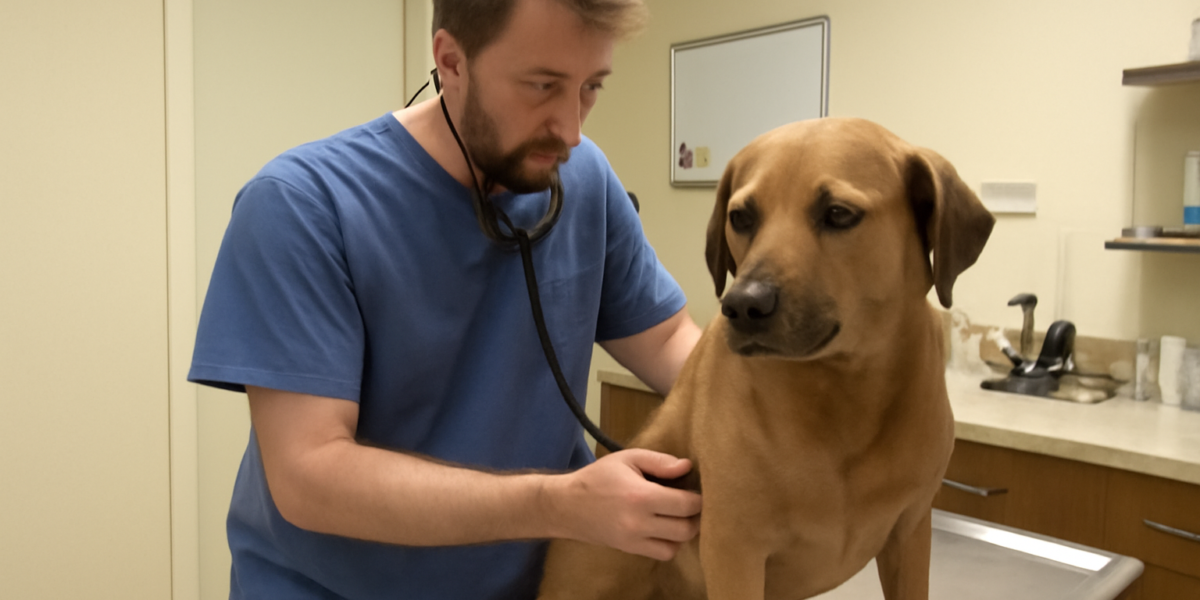
The murmur is typically the first finding. Any harsh ejection murmur in a puppy from a predisposed breed warrants prompt cardiac evaluation. Mild SAS may produce only a soft murmur, while severe SAS produces a loud, harsh sound. Murmur intensity correlates roughly but not perfectly with disease severity.
Echocardiography is the diagnostic test of choice. Cardiac ultrasound directly visualizes the obstruction, measures the pressure gradient across it, and assesses left ventricular thickness, function, and any associated abnormalities. Doppler imaging is essential for accurate severity grading.
Additional testing may include chest radiographs, ECG to look for evidence of left-sided enlargement and arrhythmias, and Holter monitoring (24-hour ECG) to detect intermittent rhythm disturbances that may not appear on a brief in-clinic ECG. The thoroughness of evaluation matches the severity of disease and the planning for management.
Severity Grading
Veterinary cardiologists classify SAS severity based on the pressure gradient across the obstruction:
- Mild: Low pressure gradients, often without significant clinical impact. Many of these dogs have normal life expectancies with monitoring.
- Moderate: Intermediate gradients. Some clinical impact and increased risk of complications.
- Severe: High gradients. Significantly increased risk of fainting, congestive heart failure, and sudden death.
The severity at initial diagnosis tends to predict the long-term course; severity may worsen as a puppy grows and the obstruction develops fully, but rarely improves. Repeat echocardiography at six months to a year often establishes the final adult severity.
Treatment Approaches
Unlike some congenital heart defects, SAS is generally not curable. Treatment focuses on reducing arrhythmia risk, preventing complications, and managing symptoms. The primary medical treatment is beta-blocker medication, most commonly atenolol. Beta-blockers slow heart rate, reduce contractility, and decrease the risk of dangerous arrhythmias.
Beta-blocker therapy is typically lifelong for moderate to severe cases. Dosing is individualized based on response, and your veterinarian will monitor for side effects. Most dogs tolerate the medication well; occasional side effects include lethargy, reduced exercise tolerance, and rarely heart rate slowing that requires dose adjustment.
Surgical or catheter-based interventions to reduce the obstruction have been studied but have not consistently shown survival benefit over medical management for most cases. Cutting balloon valvuloplasty and surgical resection have been performed at specialized centers, but results vary, and the procedures carry significant risks. The decision to pursue intervention is highly individualized and requires consultation with a board-certified veterinary cardiologist.
Activity and Exercise Recommendations
Exercise restriction is one of the most important parts of managing severe SAS. Intense exercise raises cardiac demand and can trigger fatal arrhythmias. Dogs with severe SAS should be restricted from activities that produce sustained high heart rates: long, intense running; agility and other competitive sports; pursuit of fast-moving objects; and strenuous play.
Moderate exercise tailored to the dog’s tolerance is generally appropriate. Short walks at an easy pace, gentle play, and quiet outings are usually safe. Let the dog set the pace, watch for any signs of fatigue or distress, and avoid hot or stressful conditions.
The exact activity recommendations depend on severity and individual response. Mild SAS may allow near-normal activity, while severe SAS requires substantial restriction. Your cardiologist will give specific guidance based on your dog’s evaluation.
Endocarditis Prevention
Dogs with SAS are at increased risk of bacterial endocarditis, an infection of the heart valves that can be life-threatening. Bacteria entering the bloodstream from infected sources (such as severe dental disease) can settle on the abnormal area and produce serious infection.
Preventive measures include:
- Aggressive treatment of any infection promptly
- Regular dental care to minimize oral bacterial burden
- Antibiotic prophylaxis during procedures with high bacterial release (such as dental procedures), as recommended by your veterinarian
- Prompt evaluation of any unexplained fever, lethargy, or new heart murmur changes
Endocarditis can develop in dogs with even mild SAS. Maintaining good general health, particularly oral health, reduces this risk substantially.
Long-Term Monitoring
Dogs with SAS require periodic recheck visits with a veterinary cardiologist. Severity at diagnosis influences the schedule, but typically annual or semiannual echocardiography monitors for progression and any developing complications. Changes in clinical signs warrant earlier evaluation.
Holter monitoring (24-hour ECG) at home is sometimes recommended periodically to assess for arrhythmias that might not appear during a brief visit. The information helps guide medication adjustments and activity recommendations.
Some dogs develop congestive heart failure later in life and require additional medications such as ACE inhibitors, diuretics, and pimobendan. Your cardiologist will adjust the treatment plan as the disease evolves.
Quality of Life and Prognosis
Prognosis varies significantly with severity. Dogs with mild SAS often live normal lifespans with regular monitoring. Dogs with moderate SAS typically have somewhat reduced life expectancy but can live well for many years with appropriate management. Dogs with severe SAS have the most guarded prognosis, with sudden death remaining a real concern even with optimal management.
Despite the challenges, many SAS dogs have wonderful, full lives. They simply cannot do everything an unaffected dog can do. Owners who adapt to the activity restrictions and maintain consistent veterinary care typically see their dogs thrive within those limits.
For broader pet health information, the dog care blog covers related cardiac conditions. If you are considering adopting a dog with SAS or another heart condition, the adopt a dog hub offers guidance on understanding what daily care commitments to expect.
Related Cardiac Conditions
SAS is one of several congenital heart defects in dogs. Patent ductus arteriosus presents differently and is often curable. Pulmonary hypertension can develop secondary to SAS or independently. Pericardial effusion may complicate advanced cardiac disease.
Comprehensive cardiac evaluation is essential for any puppy or young dog with a heart murmur. Veterinary cardiologists distinguish between conditions and recommend appropriate treatment for each.
Some dogs with mild SAS go many years before symptoms develop or the disease shows clear signs of progression. These dogs benefit from periodic monitoring even when they appear entirely well, since silent progression and the development of secondary changes (such as left ventricular thickening or arrhythmias) can be detected on follow-up echocardiography before symptoms emerge. Catching changes early allows medication adjustments and conversation about activity restrictions that may extend comfortable life.
Frequently Asked Questions
Is SAS curable?
Most cases are not curable. Treatment focuses on managing the disease, reducing arrhythmia risk, and preserving quality of life. Some specialized procedures have been studied but have not consistently shown survival benefit and carry their own risks.
Will my dog die suddenly?
Sudden death is a real risk in severe SAS but is much less common in mild cases. Beta-blocker medication and exercise restriction reduce the risk substantially. Discuss your dog’s specific risk with your veterinary cardiologist.
Can my dog still exercise?
Yes, with appropriate restrictions. Moderate exercise is usually fine, while intense exercise should be avoided. Let your dog set the pace and watch for any signs of distress. Severity influences specific recommendations.
How long can my dog live?
Survival varies by severity. Mild SAS often allows normal lifespan. Moderate SAS may shorten lifespan somewhat. Severe SAS carries the most guarded prognosis. Your cardiologist can provide tailored estimates after thorough evaluation.
Should I have my puppy screened?
Puppies from predisposed breeds benefit from cardiac auscultation at routine vet visits. Any murmur warrants further evaluation. Some breeders specifically test breeding stock with echocardiography to screen against producing affected puppies.
When should I call my veterinarian?
Call for any new fainting episodes, exercise intolerance worse than baseline, breathing difficulty, or unexplained lethargy. Routine rechecks every six to twelve months are typically recommended for moderate to severe cases.


