Last updated: May 4, 2026
In this article
Overview
This pyrenean Mastiff breed profile covers a breed that is often confused with both the Great Pyrenees and the Spanish Mastiff and is, in reality, neither. The Pyrenean Mastiff (Mastín del Pirineo) is a Spanish livestock guardian from the Aragonese Pyrenees — bigger than the Great Pyrenees, more mastiff-typed in build, and with its own distinct working tradition guarding sheep and protecting transhumant flocks across the Pyrenees range. The breed is large, calm, deeply territorial, and serious about its work.
Pyrenean Mastiffs are not common in North American rescue, but when they do appear they are typically there because someone bought a “fluffy giant” puppy without understanding the temperament that develops once the dog matures. The breed is gentler with family than some LGDs, but the guarding instincts are still very much present, and the size alone makes thoughtful placement non-negotiable. Adult Pyrenean Mastiffs frequently exceed 150 pounds.
Quick facts: Group: livestock guardian (working). Origin: Aragonese Pyrenees, Spain. Size: giant, typically 28–32 inches and 120–200 pounds. Coat: medium to long double coat, white with colored markings on the head and body. Energy: low to moderate. Lifespan: giant-breed range, generally shorter than small dogs. Grooming: weekly brushing, seasonal heavy shed, drool-aware household. Best for: working farms with livestock, large rural properties, experienced giant-breed owners.
History and Origin
The Pyrenean Mastiff descends from ancient mastiff-type dogs the Phoenicians and later the Romans brought to the Iberian peninsula. Across centuries, the breed protected flocks in the Aragonese Pyrenees from wolves and bears, traveling with shepherds during transhumance — the seasonal movement of livestock between high summer pastures and lowland winter grazing. The breed nearly disappeared in the early twentieth century as predator populations declined and shepherding traditions changed.
Modern Pyrenean Mastiffs descend from a recovery effort begun in the 1970s, when Spanish breed enthusiasts located surviving working dogs and began careful breeding to preserve the type. The gene pool is therefore narrower than ideal, and modern breeders take health and structure carefully. Pyrenean Mastiffs are a Spanish national heritage breed and remain recognized as a working livestock guardian.
Temperament and Personality
Calm, deliberate, watchful, and deeply loyal. Pyrenean Mastiffs are often described as the most “tolerant” of the major LGDs — they tend to be a touch more accepting of guests than Anatolians or Caucasians, given proper introductions. That said, “more tolerant” is relative. The breed remains a livestock guardian, with serious territorial instincts and clear judgment about who belongs and who does not.
With family, the Pyrenean Mastiff is typically affectionate, patient with children, and quietly attached. The breed is not high-drive or demanding; adult Pyrenean Mastiffs spend much of the day in calm observation. With strangers, they are reserved on the first visit and warmer on subsequent visits if everything goes well, but they will assess each interaction.
Force-free training works, but motivation is mostly trust-based. Same-sex dog aggression is moderate by LGD standards. Pyrenean Mastiffs raised with other animals generally accept them.
Size and Appearance
This is where many readers underestimate the breed. Pyrenean Mastiffs are giant — males routinely 30–32 inches at the shoulder and 150–200 pounds, females 28–30 inches and 120–170 pounds. The build is heavier and more mastiff-typed than the Great Pyrenees, with significant bone and a deeper, broader chest.
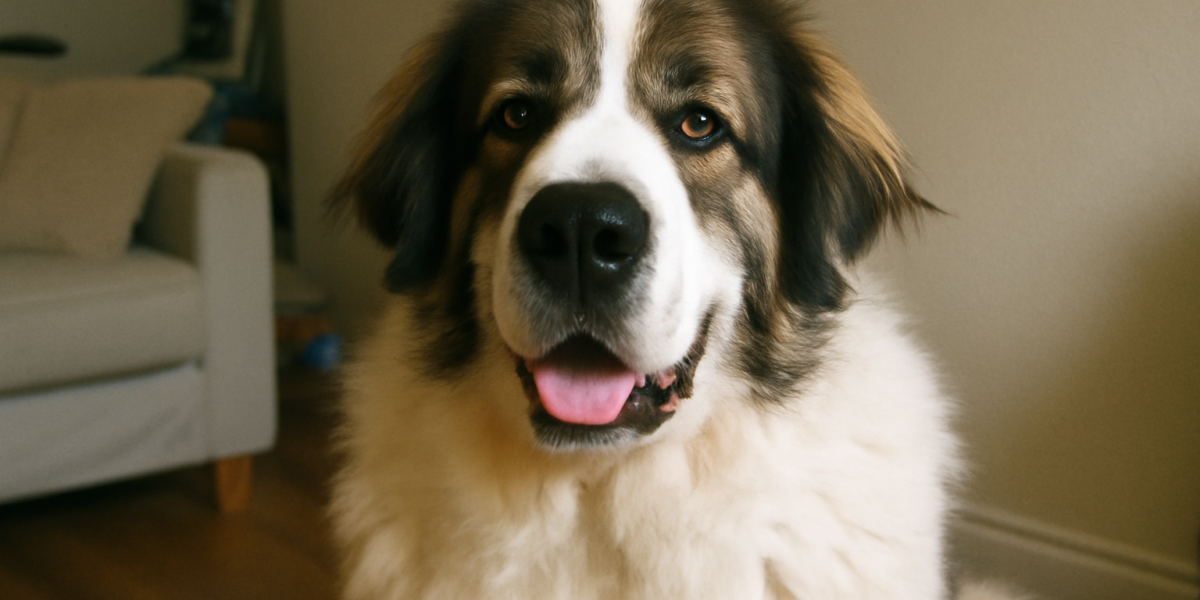
The coat is medium to long, dense, and double, with most dogs predominantly white with darker markings — typically a colored mask plus patches on the body. Colors include badger gray, gold, brindle, and black markings on the white base. The head is large, the muzzle deep, and the breed produces noticeable drool in some lines, particularly after eating or drinking.
Exercise and Activity Needs
Pyrenean Mastiffs are lower-energy than many LGDs but still need space. A working dog on a Spanish farm meets activity needs through patrolling and slow movement across the property. Replicating that without livestock requires daily walks, a securely fenced large yard or acreage, and patience for a breed that does not run laps for fun.
Avoid heavy exercise in puppies and adolescents — the breed is slow to mature physically, and the joints of a 150-pound giant cannot tolerate the same loading as a smaller dog. Off-leash work outside fencing is generally a poor idea; the breed is less prone to wide roaming than some LGDs but is still territorial and can get into trouble at boundaries.
Grooming and Care
The double coat sheds year-round and blows heavily twice a year. Weekly brushing in normal seasons, daily during coat blow, occasional baths. The coat is mostly self-cleaning when maintained and the breed generally smells clean between baths if the household stays on top of grooming.
Never shave the coat. The double coat insulates against both cold and heat, and shaving disrupts the regulation system. Drool management is real — keep towels accessible, particularly after meals. Standard ear, nail, and dental care otherwise. Diet should be a quality giant-breed formula, with slow puppy growth as a priority for joint health.
Health and Lifespan
Hip and elbow dysplasia are the most common skeletal concerns and worth screening; the recovery-era gene pool means health information from breed clubs is particularly useful. Bloat is a serious emergency risk in any deep-chested giant — every owner should learn the symptoms before adoption. Cardiac issues, entropion and other eye problems, and certain skin conditions are also worth monitoring.
Giant breeds generally live shorter lives than smaller dogs. Pyrenean Mastiffs sit firmly in the giant range. Osteosarcoma, the bone cancer that disproportionately affects giant breeds, is a real risk. Plan for veterinary costs that scale with size — surgery, anesthesia, medication doses, and food all run giant-scale.
Living With a Pyrenean Mastiff
The functional home is rural, fenced, with sufficient space for a giant dog and ideally a household that values calm over busy. Suburban yards under an acre are usually too small. Frequent visitor traffic is hard for the breed; it will assess every arrival, and that is the breed working.
Children in the family are typically safe with well-socialized Pyrenean Mastiffs — the breed is patient and tends to tolerate normal kid behavior — but the size alone means supervision is non-negotiable. A 180-pound dog turning around can knock a child down without intent. Visiting children should be supervised closely. Other dogs entering the territory should be introduced calmly and not assumed welcome.
Training and Socialization
Early socialization is essential. Puppy class for exposure, controlled introductions to varied people and environments, and consistent handling through adolescence. The breed’s slow physical maturation comes with a slow mental maturation; expect adolescence to extend through 24–30 months in many dogs.
Realistic obedience expectations: solid sit, down, stay, leave-it, recall under low distraction, and good leash manners — particularly important when the dog weighs more than the handler. Force-free training is the appropriate approach. Reading dog body language well helps you catch the early signals an LGD gives before escalation.
Is the Pyrenean Mastiff Right for You?
For most pet households, no. The size, the guarding instincts, the grooming load, and the giant-breed health and lifespan profile all combine to make this a serious commitment that fits a narrow set of homes. If you have rural acreage, livestock or a clear job, experience with giant breeds, and patience for a slow-maturing dog, the Pyrenean Mastiff can be a remarkable companion. If you want a giant family dog without the heavy guarding drive, the Saint Bernard or Bernese Mountain Dog are better matches.
If the home is right, breed-specific rescue is the responsible route, and Pyrenean Mastiff rescue is genuinely small. Many dogs in rescue are placed through general LGD networks or large-breed rescues. Read about adopting an adult dog first — adult Pyrenean Mastiffs frequently come into rescue because puppy buyers underestimated the adult dog. Start at the adopt a dog hub.
Frequently Asked Questions
Is the Pyrenean Mastiff the same as the Great Pyrenees?
No. They share a region of origin but are distinct breeds. The Pyrenean Mastiff is significantly larger, more mastiff-typed in build, and has a different working tradition. The Great Pyrenees is a Pyrenees mountain LGD on the French side of the range; the Pyrenean Mastiff is from the Spanish Aragonese side.
Is the Pyrenean Mastiff the same as the Spanish Mastiff?
No. Both are Spanish livestock guardians and both are giant, but they are separate breeds with distinct origins, breed standards, and appearances. The Spanish Mastiff is heavier and more loose-skinned; the Pyrenean Mastiff is closer to the LGD type with more white in the coat.
Are Pyrenean Mastiffs good family dogs?
For the right family — rural, experienced with giant breeds, with appropriate space — they tend to be calm, patient, and deeply bonded. For typical suburban pet homes, the size and guarding drive make them a poor fit.
Do Pyrenean Mastiffs drool?
Some lines drool noticeably, particularly after eating or drinking. The mastiff side of the breed shows up in the lips and head structure, and drool varies between individuals.
How big do Pyrenean Mastiffs get?
Adult males commonly weigh 150–200 pounds, females 120–170 pounds. The breed is genuinely giant, and prospective owners should plan accordingly.
Looking to adopt a Pyrenean Mastiff Breed Profile?
Browse Pyrenean Mastiff Breed Profile dogs and mixes available for adoption from shelters and rescues near you.
Find Pyrenean Mastiff Breed Profile Dogs for Adoption