
Last updated: May 23, 2026
In this article
Saluki Dog Breed Profile
The Saluki is one of the oldest dog breeds in recorded history, a living artifact of ancient civilization that has changed remarkably little over thousands of years. Prized by pharaohs, nomadic tribes, and royalty across the Middle East and Central Asia, the Saluki combines breathtaking physical elegance with a quiet, noble temperament that is unlike almost any other breed. Graceful, swift, and deeply devoted to those they trust, Salukis are not the right fit for every household — but for the right owner, sharing life with a Saluki is a profoundly rewarding experience. If you are considering welcoming one of these remarkable sighthounds into your home, this complete breed profile will help you understand exactly what to expect.
Quick Facts
| Characteristic | Details |
|---|---|
| Breed Group | Hound (Sighthound) |
| Size | Medium to Large |
| Weight | 35 to 65 pounds |
| Height | 23 to 28 inches at the shoulder |
| Life Expectancy | 12 to 14 years |
| Coat Types | Feathered or Smooth |
| Shedding | Low to Moderate |
| Energy Level | High (requires daily running) |
| Good with Children | Yes, with older children |
| Good with Other Dogs | Generally yes |
| Good with Small Animals | Caution advised (high prey drive) |
| Trainability | Moderate — independent thinker |
| AKC Recognition | Yes (1927) |
Personality
The Saluki possesses a personality that is often described as cat-like: reserved with strangers, deeply selective in its affections, and fiercely independent in spirit. This is not a breed that greets every visitor at the door with boundless enthusiasm. A Saluki takes its time deciding who is worthy of its trust, and once it does, the bond formed is quiet but intensely loyal. They are gentle, sensitive dogs who respond poorly to harsh handling or raised voices and do best in calm, stable households where they feel emotionally safe.
Despite their aloofness with unfamiliar people, Salukis are genuinely devoted to their families. They often choose one or two favorite people with whom they will spend hours pressed against them on the sofa, content in companionable silence. They are not clingy or demanding, but they do not like to be left alone for extended periods and can develop anxiety if isolated regularly. Within the home, the Saluki is typically quiet, clean, and well-mannered — almost regal in its bearing. Their sensitivity means they are attuned to the moods of the people around them, making them empathetic companions for those who appreciate a subtler, more nuanced dog.
Appearance
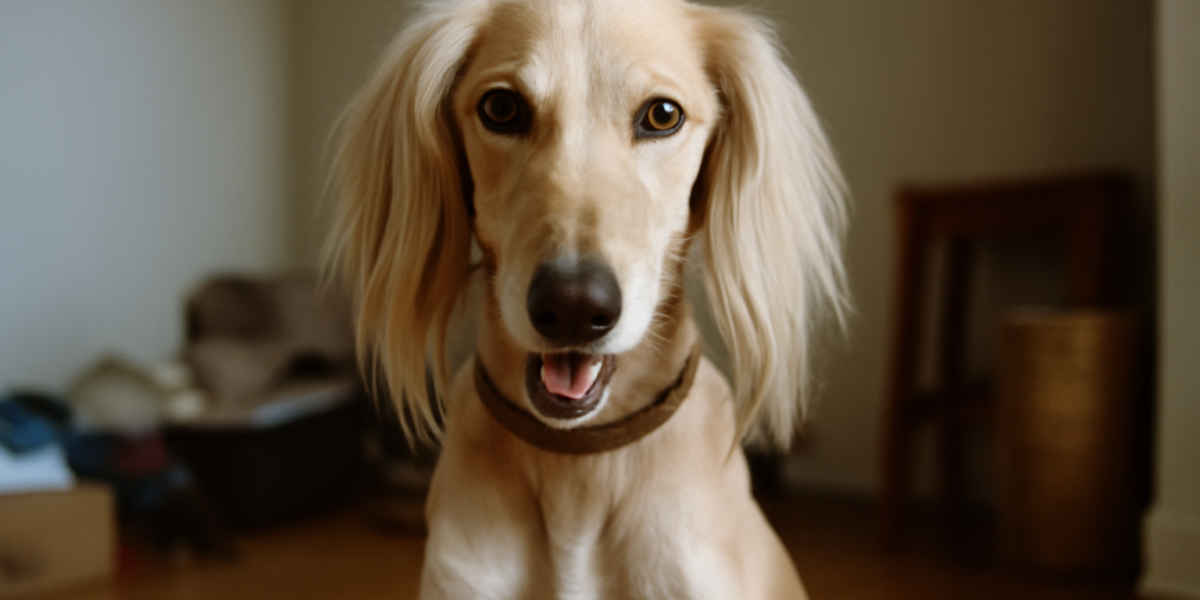
The Saluki is the picture of refined elegance. Long, lean, and aerodynamically built for speed, every feature of this breed seems designed with purpose. The head is long and narrow, with large, oval-shaped eyes that carry a faraway, contemplative expression. The ears are long and silky, hanging close to the head, and the neck is long and gracefully arched. The body is deep-chested to accommodate large lung capacity, with a tucked-up abdomen, a level back, and powerful hindquarters built for explosive acceleration.
The Saluki comes in two coat varieties: feathered and smooth. The feathered variety has silky, fine hair on the ears, the backs of the legs, between the toes, and sometimes on the tail. The smooth variety has no feathering at all. Both coat types lie flat and feel remarkably soft to the touch. Accepted colors include white, cream, fawn, golden, red, grizzle, black and tan, tricolor, and various combinations. The overall impression is always the same: a dog that looks as if it was sculpted rather than bred — slender, symmetrical, and effortlessly graceful in motion.
Exercise
Do not let the Saluki’s calm indoor demeanor fool you. This breed is one of the fastest dogs on earth, capable of reaching speeds of 40 to 43 miles per hour, and it has a deeply ingrained need to run at full speed on a regular basis. A Saluki that does not get adequate high-speed exercise will become restless, anxious, and potentially destructive. Daily exercise is non-negotiable for this breed.
The safest way to exercise a Saluki is in a fully enclosed, securely fenced area. A standard six-foot fence is the minimum recommended height, as Salukis are impressive jumpers. Off-leash exercise in open areas is extremely dangerous because, as a sighthound, a Saluki will lock onto a distant moving target — a squirrel, a bird, a blowing leaf — and be gone before you can react, completely deaf to your recall commands. Lure coursing is an ideal sport for the Saluki, satisfying both the physical need to sprint and the instinct to chase. In addition to running sessions, daily walks help provide mental stimulation, though they are not a substitute for true high-speed exercise. Plan for at least one vigorous 20-to-30-minute run per day, ideally more.
Grooming
The Saluki is a relatively low-maintenance breed when it comes to grooming, which may surprise those who see the feathered variety’s silky, flowing coat for the first time. Because the coat is fine and lies flat rather than curling or matting easily, it requires only weekly brushing to stay clean and tangle-free. A soft-bristle brush or a fine-toothed comb is all that is needed for routine maintenance. The feathered areas — ears, legs, tail, and between the toes — should be checked and combed more carefully to prevent any minor tangles from developing.
Bathing is needed only occasionally, roughly every six to eight weeks or when the dog is visibly dirty. The smooth-coated variety requires even less effort: a weekly wipe-down with a damp cloth or a chamois is often all that is needed between occasional baths. The Saluki’s nails should be trimmed every three to four weeks, as long nails can affect the dog’s gait and cause discomfort. Ears should be checked weekly for signs of moisture or debris and wiped clean as needed. Dental hygiene, as with all breeds, benefits from regular brushing several times per week. Overall, the Saluki is a clean, odor-free breed that takes relatively little time to keep looking immaculate.
Health
The Saluki is generally a healthy and long-lived breed, but there are several health considerations that owners and prospective adopters should be aware of. Cardiac issues are among the most significant: Salukis can be prone to certain heart conditions, including cardiomyopathy, and cardiac screening of breeding dogs is strongly recommended. Hypothyroidism, a condition in which the thyroid gland does not produce sufficient hormone, is also seen in the breed and can cause symptoms including weight gain, lethargy, and skin changes. It is manageable with daily medication once diagnosed.
One of the most important health considerations for any Saluki owner is the breed’s well-documented sensitivity to anesthesia. Like many sighthound breeds, Salukis have very low body fat and an unusually sensitive metabolism, which means they can react adversely to standard doses of anesthetic drugs. It is critical that your veterinarian be informed that your dog is a sighthound before any procedure requiring sedation or general anesthesia. A veterinarian with sighthound experience will adjust dosages accordingly. Additionally, because Salukis are so lean, they are susceptible to pressure sores if they regularly sleep on hard surfaces. Providing a padded bed is important for their long-term comfort and skin health. Regular veterinary check-ups and age-appropriate health screenings will help catch any issues early.
Kids and Other Pets
The Saluki can coexist happily with children, but the pairing works best with older, quieter children who understand how to interact respectfully with a sensitive dog. Young children who move unpredictably, grab at the dog, or play loudly can easily overwhelm a Saluki, which may withdraw or, if persistently cornered, snap out of stress. Salukis are not the rough-and-tumble playmates that some other breeds relish being. With older children who treat them gently, however, Salukis can be calm, affectionate companions.
With other dogs, Salukis typically do well, especially with other sighthounds who share their energy level and play style. They enjoy having a canine companion and are rarely aggressive toward other dogs. The important exception is small animals. The Saluki has an extremely strong prey drive that has been selectively bred and refined over millennia of hunting. Cats, rabbits, guinea pigs, birds, and other small pets trigger this instinct powerfully and can be at genuine risk in a home with a Saluki, regardless of how well the dog has been socialized. Some Salukis can learn to coexist with a resident cat they have been raised with from puppyhood, but this cannot be assumed and must be managed carefully. Introducing a Saluki to a home with small animals requires patience, consistent supervision, and a realistic assessment of the individual dog’s prey drive.
Training
Training a Saluki requires patience, creativity, and a genuine understanding of how sighthounds think. These are not disobedient dogs, but they are independent ones. The Saluki was bred to make split-second hunting decisions without human direction, and that independent judgment is hard-wired. They are not motivated by pleasing their handler the way a retriever or a herding dog might be, so traditional obedience training that relies on repetitive drills and punishment-based methods will fail completely with this breed.
Positive reinforcement using high-value food rewards and short, engaging training sessions produces far better results. Keep sessions to five or ten minutes to hold their attention, and end on a success. Basic manners — sit, down, stay, leave it — are achievable with consistency. However, recall (coming when called) is the single most challenging skill to train in a Saluki and should never be fully trusted off-leash in an unsecured area. When a Saluki is in full chase mode, it is physiologically incapable of responding to commands. For this reason, off-leash time should always be confined to a safely enclosed space. Early socialization is equally important: exposing young Salukis to a wide variety of people, environments, sounds, and situations builds the confidence and social flexibility they need to thrive as adult dogs. Consult resources on dog care best practices for guidance on building a positive training routine.
History
The Saluki lays claim to one of the most ancient and well-documented histories of any dog breed in existence. Archaeological evidence and depictions in ancient art place Saluki-type dogs in the Fertile Crescent region of the Middle East more than 5,000 years ago, with some estimates pushing that figure to 7,000 or even 8,000 years. Carvings, pottery, and wall paintings from Sumerian, Egyptian, and Persian civilizations consistently depict a slender, long-legged, feather-eared hunting dog that is unmistakably the Saluki we know today.
In ancient Egypt, the Saluki was held in such esteem that the breed earned the title “Royal Dog of Egypt.” Unlike other animals, which were eaten after death, Salukis were mummified and mourned as members of the family. They were considered a gift from Allah in Islamic tradition and were the only dogs permitted to sleep inside the tent — a remarkable distinction in a culture that considered dogs generally unclean. For centuries, Salukis were used by nomadic tribes across the Arabian Peninsula, Persia, and Central Asia to hunt gazelle, hare, and fox, often working in partnership with falcons. Because they were considered sacred, Salukis were never sold — only gifted. The breed was introduced to the Western world in the early twentieth century, and the American Kennel Club officially recognized the Saluki in 1927.
Frequently Asked Questions
Are Salukis good apartment dogs?
A Saluki can technically adapt to apartment living provided its exercise needs are met every single day without exception. Inside the home, the Saluki is calm, quiet, and takes up relatively little space. The challenge is ensuring access to safe enclosed spaces where the dog can run at full speed. Without that daily high-speed outlet, apartment life will not work for this breed. If you live in an apartment but have reliable access to a fenced dog park or private fenced area where the Saluki can sprint freely, it may be feasible — but it requires real commitment to daily exercise.
Do Salukis bark a lot?
No. The Saluki is generally a quiet, undemonstrative breed that does not bark excessively. They may alert bark occasionally if something unusual catches their attention, but sustained barking is not typical of the breed’s temperament. This makes them reasonably good neighbors in close-quarters living situations. Their quietness is part of their overall reserved, dignified character — they are not dogs that demand attention loudly. However, a bored or under-exercised Saluki may develop undesirable vocalizations, so adequate daily stimulation remains important.
How long do Salukis live?
The Saluki is a relatively long-lived breed for its size, with an average life expectancy of 12 to 14 years. Some individuals live into their mid-teens. Their lean, athletic build may contribute to longevity, as obesity-related health issues — which shorten the lives of many other breeds — are uncommon in Salukis. Providing appropriate exercise, a balanced diet, regular veterinary care, and attention to breed-specific health concerns such as cardiac screening and anesthesia sensitivity will give your Saluki the best possible chance at a long and healthy life.
Is a Saluki right for a first-time dog owner?
Honestly, the Saluki is best suited to experienced dog owners who understand the particular demands of independent sighthound breeds. Their sensitivity, high exercise requirements, prey drive, and recall challenges make them a more complex dog to manage than many first-time owners anticipate. That said, a first-time owner who has done thorough research, has access to a safely enclosed exercise space, is committed to positive reinforcement training, and has realistic expectations about the Saluki’s independent nature can absolutely succeed with this breed. Connecting with a breed-specific rescue or experienced adopters before committing is strongly recommended.
Adopt a Saluki
If everything you have read about the Saluki resonates with you — the elegance, the quiet devotion, the ancient history, and yes, the particular challenges — then a rescued Saluki may be your ideal companion. WalkMeHome Rescue works to match these extraordinary dogs with the thoughtful, committed homes they deserve. Adult Salukis available for adoption often come already past the demanding puppy stage, and many are already familiar with basic household routines, making the transition into your home smoother than you might expect. Giving a rescued Saluki a second chance is one of the most meaningful things a dog lover can do.
Browse available Salukis and other sighthounds through our adopt a dog page. Our team is here to help you find the right match and support you throughout the adoption process. For additional guidance on caring for your new companion, visit our dog care blog for articles on training, nutrition, health, and more.


