
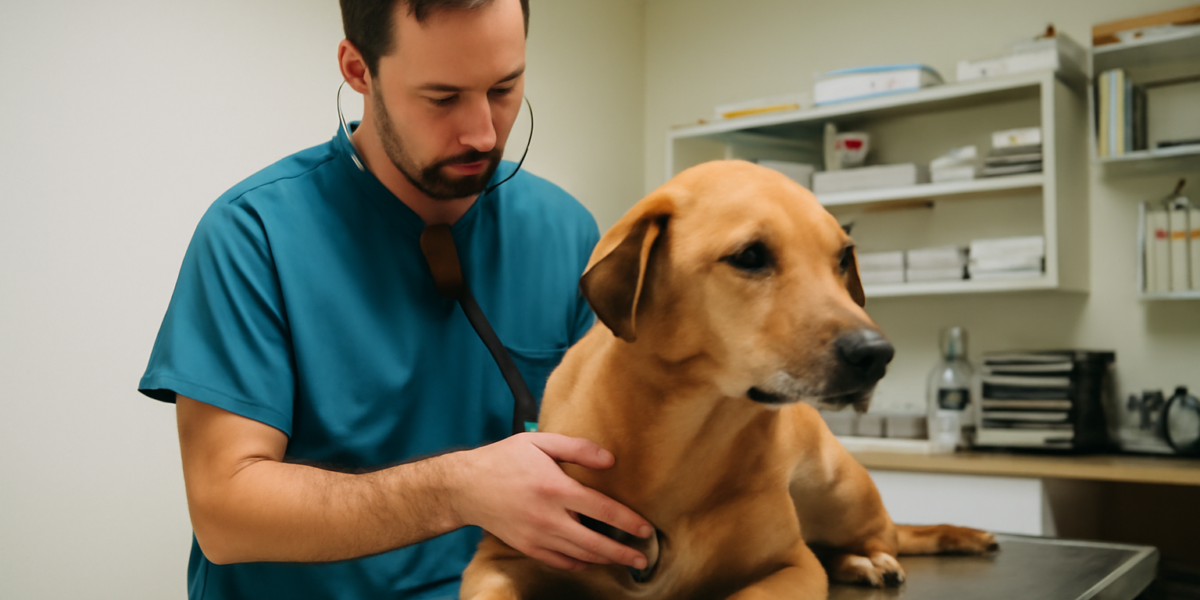
What Shelter Shock Actually Is
Shelter shock in dogs is a real psychological-stress syndrome that affects dogs in shelter and kennel environments. It is not a single diagnosis with a textbook entry, but it is a well-recognized cluster of behaviors and physiological responses that veterinary behaviorists, applied animal welfare scientists, and shelter medicine professionals see in dogs whose nervous systems have been overwhelmed by the shelter environment.
In this article
- What Shelter Shock Actually Is
- The Two Faces of Shelter Shock
- Signs of Shelter Shock to Watch For
- What Happens When the Dog Goes Home
- Decompression as Treatment
- When Medication Helps
- What Makes Shelter Shock Worse
- Recognizing Recovery
- What Doesn’t Lift With Decompression
- For Shelter Volunteers and Foster Caregivers
- Frequently Asked Questions
The core experience: a dog removed from a familiar environment (often suddenly), placed in a small kennel surrounded by other stressed dogs, exposed to constant noise, unpredictable handling, and loss of routine, develops a stress response that fundamentally changes their behavior. The dog you meet at the shelter may be a “kennel-presented” version — a coping behavior — that bears little resemblance to the dog’s real personality. Many adopters who feel they were “lied to” about a dog’s temperament are actually meeting a different dog: the post-shock real dog who emerges weeks after adoption.
Shelter shock is treatable. Recovery typically follows the broader 3-3-3 timeline, with severe cases needing professional behavioral support, sometimes including short-term medication. The most important thing adopters and shelter volunteers can do is recognize it for what it is — a stress response — rather than interpreting it as the dog’s permanent character.
The Two Faces of Shelter Shock
Shelter shock typically presents in one of two patterns, sometimes both in the same dog at different times.
The shut-down dog. Quiet, motionless, often pressed against the back of the kennel. Refuses food. Avoids eye contact. Doesn’t react to passers-by. May urinate or defecate in their kennel and lie in it. May stand for hours without moving. To staff and visitors, this dog often looks “calm” or “well-mannered” — but the calmness is actually severe psychological withdrawal. The dog is so overwhelmed they have stopped responding to their environment.
The hyper-aroused dog. Bouncing off kennel walls, barking nonstop, lunging at the door, spinning, fence-running, kennel-mouthing the bars until their teeth or gums are damaged. Refuses food when staff are present but eats compulsively when alone. Engages in stereotypies (repetitive, apparently purposeless behaviors). To visitors, this dog often looks “crazy” or “untrainable” — but the arousal is also a stress response, the body’s sympathetic nervous system stuck in overdrive.
Both patterns mask the dog’s actual personality. Both improve significantly once the dog is in a calm home environment, sometimes within days, often within weeks.
Signs of Shelter Shock to Watch For
In the shelter or in the first hours/days at home, look for:
- Refusing food for 24+ hours. Common in shut-down dogs.
- Drinking very little. Often paired with food refusal.
- Hiding constantly. Behind furniture, under beds, in crates, refusing to come out even for high-value treats.
- Avoiding eye contact, freezing when looked at.
- Loss of bowel and bladder control. Eliminating in the crate or sleeping area, or holding for so long that elimination becomes urgent and uncontrolled.
- Stereotypies. Spinning, pacing, fence-running, tail-chasing, kennel-mouthing, repetitive licking. These are often the most concerning sign because they suggest the stress response has become entrenched.
- Trembling, panting, drooling without heat.
- Hyper-vigilance. Constant scanning, no ability to settle into rest.
- Appetite loss alternating with frantic eating.
- Sleep disruption. Either sleeping constantly (shutdown) or never sleeping deeply (hyper-aroused).
Most healthy dogs show some stress signs in the first 24–48 hours of any major transition. The shelter shock pattern is more severe, more sustained, and more disabling. Generalized anxiety in dogs covers some of the underlying neurological dynamics.
What Happens When the Dog Goes Home
For most dogs, shelter shock begins to lift within days of arriving in a calm home environment. The pattern often follows the 3-3-3 framework: the first three days the dog still looks shocked, then the second week brings a gradual emergence, then real personality stabilizes around the three-month mark.
What you might see during recovery:
- Sudden appetite return. Often dramatic — the dog who refused food for days suddenly eats voraciously.
- Re-engagement with toys. The dog who ignored toys at the shelter starts to play.
- Tail wagging on a delay. The dog learns it’s safe to express positive emotion.
- Real personality emerging. Sometimes for the better (a “shy” dog turns out to be a confident goofball), sometimes with surprises (a “calm” dog turns out to have anxiety, reactivity, or guarding tendencies).
- Behavioral issues that weren’t visible at the shelter. Resource guarding, leash reactivity, separation distress.
This is normal and expected. The dog you have in week three is closer to your real dog than the dog you met at the shelter. The decompression period and 3-3-3 frameworks are how rescue communities frame this transition.
Decompression as Treatment
The single most effective treatment for shelter shock is the decompression protocol: a quiet, predictable, low-stimulus first two weeks at home. No daycare, no dog park, no big family gatherings, no houseguests. One or two short walks per day in low-traffic areas. Predictable routines for food and rest. Minimal pressure on the dog to engage or perform.
For most dogs, two weeks of careful decompression is enough to reverse the worst of shelter shock symptoms. The dog starts to eat, sleeps deeply for the first time in weeks, begins exploring the home, accepts touch, makes eye contact. Destructive chewing in dogs sometimes appears as a normal stress-discharge behavior in this phase and should be managed with appropriate chew options.
When Medication Helps
Severe shelter shock — especially in dogs from long-term shelter stays, hoarding situations, or with significant trauma history — sometimes needs medication support to break the cycle. A veterinarian or veterinary behaviorist can assess and prescribe.
Common options include:
- Trazodone. Often used as a short-term bridge to lower acute arousal during the first weeks home. Trazodone for dogs covers dosing and use cases.
- Gabapentin. Used for arousal reduction and sometimes for nerve-related discomfort. Gabapentin for dogs covers details.
- Fluoxetine. A daily SSRI for longer-term anxiety reduction, typically used for cases that don’t resolve with environmental management alone. Fluoxetine for dogs covers the protocol.
- Reconcile. A flavored fluoxetine formulation marketed specifically for canine anxiety. See Reconcile for dogs.
- Sileo. A short-acting transmucosal dexmedetomidine for situational stress. See Sileo for dogs.
Medication is not a “drug the dog into submission” approach. The right medication lowers baseline stress just enough that the dog can actually decompress and that behavioral interventions can work. For severe cases, the combination of medication plus structured decompression plus professional behavioral support is dramatically more effective than any single intervention.
What Makes Shelter Shock Worse
Some shelter and post-adoption practices unintentionally deepen shelter shock:
- Overcrowded kennels or constant kennel changes.
- High noise environments without sound dampening.
- Lack of natural light or outdoor access.
- Inconsistent staff and handling.
- Crowded meet-and-greet rooms with multiple visitors.
- Adoption-day overstimulation: photos, videos, multiple staff handovers.
- “Trial weekends” with multiple homes within a short period.
- Immediate exposure to chaotic home environments (parties, visitors, dog-park trips).
Shelters and rescues that recognize shelter shock as a real welfare issue have started building “decompression rooms,” limiting kennel time, and counseling adopters on the decompression protocol before pickup. The improvement in adoption retention is significant.
Recognizing Recovery
You’ll know the shelter shock is lifting when:
- The dog eats meals reliably without food refusal.
- The dog sleeps deeply, including REM-stage twitching and dreaming.
- The dog shows curiosity — sniffing new objects, approaching family members.
- Stereotypies (spinning, fence-running, kennel-mouthing) decrease and disappear.
- The dog’s body posture loosens — soft eyes, relaxed muscles, tail held neutrally rather than tucked or rigidly raised.
- The dog starts to engage with toys, food puzzles, or play invitations.
- The dog initiates social interaction with the family.
Most shelter shock signs are mostly resolved within the first three to six weeks at home. Residual stress responses — specific fears, sensitivities, or sensory issues — often need longer work but are no longer dominating the dog’s daily experience.
What Doesn’t Lift With Decompression
Some behavioral issues uncovered after shelter shock recedes are not shelter-induced — they were always part of the dog’s behavioral profile and were just masked by the shock. These can include true resource guarding, true leash reactivity, true separation distress, true noise sensitivity. These need targeted behavior modification, not just more decompression.
The professionals to engage:
- Certified positive-reinforcement trainer (CPDT-KA, KPA-CTP, etc.) for routine training and mild behavior issues.
- IAABC-credentialed behavior consultant for more significant issues.
- Veterinary behaviorist (DACVB) for severe cases, those needing medication, or those involving any aggression.
Counter-conditioning for dogs is the foundational protocol most professionals use. Socialize adult rescue dog covers the longer arc for dogs from chronic shelter or kennel backgrounds.
For Shelter Volunteers and Foster Caregivers
If you work with shelter dogs, the most useful contribution you can make is calm, predictable, low-pressure interaction. Sit outside the kennel with a book. Offer a treat without making eye contact. Take dogs on quiet leashed walks rather than to the play yard. Provide chews and food puzzles in the kennel. Advocate for sound dampening, natural light, and quiet hours.
For fosters, the decompression protocol applies the same way: quiet first two weeks, no introducing the foster dog to your friend’s dogs, no taking them to the dog park. The cumulative gentleness of one calm foster home can dramatically improve a dog’s adoptability.
Frequently Asked Questions
How quickly does shelter shock lift after adoption?
The most acute symptoms (refusal to eat, severe hiding, frozen posture) often improve within 3–7 days of being in a calm home. Full recovery typically takes 4–12 weeks, following the 3-3-3 timeline. Severe cases or trauma backgrounds may take 6 months or longer.
Is shelter shock the same as PTSD in dogs?
Not exactly, though there’s overlap. Some dogs from shelter backgrounds do show patterns consistent with what we’d call PTSD in humans — startle responses, specific trauma triggers, persistent hyper-vigilance. Shelter shock specifically refers to the acute stress response of being in a shelter environment; trauma responses can persist after the shelter is left behind.
Can a dog be permanently affected by shelter shock?
Most dogs recover fully with appropriate decompression and time. Some dogs from prolonged or severe shelter exposure carry forward specific sensitivities — to certain sounds, to confinement, to specific kinds of handling — that need ongoing management. Permanent personality damage is rare with good post-adoption care.
Should I bring my new shelter dog straight home or have them spend a night with a foster first?
If the rescue offers a fostering bridge between shelter and adoption, take it. Even a few days in a foster home can dramatically reduce shelter shock symptoms before the dog moves to their permanent home. Direct shelter-to-permanent-home transitions are usually fine but the foster bridge often makes everything easier.
My dog seemed fine at the shelter but is shut down at home. What’s happening?
Many dogs cope at the shelter by being hyper-aroused or hyper-vigilant, then crash when they reach a calm environment. The shutdown at home is paradoxically a sign that the dog finally feels safe enough to stop coping. Continue decompression and the dog will start to emerge over the next one to four weeks.
Should I call the shelter if my new dog is showing shelter shock signs?
Yes — most rescues want to know how their dogs are settling in. They may have helpful context (how long the dog was in care, what their kennel behavior was, what worked in foster) and may be able to recommend specific support resources. They are not going to take the dog back for shelter shock symptoms; this is normal and expected.


