Last updated: May 4, 2026
In this article
- Overview of the Suqutranese Cat
- History and Origin
- Appearance and Coat
- Temperament and Personality
- Care and Daily Living
- Health Considerations
- Diet, Feeding, and Enrichment
- Adoption and How to Find a Suqutranese
- Living With Other Pets and Children
- Is the Suqutranese Right for You?
- Costs, Setup, and Senior Care
- Frequently Asked Questions
Overview of the Suqutranese Cat
The Suqutranese cat is one of the rarest and most recently identified landrace cats in the world. It comes from Socotra, the Yemeni island that sits between the Horn of Africa and the Arabian Peninsula, and is considered a close cousin to the African Sokoke.
If you love wild-looking spotted tabby cats with a real-world working ancestry, the Suqutranese will fascinate you. They are not a designer breed and not a commercial product. They are an isolated island cat that survived on its own and is only now being studied and selectively preserved.
Because the breed is so new to the modern registry conversation, this profile sticks to qualitative description. You will not find verified lifespan numbers, breeder lists, or recognition years for the Suqutranese in mainstream sources, and we will not invent any.
History and Origin
Socotra is a remote island known for its unique flora and fauna. Cats that lived there for generations developed a distinct look, with a ticked-and-spotted tabby coat resembling the Sokoke. Researchers and cat enthusiasts gradually documented these cats and began calling them Suqutranese after the island.
The breed has been promoted by a small handful of enthusiasts and is sometimes described as a “rediscovery” rather than a creation. It is closely related in concept to other landrace projects that aim to preserve naturally evolved island cats before crossbreeding washes out their unique traits.
Major Western cat registries do not currently feature the Suqutranese in championship competition. If you see a kitten advertised under the name, ask for documented Socotra ancestry rather than assuming any spotted tabby qualifies.
Appearance and Coat
Suqutranese cats are medium-sized, lithe, and athletic. The body is moderate and well-muscled, built for the heat and rough terrain of their home island. Legs are long enough for agile climbing and long jumps.
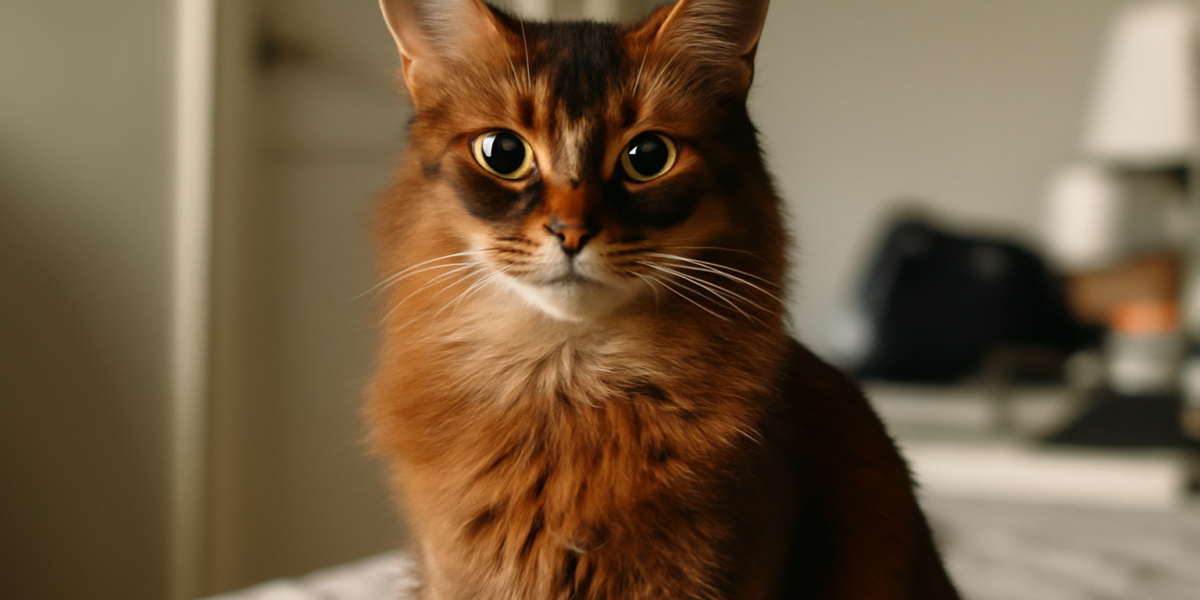
The coat is short, close-lying, and patterned. Expect a ticked tabby base with broken spots or rosette-like markings, often in warm browns, sands, and golds. The pattern reads as wild and grounded, similar to the Sokoke and to landrace cats from other coastal regions of Asia and Africa.
Eyes are typically green to amber, the head shape is moderate without exaggeration, and the tail tapers cleanly. Overall the look is of a small wild cat shaped by its environment rather than by a breeder’s vision.
Temperament and Personality
Owners who have worked with Suqutranese-type cats describe them as alert, intelligent, and active. They are not lap cats by default, though they can be deeply affectionate with their chosen people once trust is established.
Expect a curious, climbing, exploring cat who wants to know what every cabinet contains and which window has the best view. Provide vertical territory, sturdy cat trees, and window perches.
They are sociable with respectful cats and can do well with sensible dogs when introductions are gradual. As with any landrace cat, individual personalities vary depending on early socialization and household environment.
Care and Daily Living
The short, low-maintenance coat needs only weekly brushing. Suqutranese cats are clean self-groomers and rarely need bathing. Pay extra attention to nail trims and scratching surfaces given their climbing drive.
Daily play sessions, climbing structures, and food-puzzle enrichment are not optional for this kind of cat. A bored landrace cat will redecorate your apartment. Puzzle feeders and rotating toys go a long way.
Keep the cat indoors or in a secure catio. Free-roaming risks are too high for a rare, valuable cat with strong hunting drive, and indoor cats consistently live longer. Stick to a regular vaccination schedule and annual exams.
Health Considerations
Because the Suqutranese is a recently documented landrace, published breed-specific health data is limited. The general expectation, as with other naturally bred landrace cats, is broader genetic diversity than heavily engineered breeds, which often translates to good baseline health.
That does not exempt them from the usual feline concerns. Plan for dental care, parasite prevention, and as your cat ages, watch for chronic kidney disease, hyperthyroidism, and hypertrophic cardiomyopathy.
Pair an adult wellness checklist with twice-yearly visits in the senior years. Bloodwork and blood-pressure monitoring become more important after about age seven.
Diet, Feeding, and Enrichment
Suqutranese cats do well on a complete and balanced commercial cat food matched to life stage. Kittens need growth formulas until about twelve months. Adults transition to adult maintenance, and seniors often do best on wellness-focused or senior-specific options guided by bloodwork.
Wet food supports hydration, which is especially valuable for cats with strong hunting drive who may not drink much water from a bowl. Many owners alternate wet and dry, using dry in puzzle feeders and serving wet at scheduled meals. Free-feeding is risky for indoor cats with reduced exercise outlets; measure portions and watch body condition.
Suqutranese cats are quick learners and respond well to positive reinforcement. Clicker training can help channel their hunting drive into structured games and enrich their day. Many enjoy harness training and can be taught to walk on a lead in safe environments. Plan for two ten-minute wand-toy sessions daily, or a longer single session that mimics a hunt: stalk, chase, capture, and a small food reward.
Climbing structures, safe perches, and a window facing a bird-friendly outdoor space help fulfill the breed’s curiosity. A Suqutranese with no place to climb will find one anyway, often on top of your bookshelves. Hide treats around the house for foraging, use puzzle feeders at meals, and rotate toys weekly.
Adoption and How to Find a Suqutranese
You will not find verified Suqutranese cats in Western shelters. They are too rare. Realistic options include contacting researchers and enthusiasts working on Socotra preservation, looking at the closely related Sokoke, or rescuing a spotted tabby Domestic Shorthair from a local shelter.
If you go the shelter route, you will not get the documented island ancestry, but you can rescue a stunning spotted cat and free a shelter spot for another cat in need. Cat-only rescues sometimes have wild-looking tabbies waiting for placement.
If you do find a Suqutranese program, vet it carefully. Ask about Socotra ancestry documentation, kitten socialization, health screening, and ethical breeding practices. Red flags apply equally to small breeders and rescues.
Living With Other Pets and Children
Suqutranese cats often live well in multi-cat households when introductions are gradual. The standard scent-swap and slow-introduction process applies, and giving each cat their own resources during the transition reduces tension.
With dogs, success depends on the dog’s temperament and prey drive. Calm, cat-savvy dogs and a confident Suqutranese can become companions. Avoid pairing with high-prey-drive dogs without serious supervision and management.
Children who understand respectful handling do well with this breed. Active families often suit a Suqutranese better than very quiet households, because the breed wants engagement and play opportunities throughout the day.
Is the Suqutranese Right for You?
The Suqutranese suits owners who want an active, intelligent, wild-looking cat and who can offer the climbing space, enrichment, and patience that landrace cats reward. They are not couch decorations; they are partners in your day.
If you want a calm, low-energy cat who will sleep on your lap for hours, look elsewhere. If you have an active home, plenty of vertical space, and an interest in cats with real-world ancestry, the Suqutranese, or its better-known cousin the Sokoke, may suit you beautifully.
Costs, Setup, and Senior Care
Bringing home any new cat involves predictable first-year costs: spay or neuter, core vaccines, microchip, parasite prevention, food, litter, scratching surfaces, climbing structures, toys, and vet visits. The first-year cost guide covers line items.
For a Suqutranese, the acquisition path may involve overseas waitlists, import paperwork, or contributions to conservation projects. Plan for months of preparation and a serious financial commitment beyond a typical pedigreed cat. Build a pet emergency fund early; active, climbing cats occasionally take falls or injuries that require urgent care.
Active landrace cats often stay vigorous well into their senior years, but age-related changes still apply. Transition to senior cat care with twice-yearly vet visits, annual bloodwork, and weight monitoring as your cat passes seven years old.
Watch for subtle signs of declining kidney function, thyroid changes, and arthritis. Many cats hide pain well, so a slower jump or shorter play session is worth noting. Keep enrichment going with gentler games as needed; mental stimulation helps prevent feline cognitive dysfunction.
Frequently Asked Questions
Is the Suqutranese a recognized breed?
It is documented as a landrace from Socotra and is in the early stages of preservation work. Recognition by major Western registries is limited at this time.
How is the Suqutranese related to the Sokoke?
Genetic and morphological work suggests close kinship between the two landraces, both from the broader Indian Ocean region. They share the ticked-spotted look and an active, intelligent temperament.
Are Suqutranese cats good with children?
Generally yes when raised with respectful, cat-savvy children. Always supervise and teach gentle handling.
Do they need a lot of exercise?
Yes. Plan for daily interactive play, climbing furniture, and food enrichment.
How can I help preserve the breed?
Support credible Socotra conservation projects, avoid impulse buying from unverified sellers, and consider adopting a Sokoke or spotted-tabby domestic cat in the meantime.
Are Suqutranese cats vocal?
Most are moderately vocal, with curious chirps and chatter rather than constant meowing. Vocalization styles vary by individual, and feral-derived landrace cats often communicate more through body language than sound.
What is the difference between a Suqutranese and a Sokoke?
Both are landrace cats from coastal regions of the broader Indian Ocean area. The Sokoke is from the Kenyan coast and has been recognized longer. The Suqutranese is from Yemen’s Socotra island and is in earlier stages of documentation. Both share a ticked-spotted coat and athletic build.
Can I socialize a Suqutranese kitten like any other cat?
Yes, with the same patient, gradual approach. Early exposure to gentle handling, household sounds, and friendly visitors helps produce a well-adjusted adult. Adult Suqutranese rescued from Socotra populations may need more patient socialization than kittens raised in homes.
Are Suqutranese cats good for first-time owners?
They can be, if the first-time owner is active, has time for daily play, and can provide vertical territory. They are not low-maintenance cats. Their hunting drive and curiosity reward owners who lean into enrichment rather than treating cats as decorative pets.
How do Suqutranese cats handle hot weather?
They evolved on a hot island, so they tolerate warm temperatures well. Indoor air conditioning is fine for them, but they often seek out sunny window perches and warm cushions. Provide cool spots in summer and never leave any cat in a hot car or unventilated room.
What should I know before adopting a Suqutranese-type cat from rescue?
Ask about the cat’s history, socialization level, and any known health issues. Spotted-tabby rescue cats range widely in temperament; spend time with the cat before committing. Confirm the rescue covers spay or neuter, vaccinations, and parasite prevention before adoption.
Looking to adopt a Suqutranese Cat Breed Profile?
Browse Suqutranese Cat Breed Profile cats and mixes available for adoption from shelters and rescues near you.
Find Suqutranese Cat Breed Profile Cats for Adoption