Last updated: May 4, 2026
In this article
Overview of the Van Kedisi
The Van Kedisi is the original landrace cat of the Lake Van region in eastern Turkey, prized locally for its solid white coat, often-odd-eyed gaze, and enthusiastic relationship with water. The name itself means simply Van cat in Turkish, and these cats have lived around Lake Van for centuries, developing their distinctive look through natural selection in a specific geography rather than through formal breeding programs.
An important distinction matters from the start. The Van Kedisi landrace and the formalized Turkish Van pedigree are related but not identical. The Turkish Van that you see in Western cat shows is the formalized pedigree breed developed from cats taken out of Turkey in the mid twentieth century, and it is recognized by major registries with a specific color pattern and breed standard. The Van Kedisi is the older landrace from which those export cats originally came, and it remains a working population in its native region rather than a global pedigree breed.
If you have read the Turkish Van cat breed profile, you already have a sense of the type. The Van Kedisi is broadly similar in size, temperament, and water-loving personality, but it is the landrace original rather than the formalized pedigree.
History and Origins
Cats have lived around Lake Van for centuries, kept by villagers and farmers. Local populations developed traits suited to their environment, including a semi-longhair coat that is dense in winter and lighter in summer, a love of water that may have originated from fishing villages, and the famously varied eye colors that gave Van Kedisi cats their reputation.
The cats that left Turkey in the mid twentieth century became the foundation for what is now the Turkish Van pedigree. Meanwhile, the Van Kedisi continued in its native region as a regional treasure, with conservation programs in eastern Turkey working to preserve the all-white type and protect the population from dilution and threats.
Recognition as a formal breed has not been widespread internationally, in part because the Van Kedisi is more accurately understood as a landrace than as a pedigree. Some registries acknowledge the distinction between Van Kedisi and the formalized Turkish Van. Anyone interested in the breed should approach it as a regional cat type rather than a globally available pedigree.
Distinguishing Van Kedisi from Turkish Van
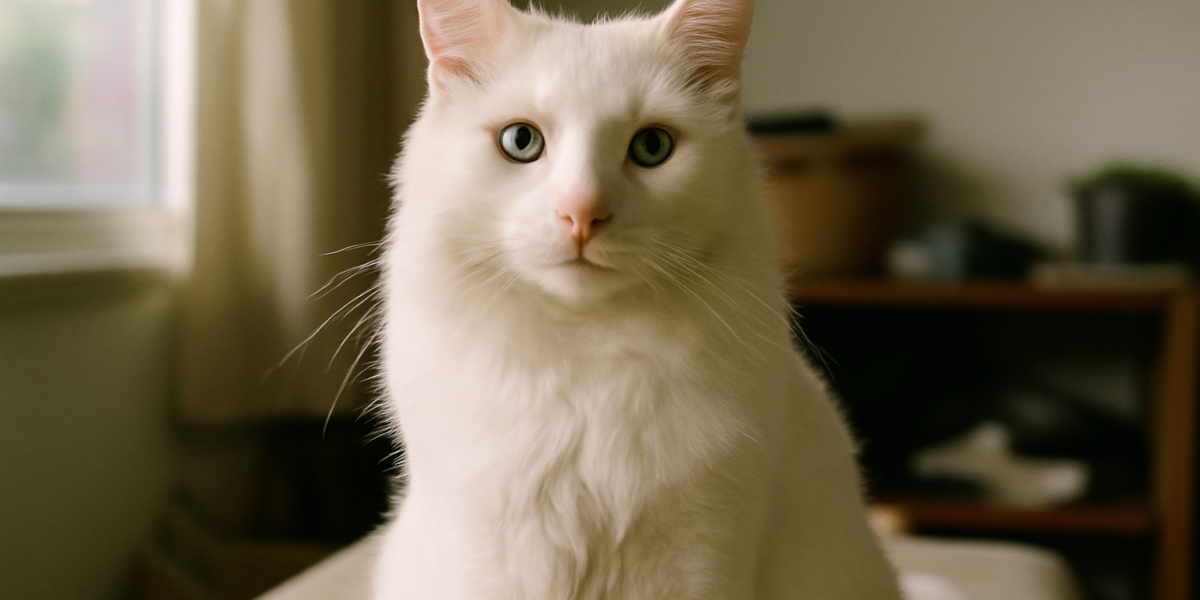
The most visible difference between Van Kedisi and Turkish Van comes down to coat color and origin documentation. Van Kedisi are typically solid white, while Turkish Vans recognized in Western registries traditionally show the Van pattern, which is a white body with color on the head and tail. The eye color of Van Kedisi is highly varied, with odd-eyed individuals especially prized. Turkish Vans can also be odd-eyed, but the breed standards differ on what is acceptable.
The two breeds also differ in availability. Van Kedisi cats live primarily in Turkey under regional protection, while Turkish Vans exist as a registered pedigree breed in Europe and North America. Both groups share the love of water and the active, curious temperament that define cats from this region.
Our comparison of Turkish Angora vs Turkish Van covers the differences between Turkey’s two best-known pedigree breeds, and adding Van Kedisi context completes the picture.
Appearance
The Van Kedisi is medium to large in size, with a strong, athletic body, broad chest, and well-developed shoulders. The head is moderately wedge-shaped with rounded features. Ears are medium to large and set wide, and the eyes are oval and expressive. Eye color is highly variable. Pure white Van Kedisi cats are most prized when they have one amber and one blue eye, the famous odd-eyed look.
The coat is semi-long, soft, and slightly water-resistant, with a noticeable seasonal change. Summer coats are shorter and lighter, while winter coats grow dense and full, especially around the neck and tail.
The White Coat and Hearing
White cats with blue eyes can sometimes be deaf in the blue-eyed ear due to the genetics linked to white coat color. This is a general feline phenomenon rather than a breed-specific issue, and it can affect any white cat. Reputable Van Kedisi caretakers are aware and screen for hearing in odd-eyed and blue-eyed kittens. If you adopt a deaf or partially deaf cat, the practical adjustments are real but very manageable.
Temperament and Personality
Van Kedisi cats are active, intelligent, and confident. They tend to be social, athletic, and playful into adulthood, often described as having energy levels closer to a small dog than a typical sedentary cat. Many enjoy fetch, climbing, and interactive games well into their senior years.
The legendary love of water is real for many Van Kedisi cats. Some swim, others play in shallow water, and many are fascinated by faucets, sinks, and bathtubs. Not every individual is enthusiastic about water, but the trait runs much higher in this breed than in the general cat population.
Van Kedisi cats are typically affectionate with their families and tolerant of respectful children. They generally prefer engaged households over quiet ones, and they often do well with other pets when introductions are handled gradually. The introducing a kitten to a resident cat guide applies if you are bringing a young Van Kedisi or Turkish-type cat into a multi-cat home.
Care and Daily Living
The semi-long coat needs brushing two or three times per week to keep it free of tangles and seasonal mats. During shed seasons, daily brushing helps move loose hair before it ends up on your furniture. The coat is relatively easy compared to a Persian or Maine Coon, but it is more involved than a true shorthair.
Activity is essential. Provide vertical space, climbing furniture, and rotating toys. Many Van Kedisi cats enjoy puzzle feeders that engage their problem-solving skills, and our puzzle feeders for cats guide includes options that work well for athletic breeds.
Diet and Health Maintenance
Feed a complete and balanced food matched to life stage, in measured portions. Active cats can sometimes be free-fed without weight gain, but body condition checks are still important. Our adult cat wellness checklist covers daily and weekly habits that support steady health.
Health Considerations
Van Kedisi cats are generally robust, with the broad genetic base of a landrace breed favoring overall hardiness. The main consideration that runs through any largely white cat population is the higher rate of congenital deafness in blue-eyed individuals. Many caretakers screen for hearing in kittens and place deaf or partially deaf cats in homes prepared to manage them.
Standard preventive care covers most other bases. Maintain annual wellness exams, follow vaccination protocols, and address dental health from kittenhood. As cats age, monitor for the common feline conditions including kidney changes, dental disease, and arthritis. The senior cat care checklist outlines what to watch for in older cats.
Adopting a Van Kedisi
True Van Kedisi cats are very rare outside their native region. Conservation programs in eastern Turkey work to preserve the landrace, and most cats remain in their region of origin. Outside Turkey, what you can realistically adopt is the related Turkish Van pedigree or a Turkish-type semi-longhair white cat from rescue.
If you fall in love with the type rather than the specific name, your options expand significantly. White semi-longhair cats with athletic builds and lively personalities appear in shelters more often than people realize, and many would fit a Van Kedisi-loving home perfectly. Our cat-only rescues overview and the guide to finding a reputable rescue in your state help you find rescues that handle cats of this type.
If you contact a breeder, including any breeder claiming to import Van Kedisi cats, read our list of reputable rescue red flags and ask hard questions about lineage, ethics, and welfare.
Living with a Van Kedisi Type
If you bring a Van Kedisi or Turkish-type semi-longhair home, expect an active, vocal, and engaged companion. They notice everything, comment frequently, and rarely settle into quiet background existence. Their athletic build means they need outlets for climbing and jumping, and their intelligence means they want enrichment beyond the basic toy box.
The water fascination is genuinely real for many cats of this type. Drinking fountains often delight them, and bathroom fixtures become a recurring source of curiosity. Some cats step into shallow water willingly, while others prefer to bat at it from a safe perch. Either way, water enrichment can be a unique form of entertainment for these cats. A simple shallow pan of water with floating toys can keep a water-loving cat occupied for far longer than expected.
Multi-cat households often suit them well. They tend to enjoy the company of another active cat, especially one who shares their playful, athletic temperament. Resource sharing matters, with multiple feeding stations, water sources, and litter boxes spread through the home. The standard recommendation of one litter box per cat plus one extra applies just as it does for any breed.
Brushing routines benefit from being daily during heavy seasonal sheds and two or three times weekly the rest of the year. The semi-long coat does not mat as readily as some longhair breeds, but it does shed visibly, and a vacuum-friendly home setup helps manage what lands on furniture and floors.
Is a Van Kedisi Right for You?
The Van Kedisi or Turkish-type cat suits adopters who want an active, intelligent, sociable companion with a striking white coat and an athletic streak. They are not lap cats in the traditional sense, but they are loyal, affectionate, and engaged with family life. They need vertical space, daily play, and regular grooming.
If you live in a small apartment with limited climbing space, this breed type may struggle. If you can offer enrichment, regular brushing, and patience for an athletic cat with strong opinions, the Van Kedisi is a memorable companion.
Frequently Asked Questions
Is the Van Kedisi the same as the Turkish Van?
Not exactly. The Van Kedisi is the landrace cat of the Lake Van region in Turkey, while the Turkish Van is the formalized pedigree breed developed in the West from exported cats. They share heritage but are recognized differently and have somewhat different breed standards and conservation status.
Why are some Van Kedisi cats deaf?
White cats with blue eyes have a higher chance of congenital deafness because of the genetics tied to white coat color. This is a feline phenomenon rather than a breed-specific defect. Deaf cats live full happy lives indoors with thoughtful adjustments.
Do Van Kedisi cats really like water?
Many do. The breed type has a longstanding association with swimming, splashing, and water play, likely from generations living near Lake Van. Not every individual loves water, but the trait runs much higher than in typical cats.
Can I find a Van Kedisi in the United States?
True pedigreed Van Kedisi cats are extremely rare outside Turkey. Adopters in North America who love the type usually look at the related Turkish Van pedigree or at white semi-longhair rescue cats with similar temperaments.
Are Van Kedisi cats good with families?
Yes, generally. They are sociable, playful, and tolerant of respectful children and other pets. They thrive in active households and benefit from plenty of climbing and play opportunities.
Looking to adopt a Van Kedisi Cat Breed Profile?
Browse Van Kedisi Cat Breed Profile cats and mixes available for adoption from shelters and rescues near you.
Find Van Kedisi Cat Breed Profile Cats for Adoption