
Last updated: April 27, 2026
In this article
- Why the Vet Is Especially Hard for Cats
- Recognizing the Signs
- Cat Friendly Practice and Fear Free Clinics
- Carrier Conditioning
- Car Ride Conditioning
- Pre-Visit Pharmaceutical Protocols
- Day-of-Visit Protocol
- Handling Advocacy
- The Returning-Home Problem
- What Not to Do
- When to Get Professional Help
- Frequently Asked Questions
Why the Vet Is Especially Hard for Cats
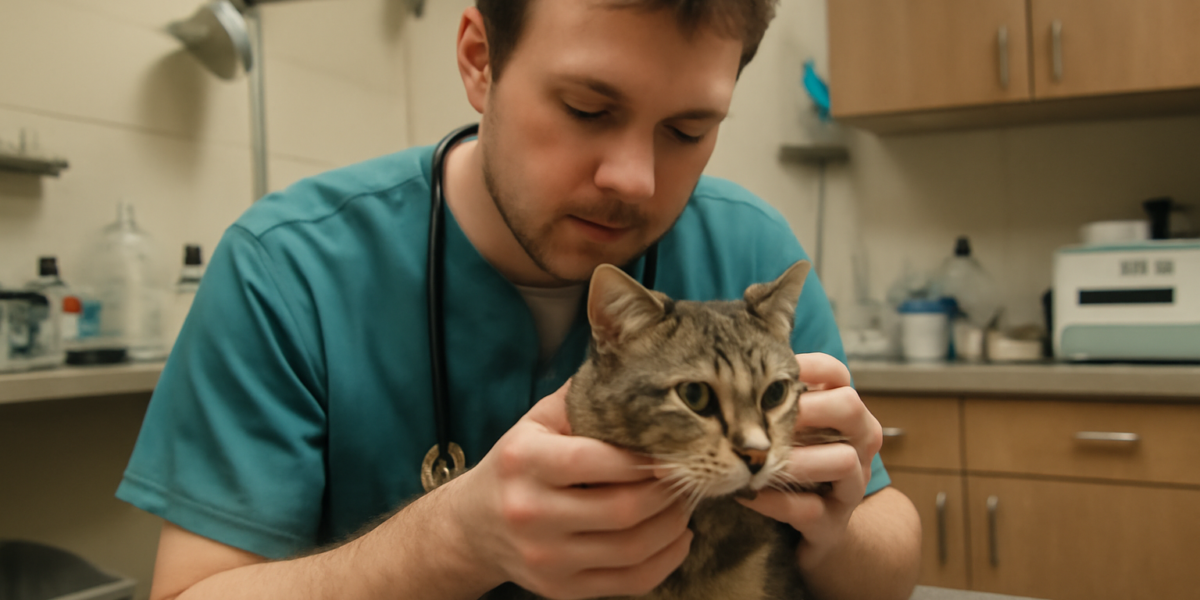
Vet visit anxiety in cats is widespread and often more intense than in dogs. The combination of carrier confinement, car ride, unfamiliar smells (alcohol, antiseptic, the residual scent of stressed and sometimes deceased animals), close proximity to dogs in the lobby, and physical handling adds up to a significant stress event for most cats. Studies suggest cats visit the vet less often than dogs, partly because the experience is so stressful that owners avoid it.
The consequences are serious. Cats hide pain and disease until they are advanced, and reduced vet visits mean later diagnoses. Highly stressed cats also produce less reliable exam findings, can have artificially elevated blood pressure and glucose readings (stress hyperglycemia), and may need heavier sedation that complicates diagnostics.
Modern veterinary medicine has shifted dramatically toward Fear Free, Cat Friendly Practice, and Low-Stress Handling approaches. Combined with at-home preparation and often pre-visit medication, most cats can have meaningfully calmer vet experiences.
Recognizing the Signs
Vet visit anxiety in cats can be quiet and easy to miss because cats often shut down rather than vocalize. Signs include:
- Hiding when the carrier appears
- Disappearing on appointment days
- Vocalizing in the carrier or car
- Drooling, panting, or open-mouth breathing
- Inappropriate elimination in the carrier
- Vomiting in the car
- Frozen body posture in the lobby
- Pupils dilated and fixed
- Pressing into the back of the carrier
- Hissing, growling, or swatting during handling
- Long recovery period after returning home (hours of hiding)
- Inter-cat aggression toward housemates after returning (smell of clinic triggers redirection)
The frozen, silent cat in the back of the carrier is often the most stressed, not the calmest. Stillness in cats is a high-stress shutdown, not relaxation.
Cat Friendly Practice and Fear Free Clinics
The American Association of Feline Practitioners runs the Cat Friendly Practice certification program specifically focused on reducing feline stress in clinics. Fear Free Certified Professionals is a parallel certification covering both dogs and cats. Aligned clinics offer:
- Separate dog and cat waiting areas
- Cat-only appointment hours or sessions
- Carriers placed off the floor on shelves or chairs
- Towels covering carriers in the lobby
- Pheromone diffusers in waiting rooms and exam rooms
- Quiet exam rooms reserved for cats
- Examination on the cat’s own towel or carrier base
- Slow, gentle handling with minimal restraint
- Treats during handling for food-motivated cats
- Pre-visit pharmaceutical recommendations
If your current clinic does not use these approaches, find a Cat Friendly Practice or Fear Free clinic in your area. Both certifications have searchable directories online.
Carrier Conditioning
The single highest-impact intervention for vet anxiety in cats is making the carrier itself a positive space. Most cats only see their carrier when something stressful is about to happen, which produces strong avoidance.
The reset:
- Leave the carrier out as everyday furniture, ideally year-round
- Remove the door if possible, or keep it secured open
- Add familiar bedding (something with the cat’s scent)
- Feed meals or special treats inside the carrier
- Hide treats inside throughout the day
- Use catnip, silvervine, or other safe herbs as occasional bonuses
- Spray with Feliway for cats 15 to 30 minutes before any travel
Top-loading hard carriers with a removable top are dramatically easier than front-loading carriers because the cat can be lifted out without having to be pulled, and the vet can examine the cat in the bottom of the carrier with the top off. If you have a front-loading carrier, consider replacing it.
Car Ride Conditioning
For many cats, the car ride is the worst part of the experience. Car conditioning is harder for cats than dogs because most cats only ride in the car for vet visits. Some practical interventions:
- Take occasional short pleasant trips that do not end at the vet (a few minutes around the block, return home)
- Secure the carrier with a seatbelt so it does not slide
- Cover the carrier with a towel sprayed with Feliway
- Drive smoothly, no sudden stops or sharp turns
- Play calm music or run a fan for white noise
- For long rides, plan a brief stop to check on the cat without opening the carrier
For cats prone to vomiting in the car, do not feed within a few hours of travel. Talk to your vet about anti-nausea medication for cats with significant motion sickness.
Pre-Visit Pharmaceutical Protocols
Pre-visit medication, often abbreviated PVM, is now standard care for moderately to severely anxious cats. Current veterinary behavior guidance considers it appropriate, not a sign of failure. The medication makes the visit possible, allows more thorough examination, reduces trauma that worsens future visits, and often allows you to skip heavier sedation at the clinic.
The most well-supported pre-visit option for cats is gabapentin, given 90 minutes to 2 hours before the appointment. Gabapentin for cats has good evidence for reducing carrier and exam stress without producing problematic sedation in most cats. Some cats are noticeably wobbly on it, which resolves within hours.
For cats with severe anxiety, your veterinarian may discuss combination protocols including gabapentin plus a second agent. Daily medications like fluoxetine for cats, clomipramine for cats, buspirone for cats, or paroxetine for cats may be considered for cats with high baseline anxiety, taking 4 to 8 weeks to reach full effect.
Test any new pre-visit medication on a non-clinic day at least a week before the appointment to see how your cat responds.
Day-of-Visit Protocol
A practical sequence for vet visit day:
- Confirm the carrier is set up and accessible the day before
- Spray carrier interior with Feliway 15 to 30 minutes before loading
- Give pre-visit medication on the schedule your vet provided
- Skip the morning meal if the appointment is early (reduces vomiting and helps with treat motivation)
- Load the cat calmly — top-loading carriers make this easier
- Cover the carrier with a towel for the trip
- Hold the carrier level, not by one handle
- At the clinic, place the carrier on a shelf or chair, not the floor
- Keep the towel over the carrier in the lobby
During the exam, ask the staff to leave the cat in the bottom of the carrier with the top removed when possible. Many exams can be performed this way. Ask for examination on the cat’s own towel rather than directly on the cold table.
Handling Advocacy
You can advocate for your cat during the visit. Helpful things to ask for:
- Quieter exam room or appointment time
- Pheromone spray on the exam towel
- Examination in the bottom of the open carrier when possible
- Minimal restraint — many cats fight scruffing and full restraint but tolerate light handling
- Pause if the cat shows escalating stress
- Splitting a long procedure across multiple appointments
- Use of injectable sedation for procedures that warrant it, rather than fighting through
Most Cat Friendly Practice clinics will already do most of these. If you ask for accommodations and the staff are dismissive, that is information about whether the clinic is the right fit for your cat.
The Returning-Home Problem
Many multi-cat households experience inter-cat tension after one cat returns from the vet. The returning cat smells different (clinic scents, possibly fear pheromones), and the other cat reacts to a “stranger.” This can produce redirected aggression incidents that hurt everyone.
Prevention:
- Plan for the returning cat to spend the first hour or two in a separate room
- Wipe the returning cat down with a soft cloth that has been rubbed on a household cat to mix scents
- Use Feliway in the shared spaces
- Reintroduce gradually rather than dropping the returning cat directly into the household
- Watch for tension and separate immediately if either cat shows escalating stress
This is especially important for households with prior inter-cat tension or after one cat has been at the vet for a procedure or overnight stay.
What Not to Do
Do not punish anxiety behaviors. Hiding, vocalization, hissing, and even biting are signs of distress, and punishment makes the next visit worse.
Do not skip preventive care because visits are stressful. Skipped care produces medical problems that require even harder visits later. Pre-visit medication and Cat Friendly clinics make routine care possible.
Do not try to “tough out” a high-stress exam. The cat learns the experience is unsafe and gets worse over time. Pause, sedate appropriately, and reschedule if needed.
Do not use a soft-sided carrier with a cat who hates the carrier — they often deform when the cat panics, making removal harder. Hard top-loading carriers are easier to manage.
For Senior or Painful Cats
Senior cats with arthritis, dental disease, or other pain often have escalating vet anxiety because handling hurts more than it used to. The first intervention is treating the pain. A senior cat whose pain is well-controlled tolerates handling much better.
For senior cats with cognitive dysfunction, the unfamiliarity of the clinic adds to general confusion. Pheromones, calm handling, and pre-visit medication often help. Schedule appointments at quieter times and ask for the same staff if possible.
When to Get Professional Help
Get professional help if your cat has bite history at the clinic, if standard pre-visit medication protocols are not enough, or if anxiety is so severe that necessary care is being skipped.
Work with a board-certified veterinary behaviorist (DACVB) for severe cases, particularly when medication selection matters. Find a DACVB through the American College of Veterinary Behaviorists directory. Telehealth makes this accessible nationwide.
For broader context, see our hubs for cat separation anxiety and cat play aggression. Browse our adopt a cat hub or more cat content in the cat care blog.
Realistic Outcomes
Most cats improve substantially with carrier conditioning, Cat Friendly clinics, and appropriate pre-visit medication. Some reach the point where vet visits are routine and uneventful. Many continue to need pre-visit medication for procedures, and that is appropriate care.
Frequently Asked Questions
Why does my cat hide when they see the carrier?
Because the carrier predicts vet visits, which they have learned are unpleasant. Reset by leaving the carrier out as everyday furniture, feeding inside it, and using it for occasional non-vet trips.
Should I withhold food before a vet visit?
For early appointments, skipping the morning meal often helps with car nausea and increases treat motivation at the clinic. For later appointments or specific procedures, follow your vet’s instructions.
Is gabapentin safe for cats?
Yes, when prescribed by a veterinarian. It has good safety data for pre-visit anxiety in cats and is widely used. Some cats are noticeably wobbly afterward, which resolves within hours.
How do I get my cat into the carrier?
If your cat resists, use a top-loading carrier and lower the cat in. For front-loading carriers, tip the carrier on end and lower the cat in feet-first. Ideally, build positive associations so the cat goes in willingly.
Can I bring my cat to the vet without a carrier?
No. Carriers are required for safety in the lobby (other animals, doors, distractions), in the car, and for handling. A loose cat in the lobby can be triggered into a redirected aggression incident.
Should I use a soft-sided carrier?
Hard top-loading carriers are generally easier. Soft-sided carriers can deform when the cat panics, making removal harder, and they offer less protection in a car accident.


