
Last updated: May 16, 2026
In this article
- Why Dental Care Requires General Anesthesia
- The Case Against “Anesthesia-Free” Cleanings
- Pre-Anesthetic Workup for Dental Patients
- Premedication for Dental Procedures
- Induction and Intubation
- Maintenance Anesthesia During Dental Work
- Local and Regional Nerve Blocks
- Dental Radiographs as Part of the Procedure
- Scaling, Polishing, and Probing
- Recovery and the First 24 Hours
- Post-Operative Pain Management
- How Often Should Dental Anesthesia Happen
- When to Choose a Veterinary Dental Specialist
- Frequently Asked Questions
Why Dental Care Requires General Anesthesia
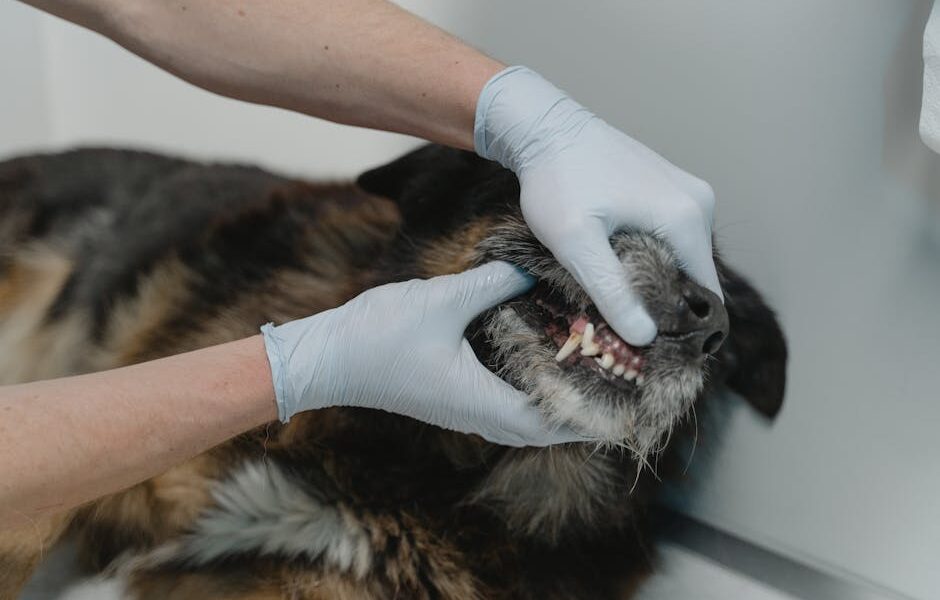
Veterinary dental anesthesia protocols are a recurring source of owner confusion and sometimes anxiety. The procedure that produces a clean mouth, healthy gums, and pain-free chewing requires general anesthesia with a cuffed endotracheal tube — and this is the standard of care recognized by the American Veterinary Dental College and major veterinary anesthesia societies. The reasoning is anatomical, hygienic, and humane. Dogs and cats will not voluntarily allow ultrasonic scaling, subgingival cleaning, dental radiographs, and probing of every tooth, and any attempt to do so without anesthesia produces stress, incomplete cleaning, undiagnosed pathology, and pain.
This article walks through what a proper dental anesthesia protocol looks like, why each component matters, and what to expect during recovery. If your pet is overdue for a dental cleaning, the goal is to understand why the team’s recommendations exist so the conversation moves from “do they really need anesthesia?” to “what is the best protocol for my specific pet?”
The Case Against “Anesthesia-Free” Cleanings
“Anesthesia-free dental cleaning” services scrape visible tartar from the outer crown of the tooth in an awake or lightly restrained pet. The visible result looks cleaner. The problem is that visible tartar is roughly the tip of the iceberg of dental disease — 70 to 80 percent of the pathology is below the gumline, in the periodontal pocket, on the root surface, and in the alveolar bone. None of this is addressed by anesthesia-free scaling.
Without subgingival cleaning, periodontal disease progresses despite a cosmetically clean crown. Without dental radiographs, fractured roots, tooth resorption, and bone loss are missed entirely. Without polishing, the scaled tooth surface becomes microscopically rough and accumulates plaque faster than before. And without an endotracheal tube, water, debris, bacteria, and dislodged tartar can be aspirated into the lungs. For the full discussion, see anesthesia-free dental cleaning debate.
Pre-Anesthetic Workup for Dental Patients
Dental patients are often older — periodontal disease accumulates over years — so the workup is calibrated to age and concurrent disease. The standard pre-anesthetic bloodwork ASA staging applies: CBC, chemistry, urinalysis. For senior dogs and cats, chest radiographs and an ECG may be added based on physical findings. For pets with known cardiac disease, an echocardiogram by a cardiologist may inform the plan.
Pets with chronic kidney disease need specific attention to hydration and intra-operative fluid rate; periodontal infection contributes to renal load, and dental care is often beneficial even in CKD patients but requires careful planning. Diabetic patients need an insulin and fasting plan — see insulin protocols for diabetic dogs — coordinated with the dental procedure. Brachycephalic dental patients carry the airway risks discussed in brachycephalic anesthetic recovery.
Premedication for Dental Procedures
Dental premedication mirrors the general principles in anesthetic premedication protocols — opioid for analgesia and sedation, plus an adjunctive agent based on patient status. Dental procedures involve real pain, even routine cleanings produce some discomfort, and extractions are substantially painful. Pre-emptive analgesia begun before tissue damage is more effective than treating pain after the fact.
For older patients with stable comorbidities (the typical dental population), buprenorphine plus midazolam or a low-dose dexmedetomidine combination is a common choice. The full discussion of buprenorphine use is in buprenorphine for dogs and buprenorphine for cats. For younger and healthier patients, methadone or hydromorphone with acepromazine or dexmedetomidine may be preferred.
Induction and Intubation
IV induction with propofol or alfaxalone takes the patient to surgical depth — see propofol vs alfaxalone induction. The endotracheal tube is placed and the cuff inflated to seal the airway against fluid, debris, and aspiration. The cuff seal is critical for dental procedures specifically because the mouth will be irrigated with water continuously during cleaning, and any leak past the cuff sends water into the trachea and potentially the lungs.
The cuff is inflated to the minimum pressure that prevents leak — typically checked by listening for air escape during ventilation. Over-inflation can damage the trachea, particularly in cats where tracheal injury from dental anesthesia is a documented complication. Some practices use cuff pressure gauges to standardize.
Maintenance Anesthesia During Dental Work
Inhalant anesthesia with isoflurane or sevoflurane — see isoflurane vs sevoflurane — is delivered through the endotracheal tube with oxygen. The patient is positioned in lateral recumbency, switched side to side during the procedure so both sides of the mouth can be accessed. Head positioning keeps water flowing away from the throat rather than pooling.
Monitoring follows the standards in anesthetic monitoring essentials — ECG, capnography, pulse oximetry, blood pressure, and temperature. Dental procedures often run an hour or longer, particularly when extractions are involved, so monitoring vigilance over a sustained period matters. Temperature loss is a particular concern because the mouth is open and continuously irrigated.
Local and Regional Nerve Blocks
Local nerve blocks substantially reduce the inhalant anesthetic needed and provide excellent pain control during and after the procedure. The common dental blocks in dogs and cats are the infraorbital block (upper teeth rostral to the maxillary molars), the maxillary block (more proximal upper teeth), the inferior alveolar (mandibular) block (lower teeth on one side), and the mental block (lower incisors and canines).
Bupivacaine is the most common local anesthetic used because of its long duration — up to six to eight hours of post-block analgesia. The block is placed by the veterinarian after intubation but before any dental work begins, so the local anesthetic is established before stimulation occurs. Properly placed blocks make extractions essentially pain-free and allow the inhalant gas to be reduced to lighter planes.
Dental Radiographs as Part of the Procedure
Full-mouth dental radiographs are the standard of care for proper dental care. Many dental abnormalities — fractured roots, periapical abscesses, tooth resorption (particularly common in cats), retained roots from prior extractions, missing teeth that turn out to be impacted, and bone loss patterns — are invisible on visual inspection and only show on radiographs. The radiographs are taken in lateral recumbency with the patient anesthetized and intubated.
Cats with feline odontoclastic resorptive lesions (FORL) — a common and painful condition — often have radiographic findings that change the treatment plan dramatically. Without radiographs, the painful tooth may be missed and the cat continues to suffer despite a “clean” scaling. Dental radiographs are not optional for proper care.
Scaling, Polishing, and Probing
Ultrasonic scaling removes tartar from the visible crown and below the gumline. Hand scaling addresses subgingival deposits that ultrasonic tips cannot reach reliably. Polishing follows to smooth the microscopic roughness left by scaling, which slows future plaque accumulation. The whole-mouth periodontal probe and chart documents pocket depths, gum recession, mobility, and furcation exposure — this is the data that drives the rest of the treatment plan.
For teeth that need extraction, surgical extraction (with gum-flap and bone-removal techniques) is often required, particularly for multi-rooted molars and for teeth with resorption or significant attachment loss. Extractions are part of dental care, not a failure of cleaning — saving a tooth that is structurally non-viable causes more pain than removing it.
Recovery and the First 24 Hours
Recovery from dental anesthesia follows the standard principles. The endotracheal tube is removed when the patient is swallowing reliably; the cuff is deflated, the tube is gently removed, and the oropharynx is suctioned if needed. Active warming continues until temperature is normal. Pain medication that was begun pre-emptively continues into recovery.
The first twenty-four hours post-dental require soft food. Kibble can irritate fresh extraction sites and disrupt sutures. Canned food, food softened with water, or a temporary prescription soft diet works well. Water intake should be encouraged. Mild bloody saliva is normal for the first few hours after extractions and is not a concern unless it persists or worsens.
Take-home medications often include continued oral pain medication, sometimes an antibiotic for pets with significant periodontal infection or pulled teeth, and sometimes a chlorhexidine oral rinse. Activity restriction is generally minimal — no chewing on hard toys for ten to fourteen days after extractions, but normal walking and play are fine.
Post-Operative Pain Management
The multimodal pain plan continues at home — see multimodal post-op pain management for the full discussion. For dogs, an NSAID like carprofen, meloxicam, or galliprant typically provides good post-dental pain control for three to five days. Opioids like buprenorphine may continue for the first day or two after major extractions.
For cats, NSAID options are more limited but include onsior (robenacoxib) for short courses. Buprenorphine is the workhorse opioid for cats and is often given by injection at the time of recovery and continued as an oral or transmucosal formulation at home. Gabapentin for cats is widely used as an adjunctive analgesic.
How Often Should Dental Anesthesia Happen
Most healthy adult dogs and cats benefit from professional dental cleaning every one to two years. Some breeds with strong predisposition to dental disease — small dogs, brachycephalic dogs, certain cat breeds — may need more frequent cleanings. Pets with chronic stomatitis or feline tooth resorption may need more frequent dental visits to manage active disease.
Pet owners can extend the interval between professional cleanings through daily toothbrushing, dental chews approved by veterinary dental organizations, prescription dental diets, and water additives. None of these replaces professional cleaning entirely, but they slow plaque accumulation between visits substantially.
When to Choose a Veterinary Dental Specialist
Routine cleanings and uncomplicated extractions can be done in general practice with appropriate anesthesia. Complex procedures — root canals, advanced periodontal surgery, oral surgery for tumors, jaw fracture repair, severe stomatitis management — are typically referred to a board-certified veterinary dentist (AVDC diplomate). For higher-risk anesthetic patients facing dental care, an ACVAA-supervised anesthesia plan combined with general-practice dental skills may be the right balance.
Pets with complex medical conditions — severe cardiac disease, advanced kidney disease, uncontrolled diabetes — may benefit from referral to a hospital with combined internal medicine and dentistry expertise. The decision is collaborative between you, your primary vet, and any specialists already involved.
Frequently Asked Questions
Why does my older pet need anesthesia for a dental cleaning?
Age is not a contraindication to anesthesia; uncontrolled disease is. A healthy senior pet with normal labs and a good cardiac exam is a good candidate. The risks of leaving dental disease untreated — chronic pain, infection, organ stress from chronic bacteremia — usually exceed the carefully managed risk of modern anesthesia.
How long is my pet under anesthesia for a dental?
Routine cleanings without extractions are often forty-five minutes to an hour. Procedures with multiple extractions can run two hours or more. The team plans for the expected duration but is prepared to extend if findings on radiographs change the plan.
Can the team do all the extractions in one visit or will I need to come back?
Most teams aim to complete all indicated dental work in one anesthetic event to avoid a second procedure. For very extensive work, splitting across two visits is sometimes appropriate. This is a planning conversation to have ahead of time.
What if my pet has a heart murmur — can they still have a dental?
Most heart murmurs do not prevent dental care; they prompt closer pre-op evaluation. For significant murmurs, an echocardiogram informs the anesthesia plan. Pets with well-managed cardiac disease often have safe dental procedures with appropriately adjusted protocols.
How can I keep my pet’s teeth clean between dental visits?
Daily toothbrushing with pet-safe toothpaste is the gold standard. Veterinary Oral Health Council (VOHC)-approved dental chews, prescription dental diets, and water additives are helpful supplements. Avoid hard chews (bones, antlers, hard nylon toys) that fracture teeth and create more dental work, not less.


