
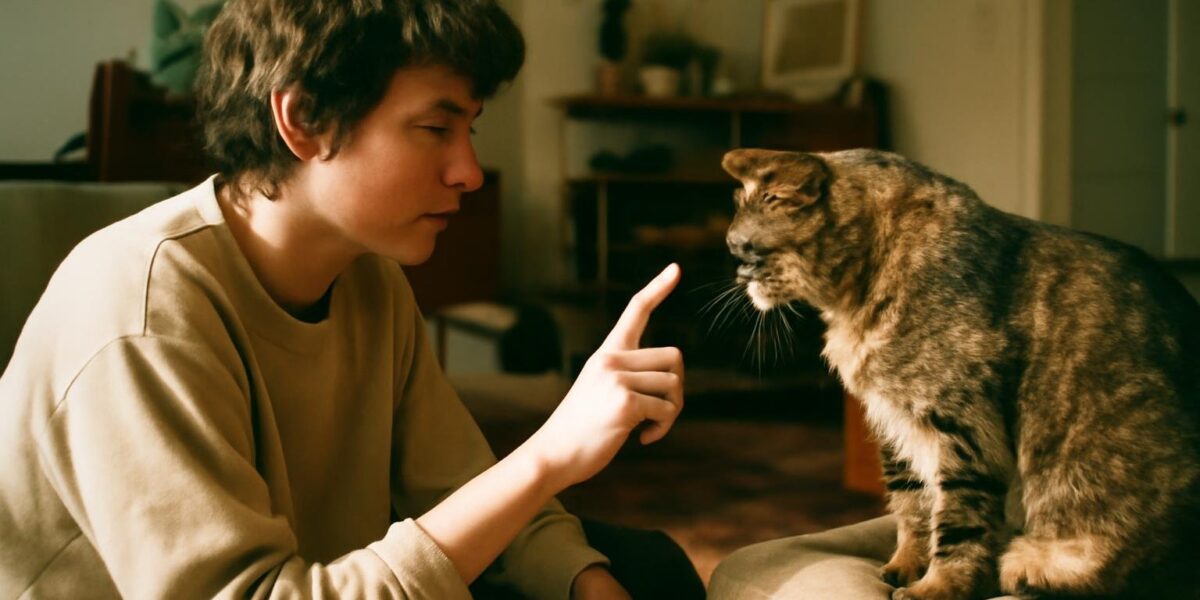
If your cat bats at her reflection or stares down the “stranger” in the mirror, you may be asking, “why does my cat paw at the mirror?” The charming answer is that your cat almost certainly thinks she is looking at another cat. Cats do not recognize themselves in mirrors the way humans do — they lack the self-recognition that would let them understand the reflection is their own image. Instead, they see a silent, oddly familiar cat who mimics their every move, and that can spark curiosity, playfulness, or occasionally a bit of territorial bluster. In nearly all cases this is normal, harmless behavior and a sign of a curious, engaged cat. Understanding what is going on helps you turn the mirror into healthy enrichment rather than a source of stress.
In this article
Your Cat Sees Another Cat, Not Herself
Self-recognition in a mirror is rare in the animal kingdom, and cats do not have it. When your cat looks at the glass, she perceives another cat of similar size and coloring who moves exactly when she does. Because the reflection makes no sound and carries no scent, it is a puzzling intruder — visible and responsive, yet impossible to smell or touch.
That sensory mismatch is a big part of the fascination. Cats rely heavily on scent to identify other cats, and a “cat” with no odor is deeply confusing. Many cats will paw at the mirror, then peek behind it, looking for the body that should go with the image. This investigative behavior is your cat trying to solve a mystery her instincts can’t quite explain.
For most cats, the reflection is interesting rather than threatening. Pawing, watching, and chasing the “other cat” are forms of play and curiosity. If your cat’s posture stays loose and playful, you are simply watching a clever animal entertain herself. Reading her body language tells you whether she is having fun or feeling challenged.
Play, Curiosity, and Hunting Instinct
Movement triggers a cat’s hunting drive, and a reflection that darts and shifts is a perfect target. Pawing at the mirror often looks just like pawing at a toy — a swat, a pounce, a quick retreat, then another swat. For an indoor cat, the moving reflection offers stimulation and a bit of exercise.
Curiosity also keeps cats coming back. Even after the novelty fades, some cats periodically check the mirror to see if the strange cat is still there. This is the same inquisitive nature that draws cats to investigate boxes, bags, and anything new in their environment. It reflects a healthy, mentally engaged cat — exactly the kind of curiosity you want to nurture with cat enrichment activities and interactive play.
Kittens and young cats tend to be the most enthusiastic mirror-pawers, since their play drive is high and the world is still endlessly novel. Most grow somewhat bored of mirrors as they age and confirm, again and again, that the silent cat never smells like anything or plays back properly.
When the Reflection Causes a Reaction
Usually mirror behavior is lighthearted, but occasionally a cat reads the reflection as a rival invading her territory. Cats are territorial by nature, and a same-sized “cat” who refuses to back down can prompt a defensive or aggressive display rather than playful pawing.
Signs that the mirror is causing more than fun include:
- Puffed fur, an arched back, flattened ears, or a lashing tail at the reflection.
- Hissing, growling, or swatting hard at the glass.
- Redirected aggression — turning on a nearby pet or person after a mirror encounter.
- Lingering agitation or stress after the interaction ends.
These reactions are not common, but they matter because chronic perceived “intruders” can stress a cat. If your cat reacts territorially, watching for the broader signs of stress in cats helps you decide whether the mirror should be covered or moved.
Why Mirrors Confuse Cats So Much
To understand the pawing, it helps to see the world the way your cat does. Cats build their picture of reality from a blend of senses, and scent and sound carry enormous weight. A real cat announces itself with smell, body heat, subtle vocalizations, and movement you can track in three dimensions. A reflection offers only the visual half of that equation — a flat, silent, scentless image — which leaves your cat’s instincts perpetually unsatisfied.
This sensory gap is exactly why most cats eventually lose interest. After enough investigations confirm that the “other cat” never smells, never makes a sound, and never crosses into the real room, the reflection stops registering as a genuine animal. Many adult cats walk past mirrors without a second glance, having long since filed reflections under “harmless and boring.”
Other shiny, reflective surfaces can produce the same effect: polished ovens, dark TV screens, glass doors at night, and even the side of a metal bowl. If your cat paws at these too, the cause is the same — a moving, mirror-like image that her eyes register as another creature while the rest of her senses come up empty. It is a quirk of how feline perception meets human technology, not a sign that anything is wrong.
Normal vs. When to Pay Attention
Mirror pawing is normal and harmless when your cat is relaxed and playful, treats the reflection like a toy, and walks away without lingering distress. There is no need to discourage a cat who is simply entertained by her reflection — it is good mental stimulation.
Pay closer attention when:
- Your cat shows fear or aggression toward the reflection, with puffed fur or hissing.
- The behavior triggers redirected aggression toward others in the home.
- Your cat seems genuinely stressed or fixated, returning to “fight” the mirror repeatedly.
- Mirror staring is paired with other compulsive behaviors or sudden behavior changes.
While mirror-pawing itself is rarely a medical concern, any sudden, dramatic change in behavior is worth mentioning to your veterinarian. If a cat becomes genuinely territorial or stressed by reflections, a certified feline behaviorist can help you manage it.
How to Channel the Behavior
If your cat enjoys the mirror harmlessly, you can simply let her play. To make the most of that curiosity, give her better, more rewarding outlets for her hunting drive — wand toys, feather teasers, and toys that mimic prey movement deliver the satisfying “catch” a reflection never will. Interactive play also burns energy and builds your bond.
You can even turn a harmless mirror fascination into a training opportunity. Some owners use the moment to introduce simple cues, rewarding the cat for turning away from the reflection toward a treat or toy. This builds focus, strengthens your bond, and gives your cat a more rewarding outlet than batting at glass — teaching her that paying attention to you pays off better than the silent stranger ever will. Ending each mirror session with a real toy “kill” she can pounce on and catch also leaves her satisfied rather than frustrated.
Rotate toys and add vertical space, window perches, and puzzle feeders so an indoor cat has plenty to do. A cat with rich daily enrichment is far less likely to fixate on a mirror out of boredom. Our roundup of indoor enrichment ideas offers easy ways to keep her engaged.
If the mirror provokes a territorial or fearful response, the simplest fix is to remove the trigger: cover, angle, or relocate low mirrors your cat can reach. You can also block her view of the reflection in problem spots. For cats who become reliably stressed by reflections — or who show redirected aggression — reduce access to the mirror and work with your vet or a behaviorist on a calming plan. For most cats, though, the mirror is just one more curious thing in a happily busy day.
Frequently Asked Questions
Does my cat know it is looking at itself in the mirror?
No. Cats lack mirror self-recognition, so your cat sees the reflection as another cat rather than herself. Because the “other cat” has no scent and makes no sound, she may paw at the glass or look behind the mirror trying to find the body that should be there.
Is it bad for my cat to paw at the mirror?
Usually not. For most cats it is harmless play and curiosity that provides mental stimulation. It only becomes a concern if your cat reacts with fear or aggression, becomes genuinely stressed, or redirects aggression onto another pet or person.
Why does my cat look behind the mirror?
Your cat is investigating the puzzling “other cat” she sees. Because the reflection has no scent, her instincts tell her a real cat should be present, so she checks behind the glass to find it. This is normal, curious problem-solving behavior.
Should I stop my cat from playing with the mirror?
If she is relaxed and playful, there is no need. Just make sure she has better outlets for her hunting drive, like wand toys and interactive play. If the mirror causes fear, aggression, or stress, cover or relocate it and provide more enrichment instead.
My cat hisses at the mirror — what should I do?
Hissing suggests she sees a rival rather than a playmate. Remove or cover the mirror she can reach, give her plenty of enrichment and play to reduce tension, and watch for redirected aggression. If the territorial response persists, consult your vet or a feline behaviorist.


