
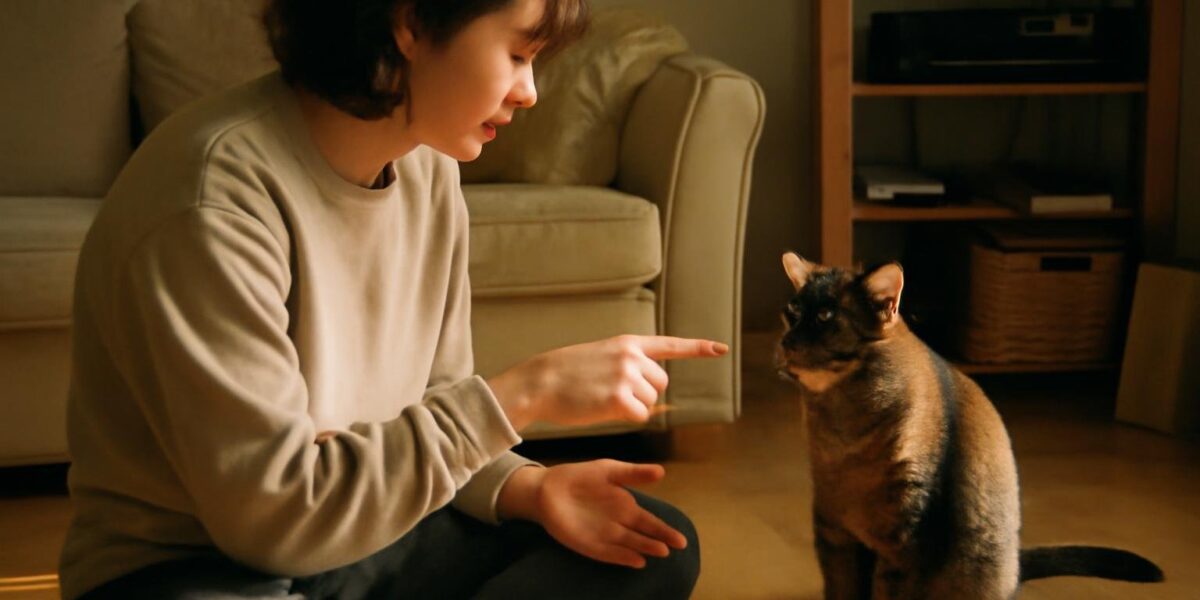
The Short Answer: It’s Usually Happiness and Trust
If your cat flops down and wriggles around at your feet, you have probably wondered, “why does my cat roll on the floor?” The good news is that this is almost always a positive, contented behavior. Rolling often signals that your cat feels happy, safe, and comfortable in your presence.
In this article
- The Short Answer: It’s Usually Happiness and Trust
- The Happy Reasons Cats Roll on the Floor
- The Belly Trap: Roll Doesn’t Always Mean Rub My Tummy
- Rolling Tied to Heat Cycles
- Rolling as Scent Communication
- When Rolling Might Signal a Problem
- How to Respond When Your Cat Rolls
- Reading the Whole Picture Around a Roll
- Frequently Asked Questions
When a cat exposes its belly by rolling, it is showing real trust — the belly is a vulnerable area, and revealing it means your cat feels secure. Add scent-marking, greeting rituals, and a bit of stretching, and you have a behavior that is mostly about comfort and connection.
This guide covers the everyday reasons cats roll, the difference between a happy roll and a sign of discomfort, and how to respond so your cat keeps feeling at ease.
The Happy Reasons Cats Roll on the Floor
Rolling can mean several things, often overlapping in one joyful wriggle.
A greeting and a sign of trust. Many cats roll over when they see a favorite person, especially after time apart. Showing the belly is a vulnerable, affectionate hello that says, “I feel safe with you.”
Scent-marking territory. Cats have scent glands along their backs, cheeks, and paws. Rolling on the floor or on your belongings deposits their scent, claiming the space and surrounding themselves in familiar smells.
Stretching and feeling good. Rolling lets a cat stretch its spine and muscles. A relaxed cat that flops and rolls is often simply enjoying a comfortable, satisfying stretch.
Asking for attention. A roll can be an invitation to interact — to talk to them, play, or offer a few gentle strokes. Reading these cues is easier with the cat body language guide.
Cooling off or finding comfort. On a warm day, a cat may roll on cool tile or hardwood to regulate its temperature and get comfortable.
The Belly Trap: Roll Doesn’t Always Mean Rub My Tummy
Here is a crucial nuance many cat owners learn the hard way. When your cat rolls and shows its belly, it is usually expressing trust — not necessarily requesting a belly rub.
The belly is one of the most sensitive and protected parts of a cat’s body. Many cats will swat or bite if you go straight for the exposed tummy, not out of aggression but because instinct kicks in to guard a vulnerable area.
Instead of diving for the belly, respond with gentle head or cheek scratches, talk softly, or start a game. Let your cat guide how much contact they want. Watching for tail flicks or tense muscles, explained in these cat stress signs, helps you avoid crossing the line from relaxed to overstimulated.
Rolling Tied to Heat Cycles
If you have an unspayed female cat, frequent, dramatic rolling combined with loud vocalizing, restlessness, and raised hindquarters may indicate she is in heat. This rolling is more intense and persistent than ordinary contented flopping.
Spaying not only stops these behaviors but also prevents unwanted litters and reduces certain health risks. If you suspect heat-related rolling, your vet can advise on spaying, which is strongly recommended for indoor cats not part of a responsible breeding program.
You can usually tell heat-related rolling apart from contented rolling by its intensity and the company it keeps. A cat in heat tends to roll persistently and dramatically, vocalize loudly, become restless or unusually affectionate, raise her hindquarters when touched near the lower back, and may try to escape outdoors. Ordinary happy rolling, by contrast, is brief, calm, and not accompanied by that frantic, repetitive quality.
For already-spayed or neutered cats, this cause does not apply, and the rolling is almost certainly the happy, trusting kind.
Rolling as Scent Communication
One of the most overlooked reasons cats roll is the chemistry of scent. For a cat, smell is a primary language, and rolling is one of the ways they write messages into their environment.
Cats carry scent glands across many parts of their bodies, including the cheeks, chin, the base of the tail, and along the back. When your cat rolls on the floor, a rug, your laundry, or a sunny patch where you often sit, they are depositing their personal scent and claiming the spot as part of their secure territory. Surrounded by their own familiar smell, a cat feels calmer and more in control of their space.
You may notice your cat is especially keen to roll on items that smell like you, or on brand-new objects you bring into the home. Rolling on your belongings blends their scent with yours, reinforcing the bond and marking you and your things as part of their family group. Fresh items get rolled on because your cat is essentially “signing” them.
Seen this way, a roll is rarely just a roll. It is often a quiet act of communication, telling other animals and reassuring themselves that this place, and this person, belong to them.
When Rolling Might Signal a Problem
The vast majority of rolling is benign, but a few patterns deserve a second look.
Rolling with scratching or skin irritation. If your cat rolls frantically while scratching, biting at its skin, or seems itchy, it could indicate fleas, allergies, or a skin condition rather than contentment.
Restless, uncomfortable rolling. A cat that rolls and writhes while appearing distressed, vocalizing painfully, or unable to settle may be in discomfort. This is different from a relaxed flop.
Sudden changes. Any new behavior paired with appetite, energy, or litter box changes is worth monitoring and discussing with your vet.
If you ever suspect pain or a medical issue, having a home pet first-aid and emergency station ready and your vet’s number handy lets you respond quickly. But in everyday life, a cat rolling at your feet is overwhelmingly a sign of a happy, trusting companion.
How to Respond When Your Cat Rolls
Responding well keeps the trust flowing and turns these moments into bonding opportunities.
- Read the context. A relaxed greeting roll calls for soft words and gentle head scratches, not an immediate belly grab.
- Let your cat lead. Offer your hand and let them decide how much contact they want. Stop if you see tail flicking or tension.
- Turn it into play. If it is an invitation, grab a wand toy and engage that playful energy. These cat enrichment activities are perfect for the moment.
- Keep them stimulated. A well-enriched cat rolls out of contentment, not boredom. Try these cat indoor enrichment ideas to keep life interesting.
- Enjoy the trust. Most of all, take it as the compliment it is — your cat feels safe and happy with you.
Reading the Whole Picture Around a Roll
Because rolling can mean several different things, the surrounding context is what tells you which message your cat is sending. The same flop can be a happy greeting, a scent-marking session, or a play invitation depending on what else is going on.
Pay attention to these accompanying signals:
- Relaxed posture and slow blinks usually mean a contented, trusting roll — enjoy it with gentle words and soft head scratches.
- Wide eyes, a wiggling rear, and a fixed gaze on a toy point to a play invitation. Grab a wand and let the games begin.
- Rolling combined with rubbing on objects is scent-marking and territory work, a sign of a confident, settled cat.
- Tense muscles, flicking tail, or flattened ears mean the moment has shifted. Give your cat space rather than reaching in.
The more you practice reading these combinations, the easier it becomes to respond in a way your cat appreciates. Over time you will find that you can tell a “hello, I trust you” roll from a “let’s play” roll almost instantly, which makes these little moments even more rewarding for both of you.
Frequently Asked Questions
Does my cat rolling on the floor mean they want a belly rub?
Not usually. Showing the belly is a sign of trust, not necessarily a request to touch it. Many cats dislike belly rubs and may swat. Start with head and cheek scratches and let your cat guide you.
Why does my cat roll over when they see me?
It is an affectionate greeting. Rolling and exposing the belly in your presence shows your cat feels safe, happy, and bonded with you. It is one of the warmest hellos a cat can offer.
Why does my cat roll on the floor and meow loudly?
If it is excited and playful, it is normal attention-seeking. In an unspayed female, persistent loud rolling can indicate she is in heat. Talk to your vet about spaying if you suspect that.
Is rolling on the floor ever a sign of a problem?
Rarely. Watch for rolling paired with frantic scratching, itchy skin, distress, or an inability to settle, which can point to fleas, allergies, or discomfort. Those cases warrant a vet visit.
Why does my cat roll on cool floors specifically?
Cats often roll on tile or hardwood to cool down on warm days and to enjoy a comfortable stretch. It is a simple, normal way to regulate temperature and relax.


