
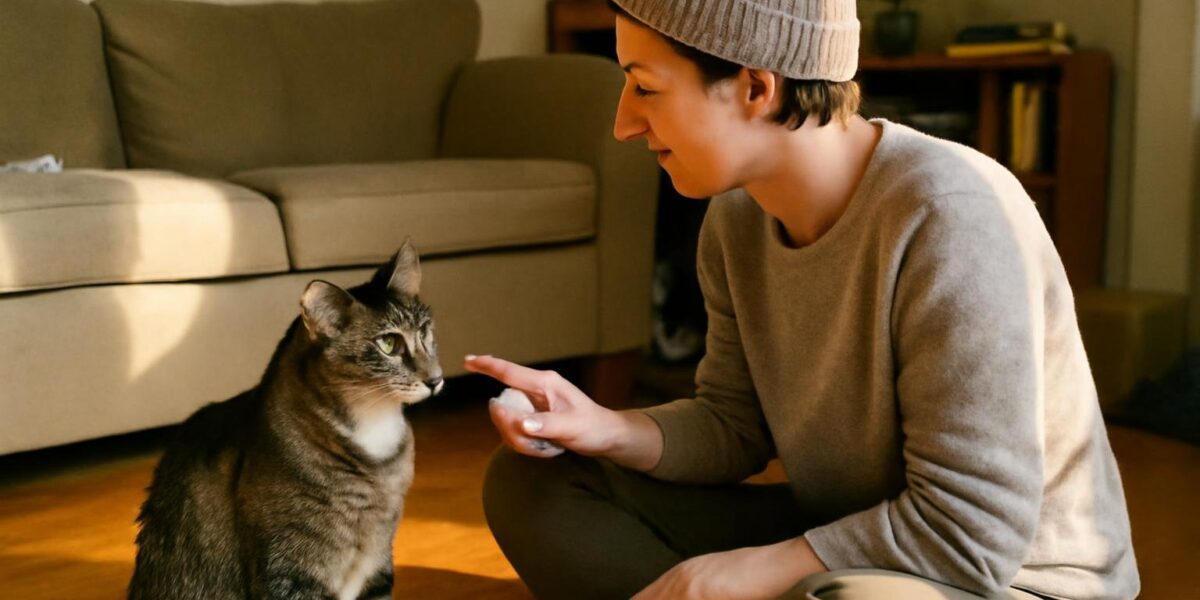
The Short Answer: Warmth, Love, and Security
When your cat plops herself squarely onto your lap, chest, or keyboard, you may fondly wonder why does my cat sit on me. The lovely answer is that your cat is showing affection, seeking warmth, and choosing you as her safest, most comfortable spot in the world. Sitting on you combines several of a cat’s favorite things at once: your body heat, your familiar scent, the rhythm of your breathing, and the security of being close to her trusted human.
In this article
Cats do not bestow their company on just anyone. By settling on you, your cat is signaling deep trust and attachment. She feels protected when she is touching you, and she enjoys the cozy comfort you provide. She is also marking you with her scent, claiming you as part of her family and territory in the gentlest possible way.
So that warm weight on your legs is a genuine compliment. Below we explore all the reasons your cat treats you like her favorite cushion, plus how to make the experience comfortable for both of you.
The Main Reasons Cats Sit on Their People
Lap-sitting looks simple, but several instincts and emotions feed into it.
Warmth. Cats love heat and run at a higher body temperature than we do. You are a living radiator, and your lap or chest is one of the warmest, softest places available. This alone explains a lot of sitting.
Affection and bonding. Sitting on you is a way of being as close as possible. Physical contact strengthens the bond, and many cats simply want to be near the person they love.
Security. Being in contact with you makes a cat feel safe. Your presence, scent, and heartbeat are reassuring, especially for cats who are a little anxious or who came from a tough background.
Scent-marking. Cats have scent glands in their cheeks, paws, and bodies. By sitting on you and rubbing against you, your cat marks you as hers, blending your scents into a comforting “family” smell.
Attention. A cat on your lap is a cat who has your attention. She may have learned that climbing aboard earns petting, conversation, and cuddles.
There is a comforting heartbeat-and-breathing element at work as well. Resting against your chest or lap lets your cat feel the steady rhythm of your body, which is deeply soothing, much as it was when she curled up against her mother and littermates as a kitten. That gentle, predictable rhythm signals “all is well” to her nervous system and helps her drift into the deep, trusting sleep that cats reserve for places they feel truly safe.
This drive for closeness shows up in many feline habits. If your cat also tracks your every move, our article on why your cat watches you sleep explores the same security-seeking instinct.
Why You and Not Someone Else?
Many owners notice their cat chooses one particular person to sit on, even in a busy household. There are good reasons your cat may have crowned you her favorite seat.
Often it comes down to who provides the most consistent care, calm energy, and gentle handling. Cats gravitate toward people who respect their boundaries, move slowly, and offer reliable affection without forcing it. Ironically, cats sometimes choose the person who is least pushy about cuddling, because that person feels safe and unthreatening.
Scent plays a role too. Your cat may love how you smell, or associate your scent with comfort, feeding, and good experiences. Whatever the mix, being chosen as the preferred lap is a meaningful sign of your bond. Our cat body language guide can help you read the other ways your cat expresses this preference throughout the day.
Practical factors come into play as well. Cats often favor the person who sits still the longest, since a steady lap makes a far better bed than a busy one. If you are the household member who reads, works at a desk, or relaxes on the couch in the evenings, you simply offer more reliable lap time. Your body temperature, the texture of your clothing, and even how warm a particular chair gets can all nudge your cat toward choosing you as her preferred perch.
Reading Your Cat While She Sits on You
A cat who is happily settled on you will show classic signs of contentment. Watch for these relaxed cues:
- Purring, the universal sound of a comfortable cat
- Kneading your lap or chest with her paws, a leftover nursing comfort behavior
- Slow blinks, the feline equivalent of a loving smile
- A loose, relaxed body, possibly with her tail curled around her
- Half-closed, drowsy eyes as she drifts toward a nap
These signals tell you your cat feels safe and content. Kneading in particular is a wonderful sign; it harks back to kittenhood, when kittens knead their mother to stimulate milk, and it resurfaces when a cat feels especially cozy and secure. To learn what her tail is adding to the conversation, our guide to cat tail language is a handy reference.
Normal Lap-Sitting vs. When to Take Notice
Sitting on you is a healthy, affectionate behavior in the vast majority of cases. It is worth a gentle second look only when the clinginess seems driven by anxiety or when it appears suddenly alongside other changes.
Perfectly normal:
- Regular lap-sitting for warmth, affection, and naps
- Relaxed body language, purring, and kneading while settled
- A cat who comes and goes on her own terms
Worth paying attention to:
- Sudden, desperate clinginess in a cat who was previously independent
- Sitting on you paired with stress signs like hiding elsewhere, overgrooming, or litter box changes
- Seeking constant body contact alongside signs she may be cold, unwell, or in pain
- Anxiety around your departures that makes her unable to settle unless touching you
A sudden shift toward frantic, anxious clinging can sometimes reflect stress, illness, or separation-related anxiety. If you notice this, review the clues in our guide to recognizing stress signs in cats, and if other symptoms appear, consult your veterinarian to rule out a medical cause.
How to Enjoy the Cuddles Comfortably
Most of the time, the only “problem” with a lap cat is a numb leg and an inability to reach the remote. A few tips help you make the most of these affectionate moments.
- Let her come to you. Forcing a cat onto your lap backfires. The magic of lap-sitting is that she chooses it, so invite rather than insist.
- Keep a soft blanket handy. A throw on your lap protects you from kneading claws and gives your cat an even cozier landing spot.
- Trim claws regularly. Gentle, routine nail trims make kneading more comfortable for you both.
- Respect her exits. When she is ready to leave, let her. Honoring her boundaries makes her more likely to return.
- Offer warm alternatives. A heated bed or a sunny window perch gives her other cozy options when your lap is unavailable.
- Keep her enriched. A stimulated cat is a calmer, happier companion. Try the ideas in our list of cat enrichment activities to round out her day.
If your cat tends to sit on you at inconvenient moments, like when you are trying to work or get up, gentle consistency helps. Rather than dumping her off abruptly, slide her onto a warm blanket beside you or onto a nearby perch, then reward her for settling there. Over time she can learn that the cozy spot next to you is almost as good as your lap, which gives you both more flexibility without bruising her feelings.
Whether your cat sits on you for warmth, love, or all of the above, it is one of the sweetest perks of sharing your home with a feline. Enjoy every cozy minute.
Frequently Asked Questions
Why does my cat always sit on me specifically?
Your cat likely sees you as her safest, warmest, most comforting spot. Cats choose people who offer calm energy, gentle handling, consistent care, and a scent they find reassuring. Being chosen as the preferred lap is a strong sign of trust and attachment.
Does my cat sitting on me mean she loves me?
Yes. Sitting on you combines affection, trust, and a desire for closeness with the warmth and security your body provides. When it comes with purring, kneading, and slow blinks, it is a clear sign your cat feels deeply bonded to you.
Why does my cat knead me before settling down?
Kneading is a comfort behavior left over from kittenhood, when kittens knead their mother while nursing. When an adult cat kneads your lap, it means she feels especially safe, relaxed, and content. A blanket on your lap protects you from her claws while she does it.
Why does my cat sit on me and not on other people?
Cats often pick one favorite person based on who feels safest and least pushy, who handles them gently, and whose scent they associate with comfort. Sometimes the chosen person is the one who does not constantly demand cuddles, which makes them feel non-threatening.
Should I worry if my cat suddenly wants to sit on me constantly?
A sudden, frantic increase in clinginess can sometimes signal stress, illness, or separation anxiety, especially in a previously independent cat. If it comes with hiding, overgrooming, litter box changes, or other symptoms, check with your veterinarian to rule out a medical cause.


