
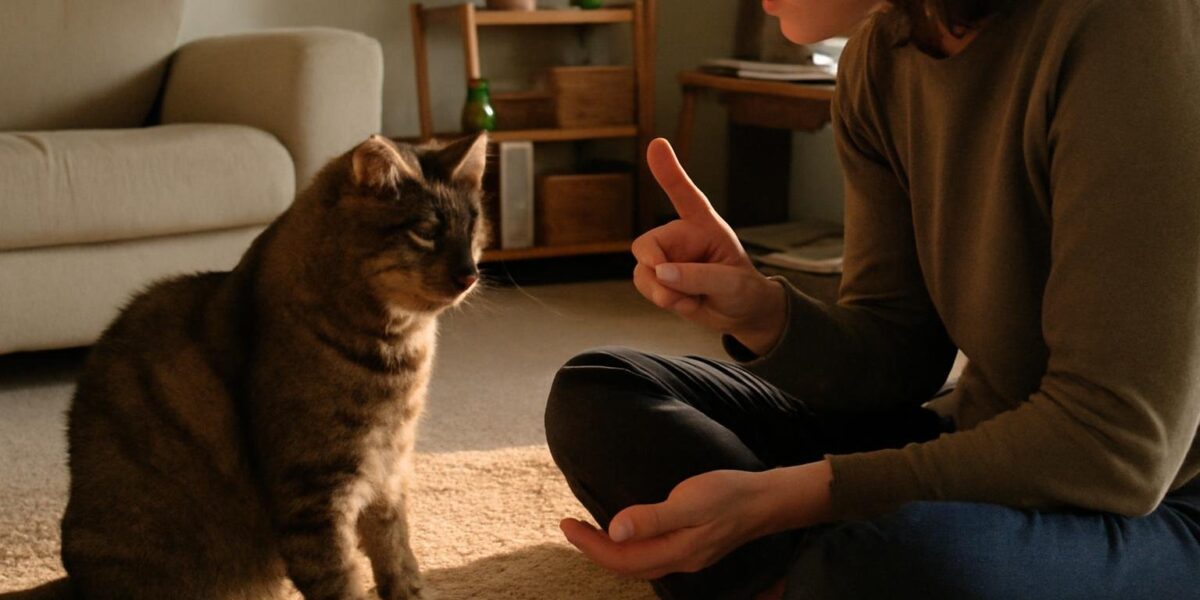
If your cat treads across your chest at dawn or marches over you while you are stretched out on the couch, you may be asking, “why does my cat walk on me?” The happy answer is that this is almost always a sign of affection, comfort, and trust. To your cat, you are warm, soft, safe, and the source of most good things in her life, so settling on or moving across you is a way of staying close to her favorite person. Walking on you can also be your cat seeking attention, claiming you with her scent, or simply finding the comfiest spot in the house. In the vast majority of cases this is normal, healthy behavior from a bonded cat. Occasionally, very intense clinginess can hint at stress or a health change worth noticing, but mostly it is a compliment delivered on four little feet.
In this article
You Are Warm, Safe, and Comfortable
Cats love warmth, and your body is a perfect heat source. Your chest, lap, and the curve of your legs offer cozy, body-warmed perches that beat any cold patch of floor. When your cat walks across you, she is often scouting for the warmest, softest place to settle — and you usually win.
Safety is part of it too. Resting on or near you means resting next to a trusted protector. Cats are most vulnerable when they sleep, and choosing to settle on you shows real trust: she feels secure enough to relax completely in your company. Walking over you to find that perfect spot is simply the prelude to a contented nap.
The rhythm of your body can be soothing as well. Your heartbeat, breathing, and warmth create a calming environment, much like the comfort a kitten feels near its mother. If your cat treads on you and then curls up with a purr, she is telling you she feels safe and content. You can confirm that relaxed mood by reading her overall cat body language.
Affection, Bonding, and Scent-Marking
Walking on you is also a social, bonding behavior. Cats form genuine attachments to their people, and staying physically close — even by trampling across you — is one way they express that bond. A cat who seeks out your body again and again is showing she considers you part of her family group.
There is a scent component, too. Cats have scent glands in their paws, and walking on you deposits a little of her smell, marking you as hers. This is a calm, affectionate kind of marking that blends your scents together and reinforces the sense that you belong to each other. It is the same impulse behind face-rubbing and head-bumping, just delivered with the feet.
Some cats also tread or “knead” on you with their paws, a leftover kitten behavior associated with nursing and comfort. A cat who walks onto your chest, kneads, and settles down is at her most relaxed and affectionate. Encouraging this gentle closeness — and channeling extra energy into enrichment and play — keeps your bond strong and balanced.
This kneading-and-treading combination often traces straight back to kittenhood. Nursing kittens push against their mother’s belly with their paws to stimulate milk, and the motion becomes permanently linked with feeling safe, full, and content. When your adult cat walks onto you and starts that rhythmic pawing, she is revisiting one of the most comforting sensations of her early life and casting you in the reassuring role her mother once held. It is about as sincere a compliment as a cat can offer.
Attention-Seeking and Learned Habits
Cats are clever, and they quickly learn what gets a reaction. If walking on you has ever earned petting, talking, treats, or simply your attention, your cat may repeat it because it works. This is especially common first thing in the morning, when a cat parades across your sleeping body to announce that it is breakfast time.
Timing tells you a lot. A cat who walks on you at predictable hours — dawn, your usual wake-up time, or right before meals — has likely learned that you are the gateway to food and fun, and trampling you is her alarm clock. A cat who climbs aboard while you are reading or working may be angling for the attention your focus is currently giving to something else.
None of this is a problem on its own, though it can be inconvenient at 5 a.m. The good news is that attention-driven walking responds well to routine and enrichment. A cat whose needs for play, food, and interaction are met on a predictable schedule is less likely to wake you by marching across your face.
Normal vs. When to See a Vet
Walking on you is normal when your cat seems relaxed and affectionate, settles down to nap or knead, and is otherwise eating, playing, and behaving like herself. A cat who chooses your lap or chest as her favorite spot is simply a devoted companion.
Consider a veterinary visit when the behavior changes in worrying ways or comes with other signs:
- Sudden, intense clinginess in a cat who was previously more independent.
- Restlessness, pacing, or an inability to settle, even while seeking contact.
- Walking on you paired with weight loss, increased thirst or appetite, or excessive vocalizing — possible signs of conditions like hyperthyroidism in older cats.
- Signs of stress such as hiding, over-grooming, or litter box changes alongside the clinginess.
- A senior cat who seems disoriented or unusually needy, which can accompany cognitive decline.
The goal is to distinguish a content, affectionate cat from one seeking comfort because she feels unwell or anxious. Learning the early signs of stress in cats helps you tell the difference, and if clinginess appears suddenly or alongside other symptoms, your veterinarian should take a look.
How to Manage and Enjoy the Behavior
If you love the cuddles but not the timing, you can shape when your cat walks on you without rejecting her affection. Establish a predictable daily routine for meals and play so she is not relying on trampling you to get her needs met. A vigorous play session followed by a meal in the evening often leads to a calmer overnight cat.
If claws or weight are the real issue rather than timing, a gentle approach helps. Keep your cat’s nails trimmed so her treading feels comfortable rather than prickly, and lay a soft blanket on your lap as an invitation that also protects your skin. When you genuinely cannot have her on you — during a work call or a meal — calmly set her on a warm bed or perch nearby instead of shooing her off, so she learns there is an acceptable alternative without feeling rejected.
To protect your sleep, avoid rewarding pre-dawn wake-ups with food or attention, which only reinforces the behavior. Instead, feed on a schedule, consider an automatic feeder for early mornings, and offer enticing alternatives — a heated cat bed beside yours, a cozy perch, or a covered hideaway can give her warm, safe spots that don’t involve standing on your chest.
Consistency is what makes these changes stick. Cats are quick to spot exceptions, so if you ignore the wake-up walking nine mornings out of ten but cave on the tenth, you actually teach her to be more persistent, since occasional rewards are powerfully motivating. Everyone in the household needs to follow the same plan. Give it a couple of weeks of steady routine before judging whether it is working, and remember that the goal is not to stop your cat from loving your company — only to shift it to moments that work for both of you.
Keep your indoor cat mentally and physically satisfied with window perches, climbing space, puzzle feeders, and rotating toys from a guide to indoor enrichment ideas. A well-stimulated cat is more relaxed and less demanding of attention at inconvenient times. And when she does settle on you for a genuine cuddle, enjoy it — being chosen as your cat’s favorite warm, safe place is one of the quiet joys of living with a cat.
Frequently Asked Questions
Why does my cat walk on me when I’m lying down?
She is usually seeking warmth, comfort, and closeness, and scouting for the coziest spot to settle. Lying down makes you a soft, body-warmed perch, and resting on you shows she trusts you. It is a sign of affection and a strong bond.
Is my cat trying to dominate me by walking on me?
No. Cats do not walk on people to assert dominance. Walking on you reflects affection, comfort-seeking, scent-marking, or a bid for attention. If anything, choosing to rest on you shows trust, since cats only relax fully around those they feel safe with.
Why does my cat walk on me every morning?
She has likely learned that trampling you wakes you up and leads to breakfast or attention. Cats are creatures of routine, so they repeat what works. Feeding on a set schedule, using an automatic feeder, and not rewarding early wake-ups can help break the habit.
Should I let my cat walk on me?
If you both enjoy it and your cat is gentle, there is no harm — it is a bonding behavior. If the timing or weight bothers you, redirect her with routine, enrichment, and appealing alternative beds rather than scolding, which can damage trust.
When should I worry about my cat walking on me?
Be concerned if the behavior becomes sudden, intense clinginess, especially with restlessness, weight loss, increased thirst or appetite, excessive vocalizing, or stress signs. These can indicate health issues like hyperthyroidism. In those cases, schedule a veterinary exam.


