
What Wobbler Syndrome Is
Wobbler syndrome in dogs is a condition that affects the cervical spine, the part of the spinal column running through the neck. Veterinarians more formally call it cervical spondylomyelopathy, but the everyday name comes from the characteristic wobbly gait many affected dogs develop. The disease causes compression of the spinal cord or nerve roots in the neck, leading to pain, weakness, and balance problems that can range from subtle to severe.
In this article
The condition has two recognized forms. The disc-associated form is most common in large-breed middle-aged to older dogs, particularly Doberman Pinschers, where one or more discs in the lower neck bulge or herniate and press on the spinal cord. The bony form, sometimes seen in younger giant-breed dogs like Great Danes and Mastiffs, involves abnormal bony growth or vertebral instability that crowds the spinal canal.
Wobbler syndrome dogs face is challenging but often manageable. Some dogs respond well to medical management alone, while others benefit from surgery to relieve compression. Understanding the form your dog has, and the realistic options, is the foundation of a good plan.
Why It Happens
The exact cause of wobbler syndrome is not fully understood, but genetics play a role in the breeds most affected. In Dobermans, abnormal disc structure and shape of the vertebrae appear together. In giant breeds, rapid growth, dietary factors, and skeletal development influence whether the disease develops in young dogs.
The mechanical problem is straightforward. The spinal canal in the lower neck becomes narrowed, either because a disc bulges into it from below, because abnormal bone juts in from the sides, or because the vertebrae are unstable and shift with movement. The spinal cord, having limited space to give, becomes compressed. Sustained pressure damages the cord and produces neurologic signs.
Why it appears at certain ages is a question of timing. Bony forms tend to show up in growing dogs whose vertebrae are not developing normally. Disc-related forms often emerge in middle age as discs degenerate and shift. Both forms can be aggravated by sudden movement, jumping, or trauma, which is why some dogs seem to develop signs after a recognizable incident.
Common Symptoms
The most recognizable sign is a wobbly, unsteady gait, often most obvious in the back legs. Affected dogs may appear drunk, take long uncoordinated steps, or sway as they walk. Owners sometimes describe the back end as having a mind of its own, with crossing-over of the back paws or scuffing of the toes.
Neck pain is common. The dog may carry the head low, resist having the neck touched, yelp when picked up or asked to look up at a high object, and walk stiffly with a careful posture. Some affected dogs become reluctant to come down from the couch, climb stairs, or play vigorously, and owners often interpret this initially as moodiness rather than a neurologic problem.
As the disease progresses, weakness in all four legs may develop, with knuckling, falling, and difficulty rising from a lying position. Severe cases can lead to inability to walk. The progression is sometimes gradual over months and sometimes more sudden after an acute disc event. Either pattern warrants veterinary evaluation.
How Veterinarians Diagnose It
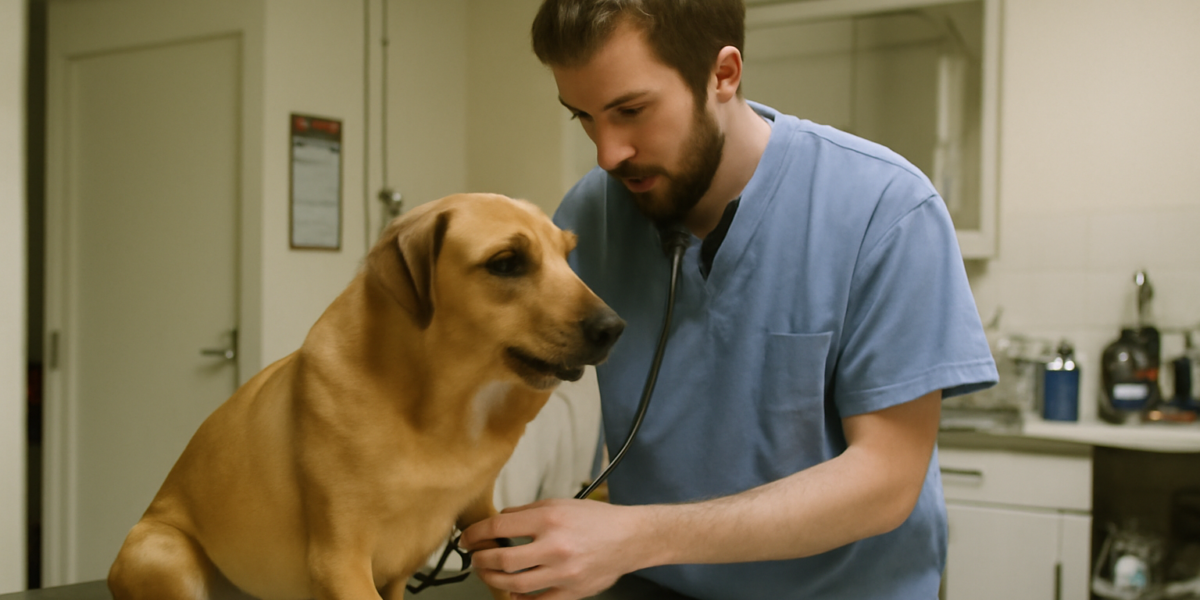
Diagnosis usually starts with a careful neurologic exam. Your veterinarian will assess gait, reflexes, neck flexibility, and pain response while looking for the characteristic pattern of cervical cord involvement. The exam often points strongly toward a cervical problem and helps rule out other conditions affecting the back legs.
Imaging confirms the diagnosis and identifies which lesions are causing the problem. MRI is the gold standard, providing detailed views of the discs, spinal cord, and surrounding soft tissue. CT myelography, where contrast is injected into the spinal fluid before imaging, is sometimes used as an alternative or complement, especially when surgical planning is being discussed.
Plain X-rays are sometimes obtained early in the workup and can show bony abnormalities, but they cannot evaluate the spinal cord or discs reliably. Most dogs need cross-sectional imaging for a clear answer. Bloodwork and other testing help rule out concurrent issues that could complicate anesthesia or treatment planning.
Conservative Management
Many dogs with mild to moderate disease respond well to conservative management, especially when symptoms are not rapidly progressing. The cornerstones are activity restriction, anti-inflammatory medication, and pain control. Strict rest, often four to six weeks of leash walks only and no jumping or running, allows inflamed tissue to settle and gives the spinal cord a chance to recover.
A neck harness rather than a collar is essential to avoid pressure on the cervical spine. Slip-resistant flooring, ramps to reach favorite spots, and elevated food and water bowls all reduce strain on the neck. Some dogs do well with a neck brace short term during severe flares, though long-term bracing is usually not necessary.
Physical rehabilitation tailored to the disease can speed recovery and maintain strength. Underwater treadmill therapy, range-of-motion work, and balance exercises supervised by a certified canine rehabilitation specialist offer real benefit for many dogs. Your veterinarian can refer you to a qualified professional in your area.
Surgical Treatment
Surgery is considered for dogs with severe or progressive symptoms, dogs who do not respond adequately to conservative care, or dogs with pronounced compression on imaging. The exact procedure depends on whether the disease is disc-associated or bony, and on which area of the neck is involved.
Ventral slot surgery, where a window is created from below to remove disc material, is commonly used for disc-associated wobblers. Dorsal laminectomy approaches the spine from above to relieve pressure on the cord. Distraction-fusion procedures, where the affected vertebrae are stabilized and held apart, are sometimes used for selected cases. Each approach has trade-offs that your veterinary surgeon will discuss.
Recovery from spinal surgery in dogs is often surprisingly good. Most dogs are walking within days, and the majority improve significantly over weeks to months. The decision to pursue surgery considers the severity of disease, the dog’s age and overall health, the family’s circumstances, and the specific findings on imaging. Specialty hospitals with experienced surgeons offer the best outcomes.
Recovery and Rehabilitation
Recovery is a marathon, not a sprint. Whether your dog has had surgery or is on a conservative track, gradual return to function over weeks to months is the rule. Strict activity restriction during the early healing window protects the spine and gives the best chance at improvement. Rushing back to normal activity often sets back progress.
Physical therapy after the first couple of weeks helps rebuild strength and coordination. A skilled rehab veterinarian or therapist designs a progression of exercises that match each dog’s ability, gradually increasing demand as healing allows. Many dogs gain function they had lost before treatment, and the recovery journey can be deeply rewarding for the family.
Long-term management often includes ongoing low-impact exercise, weight control, and a calm home environment. Slip-resistant rugs, ramps, and ergonomic feeding setups become permanent fixtures. Many dogs go on to live comfortably for years after diagnosis, especially when the underlying compression has been adequately relieved.
Living With a Wobbler Dog
Daily life with a wobbler dog focuses on stability, comfort, and avoiding setbacks. A consistent routine with predictable, gentle activity gives the dog confidence and reduces the unpredictable movements that aggravate the spine. Family members may need to coach visitors not to encourage jumping greetings or wrestling play.
Watch for any sudden change in gait, severe neck pain, or rapid worsening. Acute episodes can happen and may require an urgent recheck and possibly imaging. Keeping a written log of subtle changes helps your veterinarian decide when adjustments to medications or restrictions are needed.
Reading about related spinal conditions like intervertebral disc disease and spondylosis deformans helps round out understanding of the broader picture, since some dogs have features of more than one condition. Resources at our dog care blog include practical adaptations many families try.
Related Conditions and Long-Term Outlook
Wobbler syndrome shares features with other neurologic and orthopedic problems of large-breed dogs. Degenerative myelopathy can produce hind-end weakness in some of the same breeds and ages, but is typically painless and is a different disease entirely. Severe hip dysplasia and arthritis can also cause back-end weakness and may coexist with wobbler.
For Doberman owners, recognition that wobbler may be a genetic factor in the breed is important when considering breeding decisions and family planning around the disease. For giant breed puppies, careful nutrition and avoiding rapid weight gain during growth are part of long-term skeletal health.
Adopting a dog with a wobbler diagnosis is sometimes a question families weigh, and resources at our adopt-a-dog hub include guidance on welcoming dogs with chronic conditions. With realistic planning and good veterinary support, many of these dogs settle into wonderful family lives.
When to Call Your Veterinarian
Call promptly if your dog develops a wobbly gait, neck pain, reluctance to move the head, weakness in any limb, or progressive difficulty rising. These signs warrant a neurologic exam and likely imaging. Earlier diagnosis means earlier intervention and better outcomes.
Seek emergency care for sudden severe weakness, inability to walk, loss of pain sensation in the limbs, or new urinary or fecal incontinence. These suggest more severe spinal cord compression that may need urgent imaging and surgical evaluation. Acute disc events sometimes need rapid action to preserve function.
If your dog is being managed conservatively and is not improving as expected, or seems to be regressing, contact your veterinarian to revisit the plan. Sometimes adjustments to medication or referral for surgical evaluation are warranted. A board-certified veterinary neurologist or surgeon offers the most experience with this complex disease.
Frequently Asked Questions
Is wobbler syndrome painful?
Many dogs with wobbler syndrome have neck pain that may be subtle or obvious. Pain control is an important part of treatment for affected dogs. Some dogs show more weakness than pain, and others show the opposite pattern.
Will my dog walk again after surgery?
Most dogs improve significantly after appropriate surgery, with many regaining good walking function. Outcomes depend on the severity of pre-operative disease and how long compression has been present. Your surgeon can offer a more specific prognosis after imaging.
Can wobbler syndrome be prevented?
Genetics play a major role, so prevention is limited. Avoiding rapid growth in giant breed puppies through proper nutrition, maintaining a lean body weight, and using harnesses rather than collars may help reduce risk in predisposed breeds.
Are Dobermans more prone than other breeds?
Yes, Dobermans are one of the most affected breeds, often developing the disc-associated form in middle age. Great Danes, Mastiffs, and other giant breeds are over-represented for the bony form in younger dogs.
What activities should my dog avoid?
Jumping from heights, hard play, sudden head movements, and pulling against a neck collar should all be avoided. Use a harness, provide ramps for furniture and cars, and keep walks calm and well-controlled.
Should I see a veterinary neurologist?
Yes, when possible. A board-certified neurologist or surgeon has experience with the complex imaging and treatment decisions wobbler syndrome involves. Your primary veterinarian can coordinate the referral and continue routine care.


