Last updated: May 6, 2026
In this article
- What “Shutdown” Looks Like in a Rescue Dog
- Why Shutdown Dogs Need a Different Playbook
- The First Week: No Touch, No Talk, No Eye Contact
- Set Up a Decompression Space
- Vet Visit Comes Early but Carefully
- Predictability Is the Real Therapy
- Reading Body Language Correctly
- Working With Other Pets in the Home
- The Bathroom Problem in the First Weeks
- Force-Free Training Only
- The First Real Engagement
- Medication for Severe Cases
- What Walks Look Like for the First Months
- The Long Arc
- Frequently Asked Questions
What “Shutdown” Looks Like in a Rescue Dog
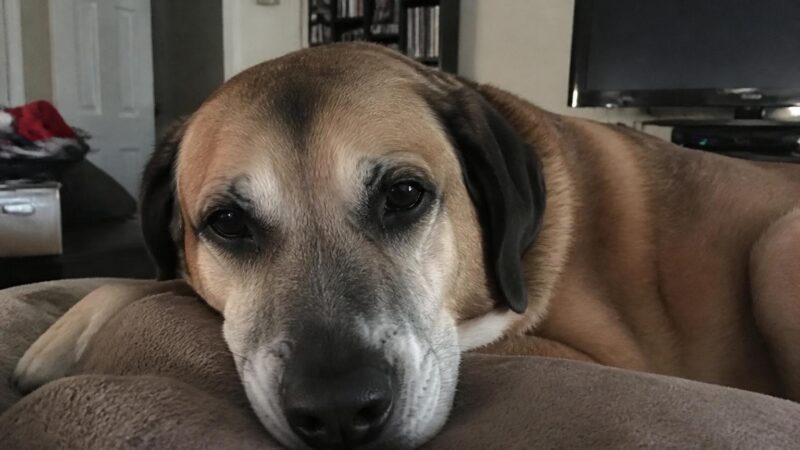
A fearful shutdown rescue dog is one whose fear has tipped past avoidance into total emotional withdrawal. They don’t run, they don’t bark, they don’t hide actively — they freeze. They stand very still in corners. They refuse food. They make minimal eye contact. They go to the bathroom only when forced outside, sometimes barely. To casual observers a shutdown dog can look “calm” or “well-behaved.” They’re not. They’re terrified beyond reaction.
This guide is for adopters bringing home a shutdown dog or considering it. The work is slow, gentle, and measured in weeks and months — not days. Done well, you will see a different dog by month three or four than the one you brought home. Done badly, you can entrench the fear for years. Patience and the right framework matter.
Why Shutdown Dogs Need a Different Playbook
Shutdown isn’t shyness. A shy dog observes their world and slowly chooses to engage. A shutdown dog has stopped trying to interact with the world at all. The instinct to “show them they’re safe by hugging and reassuring” is exactly wrong — physical attention from a stranger is more pressure, not relief. The first weeks are about removing pressure, not adding kindness.
Read the 3-3-3 rule for rescue dog decompression and double the timeline mentally. For a shutdown dog, three days becomes three weeks. Three weeks becomes three months. Three months becomes a year-plus before you’ll see the full personality.
The First Week: No Touch, No Talk, No Eye Contact
The protocol that works for severely shutdown dogs is sometimes called “no touch, no talk, no eye contact” for the first week or longer. You provide food, water, and a safe quiet space. You move slowly through the home. You don’t approach the dog. You don’t reach for the dog. You don’t reassure them with cooing voices. You don’t make direct eye contact.
What you do is exist calmly in their space. Sit on the floor reading a book. Watch TV with the volume low. Eat your meal where they can see you. The dog’s job is to observe humans being safe and predictable. Your job is to be unremarkable. This sounds counterintuitive — and it works. The protocol relaxes naturally as the dog initiates engagement; it’s a starting position, not a permanent rule.
Set Up a Decompression Space
Pick one quiet room as the dog’s primary space — a guest bedroom or office works. Inside that room provide:
- A crate or covered pen with the door open as a den option
- A comfortable bed in a corner away from doors and windows
- Food and water bowls placed where the dog won’t have to navigate past you
- A baby gate or closed door so the dog can’t bolt or hide somewhere inaccessible
- Minimal sensory load — no loud TV, no air vents blasting, no children
Many shutdown dogs spend the first week or two not leaving the corner. That’s okay. They’re processing. The decompression period guide explains the neurology.
Vet Visit Comes Early but Carefully
Some shutdown is medical. A dog in chronic pain, with low thyroid, with vision or hearing changes, with chronic GI distress can present as fearful and shut down. A vet visit in the first week or two helps rule out the medical contributors before assuming everything is behavioral.
Choose a Fear Free certified vet if available, or call ahead and ask if the practice can accommodate a fearful intake — often this means a quiet room from the start, no waiting room time, and treat-paired handling. The exam may be limited the first time. That’s fine. Bloodwork and rabies vaccination if needed are the priorities; full physical exams can come at the third or fourth visit.
Predictability Is the Real Therapy
Shutdown dogs heal through predictability more than any specific training technique. Same wake time. Same feeding times. Same potty schedule. Same quiet evening routine. Same humans, same voices, same sounds. The dog’s nervous system is searching for patterns it can trust.
This is why visitors, weekend trips, schedule changes, and “let’s introduce them to my mom” are all wrong moves in the first weeks. There will be time for socialization later — much later. Right now, boring is therapeutic.
Reading Body Language Correctly
You’ll need to learn dog body language better than you think. Shutdown dogs communicate quietly: a hard stare, a stiff body, a tucked tail, a closed mouth, lip licking, yawning out of context, whale eye (whites of the eyes showing). These all signal stress before any growl appears.
Honor those signals. If the dog freezes when you approach, don’t approach further. If the dog looks away, don’t lean in. The fear aggression in dogs guide explains the progression — fear that isn’t honored at the early signals can escalate to defensive aggression. The path forward is reading and respecting, not pushing through.
Working With Other Pets in the Home
Existing pets can either help or hinder a shutdown dog’s recovery. A calm, friendly resident dog often models confidence in ways the new dog quickly learns from — many shutdown dogs gravitate toward an existing dog for social cover. A high-energy or pushy resident dog, conversely, can entrench fear.
Cats and shutdown dogs usually coexist well if the cats have escape routes and elevated spaces. Don’t force interactions in either direction. Let the new dog meet other pets in their own time. Many adopters report the shutdown dog and existing pets quietly figuring it out within weeks, with no human-managed introductions needed beyond providing the safe space.
The Bathroom Problem in the First Weeks
A common challenge: shutdown dogs sometimes refuse to potty outside for the first days. They’re too overwhelmed to relieve themselves in an unfamiliar environment. Don’t force the issue. Carry the dog out on a leash, sit calmly, and wait. If still nothing after 15 minutes, return inside and try again in an hour. Most dogs eventually go on day one or two.
Accidents inside are normal during this phase. Clean with enzymatic cleaner without comment. Punishment makes shutdown worse — pretend you didn’t notice. Within two weeks most dogs settle into a normal potty routine. The shelter shock guide explains the underlying physiology.
Force-Free Training Only
Everything you do with a shutdown dog should be force-free, reward-based, and pressure-light. That means no prong collars, no shock collars, no choke chains, no “alpha rolls,” no pinning, no punishment-based corrections. These approaches are catastrophic for fearful dogs and worsen the underlying problem.
Modern training for fearful dogs centers on counterconditioning and desensitization (CC&DS) — pairing scary things at low intensity with great rewards until the dog’s emotional response shifts. Find a trainer credentialed through CCPDT (Certified Council for Professional Dog Trainers), KPA (Karen Pryor Academy), or similar reward-based programs. For severe cases, a veterinary behaviorist (DACVB) is the right specialist.
The First Real Engagement
At some point — week two for some dogs, week eight for others — the dog initiates. They walk past you when before they wouldn’t. They take a treat from your fingers when before they wouldn’t. They make eye contact and don’t break it for a half second longer. These are huge moments. Mark them quietly, take a deep breath, and don’t push for more.
Build engagement on the dog’s pace. Sit on the floor and toss treats — never offer from your hand at first. Speak softly. Move slowly. Let the dog’s curiosity lead. The first walk on a real leash outside might not happen for a month. The first time the dog wags their tail at you might be week six. Celebrate quietly and keep going. Document the milestones in a journal — they’re easy to forget when you’re tired and the day has been hard.
Medication for Severe Cases
Some shutdown dogs need pharmaceutical support during early recovery. SSRIs like fluoxetine or other behavior medications can lower the baseline anxiety enough that training and decompression actually work. Medication doesn’t replace the slow work; it makes the slow work possible.
This is a veterinary behaviorist conversation. A general practice vet can prescribe behavior medications, but for severe cases or non-responders, a DACVB-led plan is worth the consult. The American College of Veterinary Behaviorists maintains a directory; many specialists do remote consultations now, which has expanded access for adopters in areas without a local behaviorist.
What Walks Look Like for the First Months
Shutdown dogs often can’t walk normally for the first weeks. The leash itself is scary. The neighborhood is overwhelming. A passing car triggers freeze. Start tiny — five-minute walks at off-peak hours, around the block, no further. Carry high-value treats and offer them anytime the dog handles a stimulus calmly.
Many adopters skip walks entirely for the first two weeks and let the dog use a fenced yard instead. That’s fine. Walks are not the priority during decompression. The priority is rebuilding the dog’s belief that the world is safe enough to engage with at all.
The Long Arc
Most shutdown dogs are not “fixed” by month three. They’re better. By month six many show a real personality. By the year mark you’ve usually got a recognizable, beloved dog who still has fear triggers but who lives a comfortable life. Some carry their fears their entire lives — never fully comfortable with strangers, never the dog at the dog park.
That outcome is fine if you’re prepared for it. The first week with a rescue dog guide is a baseline; for shutdown dogs you’ll need extra patience, extra reading, extra trainer support, and the willingness to accept slow progress as real progress. Browse the adopt dogs hub only after you’ve thought hard about whether this work fits your life.
Some rescues run dedicated programs for severe-fear dogs with experienced foster networks and trainer support. If you’re new to shutdown work, ask whether the rescue offers ongoing trainer consults included with the adoption. The support network often determines whether the adoption succeeds.
Frequently Asked Questions
How long before my shutdown dog “comes out”?
Weeks to months. Some show personality at week three; some take six months. A handful take a year or more. Your job is patience, not timeline pressure.
Should I take my shutdown dog to the dog park to socialize?
No. Dog parks are sensory overload and a fast path to a defensive incident. Socialization for fearful dogs is structured, slow, and one-on-one — not group settings.
Is it okay to leave a shutdown dog alone during the workday?
Better than most people think. Calm alone time is restorative. Avoid the opposite extreme of constant attention — that adds pressure too.
What if my dog never fully recovers?
Many improve dramatically while still keeping some fears. A dog who’s comfortable in your home with you, even if cautious with strangers forever, is a successful outcome.
Should I work with a trainer or behaviorist?
For severe cases yes — a force-free certified trainer for ongoing support and a veterinary behaviorist (DACVB) for medication and complex behavior plans. Don’t try to do this alone if the dog isn’t progressing by month two.