Last updated: April 11, 2026
In this article
American Bully Dog Breed Profile
The American Bully is one of the most misunderstood breeds in the United States — and also one of the most devoted companions you will ever meet. Despite sharing a muscular, blocky build with other bully-type dogs, the American Bully is a distinct breed in its own right, formally recognized by the American Bully Kennel Club (ABKC) in 2004 and later by the United Kennel Club (UKC) in 2013. It is not the same as the American Pit Bull Terrier, the American Staffordshire Terrier, or any other bully-type breed, though those dogs contributed to its foundation. Breeders deliberately selected for a calmer, more sociable temperament alongside that signature compact, heavily muscled frame. The result is a breed built specifically to be a family companion — gentle with children, affectionate with strangers, and fiercely loyal to its household. If you are considering adding an American Bully to your home, this profile covers everything you need to know, from exercise requirements and grooming basics to health considerations and adoption resources.
Quick Facts
| Trait | Detail |
|---|---|
| Breed Group | Companion / Bully Breed (ABKC, UKC) |
| Size | Pocket, Standard, Classic, XL |
| Weight Range | Approximately 30 – 130 lbs depending on variety |
| Height Range | 13 – 23 inches at the withers |
| Life Expectancy | 8 – 13 years |
| Coat Type | Short, stiff, glossy |
| Shedding Level | Moderate |
| Energy Level | Moderate |
| Good with Children | Yes — bred as a companion |
| Good with Other Dogs | Generally yes, with proper socialization |
| Trainability | High — eager to please |
| Recognized By | ABKC (2004), UKC (2013) |
Personality and Temperament
Ask anyone who has lived with an American Bully, and the first word they will use is “gentle.” This breed carries an outward appearance that can seem imposing, but the personality underneath is warm, stable, and deeply people-oriented. The American Bully was purpose-bred to be a companion, and that intent shows in every interaction. These dogs are confident without being aggressive, playful without being hyperactive, and affectionate without being clingy. They thrive on human connection and genuinely want to be involved in whatever their family is doing, whether that is lounging on the couch on a rainy afternoon or playing in the backyard on a Saturday morning.
The breed is also known for its patience, which is part of what makes it such a popular choice for families with children. An American Bully is unlikely to snap under pressure or become reactive in a chaotic household environment. They tend to be tolerant, adaptable, and emotionally steady. Despite their loyalty, they are not typically one-person dogs — they distribute their affection broadly to everyone in the household. Guests are usually greeted with enthusiasm rather than suspicion. This openness and warmth is a defining characteristic that sets the American Bully apart from working or guarding bully-type breeds.
Appearance
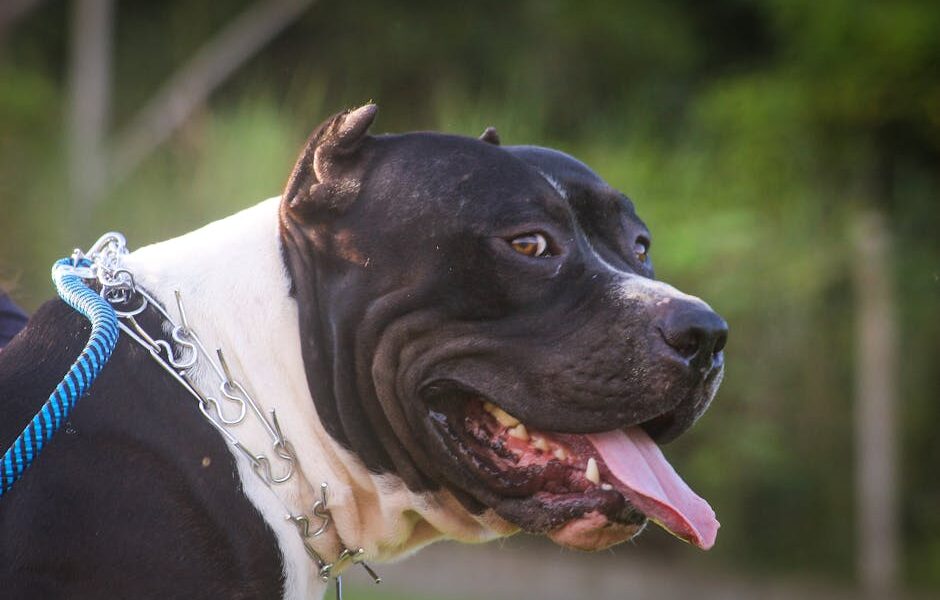
The American Bully is immediately recognizable by its heavy bone structure, broad chest, and compact, muscular body. The head is large and blocky with a wide skull, strong jaw, and prominent cheek muscles. Despite the powerful build, the overall look is balanced and proportionate within each size category.
The ABKC recognizes four official size varieties. The Pocket variety stands under 17 inches (males) or 14 inches (females) at the withers and is the smallest of the four. The Standard sits between 17 and 20 inches for males. The Classic shares the same height range as the Standard but carries a lighter body frame with less overall bulk. The XL variety is the largest, with males measuring over 20 inches at the withers and displaying the most substantial bone and muscle mass. All four varieties share the same short, close-lying, glossy coat, which comes in virtually every color and pattern. The tail is natural, and the breed’s movement should be agile and free-flowing despite its solid frame.
Exercise Needs
The American Bully has a moderate energy level that makes it well-suited to a variety of living situations, including apartments, provided its daily exercise needs are met. These dogs do not require hours of intense physical activity the way working breeds do, but they do benefit from consistent daily movement to maintain a healthy weight and a calm, balanced temperament.
A routine of two 30-minute walks per day, supplemented with play sessions in a securely fenced yard or indoor games, is typically sufficient for most American Bullies. They enjoy fetch, tug-of-war, and structured play with their owners. Because of their brachycephalic tendencies in some lines, particularly those with shorter, more pushed-in muzzles, owners should be cautious about vigorous exercise in hot or humid weather. Morning and evening sessions during summer months are advisable. Mental stimulation through puzzle feeders, obedience training, and interactive toys should be incorporated alongside physical activity to keep the breed fully satisfied. An under-exercised American Bully may become bored and engage in destructive chewing or other undesirable behaviors.
Grooming Needs
The American Bully’s short, tight coat is one of the lower-maintenance aspects of the breed. Weekly brushing with a rubber curry brush or bristle brush is generally all that is needed to remove loose hair, distribute natural oils, and keep the coat looking clean and glossy. Despite shedding at a moderate level throughout the year, the short hair does not mat and is easy to manage with minimal effort.
Bathing can be done once every four to six weeks or as needed, using a mild dog shampoo that supports skin health. This is important because some American Bullies are prone to skin fold dermatitis, particularly those with more pronounced wrinkles around the face and muzzle. Those folds should be wiped clean and dried regularly to prevent moisture buildup and bacterial growth.
Beyond coat care, routine grooming should include nail trimming every three to four weeks, regular ear cleaning to prevent wax buildup and infection, and daily or at minimum several-times-weekly tooth brushing. Dental disease is common in many breeds, and consistent oral hygiene goes a long way toward preventing costly veterinary treatment later in life. Establishing a grooming routine early makes these sessions easier for both dog and owner throughout the animal’s life. For more guidance, visit our dog care blog.
Health and Common Issues
Like all purebred dogs, the American Bully is predisposed to certain health conditions that prospective owners should understand before bringing one home. Being informed helps owners catch problems early and make sound decisions when selecting a reputable breeder or rescue organization.
Hip and elbow dysplasia are among the most commonly seen orthopedic conditions in the breed, particularly in the larger XL and Standard varieties where body weight places additional stress on developing joints. Responsible breeders screen their stock with OFA or PennHIP evaluations before breeding. Cardiac issues, including congenital heart defects, have also been documented in the breed and warrant screening by a board-certified veterinary cardiologist.
Skin conditions are particularly prevalent, including allergies (environmental and food-related), hot spots, and skin fold infections as noted in the grooming section. Routine veterinary dermatology consultations can help manage chronic skin concerns effectively. Some American Bullies, especially those bred with very short muzzles, may experience Brachycephalic Obstructive Airway Syndrome (BOAS), which can cause labored breathing, snoring, and exercise intolerance. Surgical intervention is sometimes necessary in moderate to severe cases. Eye conditions and hypothyroidism have also been reported in the breed.
Are American Bullies Good With Kids and Other Pets?
The American Bully was bred from the ground up to be a companion animal, and that purpose is most visible in the breed’s interactions with children. These dogs are patient, tolerant, and playful in a measured way that makes them a natural fit for family life. They are not easily overwhelmed by the noise and unpredictability of young children, and their stable temperament means they are unlikely to react impulsively to rough handling. That said, supervision is always recommended when any dog interacts with young children, regardless of breed.
With other pets, the American Bully generally does well when properly socialized from an early age. They can coexist comfortably with other dogs and even cats in many cases, though individual temperament varies. Early exposure to a variety of animals, environments, and people is the single most reliable predictor of a well-adjusted adult dog. Dogs that are adopted from rescue organizations and already live alongside other animals are often a safe bet for multi-pet households. Some males may display dog-selective behavior, which can typically be managed through proper introductions and ongoing socialization.
Training Tips
The American Bully is an intelligent and eager-to-please breed that responds exceptionally well to positive reinforcement training. They are motivated by praise, play, and food rewards, making standard reward-based methods highly effective. Punishment-based training is counterproductive with this breed and can erode the trust and confidence that make the American Bully such a reliable companion.
Begin training and socialization as early as possible. Puppy classes are an excellent starting point, offering both foundational obedience skills and structured exposure to other dogs and people. Basic commands — sit, stay, come, leave it, and loose-leash walking — should be established in the first few months and reinforced consistently throughout the dog’s life.
Given the breed’s physical strength, leash manners are particularly important. An untrained American Bully that pulls on the lead is genuinely difficult to manage. Practice loose-leash walking in low-distraction environments before graduating to busier settings. Short, frequent training sessions of five to ten minutes are more effective than long infrequent ones. Consistency across all household members ensures the dog does not receive mixed signals. For additional dog care guidance, explore our dog care blog.
History and Origin
The American Bully emerged in the United States during the 1990s, developed primarily in Virginia and California by breeders who sought to create a companion-focused bully-type breed with a gentler, more family-oriented temperament than its working forebears. The foundation of the breed draws heavily from the American Pit Bull Terrier and the American Staffordshire Terrier, with additional contributions from several other bully-type and Mastiff-type breeds introduced to achieve the desired compact, heavily muscled conformation.
Unlike its ancestors, which were bred for working tasks or dog sport, the American Bully was intentionally shaped for life as a household companion. Early breeders prioritized stable temperament, social ease, and suitability for families. The American Bully Kennel Club (ABKC) was established in 2004 specifically to create a formal registry and breed standard for the American Bully, marking its official recognition as a distinct breed separate from all other bully-type dogs. The United Kennel Club (UKC) followed in 2013, further legitimizing the breed within the broader purebred dog community. Today, the American Bully is one of the fastest-growing breeds in the United States and has developed a significant international following.
Frequently Asked Questions About the American Bully
Is the American Bully the same as a pit bull?
No. While the American Bully shares some ancestry with the American Pit Bull Terrier, it is a separate and distinct breed with its own breed standard, registry, and purpose. The American Bully was formally recognized by the ABKC in 2004 and the UKC in 2013 as its own breed. The term “pit bull” is a colloquial label applied loosely to several different breeds and mixes, none of which are officially recognized under that name by major kennel clubs.
Are American Bullies aggressive?
The American Bully’s breed standard explicitly disqualifies aggression toward humans as a serious fault. The breed was purpose-built to be a companion animal with a stable, confident, and people-loving temperament. Like any dog, individual behavior is shaped by upbringing, socialization, and handling. A well-socialized American Bully raised in a responsible household is typically friendly, gentle, and highly manageable.
How much does an American Bully eat?
Feeding requirements vary based on the dog’s size, age, activity level, and the caloric density of the food used. A Standard-sized adult American Bully typically consumes between 2.5 and 4 cups of high-quality dry kibble per day, divided into two meals. XL varieties may require more. Because the breed is prone to obesity, which in turn exacerbates joint problems, owners should monitor body condition closely and adjust feeding accordingly. Consult your veterinarian for a personalized feeding plan.
Can an American Bully live in an apartment?
Yes, provided its daily exercise and mental stimulation needs are consistently met. The American Bully has a moderate energy level and does not require a large yard to be content. Regular walks, play sessions, and training activities are sufficient to keep the breed happy in smaller living spaces. Be aware that some apartment complexes have breed restrictions that may include bully-type dogs, so it is worth checking your lease or building rules before adopting.
Adopt an American Bully
If you are ready to welcome an American Bully into your home, adoption is a wonderful option. Shelters and rescue organizations across the country regularly receive bully-type dogs of all ages, sizes, and temperaments — including purebred American Bullies. Many of these dogs are already house-trained, socialized, and ready to settle into a loving family. Adopting from a rescue also means working with organizations that have assessed each dog’s behavior and can help match you with the right fit for your lifestyle.
At Walk Me Home Rescue, we are committed to finding every dog the home they deserve. Browse our available dogs and start your adoption journey today.
Looking to adopt a American Bully?
Browse American Bully dogs and mixes available for adoption from shelters and rescues near you.
Find American Bully Dogs for Adoption