Last updated: May 4, 2026
In this article
Anatolian Shepherd: Complete Dog Breed Profile
The Anatolian Shepherd is one of the oldest and most capable working dogs in the world. Bred for thousands of years across the rugged highlands of Turkey, this large, powerful breed was developed to do one thing exceptionally well: protect livestock from predators. Today, the Anatolian Shepherd remains a serious working dog at heart — calm, self-reliant, deeply loyal, and fiercely protective of those it considers its flock, whether that flock is sheep on a hillside or a family in a suburban home.
This breed is not for everyone. The Anatolian Shepherd demands respect, experience, and consistent leadership. In the right hands and environment, however, this dog is an extraordinarily devoted companion and an unmatched guardian. If you are considering welcoming one of these magnificent animals into your life, this profile will give you an honest, thorough look at what to expect.
Quick Facts
| Characteristic | Details |
|---|---|
| Breed Group | Working |
| Size | Large to Giant |
| Weight | 80 to 150 pounds |
| Height | 27 to 32 inches at the shoulder |
| Life Expectancy | 11 to 13 years |
| Coat Type | Short to medium-length double coat |
| Common Colors | Fawn with black mask; also brindle, white |
| Temperament | Independent, loyal, protective, calm |
| Good With Kids | Yes, with proper socialization (older kids preferred) |
| Good With Other Pets | With early socialization; strong prey drive toward strangers |
| Shedding Level | Moderate to heavy, especially seasonally |
| Exercise Needs | Moderate — requires open space |
| Experience Level Recommended | Experienced dog owners |
| AKC Recognition | Yes (recognized 1996) |
Personality and Temperament
The Anatolian Shepherd is a study in quiet confidence. This is not a dog that seeks approval or craves constant attention. Centuries of working independently — often far from any human — have shaped a breed that thinks for itself, makes its own judgments, and acts on instinct. That independence is one of the Anatolian Shepherd’s greatest strengths on the job, and one of its most challenging qualities for pet owners who expect eager-to-please obedience.
At home, the Anatolian Shepherd tends to be calm and composed. These dogs are not hyperactive or prone to destructive behavior when properly exercised and given space. They observe their surroundings with a quiet, watchful intelligence, always aware of what is happening at the perimeter of their territory. Strangers are met with wariness rather than aggression — unless a real threat is perceived — and the breed rarely barks without reason. When an Anatolian Shepherd does bark, especially at night, it is worth paying attention.
Their loyalty to their family is profound. They bond deeply with the people and animals they have been raised alongside, and that bond forms the foundation of everything they do. Affectionate on their own terms, this breed will often position itself near its people without demanding interaction. They are protectors by nature — alert, territorial, and utterly committed to the well-being of those they guard.
Appearance
The Anatolian Shepherd is a massive, impressively built dog that commands attention. Males typically stand between 29 and 32 inches at the shoulder and weigh anywhere from 110 to 150 pounds. Females are slightly smaller but no less powerful in frame. The overall impression is one of strength, endurance, and athleticism — built for long days of work across difficult terrain.
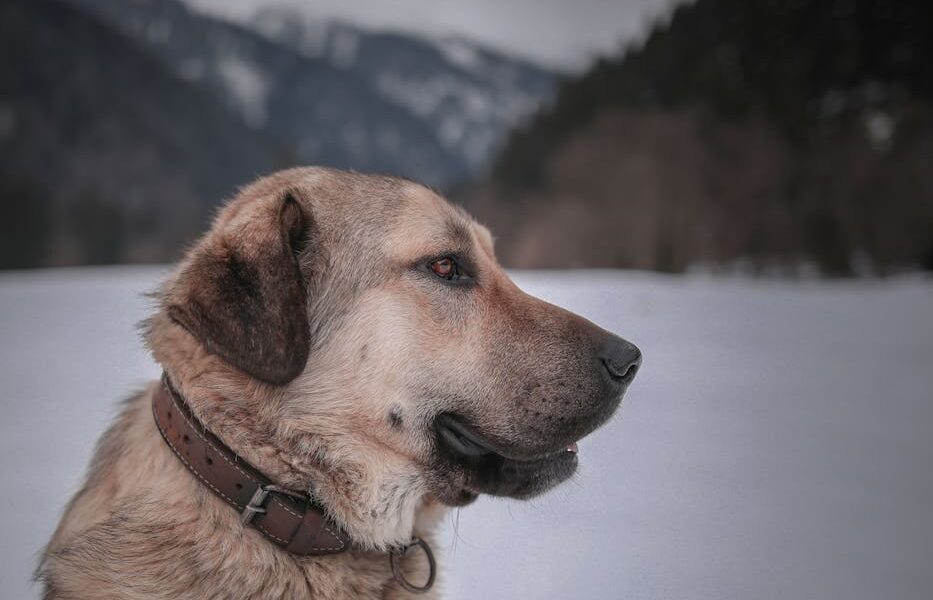
The most classic Anatolian Shepherd appearance features a short to medium double coat in fawn or cream, paired with the breed’s signature black mask around the muzzle and dark ears. However, the breed also comes in brindle, white, and pinto patterns. The coat lies flat and dense, providing insulation against both cold mountain winters and hot summer days.
The head is large and broad, with a slightly domed skull and a strong, square muzzle. The eyes are almond-shaped and typically golden or brown, carrying the calm, watchful expression that defines the breed. Ears are v-shaped and hang close to the head. The neck is thick and muscular, sometimes showing a slight dewlap. The tail is long and curls upward over the back when the dog is alert or excited.
Exercise Needs
Despite their large size, Anatolian Shepherds have moderate — rather than extreme — exercise requirements. They are not high-energy dogs in the way that herding breeds or sporting dogs tend to be. They were bred to pace themselves across long days of patrol, not to sprint. A daily walk of 30 to 60 minutes, combined with access to a securely fenced yard, is generally sufficient to keep an Anatolian Shepherd physically satisfied.
What matters far more than sheer activity level is space. This is not a breed suited to apartment living or small urban lots. An Anatolian Shepherd needs room to move, survey, and feel at home in its territory. A large, securely fenced property is ideal — and the fencing must be high and solid, as these dogs are capable climbers and determined when they believe a threat exists beyond their boundary.
Mental stimulation is equally important. Without a job or sufficient engagement, an Anatolian Shepherd may develop problem behaviors such as excessive barking, digging, or fence-testing. Activities that engage their natural instincts — such as scent work or structured patrol — can make a meaningful difference in their overall behavior and contentment.
Grooming Needs
The Anatolian Shepherd’s double coat is relatively low-maintenance compared to other large working breeds, but it does require consistent attention. During most of the year, weekly brushing with a slicker brush or de-shedding tool is usually sufficient to remove loose fur and keep the coat looking clean. The undercoat does accumulate debris and can mat if left unattended for extended periods, so regular brushing prevents that from becoming an issue.
Twice a year — typically in spring and fall — the Anatolian Shepherd undergoes a heavy seasonal shed. During these periods, daily brushing is highly recommended to manage the volume of loose coat and reduce the amount deposited around the home. A deshedding rake or an undercoat-specific brush will be a valuable tool during these weeks.
Beyond the coat, routine grooming tasks include nail trimming every three to four weeks, ear cleaning to prevent moisture buildup and infection, and regular dental care. Bathing can be done as needed — roughly once every six to eight weeks — or when the dog has gotten into something particularly unpleasant. Their working heritage means they are generally not fussy about cleanliness, but regular grooming sessions also serve as an important bonding opportunity and health check. For more tips on general dog care, visit our dog care blog.
Health and Common Issues
The Anatolian Shepherd is generally a hardy and healthy breed, shaped by centuries of natural selection in demanding conditions. That said, like all large and giant breeds, there are several health conditions that prospective owners should be aware of.
Hip and elbow dysplasia are among the most common structural concerns in large breeds, including the Anatolian Shepherd. These are developmental conditions where the joints do not form correctly, leading to pain and reduced mobility over time. Responsible breeders screen their breeding stock for these conditions, and maintaining a healthy weight throughout a dog’s life is one of the most effective preventive measures.
Entropion — a condition in which the eyelid rolls inward, causing the lashes to irritate the eye surface — is seen in some Anatolian Shepherds and can be corrected surgically if necessary. Hypothyroidism, in which the thyroid gland does not produce sufficient hormone, can cause weight gain, lethargy, and coat changes; it is manageable with daily medication. Bloat (gastric dilatation-volvulus) is a life-threatening condition that affects large, deep-chested breeds and requires immediate veterinary attention. Feeding multiple smaller meals and avoiding vigorous exercise immediately after eating can reduce risk.
Are Anatolian Shepherds Good With Kids and Other Pets?
The Anatolian Shepherd can be a gentle and devoted family companion, but context matters enormously. This breed’s relationship with children is shaped almost entirely by how the dog was raised and socialized. An Anatolian Shepherd that has been raised alongside children from puppyhood, and that has learned to view them as part of its flock, tends to be calm and protective around them. However, because of the breed’s large size and its instinct to control the movements of those it perceives as vulnerable, very young children can be at risk of being accidentally knocked over during play.
Older, calmer children who understand how to interact respectfully with a large dog are a better match for this breed. Supervision of all interactions between any large dog and young children is always recommended.
With other animals, the Anatolian Shepherd’s livestock guardian instinct comes into play. They typically accept animals they have been raised with as part of their flock and will protect them accordingly. Animals introduced later in life may be met with suspicion. Their prey drive toward unfamiliar animals — especially small ones — can be strong, so careful, gradual introductions are essential.
Training Tips
Training an Anatolian Shepherd requires patience, consistency, and an understanding of what this dog was bred to do. These are not dogs that live to please. They were designed to make autonomous decisions in the field, and that independence runs deep. Expecting a Golden Retriever-style responsiveness from an Anatolian Shepherd will lead to frustration for both owner and dog.
Early socialization is non-negotiable. Exposing puppies to a wide variety of people, sounds, environments, and other animals during the critical window of development — roughly eight to sixteen weeks of age — lays the groundwork for a well-adjusted adult dog. Gaps in early socialization are difficult to close later.
Positive reinforcement methods work best. Harsh corrections or confrontational training techniques tend to backfire with this breed, producing either shutdown or pushback. Short, varied training sessions prevent boredom and keep the dog engaged. Establishing clear, consistent boundaries from day one is critical — this breed will test limits, and an owner who is inconsistent will lose ground quickly.
This is a breed best suited to experienced dog owners who understand working breeds. First-time dog owners should carefully consider whether they are prepared for the demands an Anatolian Shepherd presents, and should seek professional guidance from a trainer with working breed experience if any doubt exists.
History and Origin
The Anatolian Shepherd is one of the oldest domesticated dog breeds in existence, with roots stretching back approximately 6,000 years to the Anatolian plateau of central Turkey. The region — marked by harsh winters, scorching summers, and a landscape that challenged both humans and animals — shaped a dog of extraordinary endurance and capability.
For millennia, nomadic and semi-nomadic herders across Turkey relied on large guardian dogs to protect their flocks of sheep and goats from wolves, bears, jackals, and other predators. Unlike herding dogs, which move animals, these dogs worked as deterrents — staying with the flock, blending in among the sheep, and confronting predators directly when necessary. The pale coats of many Anatolian Shepherds are thought to have served as natural camouflage among the flocks.
The breed came to international attention in the mid-20th century, when the United States government imported Anatolian Shepherds as part of a livestock protection program. The dogs proved remarkably effective, and the breed gained recognition from the American Kennel Club in 1996. Today, the Anatolian Shepherd continues to be used as a working livestock guardian on farms and ranches around the world, while also finding a place as a devoted family companion and guardian.
Frequently Asked Questions About Anatolian Shepherds
Is the Anatolian Shepherd a good family dog?
The Anatolian Shepherd can be an excellent family dog in the right household. They are loyal, calm, and deeply protective of those they consider their family. However, they require experienced ownership, early socialization, and a home with adequate space. They tend to do better with older children than with toddlers, and they need a family that understands and respects their independent nature.
How much exercise does an Anatolian Shepherd need?
The Anatolian Shepherd has moderate exercise needs — typically 30 to 60 minutes of physical activity per day is sufficient. More important than vigorous exercise is access to a large, securely fenced space where the dog can patrol and explore. Without space and mental engagement, this breed can become restless and develop unwanted behaviors such as excessive barking or destructive digging.
Do Anatolian Shepherds bark a lot?
Anatolian Shepherds are known to bark, particularly at night when they are most alert to activity at the perimeter of their territory. This behavior is rooted in their working heritage — nighttime barking was an effective predator deterrent when guarding livestock. In a residential setting, this can be a significant concern for neighbors. Early training, adequate exercise, and clear boundaries can help manage barking, but it is an inherent trait of the breed.
Are Anatolian Shepherds good with livestock?
Yes — the Anatolian Shepherd is one of the premier livestock guardian dog breeds in the world. When raised with livestock from a young age, they bond deeply with the animals and will protect them with remarkable dedication. They have been used successfully to protect sheep, goats, cattle, and even smaller animals such as chickens. Their effectiveness against predators, including wolves and coyotes, is well-documented in working livestock operations across multiple continents.
Adopt an Anatolian Shepherd
If you have read through this profile and feel that the Anatolian Shepherd is the right match for your home, your lifestyle, and your experience level, we encourage you to consider adoption. Large, working breeds like the Anatolian Shepherd frequently end up in rescue through no fault of their own — often because well-meaning owners underestimated the breed’s needs. These dogs deserve a second chance with someone who truly understands them.
At Walk Me Home Rescue, we work hard to match each dog with the home where they will thrive. Visit our adopt a dog page to see current dogs available for adoption, including large and working breeds. Our adoption team can help guide you through the process and answer any questions you have about whether an Anatolian Shepherd or a similar breed is the right fit for your family.
Looking to adopt a Anatolian Shepherd?
Browse Anatolian Shepherd dogs and mixes available for adoption from shelters and rescues near you.
Find Anatolian Shepherd Dogs for Adoption