
Last updated: April 10, 2026
In this article
Are Calathea Toxic to Cats? What Every Cat Owner Should Know
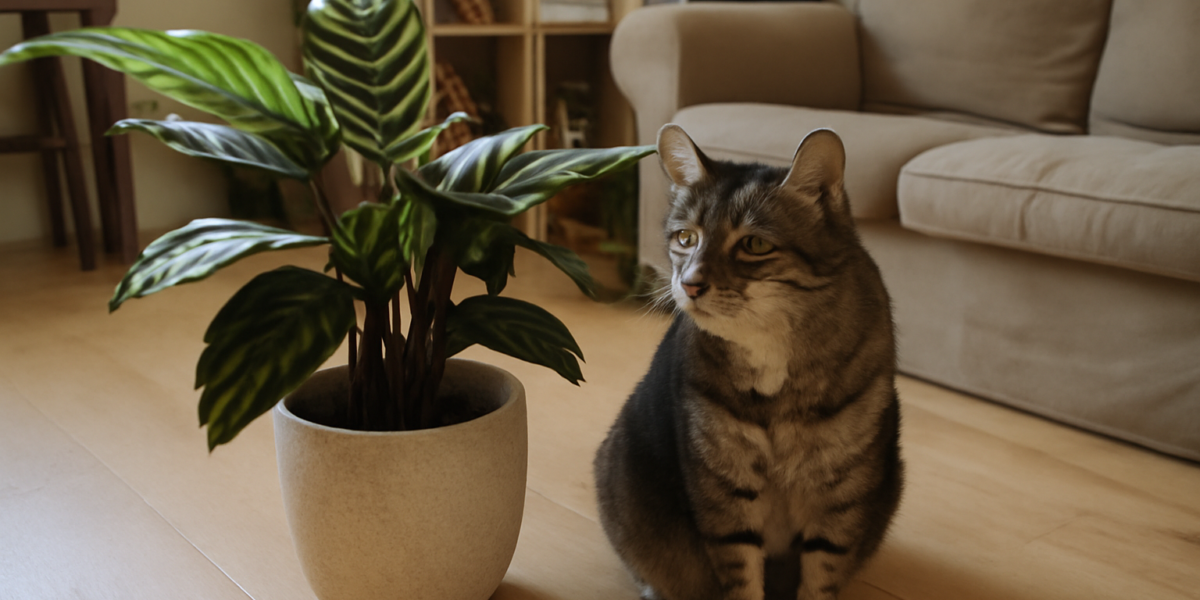
If you share your home with a curious cat, every new houseplant comes with a question: is it safe? If you have been eyeing the bold, patterned leaves of a calathea, you are in luck. Here is everything you need to know about calathea and cats.
Are Calathea Safe for Cats?
Yes, calathea are safe for cats. The question “are calathea toxic to cats” comes up often among plant-loving pet owners, and the answer is a clear and reassuring no. The American Society for the Prevention of Cruelty to Animals (ASPCA) officially lists calathea as non-toxic to cats, dogs, and horses, making them one of the most reliably pet-safe tropical plants available.
This applies across the entire calathea family. Whether you own a compact Calathea freddie, a large-leafed Calathea orbifolia, or any other variety, none of them contain compounds that are harmful to cats. If your cat chews on a leaf out of curiosity, you do not need to rush to the vet. At most, mild stomach upset from eating plant matter — which is true of nearly any non-food item — could occur, but there is no toxic threat. For cat owners who want the visual drama of tropical foliage without the safety risk, calathea deliver on every count.
Why Calathea Are Great for Cat Owners
Beyond their safety record, calathea are genuinely outstanding plants for households with cats. They belong to the Marantaceae family, commonly called the prayer plant family, and are prized for their extraordinary leaf patterns — deep greens, silvers, purples, and creamy whites arranged in stripes, feathers, and medallion shapes that no other houseplant quite replicates.
Because they thrive in indirect light, calathea fit naturally into the same indoor spaces where cats tend to lounge — away from direct sun, near a north- or east-facing window. They prefer consistent humidity and moderate watering, which suits most home environments.
For cat owners, the combination of stunning foliage and confirmed pet safety is rare. Many of the most visually striking tropical plants — such as pothos, philodendron, and peace lily — are toxic to cats. Calathea fill that visual niche without any of the risk, making them a go-to recommendation for anyone who wants a lush, leafy home that is also genuinely safe for their animals.
Can Calathea Cause Any Problems for Cats?
While calathea are non-toxic, a few minor, indirect concerns are worth knowing about. If a cat eats a significant amount of any plant material, mild gastrointestinal upset — such as vomiting or loose stool — can follow simply because cats are obligate carnivores and plant fiber is not part of their natural diet. This is not a calathea-specific issue and does not indicate toxicity.
Potting soil and fertilizers are a separate matter. Many commercial fertilizers contain concentrated nutrients or additives that can irritate a cat’s digestive system if ingested. If your cat tends to dig in planters, consider placing a layer of river rock over the soil surface to discourage this behavior, and store fertilizers well out of reach. The plant itself poses no danger — just be mindful of what surrounds it.
Popular Calathea Varieties That Are Safe for Cats
The calathea genus includes dozens of cultivated varieties, and all of them are considered non-toxic to cats. Here are some of the most popular options worth considering for a pet-friendly home.
- Calathea orbifolia — Features large, round leaves with broad silver-green stripes. It is one of the most visually striking varieties and thrives in bright indirect light.
- Calathea medallion — Known for its deep green tops and rich burgundy undersides, with a feathered medallion pattern in the center of each leaf.
- Calathea rattlesnake (Calathea lancifolia) — Offers long, wavy leaves with dark green spots that resemble rattlesnake markings, and purple-red undersides.
- Calathea pinstripe (Calathea ornata) — Dark green leaves decorated with fine pink or white pin-stripe markings make this one of the most elegant choices.
- Calathea freddie (Calathea concinna) — A compact, lower-maintenance variety with lighter green zebra-like patterning, well-suited to less humid environments.
All five of these varieties — and the many others in the family — are safe to keep in a home with cats. If you are asking “are calathea toxic to cats” while browsing a plant shop, the answer is the same regardless of which label is on the pot.
Other Cat-Safe Tropical Plants to Consider
If you are building a pet-friendly indoor garden, calathea pair beautifully with several other non-toxic tropical plants. Consider adding some of the following alongside your calathea collection.
- Haworthia — A small succulent that is safe for cats and requires very little water.
- Parlor palm (Chamaedorea elegans) — A graceful, cat-safe palm that adds height and movement to any room.
- Boston fern (Nephrolepis exaltata) — Lush, arching fronds that are non-toxic and love the humidity that calathea also prefer.
- African violet (Saintpaulia) — A compact flowering plant confirmed safe for cats by the ASPCA.
- Spider plant (Chlorophytum comosum) — Easy-care, fast-growing, and non-toxic, though best hung out of reach since cats find the dangling offshoots irresistible.
For more guidance on keeping your cat healthy and happy at home, visit our cat care blog.
Frequently Asked Questions
Are all calathea varieties non-toxic to cats?
Yes. All cultivated calathea varieties are non-toxic to cats. The ASPCA’s non-toxic classification applies to the calathea genus as a whole, not just specific cultivars. Whether you own an orbifolia, a medallion, a rattlesnake, or any other variety, your cat is safe around it.
What should I do if my cat eats a calathea leaf?
There is no need to panic. Because calathea are non-toxic, eating a leaf will not poison your cat. Monitor for mild stomach upset, such as vomiting or loose stool, which can happen when cats eat plant material of any kind. If symptoms persist beyond 24 hours or seem severe, contact your veterinarian. In most cases, no treatment is needed.
Are calathea toxic to cats the same way pothos or lilies are?
No. Pothos contain insoluble calcium oxalate crystals that cause oral irritation and swelling, while true lilies (Lilium species) are severely toxic and can cause acute kidney failure in cats even in small amounts. Calathea contain none of these compounds. They are in an entirely different category and are confirmed safe by the ASPCA.
Can calathea and cats coexist without any issues?
In the vast majority of homes, yes. Calathea are non-toxic, so there is no safety risk from the plant itself. The main practical challenge is simply that some cats enjoy chewing on or batting at plant leaves. If your cat is particularly interested in the calathea, placing it on a higher shelf or using a hanging planter can help preserve both the plant and your peace of mind.


