
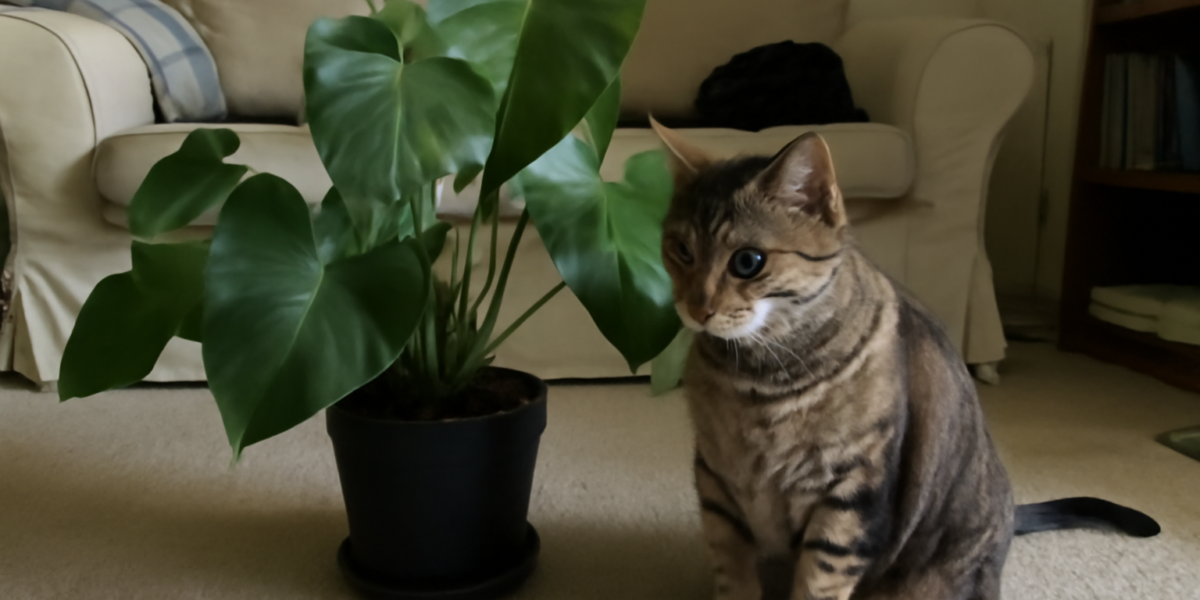
Philodendron Is Toxic to Cats: What Every Cat Owner Should Know
All species of philodendron are toxic to cats. Both the popular heartleaf philodendron (Philodendron hederaceum) and the dramatic split-leaf philodendron (Thaumatophyllum bipinnatifidum, formerly Philodendron bipinnatifidum) contain insoluble calcium oxalate crystals that cause immediate oral pain, swelling, and gastrointestinal distress when chewed or ingested by cats.
In this article
The toxicity level is considered mild to moderate in most cases. While philodendron poisoning is rarely fatal, the intense oral pain and swelling can cause difficulty breathing if the tongue or throat swells significantly, making prompt attention essential. If your cat has chewed on any part of a philodendron plant, contact your veterinarian immediately.
Philodendrons are among the most common houseplants worldwide, and their trailing vines and broad leaves are particularly attractive to curious cats. Understanding the specific risks helps you protect your feline companion while deciding whether these plants can coexist safely in your home.
Toxic Compounds in Philodendron Plants
The primary toxic agents in all philodendron species are insoluble calcium oxalate crystals, also called raphides. These microscopic needle-shaped crystals are embedded throughout the plant’s stems, leaves, and roots in specialized cells called idioblasts.
When a cat bites into any part of a philodendron, the pressure ruptures the idioblast cells and launches the raphides into the soft tissue of the mouth, tongue, and throat. The crystals physically penetrate the mucous membranes, causing immediate, intense pain and triggering an inflammatory response.
In addition to calcium oxalate crystals, philodendrons contain proteolytic enzymes that worsen the tissue irritation caused by the raphides. Some species also produce small amounts of other irritant compounds that contribute to gastrointestinal symptoms if plant material is swallowed.
The concentration of these toxic compounds varies between philodendron species and even between different parts of the same plant. Younger leaves and stems tend to have higher concentrations of calcium oxalate than mature growth. However, all parts of every philodendron species should be considered toxic to cats.
Symptoms of Philodendron Poisoning in Cats
Symptoms typically appear within minutes of a cat chewing on a philodendron, making this one of the faster-onset plant toxicities. The intense oral pain usually causes cats to stop chewing quickly, which limits the amount of plant material ingested and keeps most cases in the mild to moderate range.
Immediate Symptoms (Within Minutes)
- Intense pawing at the mouth and face
- Drooling and excessive salivation, often profuse
- Visible swelling of the lips, tongue, and oral tissues
- Head shaking and signs of oral discomfort
- Vocalization and restlessness
Symptoms Developing Within Hours
- Difficulty swallowing (dysphagia)
- Decreased appetite or complete food refusal
- Vomiting, sometimes with visible plant material
- Diarrhea in some cases
Severe Symptoms Requiring Emergency Care
- Significant swelling of the tongue or throat that causes difficulty breathing
- Wheezing, labored breathing, or open-mouth breathing
- Inability to swallow water
- Severe, persistent vomiting
While most cats experience only the mild oral irritation symptoms and recover within 12 to 24 hours, the potential for airway swelling means every case should be taken seriously. Cats with pre-existing respiratory conditions or brachycephalic (flat-faced) breeds may be at higher risk for breathing complications.
First Aid for Philodendron Ingestion
If you catch your cat chewing on a philodendron or notice symptoms of exposure, take these steps immediately.
- Remove plant access. Move the plant out of reach and gently remove any visible plant material from your cat’s mouth if you can do so safely. Do not put your fingers deep into the cat’s mouth, as a distressed cat may bite.
- Rinse the mouth. If your cat allows it, gently wipe the inside of the mouth with a damp cloth or offer small amounts of water, tuna water, or milk to help rinse away calcium oxalate crystals. Milk or yogurt can help bind some of the crystal fragments and soothe irritated tissue.
- Monitor breathing. Watch closely for any signs of respiratory difficulty, including open-mouth breathing, wheezing, or labored effort. If breathing appears compromised at any point, this is an emergency — go to the nearest veterinary clinic immediately.
- Call your veterinarian. Even if symptoms seem mild, phone your vet or the ASPCA Animal Poison Control Center (888-426-4435) for guidance. Describe what your cat chewed, approximately how much, and the symptoms you are observing.
- Do not induce vomiting. Never induce vomiting after calcium oxalate ingestion. The crystals will cause additional damage to the esophagus and mouth on the way back up, worsening the injury.
Most cats with mild exposure recover fully within 24 hours with supportive care. Your vet may recommend pain medication, anti-inflammatory drugs, or gastroprotectants depending on the severity. Intravenous fluids may be needed for cats who cannot eat or drink due to oral swelling. For more plant safety information, see our guide on pothos toxicity in cats, which involves the same calcium oxalate mechanism.
Severity Levels and Veterinary Treatment
Veterinarians generally classify philodendron poisoning in cats across three severity levels, and treatment scales accordingly.
Mild cases involve brief chewing exposure with drooling, pawing at the mouth, and mild oral redness that resolves within a few hours. These cats usually need only home monitoring and may benefit from offering soft, palatable food once symptoms subside.
Moderate cases involve more significant oral swelling, persistent drooling, food refusal lasting more than 12 hours, and possible vomiting. Your vet may administer anti-inflammatory medication, pain relief, and a gastroprotectant like sucralfate to coat and protect irritated tissue in the mouth and esophagus.
Severe cases — which are uncommon — involve substantial swelling affecting the airway, persistent vomiting, dehydration from inability to eat or drink, or secondary infection of damaged oral tissues. Hospitalization with intravenous fluids, injectable medications, and close monitoring may be necessary. In extremely rare cases, a temporary tracheostomy could be needed if airway swelling is critical.
The vast majority of philodendron exposures in cats fall into the mild category because the immediate pain discourages continued chewing. Nonetheless, every exposure deserves veterinary consultation to ensure your cat receives appropriate care.
Keeping Philodendron and Cats Safe Together
If you choose to keep philodendron plants in a home with cats, strict separation is essential. Cats are agile climbers and jumpers, so simply placing a plant on a high shelf may not be sufficient.
- Use a dedicated plant room. Keep philodendrons in a room with a closed door that your cat cannot access. This is the most reliable prevention method.
- Hang plants from the ceiling. Macrame hangers or ceiling hooks that position trailing vines well out of jumping range can work, but trim vines before they grow low enough for a cat to reach.
- Use terrariums or glass cloches. Enclosed glass containers protect both the plant and the cat, though they only work for smaller philodendron species.
- Consider safer alternatives. Spider plants, Boston ferns, calathea, and parlor palms are non-toxic to cats and offer similar tropical aesthetics. Our article on asparagus fern and cats covers another popular plant worth researching.
If you have a cat who is especially drawn to chewing plants, the safest approach is to remove all toxic plants from your home entirely. Providing cat grass (wheatgrass or oat grass) gives your cat a safe outlet for their plant-chewing instinct. Browse our cat care resources for more tips on creating a cat-safe home environment.
Frequently Asked Questions
Are all philodendron varieties toxic to cats?
Yes. Every species and cultivar in the Philodendron genus contains calcium oxalate crystals and is toxic to cats. This includes heartleaf philodendron, split-leaf philodendron, Brasil philodendron, lemon-lime philodendron, and all other varieties. The split-leaf variety (now reclassified as Thaumatophyllum) contains the same toxic compounds despite its taxonomic reclassification.
How much philodendron is dangerous for a cat?
Even a single bite can cause oral pain and drooling. The amount needed to cause serious systemic effects is relatively large because cats typically stop chewing quickly due to the immediate pain. However, kittens and small cats are at higher risk because it takes less plant material relative to their body weight to cause significant symptoms.
Can a cat die from eating philodendron?
Fatal outcomes from philodendron ingestion are extremely rare in cats. The primary risk of death would come from severe airway obstruction due to throat swelling, which is uncommon. Most cats make a full recovery within 24 to 48 hours with appropriate care. Still, prompt veterinary attention is important to manage symptoms and prevent complications.
Is philodendron also toxic to dogs?
Yes, philodendron is toxic to dogs through the same calcium oxalate mechanism. Dogs typically experience similar symptoms including drooling, oral pain, and swelling. Our guide on philodendron toxicity in dogs covers species-specific details.
My cat brushed against a philodendron but did not bite it. Is that dangerous?
Simple skin contact with an intact philodendron plant is not dangerous. The calcium oxalate crystals are contained within the plant cells and are only released when the plant tissue is crushed or chewed. If your cat rubbed against the plant without damaging it, no toxic exposure occurred. However, if sap from a broken stem contacts the skin, mild irritation is possible.


