
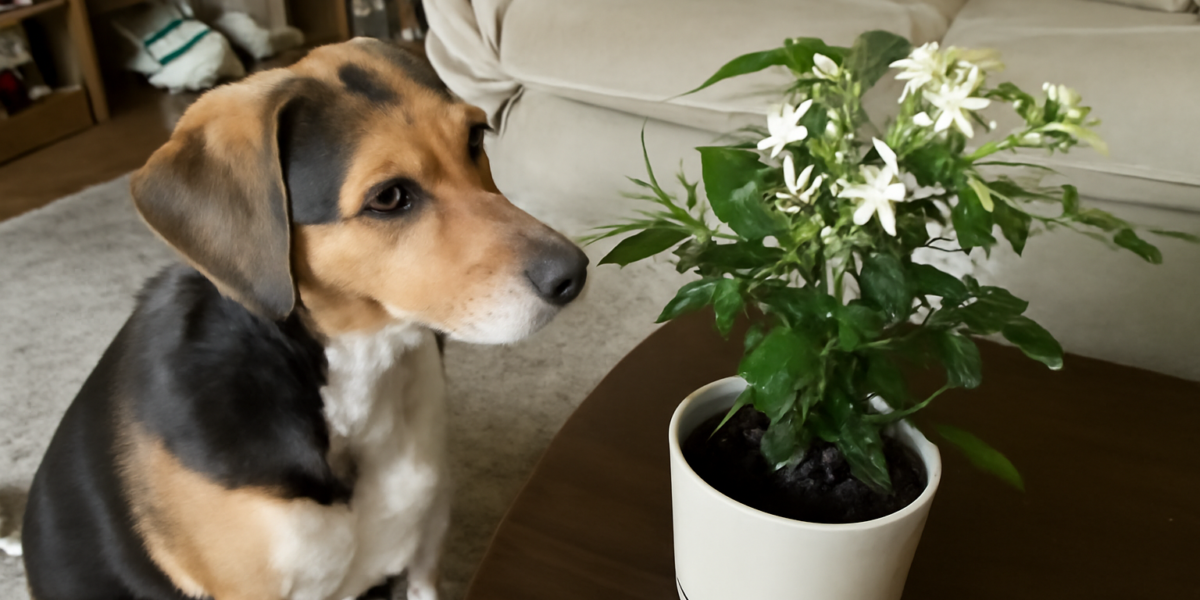
Is Jasmine Toxic to Dogs?
The answer depends on which jasmine plant you are asking about. True jasmine (Jasminum species) is generally considered non-toxic to dogs by the ASPCA. However, several plants commonly called “jasmine” are actually toxic impersonators. Carolina jasmine (Gelsemium sempervirens), star jasmine (Trachelospermum jasminoides), and cape jasmine (Gardenia jasminoides) can all cause problems ranging from mild stomach upset to serious poisoning in dogs.
In this article
Because the common name “jasmine” is used loosely for many different plants, correctly identifying your specific jasmine variety is critical for understanding whether it poses a risk to your dog. If your dog has eaten any plant you believe to be jasmine and you are unsure of the exact species, contact your veterinarian right away.
True Jasmine vs. Toxic Look-Alikes
Understanding the distinction between true jasmine and its toxic namesakes can protect your dog from an avoidable poisoning.
True Jasmine (Jasminum spp.) — Generally Safe
True jasmine species, including Jasminum officinale (common jasmine) and Jasminum polyanthum (pink jasmine), are listed as non-toxic to dogs by the ASPCA. While eating large amounts of any plant material can cause mild stomach upset, true jasmine does not contain compounds that are specifically toxic to dogs.
Carolina Jasmine (Gelsemium sempervirens) — Highly Toxic
This is the most dangerous plant commonly called jasmine. Carolina jasmine contains gelsemine, gelseminine, and other alkaloids that affect the nervous system. It is extremely toxic to dogs and can cause respiratory failure and death even in small amounts. All parts of the plant are poisonous, including the flowers, leaves, and roots. Despite its beauty, Carolina jasmine should never be planted in areas accessible to dogs.
Star Jasmine (Trachelospermum jasminoides) — Mildly Toxic
Star jasmine contains a milky sap that can cause gastrointestinal irritation if ingested. Symptoms are usually mild, including drooling, vomiting, and diarrhea. It is not considered highly dangerous, but ingestion should still be monitored.
Cape Jasmine / Gardenia (Gardenia jasminoides) — Mildly Toxic
Cape jasmine contains gardenoside and geniposide, compounds that cause mild vomiting, diarrhea, and hives in dogs. Toxicity is considered mild, but sensitive dogs or those that eat large amounts may need veterinary attention.
Symptoms of Jasmine Poisoning in Dogs
Symptoms vary depending on the species ingested. Here is what to watch for:
Mild Toxicity (Star Jasmine, Cape Jasmine)
- Drooling
- Vomiting
- Diarrhea
- Loss of appetite
- Mild lethargy
- Skin irritation from sap contact
Severe Toxicity (Carolina Jasmine)
- Muscle weakness and difficulty walking
- Difficulty breathing or respiratory distress
- Vision changes and dilated pupils
- Seizures
- Paralysis
- Collapse and potentially death
Carolina jasmine poisoning is a veterinary emergency. If your dog has ingested any part of this plant, do not wait for symptoms to develop. Get to an emergency veterinarian immediately. Every minute counts with alkaloid poisoning.
First Aid for Jasmine Ingestion
Your first step should always be identifying which jasmine species your dog ate. If you are unsure, assume the worst and seek veterinary care immediately.
- Remove your dog from the plant. Clear any remaining plant material from their mouth.
- Identify the plant species. Take clear photos of the plant including leaves, flowers, and stems. Use a plant identification app if needed, or bring a cutting to your vet.
- Call your veterinarian. For suspected Carolina jasmine ingestion, go directly to an emergency vet. For milder species, call for advice on whether a visit is needed.
- Do not induce vomiting unless directed by a veterinarian. This is especially important with Carolina jasmine, as the alkaloids can cause complications during vomiting.
- Monitor your dog closely. Keep them calm and note any symptoms along with the time they appear.
For Carolina jasmine specifically, the ASPCA Animal Poison Control Center at (888) 426-4435 can provide immediate guidance while you transport your dog to the vet.
Veterinary Treatment for Jasmine Poisoning
Treatment depends on the species of jasmine and the severity of symptoms.
For mild cases involving star jasmine or cape jasmine, treatment is supportive. Your vet may administer anti-nausea medications, IV fluids for hydration, and gastroprotectants. Most dogs recover within 24 hours.
For Carolina jasmine poisoning, treatment is more aggressive and may include:
- Gastric decontamination: Activated charcoal or gastric lavage to remove toxins.
- Respiratory support: Oxygen therapy or mechanical ventilation if breathing is compromised.
- Anticonvulsants: To manage seizures.
- IV fluid therapy: Aggressive hydration to support organ function and toxin elimination.
- Cardiac monitoring: The alkaloids can affect heart rhythm.
- Hospitalization: Dogs with Carolina jasmine poisoning often need 24 to 48 hours of intensive monitoring.
The prognosis for Carolina jasmine poisoning depends heavily on how quickly treatment begins. Dogs that receive care before respiratory depression sets in generally have a fair to good prognosis. Delayed treatment significantly worsens outcomes.
Keeping Your Dog Safe Around Jasmine Plants
If you love jasmine and want to include it in your garden, stick with true Jasminum species. Here are some additional tips for keeping your dog safe:
- Learn to identify your jasmine. Know the exact species of every jasmine plant on your property. A local nursery or extension office can help with identification.
- Remove Carolina jasmine entirely if you have dogs. The risk is too high to manage with barriers alone.
- Supervise your dog in new environments. When visiting friends, parks, or rental properties, be aware that jasmine varieties may be present in landscaping.
- Teach a strong “leave it” command. Reliable obedience training is one of your best tools for preventing plant ingestion.
- Keep berries cleaned up. Some jasmine species produce berries that can attract curious dogs. Regularly clear fallen berries from the ground.
Other Common Plants Dog Owners Should Know About
Jasmine confusion is a good reminder that common plant names can be misleading. Many popular garden and houseplants are toxic to dogs. For more information on plants to keep away from your pets, read about English ivy toxicity, hosta plant risks, and fiddle leaf fig dangers.
When planning your garden or choosing houseplants, always verify the botanical name, not just the common name, against a reliable toxicity database like the ASPCA’s. If you are preparing to adopt a dog, a plant safety audit should be on your pet-proofing checklist.
Frequently Asked Questions
Can the smell of jasmine harm dogs?
No, the fragrance of jasmine plants is not harmful to dogs. Toxicity occurs only through ingestion of plant material. Your dog can safely enjoy being near jasmine flowers without any risk from the scent alone.
Is jasmine essential oil safe for dogs?
Jasmine essential oil should be used with caution around dogs. While jasmine itself is not toxic when diffused in well-ventilated areas, concentrated essential oils can irritate a dog’s sensitive respiratory system. Never apply undiluted essential oils to your dog’s skin or allow them to ingest any essential oil. Consult your veterinarian before using aromatherapy around pets.
How can I tell if my jasmine is true jasmine or Carolina jasmine?
True jasmine (Jasminum) typically has white or light pink flowers with a sweet fragrance and compound leaves. Carolina jasmine (Gelsemium sempervirens) has bright yellow, trumpet-shaped flowers and glossy, lance-shaped evergreen leaves. Carolina jasmine is native to the southeastern United States and is the state flower of South Carolina. When in doubt, take a photo to a local nursery or use a plant identification app.
My dog ate jasmine flowers from a bouquet. Is that dangerous?
Jasmine flowers in commercial bouquets and floral arrangements are almost always true jasmine (Jasminum species), which is non-toxic. However, floral arrangements may have been treated with preservatives or pesticides. Watch for mild stomach upset and call your vet if vomiting or diarrhea persists beyond a few hours.
Are jasmine berries toxic to dogs?
True jasmine berries (from Jasminum species) may cause mild gastrointestinal upset but are not considered significantly toxic. However, berries from Carolina jasmine are highly toxic and can cause serious poisoning. If your dog eats berries from any jasmine-type plant and you cannot confirm the species, treat it as an emergency and contact your veterinarian immediately.


