
Last updated: May 16, 2026
In this article
- Is Poison Sumac Toxic to Dogs? The Quick Answer
- Meet Toxicodendron Vernix, the Wetland Sumac
- Distinguishing Poison Sumac From Staghorn Sumac
- Why Dogs Are Largely Resistant to Urushiol
- The Post-Walk Decontamination Protocol
- What If a Dog Eats Poison Sumac?
- Avoiding Poison Sumac on Walks
- The Anacardiaceae Family Connection
- Other Trail and Yard Hazards
- Pet-Safe Living in Poison Sumac Country
- Vet Routing and Final Notes
- Frequently Asked Questions
Is Poison Sumac Toxic to Dogs? The Quick Answer
Mostly no, with the same vector caveat that applies to its Toxicodendron relatives. Dogs are largely resistant to the urushiol contact dermatitis that poison sumac (Toxicodendron vernix) causes in humans. Their fur protects most of the skin, and dog skin biology is less reactive to urushiol. The dog usually walks away unbothered. The risk is that urushiol oil sticks to fur for days and transfers to humans during petting, producing the standard one-to-three-day-onset itchy blister rash. Oral ingestion of poison sumac can cause GI upset and oral irritation, though most dogs avoid the resinous taste. Severity for the dog is generally mild; severity for the unsuspecting human pet-owner is the standard sumac rash, which is sometimes more severe than poison-ivy reactions because the urushiol concentration in poison sumac sap can be higher.
Poison sumac also carries an extra identification hazard: it is often confused with the harmless staghorn sumac (Rhus typhina), a common landscape tree with similar compound leaves and bright red autumn fruit clusters. Distinguishing the two correctly is half the safety battle, and we cover that below. This guide walks through the biology, why dogs are resistant, the post-walk decontamination protocol, ingestion management, and the staghorn-vs-poison sumac differentiation that prevents most identification errors.
Meet Toxicodendron Vernix, the Wetland Sumac
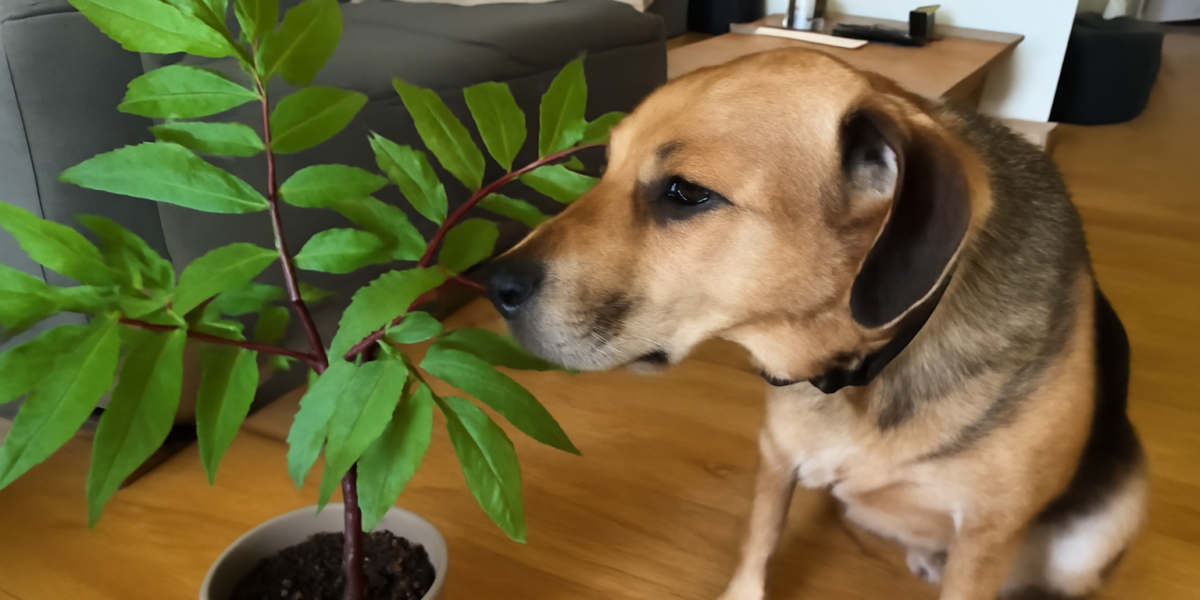
Poison sumac is a deciduous shrub or small tree growing six to twenty feet tall in wet, swampy habitats throughout the eastern United States and southeastern Canada. It prefers boggy ground, the edges of beaver ponds, swampy woodlands, and saturated lowland soils. The compound leaves have seven to thirteen leaflets arranged along a central stem, smooth-edged (not toothed), with a pinkish-red central rachis (the leaflet stem) that is one of the more reliable identification features. New leaves emerge red, mature to glossy green in summer, and turn dramatic orange-red in fall.
The flowers are small and yellowish-green, hanging in loose clusters from leaf axils. The fruit is the second key identification feature: small grayish-white to cream-colored berries hanging in loose drooping clusters, very different from the upright reddish fuzzy fruit of staghorn sumac. The bark is gray and smooth on younger stems, with horizontal lenticels, becoming darker and rougher with age. All parts of the plant contain urushiol; the sap is especially concentrated and the broken stem is a particularly potent contact hazard.
Distinguishing Poison Sumac From Staghorn Sumac
This distinction is critical for both safety and confidence. Staghorn sumac (Rhus typhina) is non-toxic. It is a common landscape and roadside tree across eastern North America with several giveaway features: leaflets are toothed (saw-edged), the central rachis is fuzzy and reddish-brown, the autumn fruit is upright, fuzzy, dark red, and clustered into “torches” at the branch tips that persist through winter. Staghorn sumac thrives in dry sunny soils, roadsides, and old fields, the opposite habitat from poison sumac.
Poison sumac, by contrast, has smooth-edged (not toothed) leaflets, smooth or only slightly fuzzy reddish rachis, drooping cream-white berry clusters in late summer, and grows in wet swampy ground. If you see a “sumac” growing in dry roadside soil with toothed leaflets and upright red fruit clusters, it is staghorn (or smooth sumac, R. glabra; or fragrant sumac, R. aromatica) and is safe. If you see a “sumac” growing in a swamp or wet boggy area with smooth-edged leaflets and white berries, treat it as poison sumac and stay clear. The habitat alone is a strong hint; you almost never find Toxicodendron vernix in a dry sunny field, and you almost never find Rhus typhina in a swamp.
Why Dogs Are Largely Resistant to Urushiol
Urushiol triggers a delayed-type hypersensitivity reaction in human skin via T-cell-mediated immune recognition. Dogs do not mount the same immune response and have fur that physically prevents the oil from contacting most of the skin. Thin-fur zones (belly, inner thighs, muzzle, eye margins) are theoretically vulnerable, but clinical reactions in dogs from sumac contact are uncommon. The veterinary dermatology literature treats poison sumac as a low direct-risk plant for dogs and a higher concern for the vector route. Cats appear to follow the same pattern, though cat-and-poison-sumac literature is sparse because cats encounter swampy habitat far less often than dogs.
The vector role is the practical concern. Poison sumac sap is so urushiol-rich that even brushing past a broken stem can leave a substantial dose on dog fur. Owners then develop rashes hours to days later, often without realizing the dog was the carrier. The vector pattern is identical to poison ivy and poison oak, but the rash from poison sumac exposure is often described as more severe.
The Post-Walk Decontamination Protocol
The protocol is the same Dawn-and-gloves routine across all the urushiol-bearing plants. Step one. Put on rubber or nitrile gloves and protective clothing before handling the dog. Long sleeves and pants are smart. Step two. Bathe the dog at an outdoor hose, garage utility tub, or bathtub with a degreasing soap. Original Dawn dish soap is the classic recommendation; veterinary degreasing or “oil” shampoos also work. Lather thoroughly across legs, belly, ears, and muzzle. Rinse, lather a second time, and rinse again. Two passes are usually enough.
Step three. Strip your protective clothing and run it through a hot wash separately. Wash all leashes, collars, harnesses, and bath towels in the same load. Wipe down the tub with a degreasing cleaner; urushiol residue on porcelain transfers for days. Step four. Once the dog is fully dry, normal contact resumes safely. Owners who walk dogs in swampy habitat where poison sumac is common often keep a permanent decontamination station by the back door: gloves, Dawn, towels, hose connection, and a designated laundry bag.
What If a Dog Eats Poison Sumac?
Dogs occasionally chew leaves while exploring boggy areas, though the resinous bitter taste discourages most after a single mouthful. Oral ingestion produces local irritation and GI upset: drooling, lip-licking, vomiting, soft stool. Larger ingestions or chewing on the woody stems (where urushiol sap is concentrated) can produce more pronounced symptoms including throat swelling and prolonged GI upset. Reports of severe systemic toxicity in dogs from poison sumac ingestion are uncommon, but the local irritation can be uncomfortable enough to warrant veterinary care.
If your dog ate any meaningful amount of poison sumac or chewed on the stems, call your veterinarian, the ASPCA Animal Poison Control Center at 888-426-4435, or the Pet Poison Helpline at 855-764-7661. Bring information about quantity, timing, and any photographs of the plant. Do not induce vomiting at home; bringing resinous urushiol-containing plant matter back through an already irritated esophagus can compound the problem.
Avoiding Poison Sumac on Walks
The realistic plan for walking dogs in eastern wetlands is to stay on cleared trails and boardwalks where possible. Off-trail exploration in swampy habitat almost always means proximity to poison sumac. Keep dogs leashed in known habitat zones; this single change cuts vector exposure dramatically. If you must cross wet ground off-trail, plan for a bath when you get home and inspect the dog under good light in case you brushed something visible without realizing.
For yard removal in swampy lots that backed onto wetlands, do not pull poison sumac with bare hands. Long sleeves, gloves, eye protection, and a particulate mask (broken plant fragments release urushiol) are minimum gear. Bag and dispose; never compost and never burn (urushiol vaporizes into smoke and produces a serious lung exposure that can require hospitalization). For heavily infested wetland edges, professional clearing is worth the cost. Some homeowners simply rope off the wet corner and accept the buffer rather than try to remove established poison sumac.
The Anacardiaceae Family Connection
Poison sumac shares the family Anacardiaceae with poison ivy, poison oak, mango trees, cashew trees, and pistachio. Urushiol or related contact-dermatitis-triggering compounds run through the family in varying concentrations. The vector role for dogs and the decontamination approach transfer across all of them. People who develop a sumac rash from a dog vector also tend to develop sympathetic responses to mango sap in tropical regions, since the cross-reactivity is well-documented.
Importantly, edible sumac species (Rhus aromatica, Rhus glabra, Rhus typhina, and Mediterranean Rhus coriaria, the source of culinary sumac spice) are in a related but distinct genus from Toxicodendron. The fruit clusters are used as a tart citrus-like spice in Middle Eastern cuisine and the dried leaves as tea bases by some cultures, all without the urushiol concern. The genus split between Rhus and Toxicodendron is the species-level reason the kitchen spice is safe and the swamp species is not.
Other Trail and Yard Hazards
Beyond the Toxicodendron family, several other plants merit consideration in mixed wetland habitat. Stinging nettle often grows alongside poison sumac in damp lowlands and adds a mechanical-irritation hazard. Essential oils in human skincare can compound urushiol reactions on already irritated skin. Tick checks are also part of post-wetland-walk care since wet brushy habitat is prime tick territory.
For yard planning around a wetland margin, consider replacing accessible poison sumac with native non-toxic wetland shrubs like buttonbush, winterberry holly, or sweetspire. The pet-safe garden plants guide includes broader suggestions. Replacing problem species is a multi-year project; mulching aggressively around new plantings suppresses poison sumac re-seeding from any remaining mature plants downwind.
Pet-Safe Living in Poison Sumac Country
For households in regions where poison sumac is endemic, the practical safety habits are: leashed walks in known habitat, post-walk inspection and bath when off-trail exposure is suspected, decontamination kit by the back door, and a yard audit before any new dog arrives. Our adopt-a-dog hub includes the yard audit on the pickup-day checklist for exactly this kind of regional awareness. New residents from drier regions are sometimes surprised by how aggressive eastern wetland plants can be.
If you have children, the vector-route concern is amplified because kids hug dogs more often and with more skin contact than adults do. The bath becomes a non-negotiable post-walk step rather than an “if I have time” task. Most households eventually settle into a routine where the dog’s harness comes off at the back-door station and the inspection-and-rinse takes about five minutes per outing.
Vet Routing and Final Notes
Most poison-sumac-and-dog encounters end with an annoyed bath, a happy dog, and a careful pet-owner. The cases that need veterinary attention are oral ingestions with persistent vomiting, dramatic facial or oral swelling, breathing changes, or the rare dog with documented urushiol sensitivity who develops a true contact rash. Save your veterinarian’s number, the ASPCA Animal Poison Control Center at 888-426-4435, and the Pet Poison Helpline at 855-764-7661 in your phone for the cases that need them.
For human exposure from dog vector contact, follow the standard human-side advice: cool wash with soap within an hour, calamine and oral antihistamines for symptom relief, and a doctor’s call for severe rashes or facial involvement. Poison sumac rashes are sometimes more severe than poison ivy and may benefit from prescription steroid treatment.
Frequently Asked Questions
Will my dog get a rash from poison sumac?
Probably not. Dogs are largely resistant to urushiol contact dermatitis because of fur coverage and less reactive skin biology. The bigger concern is the vector role, where the dog carries urushiol oil home on fur and gives the rash to humans during petting.
How is poison sumac different from staghorn sumac?
Staghorn sumac (Rhus typhina) is non-toxic with toothed leaflets, fuzzy red rachis, and upright fuzzy red fruit clusters that persist through winter. Poison sumac (Toxicodendron vernix) has smooth-edged leaflets, drooping cream-white berry clusters, and grows in wet swampy habitat. Habitat alone is often a strong hint.
Can I get poison sumac rash from my dog?
Yes, and this is the primary risk. Urushiol clings to fur for days and transfers to your skin during petting. Bathe the dog with degreasing soap and gloves after suspected exposure to break the vector chain. Wash leashes, collars, and bedding the dog used.
What if my dog ate poison sumac?
Most dogs experience only mild GI upset from a small amount, since the resinous bitter taste discourages further eating. For larger ingestions or persistent vomiting, call your veterinarian or a poison-control line. Do not induce vomiting at home.
Is culinary sumac spice the same plant?
No. Culinary sumac comes from Rhus species (most commonly Rhus coriaria), which are in a related but distinct genus from Toxicodendron. Rhus species are non-toxic and used for the tart citrus-like flavor of Middle Eastern cuisine; Toxicodendron vernix (poison sumac) is the urushiol-containing wetland species and is not edible.


