
Last updated: May 4, 2026
In this article
- Cat Breath Should Not Be Notably Foul
- Dental Disease: The Top Reason
- Kidney Disease: The Uremic Smell
- Diabetes and Diabetic Ketoacidosis
- Oral Cancer: Particularly Concerning in Cats
- Other Systemic Causes
- What Your Vet Will Check
- What Cat Owners Can Do at Home
- When to Worry — Don’t Wait
- How the Odor Profile Points Toward Diagnosis
- Frequently Asked Questions
Cat Breath Should Not Be Notably Foul
The bad breath in cats causes you should know about are different in significance from “bad breath” in dogs. Cats don’t have the same baseline of strongly noticeable mouth odor that owners often (incorrectly) accept as normal in dogs. When a cat develops persistent or strong bad breath, it is almost always pathological and worth investigating.
The most common cause is dental disease, but cats also develop a specific severe inflammatory condition (stomatitis) that goes beyond ordinary periodontal disease. Beyond the mouth, kidney disease, diabetes, oral cancer, and certain infections all produce breath changes that point toward serious diagnoses. The threshold for “this needs a workup” is lower in cats than in dogs.
This guide walks through the major causes, what each typically smells like, and why feline bad breath often warrants both a dental evaluation and bloodwork, even when the owner thinks it’s just the teeth.
Dental Disease: The Top Reason
Periodontal disease is the most common cause of bad breath in cats. The same plaque-bacteria-inflammation process that affects dogs affects cats, and the volatile sulfur compounds produced by bacteria become noticeable as disease progresses through the AVDC grading scale. See periodontal disease stages in cats for the full grading.
What makes cats different is the frequency of two additional dental conditions that can drive breath changes. The first is tooth resorption — a process where the cat’s own cells dissolve tooth structure, often hidden below the gum line and intensely painful. See tooth resorption in cats for details. The lesions can become inflamed and infected, contributing to oral odor.
The second is feline chronic gingivostomatitis (FCGS), often just called stomatitis — severe immune-mediated inflammation of the mouth that goes well beyond ordinary periodontal disease. Cats with stomatitis often have dramatic breath changes alongside their other signs (drooling, refusing hard food, weight loss). See our deep dive on stomatitis in cats for what the disease involves and how it’s treated.
Kidney Disease: The Uremic Smell
Chronic kidney disease is extremely common in older cats — by some estimates, the majority of cats over 12 to 15 years develop some degree of kidney dysfunction. As the kidneys lose their ability to clear waste products, urea accumulates in the blood and is partly excreted in saliva, where bacteria break it down into ammonia. The result is a distinctive ammonia-like or urine-like breath odor.
Other signs of feline kidney disease include increased thirst, increased urination, weight loss, decreased appetite, and progressive lethargy. The breath change often emerges in mid-to-late disease, after significant function has been lost. See our deep dive on chronic kidney disease in cats for the full clinical picture.
Catching kidney disease earlier — through routine annual bloodwork including kidney values and SDMA — gives much better outcomes than waiting for the breath change. Cats over 7 years should have annual bloodwork; cats over 10 should have it twice yearly.
Diabetes and Diabetic Ketoacidosis
Cats with poorly controlled diabetes mellitus can develop diabetic ketoacidosis (DKA), an emergency state. One sign is sweet, fruity, or acetone-like breath, the same chemistry that appears in canine DKA. Other signs include increased thirst and urination, weight loss despite normal or increased appetite, vomiting, lethargy, and weakness.
DKA is a true emergency. If your cat has diabetes and starts to show fruity breath, or if your cat has the other classic diabetic signs without a diagnosis yet, go to the vet the same day. See diabetes mellitus in cats for the full disease picture and treatment approach.
Cats are particularly susceptible to type 2-like diabetes, often associated with obesity and high-carbohydrate diets. Many cases are diagnosed during routine bloodwork before reaching DKA. Annual bloodwork in middle-aged and senior cats catches the disease early.
Oral Cancer: Particularly Concerning in Cats
Oral squamous cell carcinoma is one of the most common cancers in cats, and bad breath can be an early sign. The tumors often start under the tongue, along the lower jaw, or on the palate, and produce foul breath as they outgrow their blood supply and become infected or necrotic.
Other signs include drooling (sometimes blood-tinged), difficulty eating, weight loss, facial swelling, and a visible mass in the mouth. Cats are very good at hiding oral discomfort, and the cancer often progresses significantly before being detected. Any cat with persistent bad breath, especially combined with drooling, weight loss, or eating changes, deserves a thorough oral exam under sedation.
Other oral cancers — fibrosarcoma, lymphoma — also occur in cats. The prognosis varies, but earlier diagnosis generally gives more treatment options. Don’t wait to see if breath changes resolve on their own.
Other Systemic Causes
Liver disease can produce a sweet, musty breath odor in cats, similar to dogs but often more subtle. Common feline liver issues include hepatic lipidosis (fatty liver, often triggered by sudden weight loss or anorexia), cholangiohepatitis, and triaditis. Bloodwork including liver enzymes and bile acids identifies the problem.
Upper respiratory infections, particularly chronic ones, can produce foul breath if there’s involvement of the nasal passages or sinuses with bacterial infection. Severe gingivostomatitis combined with chronic upper respiratory disease is sometimes seen in cats with calicivirus or other viral conditions.
Gastrointestinal disease — vomiting, regurgitation, esophageal disorders — can produce breath changes from repeated stomach contents contacting the oral cavity. Inflammatory bowel disease in cats is common and may need workup if breath changes accompany chronic GI signs.
What Your Vet Will Check
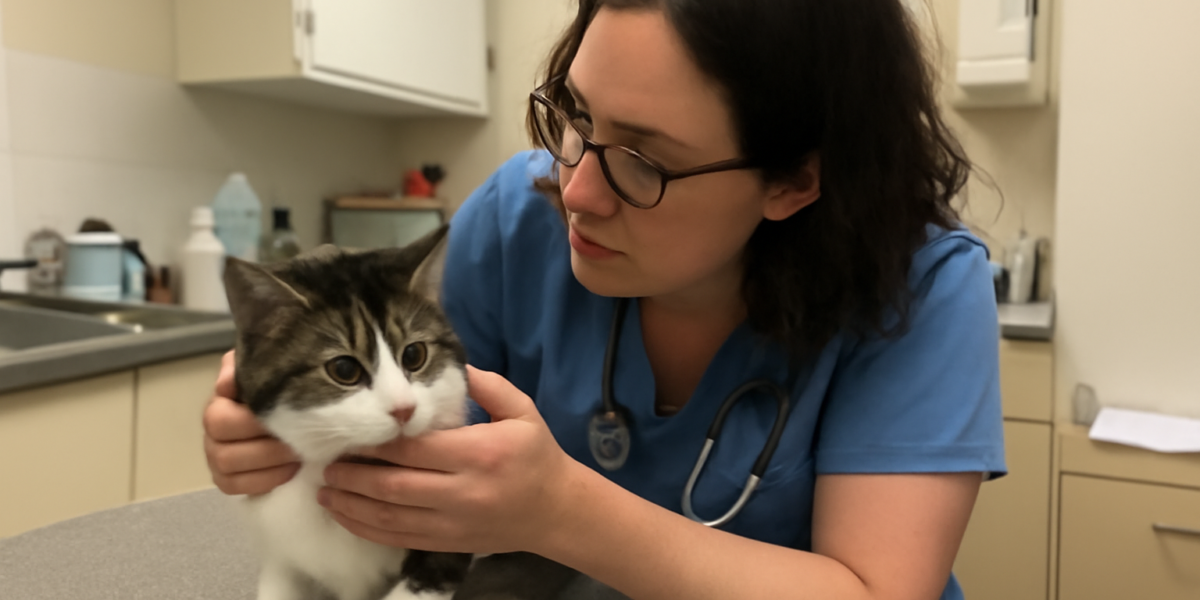
The workup for feline bad breath typically starts with a thorough oral exam — though awake exams in cats are limited because most cats refuse to allow detailed mouth assessment. A sedated dental evaluation with full-mouth X-rays is often needed to truly assess what’s happening. See dental X-rays for dogs for what dental imaging reveals (the same principles apply to cats).
Bloodwork (CBC, chemistry panel, T4) and urinalysis screen for kidney disease, diabetes, liver disease, and hyperthyroidism (which is common in older cats and can affect general health). Imaging may be added based on findings.
Don’t accept “just dental” as the answer for a cat with bad breath without bloodwork, particularly in middle-aged and senior cats. The probability that a systemic condition is contributing — or is the primary cause — is meaningful in this population.
What Cat Owners Can Do at Home
Daily home dental care slows the progression of dental disease, the most common cause. Building any sustainable routine — brushing, finger-rubbing with toothpaste, dental wipes, water additives — helps. Cats are notoriously harder than dogs, but even partial care matters.
VOHC-accepted dental treats, water additives, and prescription dental diets provide additional support — see VOHC-approved dental products for what carries the seal in cats. Layer multiple modest interventions to compensate for the difficulty of brushing.
Annual veterinary visits with a thorough oral exam (and sedated assessment when needed) catch dental and systemic causes early. For cats over seven, twice-yearly visits with bloodwork is wise. The earlier disease is caught, the better the outcomes.
When to Worry — Don’t Wait
Sudden onset of bad breath, severe foul odor, breath change combined with drooling or visible blood in saliva, weight loss, decreased appetite, or any visible oral mass all warrant prompt veterinary evaluation. Cats hide pain extremely well, and a cat showing obvious oral signs has often been suffering silently for some time.
Even mild persistent bad breath in a cat is worth investigating, especially in older cats. The differential is broader than in dogs, and several of the possibilities (oral cancer, kidney disease, diabetes) benefit dramatically from early intervention.
Don’t try home remedies for cat bad breath without first ruling out the serious causes. Cosmetic breath fresheners may mask the odor while disease progresses underneath. Treat the cause, not the smell.
How the Odor Profile Points Toward Diagnosis
The character of the smell often hints at the underlying cause. Foul, fetid breath with visible tartar typically points toward dental disease. Ammonia or urine-like odor suggests kidney disease, especially in older cats. Sweet or fruity odor raises suspicion for diabetic ketoacidosis. A musty or sweet “rotten” odor can suggest liver involvement.
The smell alone rarely gives a definitive diagnosis, but it narrows the differential and tells your veterinarian where to start. Describe the odor in detail during the consultation — “it smells like ammonia” or “it’s sweet, almost fruity” gives the team useful information. Combined with bloodwork, urinalysis, and a thorough oral exam, the workup typically identifies the cause efficiently.
For cats adopted from rescues, baseline dental and systemic health is often unknown. Many cats come with established but unrecognized dental disease, and some have early signs of kidney compromise that hadn’t been screened for. An early veterinary assessment after adoption — through resources like our adoption hub — establishes a baseline so future changes are easier to interpret.
Frequently Asked Questions
Is bad breath in a cat always serious?
It’s almost always worth investigating, even when the underlying cause turns out to be manageable dental disease. Cats don’t have a “normal” baseline of foul breath — persistent bad breath is a signal worth following up on.
What does kidney disease breath smell like in cats?
Distinctly ammonia-like or urine-like, sometimes described as similar to a litter box. The smell becomes noticeable when significant kidney function has been lost, so it usually appears mid-to-late in the disease course.
Can stomatitis cause bad breath?
Yes, often dramatically. Cats with feline chronic gingivostomatitis frequently have severe foul breath alongside other signs like drooling, refusing hard food, and weight loss. The condition usually requires veterinary management including surgical extractions.
How do I tell if it’s dental or something more serious?
You usually can’t from the breath alone. A thorough veterinary workup — sedated oral exam with X-rays plus bloodwork — narrows the differential. Don’t try to guess; the differential includes both manageable and serious conditions.
Will dental cleaning fix my cat’s bad breath?
If the cause is dental disease, yes — usually dramatically. If the cause is systemic (kidney, diabetes, cancer), dental cleaning won’t fix the breath. Persistent odor after dental treatment warrants further investigation.
How often should my cat have a dental exam?
Annually as part of a wellness visit, with sedated dental assessment and X-rays roughly every 12 to 24 months for most adult cats. Cats with active dental disease, stomatitis, or resorption may need more frequent attention.


