Last updated: May 4, 2026
In this article
Overview
This Beauceron breed profile is for the person who has come across a tall, athletic, black-and-tan French dog that looks vaguely like a Doberman crossed with a Rottweiler and wondered what it actually is. The Beauceron — sometimes called the Berger de Beauce — is a French herding and protection breed with centuries of history working sheep and cattle on the plains around Paris. The breed’s combination of size, drive, intelligence, and suspicion of strangers means it sits firmly in the experienced-handlers-only category, much like the Belgian Malinois or working-line German Shepherd.
Beaucerons are not common in American shelters. The dogs that do land in rescue often arrived at homes through casual breeders or first-time owners who underestimated the breed and ended up overwhelmed. They are not a starter dog. They are not a casual companion. They are a serious working breed that needs a job, structured leadership, secure fencing, and a household that genuinely enjoys living with a high-drive dog.
Quick facts: Group: herding (working). Origin: France (Beauce region). Size: 24–28 inches at the shoulder, 70–110 pounds. Coat: short, dense double coat. Energy: high — needs serious daily work. Lifespan: typically 10–12 years. Grooming: weekly brushing, seasonal shedding. Best for: experienced working-dog homes with secure fencing, time for daily training, and a structured lifestyle.
History and Origin
The Beauceron developed on the Beauce plains southwest of Paris as a versatile farm dog used to drive flocks of sheep and cattle, guard the property at night, and serve as a general-purpose working partner. The breed was formally cataloged in the late 1800s and standardized through French breed clubs. During both world wars, Beaucerons served in military and police roles — message-carrying, mine detection, search and rescue — alongside other French and European working breeds.
One distinctive breed-standard quirk is double dewclaws on the rear feet. This is not a defect but a recognized feature of the breed. Two dewclaws on each rear leg are required by the French breed standard, and reputable breeders preserve this trait. The Beauceron arrived in the United States in the 1980s and gained AKC recognition in 2007, but the breed remains uncommon. Most American Beaucerons descend from carefully imported stock.
Temperament and Personality
Beaucerons are confident, intelligent, and deeply loyal to their family. They are reserved with strangers and watchful of their environment in a way that reflects centuries of property-guarding work. They are not casually friendly with everyone they meet. Inside the home with their people they are affectionate, calm, and steady — but they are not lap dogs.
The breed has high drive and high biddability, an unusual combination. Unlike sighthounds, who are independent thinkers, Beaucerons want a job and want to work with their handler. That makes them outstanding partners in dog sports — French Ring, IGP, agility, herding, search and rescue, scent work — and challenging pets in households without an outlet for that drive. An under-stimulated Beauceron becomes anxious, destructive, or reactive. The behavior is not the dog’s fault. It is what happens when a working dog has no work.
With other dogs, individual variation matters; many Beaucerons coexist peacefully with other dogs in the household, but same-sex aggression in adults is reported. With cats and small animals raised with the dog from puppyhood, coexistence is often possible. With unfamiliar small animals, manage carefully.
Size and Appearance
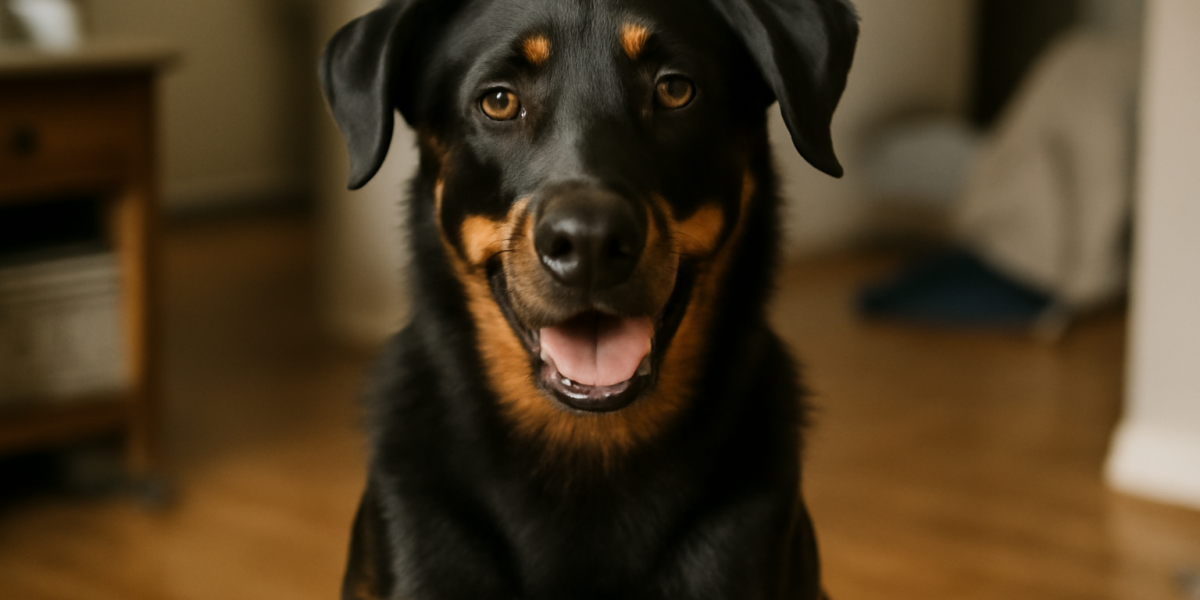
Beaucerons are large, athletic, and powerful. Adults stand 24–28 inches at the shoulder and weigh 70–110 pounds, with males larger than females. The build is rectangular, muscular without being heavy, and clearly athletic. The head is long with dark eyes and naturally drop ears (some are cropped in countries where the practice is legal; many countries and several US states now restrict cropping).
The most familiar coat color is black and tan, often called the harlequin in the gray-black-and-tan variant. The coat is short on the body with slightly longer hair on the rear of the legs and tail. The double dewclaws on the rear feet are a breed standard feature and not a defect. The overall impression is of a serious working dog built for endurance, agility, and physical confrontation when needed.
Exercise and Activity Needs
Beaucerons need real, structured, daily work. Long walks alone do not meet the breed’s needs. Plan for a combination of physical exercise — running, hiking, fetch, swimming — and structured mental work — training sessions, scent games, dog sports, herding if available. Two to three hours of activity per day across multiple sessions is a realistic baseline for an adult dog.
Off-leash freedom is reasonable in safe enclosed areas if the dog has a reliable recall built through consistent training, but unsecured off-leash work in environments with livestock, wildlife, or strangers carries real risk. Beaucerons can be reactive to other dogs encountered off-leash, particularly same-sex pairs. Six-foot solid fencing is standard. Without daily structured work, expect to deal with destructive behavior, reactivity, or both. The breed is not negotiable about this.
Grooming and Care
Grooming is moderate. The short double coat sheds year-round and blows heavily twice a year. Weekly brushing during normal months and daily brushing during coat blow keeps the house manageable and the dog comfortable. Bathing is occasional. The coat repels dirt reasonably well and does not develop a heavy doggy odor when healthy.
Standard care otherwise: keep nails trimmed (including the dewclaws — they do not wear naturally), check ears for moisture and debris, brush teeth regularly, and watch weight. Beaucerons are athletic dogs and stay leaner than many large breeds in good condition. Diet should be a quality large-breed formula appropriate for high-activity dogs.
Health and Lifespan
Beaucerons are generally healthy for a large breed. Concerns include hip and elbow dysplasia, bloat (gastric dilatation-volvulus) common in deep-chested breeds, and certain cardiac conditions. Reputable breeders screen breeding dogs for hips, elbows, and heart. Eye conditions and hypothyroidism turn up occasionally. Cancer rates in the breed appear comparable to other large working breeds.
Lifespan is typically 10–12 years. The breed’s athletic build and strong working heritage support good late-life function in well-maintained dogs. Plan for the larger costs that come with the size — surgery, anesthesia, medication doses, and food are all large-breed scale. Tell your veterinarian about any breed-specific medication sensitivities and be aware that the breed may have variable responses to common drugs.
Living With a Beauceron
The functional setup is a household with secure fencing, daily time for training and exercise, and at least one adult who genuinely enjoys working with a high-drive dog. Suburban yards work if the household commits to the daily workload. Apartments are not realistic. Rural acreage with secure fencing is ideal but not required.
Visitors require management. Beaucerons are not naturally social with strangers, and forcing greetings backfires. Most Beaucerons can be taught to accept invited guests calmly with consistent training, but they will rarely be the dog who runs to greet every new person. Children inside the family are usually safe and often beloved by the dog. Visiting children are a different category and require active management. Same applies to other dogs — Beaucerons do not always enjoy dog parks and can be reactive in chaotic dog-on-dog environments.
Training and Socialization
Start training and socialization early — and keep going through the entire two-to-three-year adolescence. Force-free, positive-reinforcement methods set the foundation. Avoid harsh handling; Beaucerons are sensitive despite their tough exterior, and a dog that loses trust in a handler does not recover quickly. Engage the brain as much as the body.
Realistic training goals are solid obedience across distractions, reliable recall in safe environments, calm behavior around visitors, and the ability to disengage from triggers. Dog sports — IGP, French Ring, agility, scent work, herding — give the breed an outlet that pet life alone does not provide. Read dog body language well so you catch the warning signals before any reactive incident. The breed almost always communicates before it acts. Compare temperament with the German Shepherd and Belgian Malinois; the experience of living with a Beauceron sits in similar territory.
Is the Beauceron Right for You?
This is the section where most readers should pick a different breed. Beaucerons fit a narrow set of homes: experienced working-dog handlers, dog-sport competitors, structured rural or suburban households with secure fencing, and adopters with the time and patience to live with a high-drive serious dog. They are not casual pets, and the most common surrender reason is mismatch between drive and lifestyle.
If you have the setup and experience, a Beauceron from rescue or a breed-specific rescue can be a remarkable partner. If you are uncertain, consider lower-drive herding alternatives — the Briard is a French herding breed with a softer profile, and the standard German Shepherd ranges from working-line intensity to companion-line moderation. Visit the adopt a dog hub to start, and read about the first week with a rescue dog before pickup.
Frequently Asked Questions
Are Beaucerons aggressive?
Not inherently, but they are watchful, protective, and reactive when under-stimulated or poorly trained. A well-bred and well-handled Beauceron is confident and stable, not aggressive. A poorly raised one can be a serious problem.
Are Beaucerons good with children?
With children inside the family, generally yes — many Beaucerons are devoted to “their” kids. With visiting or unfamiliar children, supervision is required. The breed dislikes rough handling and unpredictable noise.
Why do Beaucerons have double dewclaws?
The double rear dewclaws are a breed standard feature preserved in French herding tradition. They do not affect function, though they do require regular nail trimming since they do not wear naturally.
Can Beaucerons live in apartments?
Realistically no. The breed needs space, structured exercise, and an outlet for working drive that apartment life does not support. Suburban or rural homes with secure fencing are appropriate.
How are Beaucerons different from German Shepherds?
Both are working herding breeds with similar drive levels and protection instincts, but Beaucerons are typically taller, leaner, and more reserved with strangers. German Shepherds are more available through rescue and have a wider range of temperament between working and companion lines.
Looking to adopt a Beauceron Breed Profile?
Browse Beauceron Breed Profile dogs and mixes available for adoption from shelters and rescues near you.
Find Beauceron Breed Profile Dogs for Adoption