Last updated: May 4, 2026
In this article
What Makes a Good Active Cat
The best active cat is a breed whose energy and engagement match an owner who wants a cat that participates rather than observes. High-activity cats need daily structured stimulation — interactive play, climbing, puzzle-feeding, and enrichment rotation — and they reward owners who provide it with intelligent, curious, often dog-like companionship. They are not the right choice for adopters who want a low-maintenance lounger.
Five criteria define a good active cat: high baseline energy that holds across adulthood, willingness to engage with humans during play, intelligence that benefits from cognitive challenge, athleticism for climbing and jumping, and tolerance for the structured routines high-activity breeds require. Bonus criteria include sociability with other animals (to provide play partners) and adaptability to creative enrichment.
The Bengal vs Abyssinian comparison is critical because both breeds rank among the most active in the cat world — but they express activity in noticeably different ways. The Bengal’s energy is prey-driven, climbing-obsessed, and water-curious. The Abyssinian’s energy is busy, social, and exploratory. Both demand engaged owners, but they suit different households.
Bengal for Active Living
The Bengal is one of the most physically demanding domestic cat breeds. Their energy is intense and prey-driven — they pounce, leap, climb, and hunt enrichment toys with focused intensity. Many Bengals are obsessed with water (they will join showers, dip paws in water bowls, fish ice cubes), demand vertical space, and require structured daily play to avoid destructive boredom.
For high-engagement active living, Bengals deliver. They learn tricks readily, enjoy harness walks, and participate in agility-style play. Their spotted or marbled coat is a standout visual element, and many owners specifically choose Bengals for the wild aesthetic combined with domestic temperament. They are confident, dog-like, and bond strongly with their primary humans.
The tradeoff is the activity floor — Bengals need significant daily enrichment and do not adapt well to under-stimulation. The Bengal care guide walks through enrichment requirements. Score Bengals at the top of the active-cat scale, with caveats around space requirements and the realities of living with a water-curious athlete.
Abyssinian for Active Living
The Abyssinian is similarly active but expresses energy differently. Their pattern is “busy” — perpetually exploring, investigating, climbing, and following their humans through every household activity. They are less prey-driven than Bengals and more social-driven; they want to participate in what their humans are doing rather than hunt enrichment toys in isolation.
Abyssinians are smaller and more graceful than Bengals — slim, athletic, and built for agility rather than power. The ticked agouti coat (each hair banded with multiple colors) is the breed’s hallmark and is fundamentally different from Bengal spotting. The temperament is described as “the clown of the cat world” — engaged, playful, and social, often working the entire household for attention rather than focusing on one person.
For high-engagement active living, Abyssinians offer a slightly more manageable version of the active-cat experience. They climb everything, but their lighter weight makes them less destructive. They require daily play, but a single intense fifteen-minute session usually satisfies. Score Abyssinians strongly on active-cat criteria, with the social-driven energy being either a feature or a bug depending on how much constant cat presence you want.
Side-by-Side Comparison
Both breeds qualify as high-energy, but the energy types are different — and the differences matter for matching a cat to a household.
Energy type: Bengal is prey-driven and intense; Abyssinian is busy and social. Bengals work toys; Abyssinians work people.
Size and build: Bengals are medium-large and muscular. Abyssinians are smaller, slimmer, and more graceful.
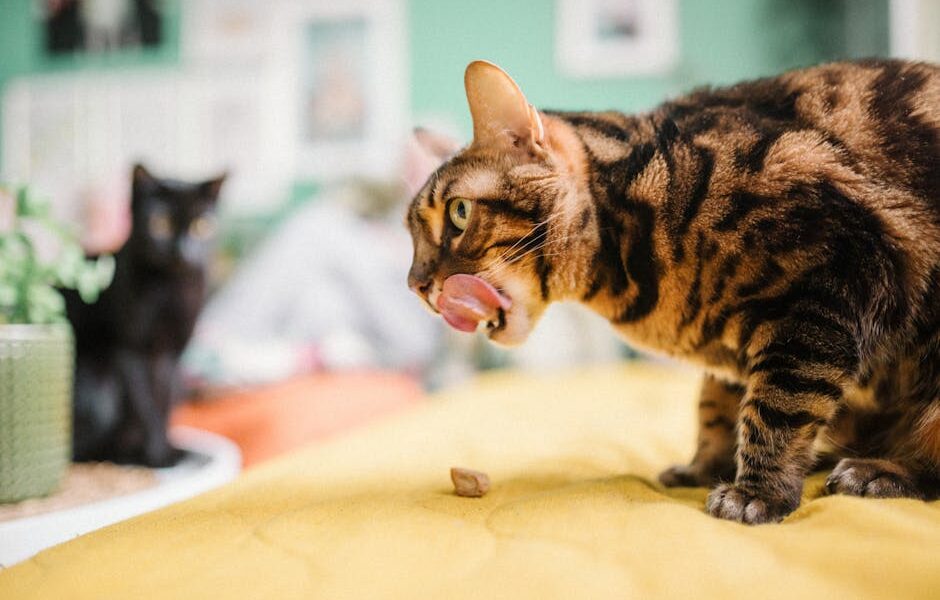
Coat: Bengals show spotted or marbled patterns with high contrast. Abyssinians show ticked agouti — each hair banded with multiple colors, no spots or stripes on the body.
Water affinity: Bengals are famously water-curious. Abyssinians vary; some enjoy water, most are indifferent.
Vocalization: Bengals are conversational with a distinctive raspy meow. Abyssinians are quieter overall but still vocal compared to calmer breeds.
Cost and availability: Both run in the moderate-to-higher range. Bengals are widely available; Abyssinians require slightly more breeder search but are not rare.
Care Differences
Bengal care emphasizes high-volume enrichment. Daily interactive play, climbing structures sized for substantial cats, water enrichment, and rotation of complex puzzle toys are essential. The Bengal diet guide covers nutritional considerations for an active breed. Many Bengal owners build catios or harness-train their cats to provide additional stimulation. Underestimating Bengal enrichment needs is the leading cause of Bengals surrendered to rescues.
Abyssinian care emphasizes social participation. Daily play sessions, climbing structures, and human attention are essential. They are less destructive than Bengals when bored — they meow, follow, and demand rather than shred furniture — but the ongoing attention requirement is meaningful. Both breeds benefit from puzzle feeders that turn meals into cognitive challenges.
Grooming is minimal for both. Weekly brushing handles either coat. Standard nail care, dental brushing, and ear checks complete the basics. Both breeds benefit from indoor cat exercise routines that channel their energy productively.
Daily Routine Realities
An honest day with a Bengal looks like: morning play session before work (15-20 minutes), interactive lunch-break check-in if working from home, evening play session (20-30 minutes), and ambient enrichment throughout the day via puzzle feeders, climbing structures, and rotating toys. Bengals who do not get this routine often become destructive, vocal, or anxious. Owners with travel-heavy jobs or unpredictable schedules struggle to keep Bengals satisfied.
An Abyssinian day looks similar in time commitment but different in style. They want to participate in your activities — supervising your morning routine, following you between rooms, climbing onto your desk while you work. A single intense play session in the evening usually suffices, but the cat will be present throughout the day rather than parked. Owners who work from home or have flexible schedules often find Abyssinians easier to live with.
Both breeds do better in multi-cat households where they can play with another active feline. A single Bengal in an under-stimulated environment is among the most challenging cats to keep happy. A pair of Bengals or a Bengal with another active breed often thrives because the cats entertain each other.
Plan for the sometimes-mischief that comes with intelligent active breeds. Both Bengals and Abyssinians figure out cabinet latches, faucet handles, and door mechanisms with surprising speed. Childproof locks on cabinets, weighted lids on bins, and barriers around fragile items prevent the most common household casualties. Owners often find that an Abyssinian’s mischief is curious and social, while a Bengal’s mischief is goal-directed and persistent — a Bengal that wants something rarely gives up easily.
Health Considerations
Both breeds are generally healthy with reasonable lifespans for medium-sized domestic cats. Bengals are at known risk for hypertrophic cardiomyopathy, progressive retinal atrophy, and pyruvate kinase deficiency. Reputable Bengal breeders test parents for relevant genetic markers. Earlier-generation Bengals (F1-F3) may have additional considerations and legal restrictions in some jurisdictions.
Abyssinians are also at known risk for HCM, progressive retinal atrophy (a different mutation than Bengal PRA), and pyruvate kinase deficiency. Reputable Abyssinian breeders test parents for relevant genetic markers. Renal amyloidosis has been documented in some Abyssinian and Somali lines.
For active breed adopters, the practical implication is similar: both breeds need a breeder who tests parents and provides documentation. Plan for annual wellness exams and budget for emergency funds — high-activity breeds occasionally injure themselves through their athleticism. The emergency fund guide applies.
Cost & Availability
Pet-quality kittens of both breeds typically run in the moderate-to-higher range. Bengals are widely available across North America, with regional waiting lists for specific patterns (snow Bengal, charcoal Bengal, silver Bengal). Abyssinians are also available but require slightly more breeder search; ruddy and red Abyssinians are more common, while blue and fawn lines are scarcer.
Adoption is possible for both. The rescue Bengal adoption guide walks through breed-specific rescues and what to expect. Abyssinians occasionally surrender to all-breed rescues. Browse adoptable cats for current options. Lifetime costs run higher than average due to enrichment needs — see the first-year cost of owning a cat.
Decision Framework: When to Choose Each
Choose the Bengal for active living if: you want the highest-energy mainstream domestic breed, with the wild aesthetic, water-curious behavior, and prey-driven intensity. The Bengal suits owners with significant enrichment commitment, larger living spaces, comfort with climbing-everywhere athletes, and tolerance for the dramatic side of feline activity. They are not for first-time owners or low-attention households.
Choose the Abyssinian for active living if: you want a smaller, more manageable version of high-activity living — a busy social companion who participates in your daily life rather than hunting toys with focused intensity. The Abyssinian suits adopters who work from home, families with engaged children, and homes where the cat will be a constant participant rather than an occasional partner. They are easier to live with than Bengals while still meeting active-cat criteria.
For broader active context, browse the most playful cat breeds roundup, the highest energy cat breeds, and the dog-like cat breeds. Sibling B108 articles like Best Water-Loving Cat: Turkish Van vs Bengal and Abyssinian vs Egyptian Mau add comparison points. For breed-specific deep dives, see the Bengal profile and the Abyssinian profile.
Frequently Asked Questions
Are Bengals legal everywhere?
SBT (later-generation) Bengals are legal in most U.S. jurisdictions, but earlier-generation Bengals (F1-F3) face restrictions in some states and cities. Check local regulations before adopting any Bengal, especially earlier generations. Most pet-quality Bengals are SBT and unrestricted.
Which breed is better for first-time owners?
Neither, frankly. Both are demanding for first-time owners. If you must choose, the Abyssinian is more forgiving — smaller, less destructive when under-stimulated, and easier to satisfy with social engagement. Bengals reward dedicated owners but punish under-engagement.
Do these breeds get along with other cats?
Both can. Bengals often do well with another cat to share play energy, ideally another active breed. Abyssinians similarly benefit from a feline companion. Slow structured introductions matter for either.
Are these breeds good with children?
Both can be excellent with respectful older children who enjoy interactive play. Toddler households may struggle with either breed’s intensity. Always supervise and teach gentle handling.
Can I keep an active breed in an apartment?
It is possible but challenging. Both breeds need significant vertical space, daily enrichment, and consistent play. Apartments require deliberate vertical-space planning and an owner committed to making up for limited horizontal roaming.
Looking to adopt a Best Active Cat?
Browse Best Active Cat cats and mixes available for adoption from shelters and rescues near you.
Find Best Active Cat Cats for Adoption