Last updated: May 6, 2026
In this article
Somali Cat Breed Profile: The Long-Haired Abyssinian
Imagine taking one of the most beloved cat breeds in the world — the Abyssinian — and adding a flowing, fox-like coat of ticked fur that ripples with color as the cat moves. That is essentially what the Somali cat breed is, and the result is nothing short of spectacular. Often called the “fox cat” for their bushy tails, large ears, and alert expressions, Somalis are stunningly beautiful cats with personalities that are just as vibrant as their appearance.
If you love the idea of a cat that is endlessly curious, remarkably athletic, and always ready for the next adventure, the Somali might be your perfect match. But this breed is not for everyone — their high energy levels and need for mental stimulation mean they do best with owners who are ready to keep up. In this complete guide, we cover everything you need to know about the Somali, from their unexpected origins to their care requirements and what daily life with one of these magnificent cats truly looks like.
The Surprising Origins of the Somali Cat
The Somali’s history is one of happy accidents. For decades, long-haired kittens occasionally appeared in Abyssinian litters. Most Abyssinian breeders considered these fluffy kittens embarrassing mishaps — evidence that a long-haired gene was hiding in their bloodlines. The long-haired kittens were typically placed quietly as pets without registration papers, and the topic was rarely discussed openly in breeding circles.
Everything changed in the late 1960s and early 1970s when a few forward-thinking breeders looked at these long-haired Abyssinians and saw not a problem, but a beautiful new breed waiting to be recognized. Evelyn Mague, an American breeder, is widely credited as the driving force behind establishing the Somali as a breed in its own right. She named the breed “Somali” as a nod to Somalia, which neighbors Abyssinia (now Ethiopia) on the African continent — a clever way to acknowledge the breed’s Abyssinian roots while giving it a distinct identity.
The Cat Fanciers’ Association accepted the Somali for registration in 1972 and granted full championship status in 1979. Since then, the breed has developed a dedicated following of enthusiasts who adore these cats for their unique combination of beauty, intelligence, and personality.
The Abyssinian remains the Somali’s closest relative, and the two breeds share many traits beyond their ticked coats. Understanding the Abyssinian helps you understand the Somali — think of the Somali as an Abyssinian who traded a sleek sports car body for an equally fast but more glamorous one.
Physical Characteristics: The Fox Cat
The Somali cat breed is a medium-sized, well-muscled cat that carries itself with grace and athletic confidence. Males typically weigh between 8 and 12 pounds, while females range from 6 to 9 pounds. Their body type is lithe and elegant — foreign in cat fancy terms — with long legs, a moderately wedge-shaped head, and large, alert ears that are sometimes adorned with tufts at the tips.
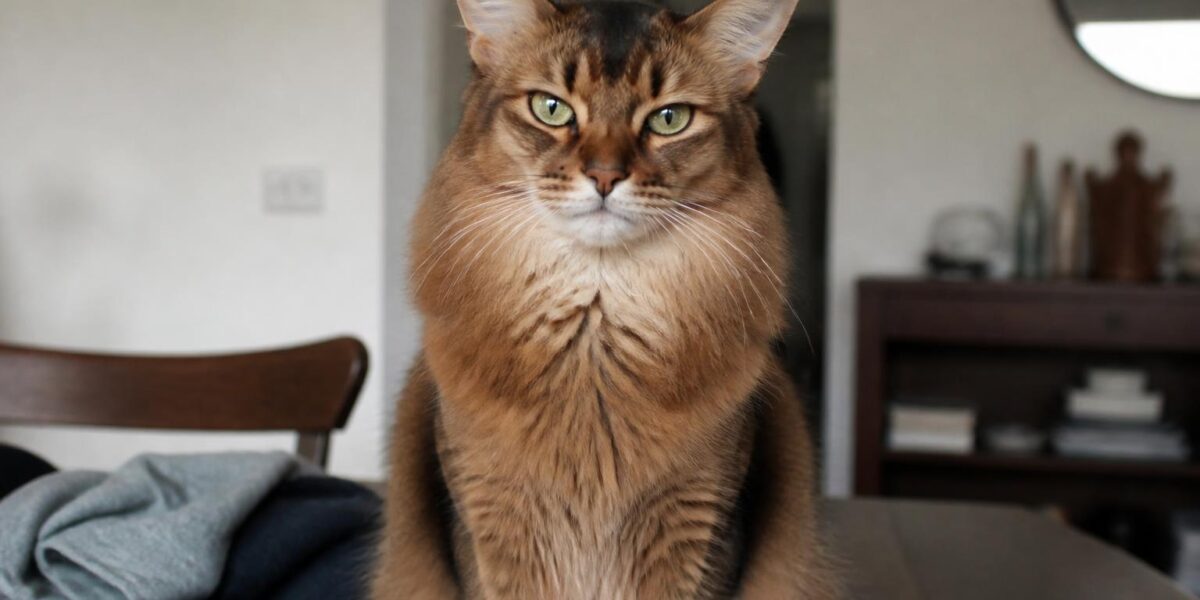
The coat is the defining feature that sets the Somali apart from its Abyssinian sibling. It is medium to long in length, fine-textured, and dense, with a distinct ruff around the neck and “britches” on the hind legs. The tail is one of the breed’s most dramatic features — long, full, and plumed, earning the Somali its fox-like reputation. Despite its length, the coat is surprisingly easy to manage compared to many long-haired breeds, as it is not prone to excessive matting.
Like the Abyssinian, the Somali’s coat features agouti ticking — each individual hair is banded with alternating light and dark colors, creating a warm, glowing effect that shimmers when the cat moves. The primary accepted colors are ruddy (a burnt sienna base with dark brown or black ticking), red (a warm apricot base with chocolate ticking), blue (a warm beige base with slate blue ticking), and fawn (a pale cream base with light cocoa ticking). The overall effect is strikingly beautiful and unlike any other cat breed.
The eyes are large, almond-shaped, and expressive, set in the face with a slight upward tilt. Eye color is typically gold, copper, or green, with a rich, deep hue that complements the warm coat colors. A dark line surrounding each eye, sometimes called “eyeliner,” enhances the breed’s exotic expression. Light-colored “spectacles” around the eyes add to the overall striking facial appearance.
Temperament: Boundless Energy and Brilliant Minds
Living with a Somali is like living with a perpetual motion machine that also happens to be a genius. These cats are among the most active, curious, and playful of all domestic cat breeds. They need to be involved in everything, explore every corner, and investigate every new object that enters their territory. If there is a high shelf that seems unreachable, your Somali will find a way to get there. If there is a closed door, they will figure out how to open it. If there is a boring moment, they will find a way to make it interesting — for better or for worse.
This breed excels at interactive play and benefits enormously from cat enrichment activities. Puzzle feeders, treat-dispensing toys, feather wands, and even fetch games are all favorites. Somalis are one of the few cat breeds that consistently enjoy playing fetch, often bringing the toy back to their human and dropping it expectantly. They can also learn tricks, walk on a leash, and navigate agility courses designed for cats.
Despite their high energy, Somalis are also affectionate and people-oriented. They want to be with their humans, but they show their love through active engagement rather than quiet lap-sitting. A Somali will “help” you cook dinner, “supervise” your work at the computer, and “assist” with folding laundry — usually by scattering the clean clothes as they dive into the pile. Their antics are endlessly entertaining and are one of the main reasons the breed has such devoted fans.
Somalis are social cats who generally get along well with other cats and cat-friendly dogs. In fact, having a feline companion can be a real benefit if you work outside the home, as Somalis do not handle boredom well. A bored Somali can become destructive, finding creative ways to entertain themselves that may not align with your idea of acceptable behavior. Two active cats can keep each other stimulated and channel their energy into play rather than mischief.
Vocally, Somalis are moderate. They are not as talkative as Siamese, but they do communicate with soft chirps, trills, and the occasional meow. Their voice is pleasant and musical, and they are most vocal when they want attention, food, or access to something that has caught their eye.
Health Considerations and Lifespan
The Somali is generally a healthy breed with a lifespan of 12 to 16 years. However, they share some genetic health concerns with the Abyssinian due to their close relationship. Being aware of these conditions allows you to work proactively with your veterinarian to monitor and manage them.
Pyruvate kinase deficiency is an inherited condition that affects red blood cells and can lead to anemia. Genetic testing is available, and responsible breeders screen their cats for this condition. If you are getting a Somali from a breeder, always ask for PK deficiency test results.
Progressive retinal atrophy is another inherited condition that affects the eyes, eventually leading to blindness. As with PK deficiency, genetic testing exists and reputable breeders test for this before breeding. Early detection through regular eye exams can help manage the condition and maintain quality of life.
Renal amyloidosis is a condition where abnormal proteins are deposited in the kidneys, potentially leading to kidney failure. While not as common as in some lines of Abyssinians, it does occur in Somalis. Regular kidney function monitoring through blood work and urinalysis is important, particularly as your cat ages.
Dental issues, including gingivitis and periodontal disease, can be a concern for Somalis. Regular dental care — both professional cleanings and at-home brushing — is important for long-term oral health. Dental treats and water additives can supplement your routine.
Keeping your Somali at a healthy weight through proper nutrition and ample exercise is one of the best things you can do for their overall health. Their active nature helps, but it is still important to measure food portions and avoid overfeeding treats.
Grooming the Somali’s Ticked Coat
Despite being a long-haired breed, the Somali’s grooming needs are surprisingly moderate. Their coat texture is fine and does not mat as readily as the coats of breeds like Persians or Himalayans. A thorough brushing two to three times per week is usually sufficient to keep the coat in beautiful condition and minimize shedding around your home. For more detailed grooming techniques, check out our cat grooming guide.
Use a wide-toothed comb or a slicker brush, working gently through the coat in the direction of hair growth. Pay special attention to the ruff around the neck, the britches on the hind legs, and the plume of the tail, as these areas have the longest fur and are most prone to tangles. During seasonal shedding periods, which typically occur in spring and fall, you may need to brush more frequently.
Bathing is rarely necessary unless your Somali gets particularly dirty. When bathing is needed, use a gentle, cat-specific shampoo and rinse thoroughly to prevent residue from dulling the coat’s natural sheen. The ticked coat looks its best when clean and well-maintained, as the light plays off the individual hair bands to create that characteristic shimmer.
Nail trimming should be done every two weeks. Somalis are active climbers and scratchers, so providing multiple scratching posts will help keep their nails naturally worn down between trims. Check ears weekly for wax buildup or signs of infection, and gently wipe them with a soft, damp cotton ball as needed.
Because Somalis can be prone to dental issues, establishing an at-home dental care routine early in life is particularly important. Cat-specific toothpaste and a finger brush or small cat toothbrush make the process easier. Many Somalis, with patience and positive reinforcement, learn to tolerate and even enjoy tooth brushing.
Is a Somali the Right Cat for You?
The Somali is a spectacular breed, but it is important to honestly assess whether your lifestyle can meet this cat’s needs. Here are the key questions to consider before bringing a Somali into your home.
Do you have time for active play? Somalis need at least two to three substantial play sessions per day, plus ongoing environmental enrichment. If you enjoy interactive play with your cat and find puzzle toys and training sessions fun, a Somali will be a joy. If you prefer a low-maintenance, quiet cat, this is not the breed for you.
Can you cat-proof your home? Somalis are climbers, jumpers, and explorers. Breakable items on high shelves are not safe. Cabinet doors may need child locks. Toilet lids should stay down. Living with a Somali requires a sense of humor and a willingness to adapt your environment to accommodate a very clever, very active cat.
Is someone home for much of the day, or can you provide a feline companion? Somalis do not handle long stretches of solitude well. If your household is empty for eight or more hours daily, strongly consider adopting two cats so they can keep each other company.
Do you have children or other pets? Somalis generally do well with both, as long as children are taught to handle them respectfully. Their playful nature makes them excellent companions for older kids. They typically get along with other cats and cat-friendly dogs, especially when introductions are handled gradually.
If you can say yes to these considerations, a Somali will reward you with years of entertainment, affection, and companionship that is truly unlike any other breed. Their beauty is matched only by their personality, and once you have loved a Somali, you will understand why the breed’s fans are so passionate.
Frequently Asked Questions
Are Somali cats the same as long-haired Abyssinians?
Genetically, yes — the Somali carries the recessive long-hair gene that has been present in the Abyssinian gene pool for over a century. However, the Somali has been developed and recognized as its own distinct breed since the 1970s. While they share many traits with Abyssinians, including the ticked coat pattern, body type, and energetic personality, the Somali’s longer coat gives it a distinctly different appearance and slightly different grooming needs. Some registries still allow crosses between Somalis and Abyssinians to maintain genetic diversity in both breeds.
Do Somali cats shed a lot?
Somalis shed moderately throughout the year, with heavier shedding during seasonal coat changes in spring and fall. Compared to other long-haired breeds, their shedding is relatively manageable because their coat lacks the dense, cottony undercoat that causes extreme shedding in breeds like Persians. Regular brushing two to three times per week significantly reduces the amount of loose fur in your home. Many Somali owners find that the grooming commitment is much less than they expected for a long-haired cat, making the breed a good option for people who love the long-haired look but want reasonable upkeep.
Can Somali cats be trained to walk on a leash?
Absolutely. Somalis are one of the best cat breeds for leash training because of their intelligence, curiosity, and desire for adventure. Start by introducing a harness indoors, letting your cat wear it for short periods while you supervise and offer treats. Once your Somali is comfortable in the harness, attach the leash and practice walking inside. When they are confident with indoor leash walking, you can gradually introduce short outdoor sessions in quiet, safe areas. Most Somalis take to leash walking enthusiastically, as it satisfies their deep need for exploration and stimulation. Always use a properly fitted harness rather than attaching the leash to a collar, as cats can slip out of collars easily.
How active are Somali cats compared to other breeds?
Somalis rank among the most active domestic cat breeds, comparable to Abyssinians, Bengals, and Siamese. They are not a cat that will spend most of the day sleeping on a windowsill — they want to play, explore, climb, and interact. Their activity level remains high well into adulthood, though it does moderate somewhat as they enter their senior years. Providing adequate outlets for their energy through climbing structures, interactive toys, puzzle feeders, and regular play sessions is essential. A Somali without sufficient stimulation may develop behavioral issues like excessive grooming, destructive scratching, or attention-seeking behaviors.
Looking to adopt a Somali Cat Breed Profile?
Browse Somali Cat Breed Profile cats and mixes available for adoption from shelters and rescues near you.
Find Somali Cat Breed Profile Cats for Adoption