
Last updated: March 31, 2026
In this article
Can Cats Eat Peanuts? Safety Guide for Cat Owners
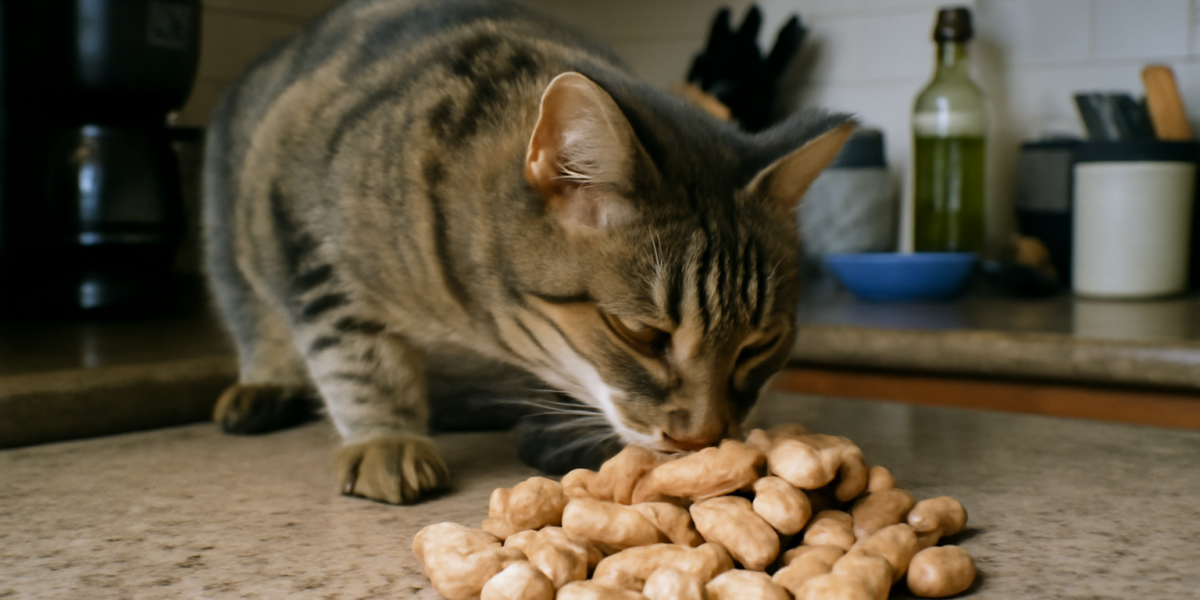
If you have ever been snacking on a handful of peanuts and noticed your cat eyeing them with curiosity, you may have wondered whether it is safe to share. Peanuts are a popular human snack loaded with protein and healthy fats, but what works well for people does not always translate to our feline friends. As obligate carnivores, cats have very specific dietary requirements centered around animal-based protein, and plant-based foods like peanuts fall outside their natural diet.
In this guide, we will explore whether cats can eat peanuts, what nutritional considerations matter, potential risks to watch for, and how to handle the situation if your cat happens to snag one off the floor.
Quick Answer: Can Cats Eat Peanuts?
Peanuts are not toxic to cats, so eating one or two plain, unsalted peanuts on a rare occasion is unlikely to cause serious harm. However, peanuts are not recommended as a regular treat for cats. They are high in fat, difficult for cats to digest properly, and offer no essential nutrients that cats cannot get more effectively from their regular meat-based diet. Salted, flavored, or chocolate-coated peanuts should always be avoided entirely.
The bottom line is that while a single plain peanut will not send you rushing to the emergency vet, there is no good reason to make peanuts a part of your cat’s diet. Their digestive system simply is not designed to handle legumes efficiently.
Nutritional Considerations for Cats
Peanuts are technically legumes, not true nuts, and they contain a notable nutritional profile for humans. A one-ounce serving of peanuts provides roughly 7 grams of protein, 14 grams of fat, and smaller amounts of fiber, vitamin E, niacin, folate, and magnesium. For humans, this makes peanuts a convenient source of energy and nutrients.
For cats, however, this profile is largely irrelevant. Cats are obligate carnivores, meaning their bodies are specifically adapted to derive nutrition from animal tissue. They require amino acids like taurine and arachidonic acid that are found naturally in meat but are absent from peanuts. While peanuts do contain protein, it is plant-based protein that cats cannot utilize as efficiently as animal protein.
The high fat content in peanuts is another concern. A cat’s caloric needs are modest compared to a human’s, and even a small amount of peanuts can represent a significant caloric addition. A single ounce of peanuts contains about 160 calories, while an average indoor cat only needs around 200 to 250 calories per day. This means just a few peanuts could account for a disproportionate share of a cat’s daily caloric intake.
Cats also lack certain digestive enzymes that efficiently break down plant matter. The fiber and complex carbohydrates in peanuts can sit undigested in a cat’s gut, potentially leading to gastrointestinal discomfort, gas, or loose stools.
Benefits and Risks of Feeding Peanuts to Cats
There are very few benefits to feeding peanuts to cats. The small amount of protein they contain is not in a form that cats can use optimally, and any vitamins or minerals present are available in better proportions from quality cat food. The reality is that a well-formulated commercial cat food already covers every nutritional need your cat has.
The risks, on the other hand, are more substantial:
- Choking hazard: Whole peanuts, especially with shells, can pose a choking risk for cats. Cats tend to swallow food without chewing thoroughly, and peanuts are the right size and shape to become lodged in the throat.
- High fat content: Excessive fat intake can lead to weight gain and, over time, contribute to obesity-related health problems. In some cases, a high-fat snack can trigger pancreatitis, a painful and potentially serious inflammation of the pancreas.
- Salt and seasonings: Most commercially available peanuts are salted or flavored. Salt is harmful to cats in anything beyond trace amounts and can lead to sodium ion poisoning, with symptoms including vomiting, diarrhea, tremors, and in severe cases, seizures.
- Aflatoxins: Peanuts can harbor aflatoxins, which are naturally occurring mold-produced toxins. While commercially processed peanuts are tested for aflatoxin levels, the risk is not zero, and cats may be more sensitive to these compounds than humans.
- Allergic reactions: Though uncommon, cats can develop food allergies or sensitivities. Signs of an allergic reaction may include itching, swelling, vomiting, or difficulty breathing.
- Gastrointestinal upset: Even plain peanuts can cause stomach discomfort, diarrhea, or vomiting in cats whose digestive systems are not equipped to handle legumes.
It is also worth noting that peanut butter, while popular as a treat for dogs, carries additional risks for cats due to its sticky consistency and often high sugar content. Some peanut butter brands contain xylitol, an artificial sweetener that is extremely toxic to animals.
How to Serve Peanuts Safely to Cats
If your cat has shown persistent interest in peanuts and you want to offer a tiny taste, follow these guidelines to minimize risk:
- Choose plain, unsalted peanuts only. Never offer salted, roasted with oil, honey-roasted, flavored, or chocolate-covered varieties.
- Remove the shell completely. Peanut shells are indigestible and pose both a choking hazard and a risk of intestinal blockage.
- Crush or chop the peanut into very small pieces. This reduces the choking risk and makes it easier for your cat to handle.
- Offer only one or two small pieces at most. This is not a snack that should be given in any meaningful quantity.
- Monitor your cat closely after eating. Watch for any signs of digestive upset, choking, or allergic reaction for the next 12 to 24 hours.
- Do not make it a regular treat. If you give peanuts at all, it should be an extremely rare occurrence, not a weekly or daily habit.
Remember that cats do not need variety in their diet the way humans do. A high-quality cat food provides complete and balanced nutrition. If you are looking for ways to enrich your cat’s diet with treats, consider options specifically formulated for felines. If you are considering adopting a cat, ask your veterinarian about appropriate treat options from the start.
Signs of Problems After Eating Peanuts
If your cat has eaten peanuts, whether offered intentionally or swiped from your snack bowl, keep an eye out for the following symptoms:
- Vomiting or retching
- Diarrhea or unusually soft stools
- Loss of appetite or refusal to eat regular food
- Lethargy or unusual tiredness
- Abdominal pain, indicated by sensitivity when the belly is touched or a hunched posture
- Excessive gas or bloating
- Difficulty breathing or swelling around the face (signs of allergic reaction)
- Excessive drooling or pawing at the mouth (possible choking or oral irritation)
If your cat consumed salted peanuts, also watch for increased thirst, frequent urination, tremors, or disorientation, as these may indicate sodium toxicity. Contact your veterinarian promptly if you observe any of these signs, especially if your cat ate a large quantity or consumed flavored or salted peanuts.
In cases where your cat has eaten peanuts with the shell, watch for signs of intestinal blockage such as persistent vomiting, constipation, or a distended abdomen. These symptoms warrant immediate veterinary attention.
Healthy Alternatives to Peanuts for Cats
If you want to give your cat a special treat, there are much better options than peanuts that align with their natural dietary needs as obligate carnivores:
- Small pieces of cooked chicken or turkey: Plain, unseasoned, and boneless cooked poultry is one of the safest and most appreciated treats for cats. For more on this topic, see our guide on whether cats can eat canned chicken.
- Cooked salmon or tuna: Small amounts of plain cooked fish can be a welcome treat, though it should not replace balanced cat food.
- Commercial cat treats: Look for treats that list real meat as the first ingredient and avoid those with excessive fillers or artificial additives.
- Freeze-dried meat treats: These are convenient, shelf-stable, and usually made from a single protein source with no added ingredients.
- Small pieces of cooked egg: Eggs are a good source of animal protein and are generally well-tolerated by cats in small amounts.
These alternatives provide protein and nutrients that cats can actually use while carrying far fewer risks than plant-based snacks like peanuts. If you have recently adopted a new cat, establishing healthy treat habits early will serve both of you well in the long run.
Frequently Asked Questions
Can cats eat peanut butter?
Peanut butter is not toxic to cats, but it is not recommended. Its sticky consistency can be a choking hazard, and it is high in fat, sugar, and calories. Some brands contain xylitol, which is extremely toxic to cats and dogs. If you choose to offer a tiny taste, ensure the product is xylitol-free and give only a pea-sized amount at most.
Are peanuts poisonous to cats?
No, plain peanuts are not poisonous or toxic to cats. However, they are not a suitable food for felines due to their high fat content, potential for causing digestive upset, and lack of nutritional value for obligate carnivores. Flavored, salted, or coated peanuts introduce additional risks that can be harmful.
How many peanuts can a cat safely eat?
If you give peanuts at all, limit it to one or two small, crushed pieces of plain, unsalted peanut on very rare occasions. This should not be a regular treat. Even this small amount offers no nutritional benefit and only serves to satisfy curiosity. Always prioritize meat-based treats that match your cat’s dietary needs.
What should I do if my cat ate a lot of peanuts?
If your cat consumed a large number of peanuts, especially salted or flavored varieties, contact your veterinarian for guidance. Monitor your cat for signs of gastrointestinal distress, including vomiting, diarrhea, lethargy, or loss of appetite. If the peanuts were salted, watch for signs of sodium toxicity such as excessive thirst, tremors, or disorientation.
Can kittens eat peanuts?
No, kittens should not be given peanuts. Kittens have even more delicate digestive systems than adult cats and are at a higher risk of choking. Their nutritional needs during growth are best met exclusively by kitten-formulated food, which provides the precise balance of protein, fat, vitamins, and minerals they need for healthy development.
Why does my cat seem interested in peanuts?
Cats are often attracted to peanuts because of their smell and the fat content they can detect. Cats may also be drawn to the crunching sound or simply curious about what their owner is eating. This curiosity does not indicate a nutritional need or that peanuts are appropriate for them. Redirect your cat’s interest toward a suitable meat-based treat instead.


