
Last updated: April 9, 2026
In this article
Can Cats Eat Potatoes? A Complete Guide for Cat Owners
Potatoes are everywhere in the human diet — mashed, baked, fried, roasted, and boiled in every conceivable combination. If you share your home with a cat, there is a reasonable chance your cat has shown interest in potatoes at some point, whether by investigating the smell of a baked potato or batting a french fry off the edge of your plate. The question of whether cats can eat potatoes has a straightforward answer, but the details matter.
Plain, cooked potatoes are safe for cats in small amounts. They are not toxic once cooked, and a cat that eats a small bite of plain boiled or baked potato will not be harmed. However, raw potatoes are a different story entirely — they contain solanine, a glycoalkaloid that is toxic to cats. Beyond the raw-versus-cooked distinction, there are important considerations about preparation, portion size, and nutritional relevance that every cat owner should understand before sharing this vegetable with their feline companion.
Why Raw Potatoes Are Dangerous for Cats
Raw potatoes belong to the Solanaceae family, commonly known as the nightshade family. All members of this family produce solanine and other glycoalkaloid compounds as a natural defense against insects and disease. In potatoes, solanine is concentrated in the skin, the eyes (where sprouts emerge), and any portions of the flesh that have turned green due to light exposure.
Solanine is toxic to cats and can cause a range of symptoms including severe gastrointestinal distress (vomiting, diarrhea, abdominal pain), lethargy, confusion, and in serious cases, neurological symptoms such as tremors and difficulty breathing. Cats are smaller than humans and more sensitive to many toxins, which means the amount of solanine required to cause clinical symptoms is proportionally lower.
Cooking potatoes significantly reduces their solanine content, which is why cooked potatoes are considered safe while raw potatoes are not. However, if a potato is green or heavily sprouted, cooking may not reduce the solanine to safe levels. Green or sprouted potatoes should be discarded entirely rather than cooked and served, whether to humans or cats.
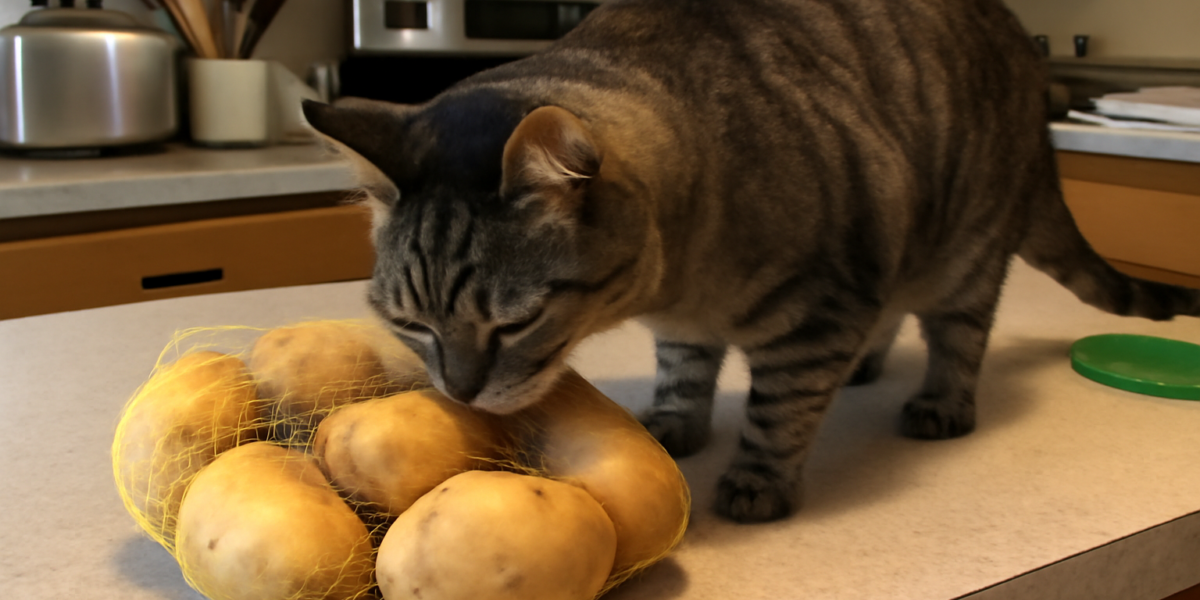
The leaves and stems of the potato plant are also high in solanine and should never be accessible to cats. If you grow potatoes in your garden and your cat has outdoor access, ensure the plants are in an area your cat cannot reach. Indoor cats are generally only at risk if they encounter raw potato on the kitchen counter or floor, which is easily preventable with basic food safety practices.
How to Serve Potatoes Safely to Cats
If you want to offer your cat a taste of potato, the preparation method is the determining factor in safety. The key principles are simple: cook thoroughly, serve plain, and keep the portion small.
Boiled potatoes. This is the safest option. Peel the potato, cut it into pieces, and boil until soft. Do not add salt, butter, or any seasoning. Let the potato cool to room temperature before offering a small piece to your cat. The bland, soft texture of boiled potato is easy for cats to eat and digest.
Baked potatoes. A piece of plain baked potato with the skin removed is also safe. The skin concentrates solanine residues and can be harder for cats to digest, so it is best removed. Skip all toppings — sour cream, butter, cheese, chives, and bacon are all inappropriate for cats. Chives, in particular, are a member of the allium family and are toxic to cats, just like garlic and onions.
Mashed potatoes. Only if they are made from plain boiled potato with nothing added. The mashed potatoes most people prepare contain butter, milk or cream, salt, and often garlic — all of which are problematic for cats. Most adult cats are lactose intolerant, so dairy products can cause digestive upset. Garlic is outright toxic. Do not share human-prepared mashed potatoes with your cat.
French fries, chips, and hash browns. These are never appropriate for cats. The frying process adds a large amount of fat that can cause pancreatitis or gastrointestinal distress. The heavy salting of these products introduces sodium levels that are dangerous for a cat’s small body. Additionally, some seasonings used on fries and chips (such as garlic powder or onion powder) are toxic to cats.
Nutritional Value of Potatoes for Cats
It is important to understand what potatoes do and do not offer a cat nutritionally. Potatoes provide carbohydrates (primarily starch), vitamin C, vitamin B6, potassium, and some fiber. For humans, these are meaningful nutritional contributions. For cats, the picture is quite different.
Cats are obligate carnivores. Their digestive systems are optimized for processing animal protein and fat, not carbohydrates. Cats lack certain digestive enzymes that would allow them to efficiently extract nutrients from plant-based foods, and their metabolic pathways are geared toward using protein as their primary energy source rather than carbohydrates.
This does not mean potatoes are harmful to cats — cooked potatoes are safe and digestible. It means that potatoes offer very little that a cat’s body can use effectively. The vitamin C in potatoes is irrelevant because cats synthesize their own vitamin C internally. The carbohydrates in potatoes provide energy, but cats get their energy more efficiently from protein and fat. The fiber may offer a small digestive benefit, but cats can obtain fiber from more appropriate sources.
Potatoes do appear as an ingredient in some commercial cat foods, particularly grain-free formulas where they serve as a starch source for kibble formation. In this context, the potato is a functional ingredient rather than a nutritional one — it helps bind the kibble and provides texture. The presence of potato in commercial cat food does not mean potatoes are a nutritionally valuable food for cats; it means they are a safe, neutral starch source that serves a manufacturing purpose.
How Much Potato Can a Cat Eat?
The answer is: not much, and not often. Potatoes should be treated as an occasional, incidental food rather than a regular part of a cat’s diet. A few small cubes of plain cooked potato — roughly one to two teaspoons — is an appropriate amount for an average-sized adult cat. This can be offered once or twice a week at most.
Cats that eat too much potato may experience digestive upset including gas, bloating, or loose stools. The starch content can also contribute to weight gain if potatoes are offered frequently, which is a concern given that feline obesity is a widespread health problem associated with diabetes, joint disease, and reduced lifespan.
Diabetic cats should not be given potatoes. The high glycemic index of potatoes causes a rapid spike in blood sugar, which is particularly dangerous for cats with diabetes or insulin resistance. If your cat has diabetes, consult your veterinarian about appropriate treats — there are much better options that do not interfere with blood sugar management.
Kittens have specific nutritional needs for growth and development that are best met by a high-quality kitten food formulated to provide the right balance of protein, fat, vitamins, and minerals. Potatoes do not contribute to meeting these needs and should not be offered to kittens as treats. Once a cat reaches adulthood and is eating a complete and balanced adult diet, small amounts of cooked potato as an occasional treat are fine for healthy individuals.
Sweet Potatoes vs. Regular Potatoes for Cats
Cat owners sometimes wonder whether sweet potatoes are a better choice than white potatoes for their cat. Sweet potatoes are not members of the nightshade family and do not contain solanine, which gives them a safety advantage in their raw form. However, raw sweet potatoes are still difficult for cats to digest and should be cooked before serving.
Nutritionally, sweet potatoes offer more beta-carotene and fiber than white potatoes, and they have a lower glycemic index. From a cat’s perspective, however, neither offers significant nutritional value. Both are starchy carbohydrate sources that a cat’s body is not designed to rely on.
If you are choosing between the two, sweet potatoes are marginally better because of the absence of solanine and the lower glycemic impact. But the difference is modest enough that it should not be a major consideration. Either one is fine as an occasional, small treat in its plain, cooked form. The more important decision is ensuring that treats of any kind — potato or otherwise — remain a small fraction of your cat’s overall diet.
Frequently Asked Questions
My cat ate a piece of raw potato. What should I do?
If your cat ate a small piece of raw potato — say, a sliver that fell on the floor while you were cooking — the solanine content in that small amount is likely too low to cause serious symptoms. Monitor your cat for the next 12 to 24 hours for vomiting, diarrhea, or lethargy. If symptoms develop or if your cat consumed a larger piece (particularly one that was green or had sprouts), contact your veterinarian. For very small exposures in healthy adult cats, symptoms are unlikely, but it is always better to be observant and cautious.
Can cats eat potato chips?
No. Potato chips are heavily salted and cooked in oil, both of which are harmful to cats. The sodium content in even a few chips is excessive for a cat’s small body and can contribute to dehydration and, in extreme cases, sodium toxicity. Many flavored chips also contain garlic powder, onion powder, or other seasonings that are toxic to cats. Potato chips are a human snack that should never be shared with cats, not even as an occasional treat.
Is potato starch in cat food safe?
Yes. Potato starch used as an ingredient in commercial cat food has been processed and is present in formulated amounts that are safe for cats. It serves primarily as a binding agent in dry food (kibble) and as a carbohydrate source. If you are choosing a cat food that contains potato starch, the more relevant question is whether the overall formulation meets your cat’s nutritional needs — the potato starch itself is not a concern from a safety standpoint.
Can cats eat instant mashed potatoes?
Instant mashed potatoes are not recommended for cats. They typically contain added sodium, preservatives, powdered milk, butter flavoring, and other additives that are inappropriate for feline consumption. The sodium content alone is concerning — a single serving of instant mashed potatoes prepared according to package directions can contain more sodium than a cat should consume in an entire day. If you want to offer your cat mashed potato, make it from scratch using a plain boiled potato mashed with a small amount of water and nothing else.
Why does my cat want to eat potatoes?
Cats are curious animals, and their interest in potatoes may have more to do with the context than the food itself. If you are eating and your cat wants what you have, they are responding to the social dynamic and the novelty of human food rather than a specific craving for potato. Some cats may also be attracted to the warm starchy smell of cooked potatoes or to the butter and seasoning on a prepared potato rather than the potato itself. If your cat consistently seeks out starchy or carbohydrate-rich foods, mention it to your veterinarian, as it could occasionally be associated with underlying dietary deficiencies or metabolic conditions.


