
Last updated: April 1, 2026
In this article
- Are French Fries Safe for Cats?
- Nutritional Profile of French Fries for Cats
- Benefits of French Fries for Cats
- Risks and Side Effects of French Fries for Cats
- How to Handle It If Your Cat Eats French Fries
- Signs of Problems After Eating French Fries
- Healthy Alternatives to French Fries for Cats
- Frequently Asked Questions
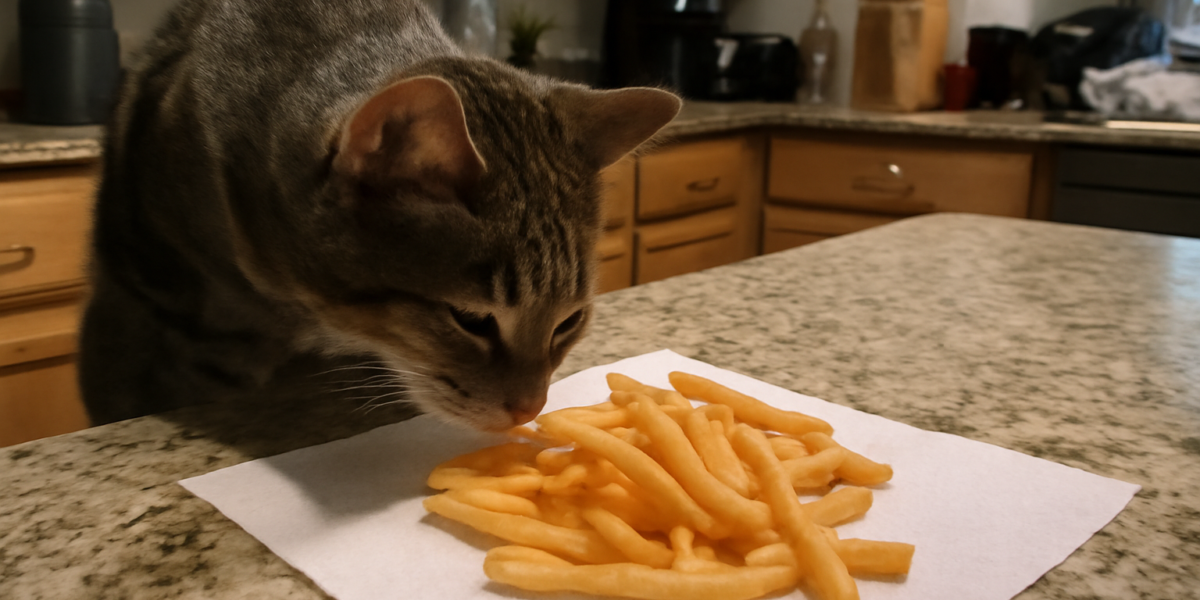
French fries are one of the most universally loved snack foods, and their salty, crispy appeal is not lost on curious cats who happen to be nearby while you eat. Whether you are snacking on fast-food fries or homemade oven-baked versions, your cat may beg for a taste. It is a reasonable question — potatoes are a natural, plant-based food, so how bad could a fry or two really be? Unfortunately, for cats, the answer involves more than just the potato itself. The deep frying, heavy salting, and starchy carbohydrate load of french fries make them a food that cats are better off avoiding entirely.
Quick Answer: No, cats should not eat french fries. While a single plain fry is unlikely to cause an emergency, french fries are high in fat, salt, and carbohydrates — none of which align with a cat’s nutritional needs. Regular consumption can contribute to obesity, sodium toxicity, and digestive upset.
Are French Fries Safe for Cats?
French fries are not considered safe or appropriate for cats. Cats are obligate carnivores whose digestive systems are designed to process animal protein and fat, not deep-fried starchy vegetables. While plain cooked potato in a very small quantity is not toxic to cats, the way french fries are prepared transforms a relatively benign vegetable into a nutritionally problematic food.
The cooking oil adds a significant amount of fat. The generous coating of salt dramatically increases sodium content. Seasoned fries — loaded with garlic powder, onion powder, paprika, or cheese — introduce potentially toxic ingredients on top of the already unsuitable base. Even unsalted, baked sweet potato fries are heavy in carbohydrates that cats have limited ability to metabolize.
A single plain fry dropped on the floor and quickly consumed by your cat is not cause for panic, but intentionally feeding french fries to your cat as a treat is not advisable.
Nutritional Profile of French Fries for Cats
A small serving of fast-food french fries (about 75 grams) contains roughly 230 calories, 11 grams of fat, 29 grams of carbohydrates, and 160 milligrams of sodium. Consider what this means for a cat:
- Calories: That small serving represents nearly an entire day’s caloric intake for an average indoor cat (200 to 250 calories per day).
- Fat: The deep-frying process saturates fries with oil, delivering far more fat than a cat’s system is designed to handle in a single sitting. Excess fat can trigger pancreatitis.
- Carbohydrates: Cats lack the digestive enzymes to efficiently process large amounts of starch. The carbohydrates in french fries provide empty calories that are stored as fat.
- Sodium: Cats need approximately 21 milligrams of sodium daily. Even a few salted fries can deliver many times that amount, stressing the kidneys.
- Protein: French fries contain negligible protein — the one macronutrient cats actually need in abundance.
Simply put, french fries deliver everything a cat does not need and almost nothing that it does.
Benefits of French Fries for Cats
There are no meaningful nutritional benefits of feeding french fries to cats. Unlike animal-based proteins that provide essential amino acids, taurine, and bioavailable minerals, potatoes offer primarily starch and a small amount of vitamin C and potassium — nutrients that cats either synthesize on their own or obtain in sufficient quantities from their commercial food.
The only conceivable “benefit” is the momentary enjoyment your cat might experience from the texture and salt, but this is far outweighed by the health risks. There are many safer, more nutritious treats that will bring your cat just as much joy without the downsides.
Risks and Side Effects of French Fries for Cats
Feeding french fries to your cat, even occasionally, carries several health risks:
Sodium toxicity: Cats are extremely sensitive to excess sodium. Symptoms of sodium poisoning include excessive thirst, frequent urination, vomiting, diarrhea, tremors, and in severe cases, seizures. Cats with existing kidney disease are at especially high risk.
Pancreatitis: The high fat content of deep-fried foods can trigger acute pancreatitis, characterized by vomiting, abdominal pain, lethargy, and loss of appetite. Pancreatitis can be life-threatening and requires veterinary treatment.
Obesity: The combination of high calories, high fat, and high carbohydrates promotes weight gain. Feline obesity is associated with diabetes, joint problems, heart disease, and a shortened lifespan.
Digestive upset: The grease and starch in french fries can cause vomiting, diarrhea, and gas in cats whose digestive tracts are not equipped to process these foods.
Seasoning toxicity: Garlic fries, cheese fries, and other flavored varieties introduce additional toxic or harmful ingredients. Garlic and onion are particularly dangerous for cats, causing damage to red blood cells.
Choking hazard: Long, thin french fries can be a choking risk, especially for cats that tend to gulp food without chewing.
How to Handle It If Your Cat Eats French Fries
If your cat ate one or two plain, lightly salted french fries, do not panic. Provide fresh water to help flush excess sodium and monitor for digestive upset over the next 12 to 24 hours.
If your cat consumed a larger quantity, or if the fries were heavily seasoned with garlic, onion powder, or other spices, take the following steps:
- Remove remaining fries from your cat’s reach.
- Note the type and amount of fries consumed, including any seasonings.
- Ensure plenty of fresh water is available.
- Contact your veterinarian if you observe vomiting, diarrhea, excessive thirst, lethargy, or any unusual behavior.
- For garlic or onion-seasoned fries, call your vet or the ASPCA Animal Poison Control Center (888-426-4435) regardless of the amount consumed.
- Kittens: Should not be given french fries under any circumstances. Their small body size and developing organs make them especially vulnerable to sodium and fat overload.
- Adult cats (6–10 lbs): A single plain fry accidentally consumed is unlikely to cause harm, but intentional feeding is not recommended.
- Large cats (over 10 lbs): Same as adult cats. Size does not make french fries any more appropriate — the nutritional profile is wrong for cats of all sizes.
Signs of Problems After Eating French Fries
Monitor your cat for the following symptoms after consuming french fries:
- Vomiting or nausea (lip-licking, drooling)
- Diarrhea or loose stools
- Excessive thirst and increased urination
- Lethargy or unusual quietness
- Loss of appetite for the next meal
- Abdominal discomfort (hunched posture, reluctance to jump)
- Tremors or unsteadiness (in cases of significant sodium overload)
Most mild cases resolve within 24 hours with access to fresh water and a return to normal cat food. However, if symptoms persist or worsen, veterinary attention is warranted.
Healthy Alternatives to French Fries for Cats
Instead of french fries, treat your cat to snacks that actually support their carnivorous biology:
- Freeze-dried chicken or turkey: Crunchy, protein-rich, and irresistible to most cats.
- Small pieces of plain cooked steak: A high-protein treat that aligns with a cat’s natural diet. See our guide on can cats eat steak.
- Commercial dental treats: Many provide the satisfying crunch cats enjoy while supporting dental health.
- Cooked, plain pumpkin: A small spoonful can aid digestion and is safe for cats in moderation.
- Plain cooked egg: Rich in protein and a treat many cats enjoy. Check out can cats eat eggs for details.
Thinking about adding a cat to your family? Browse our adoption page to find your perfect feline match.
Frequently Asked Questions
Can cats eat plain, unsalted french fries?
While unsalted fries remove the sodium concern, they are still deep-fried and high in carbohydrates and fat. Cats gain nothing nutritionally from potatoes, and the cooking oil can still cause digestive upset or contribute to pancreatitis. Unsalted fries are marginally less harmful than salted ones, but they are still not recommended.
Can cats eat sweet potato fries?
Sweet potatoes are not toxic to cats, but sweet potato fries are still a fried, starchy food that does not belong in a cat’s diet. The added sugar and carbohydrates provide no benefit to obligate carnivores, and the frying process adds unnecessary fat. If you want to offer your cat a tiny taste of sweet potato, a small piece of plain, baked sweet potato is a better option than a fry.
My cat keeps stealing french fries — how do I stop this?
Cats learn quickly that certain behaviors result in food rewards. To break the habit, never feed your cat from your plate or allow them on the table while you eat. Keep fries and other human food out of reach. Offer a cat-appropriate treat in a separate location at mealtime so your cat has their own special food to enjoy. Consistency is key — if everyone in the household follows the same rules, the begging behavior will diminish over time.
Are baked potato chips safer than french fries for cats?
No. Potato chips, whether baked or fried, are heavily salted and often contain flavoring powders that may include garlic, onion, and other ingredients harmful to cats. The thin, crispy texture of chips can also present a choking hazard. Chips are not a suitable treat for cats.
Can french fries kill a cat?
A single french fry is extremely unlikely to kill a healthy adult cat. However, large quantities of heavily salted fries could theoretically cause sodium toxicity, which can be fatal if untreated. French fries seasoned with garlic or onion pose a separate toxicity risk. The greater long-term danger is obesity and associated diseases from regular consumption. When in doubt, contact your veterinarian.


