
Last updated: April 8, 2026
In this article
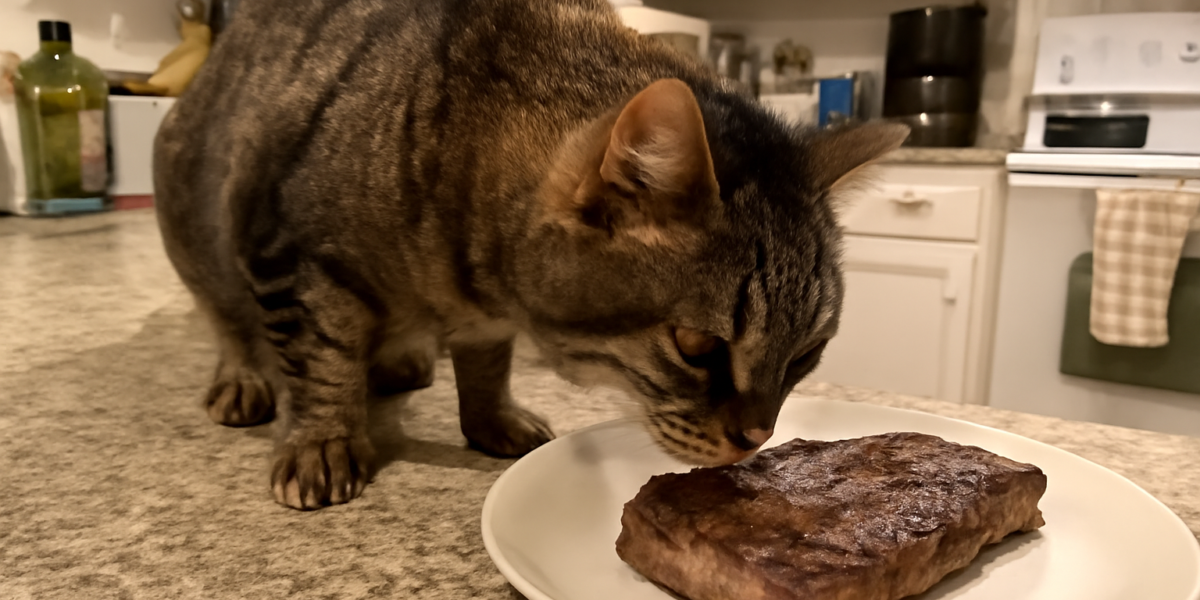
If you have ever sat down to enjoy a juicy steak dinner, chances are your cat has appeared beside you, eyes wide, nose twitching. Cats are drawn to the rich aroma of cooked beef, and it is natural to wonder whether sharing a small piece is safe. As obligate carnivores, cats thrive on animal-based protein, and steak is about as straightforward a meat source as it gets. But before you slide a slab off your plate and onto the floor, there are important details about preparation, portion size, and potential hazards that every cat owner should understand.
Quick Answer: Yes, cats can eat steak in moderation. Plain, fully cooked steak without seasoning, garlic, onions, or excess fat is a safe, protein-rich treat. Always cut it into small, bite-sized pieces and keep portions limited to no more than 10 percent of your cat’s daily caloric intake.
Is Steak Safe for Cats?
Steak is generally safe for cats when it is prepared correctly. Because cats are obligate carnivores, their bodies are designed to digest and absorb nutrients from animal tissue. Beef provides high-quality protein with a complete amino acid profile, including taurine, which is essential for feline heart health, vision, and reproduction.
The key safety considerations revolve around preparation rather than the meat itself. Raw or undercooked steak can harbor harmful bacteria such as Salmonella and E. coli. Seasonings commonly applied to steak — garlic powder, onion salt, pepper blends, and marinades — can be toxic to cats. Fat trimmings, while tempting to offer, can trigger pancreatitis in sensitive animals. As long as you serve plain, thoroughly cooked, lean steak in small amounts, it is a perfectly acceptable occasional treat.
Nutritional Profile of Steak for Cats
A three-ounce serving of cooked beef sirloin contains approximately 25 grams of protein, 8 grams of fat, and zero carbohydrates. For a cat, the nutritional highlights include:
- Protein: The building block of muscle, skin, and organ tissue. Cats require significantly more protein per pound of body weight than dogs or humans.
- Taurine: An amino acid found naturally in beef that supports cardiac function, eyesight, and immune health in cats. Taurine deficiency can lead to serious health problems including dilated cardiomyopathy.
- Iron: Red meat is an excellent source of heme iron, which is more bioavailable than plant-based iron and supports healthy oxygen transport in the blood.
- B vitamins: Steak provides B12, niacin, and B6, all of which support energy metabolism and nervous system function.
- Zinc: Important for skin health, wound healing, and immune system function.
While these nutrients are beneficial, remember that a nutritionally complete commercial cat food already provides everything your cat needs. Steak should supplement the diet, not replace it.
Benefits of Feeding Steak to Cats
When offered as an occasional treat, steak can provide several advantages for your feline friend.
The high protein content aligns perfectly with a cat’s biological needs. Unlike omnivores, cats derive the majority of their energy from protein and fat rather than carbohydrates. A small piece of steak delivers concentrated, highly digestible animal protein that supports lean muscle maintenance.
Steak can also serve as a valuable tool for picky eaters or cats recovering from illness. The strong aroma and appealing texture can stimulate appetite in cats that have been refusing their regular food. Some veterinarians even recommend small amounts of plain cooked beef as a bland diet component during gastrointestinal recovery, alongside boiled chicken.
Additionally, using tiny steak pieces as high-value training treats can help with medication administration or positive reinforcement during behavioral training sessions. The powerful scent makes steak irresistible to most cats.
Risks and Side Effects of Steak for Cats
Despite being a natural food source for feline carnivores, steak does carry some risks that owners should be aware of.
Seasoning toxicity: Garlic and onions, in all forms, are toxic to cats. They can damage red blood cells and cause hemolytic anemia. Many steak seasonings contain garlic powder, onion powder, or both. Even small amounts can be harmful over time.
High fat content: Fatty cuts of steak or fat trimmings can cause gastrointestinal upset, including vomiting and diarrhea. In more serious cases, excessive fat intake can trigger acute pancreatitis, a painful and potentially life-threatening condition.
Bone hazards: If your steak includes a bone, never allow your cat to chew on it. Cooked bones can splinter and cause choking, intestinal obstruction, or perforation of the digestive tract.
Bacterial contamination: Raw or rare steak may contain pathogenic bacteria. While some advocates promote raw feeding, most veterinary organizations recommend cooking meat thoroughly to reduce the risk of foodborne illness.
Caloric excess: Steak is calorie-dense. An average indoor cat needs only 200 to 250 calories per day. A single ounce of steak contains roughly 55 to 75 calories, which can add up quickly and contribute to obesity if fed frequently.
How to Feed Steak to Your Cat Safely
Follow these guidelines to ensure your cat enjoys steak without any adverse effects.
Start by selecting a lean cut such as sirloin, flank, or eye of round. Trim away visible fat before cooking. Cook the steak thoroughly — medium-well to well-done — without any oil, butter, salt, pepper, garlic, onion, or other seasonings. Boiling or baking are the safest cooking methods for cats.
Once cooked and cooled to room temperature, cut the steak into very small, pea-sized pieces. Cats have small throats and are prone to gulping food without chewing thoroughly, so smaller pieces reduce the choking risk.
- Kittens: One or two tiny pieces (about the size of a pea) once or twice a week, starting after they are fully weaned and eating solid food confidently.
- Adult cats (6–10 lbs): Up to half an ounce (about one tablespoon of diced steak) once or twice a week as a treat.
- Large cats (over 10 lbs): Up to one ounce of diced, plain steak once or twice a week, adjusted based on overall caloric needs.
Always introduce steak gradually. Offer a single small piece first and monitor your cat for 24 hours for any signs of digestive upset before offering more.
Signs of Problems After Eating Steak
While most cats tolerate plain cooked steak well, watch for the following symptoms that could indicate a problem:
- Vomiting or retching within a few hours of eating
- Diarrhea or unusually soft stools
- Lethargy or decreased appetite the following day
- Abdominal pain (hunching, reluctance to be touched around the belly)
- Excessive drooling or lip-licking
If your cat consumed seasoned steak containing garlic or onion, watch for signs of toxicity over the following 24 to 72 hours, including pale gums, weakness, rapid breathing, and dark-colored urine. Contact your veterinarian immediately if you observe any of these symptoms.
If your cat ate a large quantity of fatty steak or fat trimmings, monitor closely for signs of pancreatitis, which include persistent vomiting, loss of appetite, abdominal tenderness, and fever. Pancreatitis requires veterinary treatment and can become serious if left untreated.
Healthy Alternatives to Steak for Cats
If you want to offer your cat protein-rich treats beyond steak, consider these alternatives:
- Plain cooked chicken breast: Lower in fat than most beef cuts and equally appealing to cats. Learn more in our guide on can cats eat chicken.
- Cooked turkey: Another lean poultry option that provides excellent protein without excessive fat.
- Bison: A leaner alternative to beef with a similar amino acid profile. Check out our article on can cats eat bison for details.
- Commercial cat treats: Freeze-dried meat treats formulated specifically for cats offer convenience and guaranteed nutritional balance.
- Cooked fish: Small amounts of cooked salmon or whitefish can provide protein and omega-3 fatty acids, though fish should not be a dietary staple due to potential mercury and thiaminase concerns.
If you are looking to bring a new feline friend into your life, consider visiting our adoption page to find cats in need of loving homes.
Frequently Asked Questions
Can cats eat raw steak?
While some raw feeding advocates promote raw beef for cats, most veterinary professionals advise against it due to the risk of bacterial contamination from Salmonella, E. coli, and Listeria. Raw meat can also pose a health risk to immunocompromised humans in the household. If you are interested in raw feeding, consult your veterinarian about commercial raw diets that undergo pathogen reduction processes.
Can cats eat steak bones?
No. Cooked steak bones are dangerous for cats because they become brittle and can splinter into sharp fragments. These fragments can cause choking, damage the esophagus, puncture the stomach or intestinal lining, or create dangerous blockages. Always keep cooked bones away from your cat.
How often can I give my cat steak?
Steak should be an occasional treat, not a regular part of your cat’s diet. Once or twice a week in small amounts is appropriate for most healthy adult cats. Treats of all types, including steak, should make up no more than 10 percent of your cat’s total daily caloric intake. The remaining 90 percent should come from a nutritionally complete commercial cat food.
Can kittens eat steak?
Kittens can eat very small amounts of plain, well-cooked steak once they are fully weaned and comfortably eating solid food, typically around eight to ten weeks of age. Offer only one or two tiny, pea-sized pieces at a time. Kittens have sensitive digestive systems, so introduce any new food slowly and watch for adverse reactions.
Is steak better for cats than commercial cat food?
No. While steak provides excellent protein and certain nutrients, it does not offer the complete and balanced nutrition that cats require. Commercial cat foods are formulated to meet all of a cat’s nutritional needs, including specific ratios of vitamins, minerals, fatty acids, and amino acids. Steak lacks adequate calcium, certain vitamins, and other micronutrients that cats need for long-term health. Use steak as a supplement, not a replacement.
What should I do if my cat ate seasoned steak?
If your cat consumed a small amount of steak seasoned only with salt and pepper, the risk is low — monitor for mild gastrointestinal upset. However, if the steak contained garlic, onion, or a spice blend that includes these ingredients, contact your veterinarian or the ASPCA Animal Poison Control Center (888-426-4435) for guidance. Provide details about the amount consumed and the specific seasonings involved. Early intervention can prevent serious complications.


