
Last updated: April 27, 2026
In this article
- The Short Answer: No, Cats Should Not Eat Cooked Bones
- Why Cooking Changes the Danger
- The Specific Risks of Cooked Bones for Cats
- Specific Bone Types and Why None Are Safe Cooked
- What to Do If Your Cat Ate a Cooked Bone
- Signs of Trouble After a Bone Ingestion
- Safer Alternatives to Cooked Bones
- Frequently Asked Questions
The Short Answer: No, Cats Should Not Eat Cooked Bones
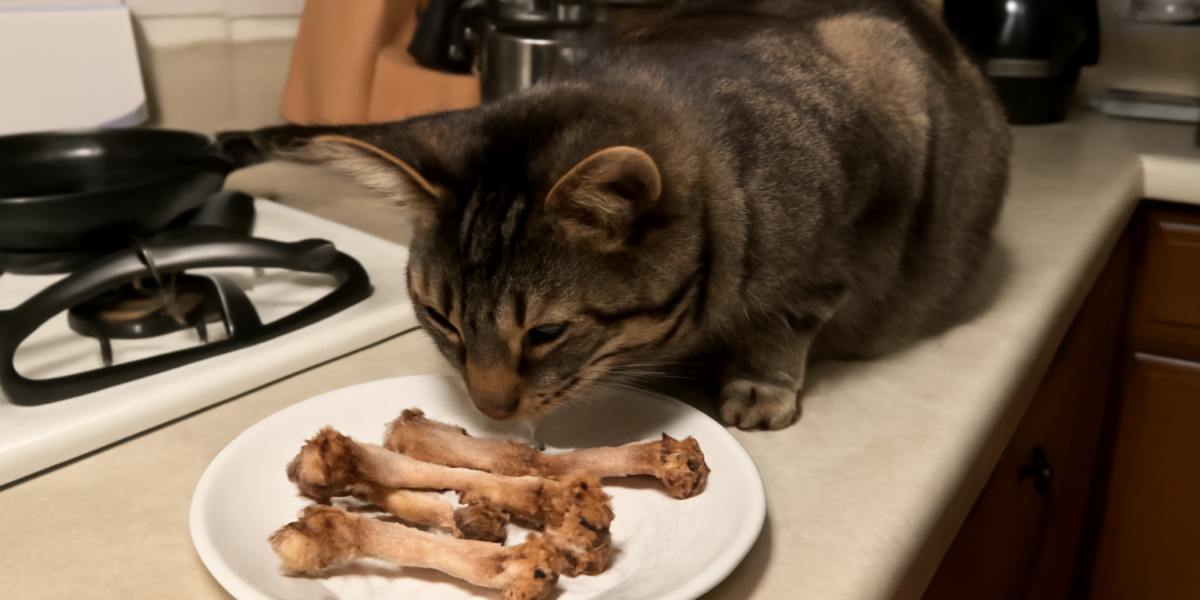
Can cats eat cooked bones? The short answer is no. Cooked bones of any kind — chicken, turkey, fish, pork, beef — are not safe for cats. Cooking changes the structure of bone, making it brittle and prone to splintering when bitten or swallowed. Those splinters can lodge in the mouth or throat, puncture the esophagus, cause painful constipation, or in the worst cases perforate the stomach or intestines. A cat who has eaten a cooked bone is in a “call the vet” situation, not a “wait and see” situation.
This is one of the clearer no-answer questions in the can-cats-eat category. There are no good reasons to give cooked bones to a cat, and there are many ways it can go wrong. The safest approach is to keep cooked bones out of reach entirely — in sealed trash, high counters, or closed bins your cat cannot access.
Why Cooking Changes the Danger
Raw bones are relatively soft and flexible compared to cooked ones. They contain more moisture and intact collagen, which makes them bend and crush rather than split. Cooking drives out moisture, denatures collagen, and leaves bone in a brittle, glass-like state that breaks into sharp fragments under pressure. A chicken drumstick that would bend raw will snap into shards when cooked.
Cats have a feline-specific jaw and throat geometry that is designed for swallowing small prey whole or in large chunks. They do not grind food the way dogs and humans do. A cat who bites a cooked bone is likely to swallow a splintered piece quickly, and that splinter can become stuck or start damaging tissue on the way down.
The Specific Risks of Cooked Bones for Cats
Several categories of problem can come from cooked bone ingestion:
- Choking — bone fragments lodged in the throat, blocking airflow
- Oral injuries — cuts to gums, tongue, or the roof of the mouth
- Esophageal obstruction or perforation — splinters stuck or cutting the esophagus
- Gastric irritation — sharp pieces irritating the stomach lining
- Intestinal blockage — bone fragments getting stuck partway through the GI tract
- Intestinal perforation — sharp pieces puncturing the gut, leading to peritonitis
- Severe constipation — bone fragments and calcium compacting into hard, painful stool
- Rectal tearing — sharp fragments passing through and damaging the rectum
Not every cat who eats a bone will experience the worst of these outcomes, but the possibilities are serious enough that there is no safe version of cooked bone feeding for cats.
Specific Bone Types and Why None Are Safe Cooked
Chicken bones are the most common culprit because leftover chicken is everywhere and cats love the flavor. Cooked chicken bones splinter badly. Turkey bones at Thanksgiving cause the same problem at larger scale. Fish bones are small but numerous and can cause sharp lodgings in the mouth and throat. Pork rib bones and steak bones are big and hard enough to break teeth on contact. Cooked bone-in ham is a double risk because of the bone and the high sodium.
People sometimes ask about bones that have been “cooked until soft” — for example, a bone that has been in a slow cooker for 12 hours. These are still not safe. Soft-cooked bones may be softer, but they still fragment unpredictably and can cause obstructions. Commercial bone broth made by simmering bones is different and can be safe if it is plain and strained, but the bones used to make it should never be fed to the cat.
What to Do If Your Cat Ate a Cooked Bone
React calmly but quickly. The goal is to prevent further eating, assess the situation, and get professional advice. Steps to take:
- Remove any remaining bone from the cat’s reach and from the mouth if you can do so safely.
- Check for immediate signs of choking: pawing at the mouth, difficulty breathing, distress, or silence after eating. If your cat is choking, get to an emergency vet immediately.
- Note the type of bone, approximate size, and how much was eaten.
- Call your veterinarian or an animal poison control line for guidance. Describe what happened and follow the advice you receive.
- Do not try to induce vomiting at home. This is unsafe in cats generally, and with a sharp object in the stomach it could cause additional injury on the way back up.
- Do not feed bread, oil, or other “bulking” home remedies unless specifically directed by a vet.
Depending on the bone size, cat size, and timing, your vet may recommend imaging (X-rays), a short period of in-clinic observation, or a feeding regimen designed to help the bone pass. In some cases, surgical removal is needed. Prompt evaluation is the only way to know which scenario applies.
Signs of Trouble After a Bone Ingestion
Watch for these symptoms for at least 48 to 72 hours after the incident:
- Drooling or pawing at the mouth
- Difficulty swallowing or eating
- Gagging or retching
- Vomiting, with or without blood
- Loss of appetite
- Straining in the litter box
- Constipation or bloody stool
- Abdominal pain or hunched posture
- Lethargy or hiding
- Fever
Any of these signs warrants a same-day vet visit. Symptoms that appear suddenly after what seemed like a successful “passing” of a bone can indicate delayed perforation or partial obstruction, both of which are emergencies.
Safer Alternatives to Cooked Bones
If your cat has been enjoying the flavor of bone or the crunch of chewing, there are safer ways to give them similar satisfaction. Commercially prepared freeze-dried meat treats provide the meaty flavor without any bone risk. Small, soft raw meat pieces (from a reliable source, handled with food-safety precautions) can satisfy crunchy or chewy preferences, though raw feeding carries its own risks and should be discussed with your vet.
Dental treats and dental kibble designed specifically for cats provide the mechanical cleaning some owners hope bones will deliver, without the splinter risk. Vet-approved dental chews formulated for cats are the safest option. Regular dental care — brushing, professional cleanings, and appropriate toys — is a much better approach to oral health than bone chewing.
For more cat feeding topics, see our articles on chicken bones specifically, fish bones, and salmon skin preparation. Our cat care blog covers feline dental care in depth, and the cat adoption hub has resources for new cat owners.
Frequently Asked Questions
My cat ate a small cooked chicken bone and seems fine. Is it over?
Not necessarily. Problems can develop hours or days later as the bone moves through the GI tract. Call your vet, describe what happened, and follow their monitoring plan. Many cases pass without issue, but catching problems early matters.
Are cooked fish bones safer because they are soft?
No. Cooked fish bones still fragment and can lodge in the mouth, throat, or stomach. Small fish bones are especially likely to cause oral injuries because they are easy to bite through but hard to see.
Can cats have raw bones?
Some raw feeders include raw meaty bones in feline diets with veterinary guidance. Raw bones are safer than cooked bones because they are less prone to splintering, but they carry bacterial risks and are not something to try without proper preparation and professional input.
What about bone meal in cat food?
Commercial cat foods with bone meal are formulated to be safe and provide minerals without any whole-bone risk. This is different from feeding whole cooked bones and is not a concern.
How long does it take a swallowed bone to pass?
If a bone passes at all, it typically takes 24 to 72 hours. Stuck bones do not pass and require medical or surgical intervention. This is why vet evaluation after an ingestion is important.


