
Last updated: April 9, 2026
In this article
- The Short Answer: Yes, in Moderation and Only Cooked Plain
- Nutritional Benefits of Salmon Skin
- Cooking Method Matters: Safe Preparation
- Why Raw Salmon Is a No
- Safe Portion Size
- Mercury and Other Cautions
- Signs of Trouble After Salmon Skin
- What to Do If Your Cat Had Too Much Salmon Skin
- Salmon Skin and Commercial Cat Food
- Frequently Asked Questions
The Short Answer: Yes, in Moderation and Only Cooked Plain
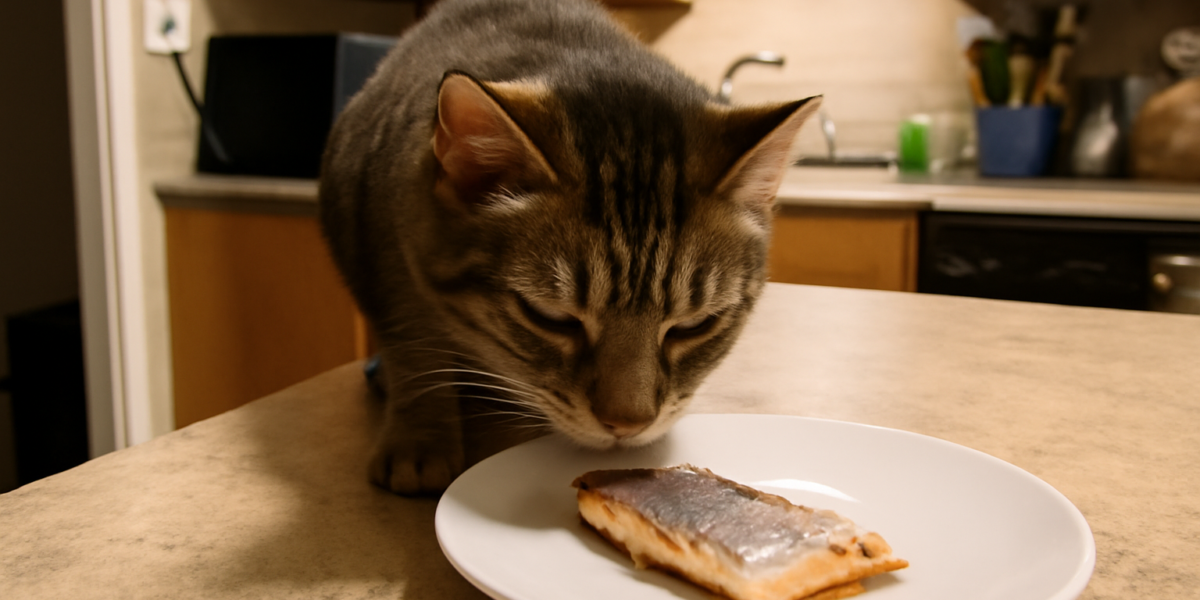
Can cats eat salmon skin? Yes, cats can eat cooked plain salmon skin in small amounts as an occasional treat. Salmon skin is rich in omega-3 fatty acids that support coat, skin, and joint health, and many cats love the flavor. The key words here are cooked, plain, and small amounts. Raw salmon skin carries parasite and bacterial risks, seasoned or smoked salmon is too salty, and even plain cooked salmon skin should be treat-sized because the fat content is high.
This is one of the more nuanced can-cats-eat answers. The basic ingredient — salmon skin — is fine, but the way it is prepared makes all the difference between a healthy treat and a trip to the vet. Getting the preparation right is the entire game here.
Nutritional Benefits of Salmon Skin
Salmon skin concentrates several nutrients that cats can benefit from when the skin is served safely. The big ones are omega-3 fatty acids, specifically EPA and DHA, which support healthy skin and coat, reduce inflammation, and are increasingly recognized as beneficial for feline joint and cognitive health. Salmon skin is also a source of collagen and protein, along with some vitamin D and B vitamins.
Cats benefit from omega-3s more than many people realize. Unlike some animals, cats cannot efficiently convert plant-based omega-3s (like those in flaxseed) to the useful forms, so they rely on animal sources. That is one of the reasons fish is such a common flavor in cat foods and why salmon skin, when prepared safely, can be a genuinely good addition to a cat’s treat rotation.
Cooking Method Matters: Safe Preparation
The preparation rules for cat-safe salmon skin are strict. Follow them exactly.
- Cook thoroughly. Salmon should be cooked to an internal temperature of 145 degrees Fahrenheit. Baking, poaching, or pan-searing without oil are all fine.
- No seasonings. No salt, pepper, garlic, onion, lemon, butter, oil, or herbs. The skin should come off the fish plain.
- Skip the crispy skin. Pan-fried or broiled skin cooked in oil or butter is too fatty and salty for cats. If you want to offer skin, bake the salmon skin-side-up without added fats and remove the skin before it gets seasoned.
- No smoked salmon or lox. These products are cured with salt and sometimes sugar and are not safe for cats.
- Remove any bones. Small salmon bones can be in or near the skin. Check carefully before offering.
- Let it cool. Hot salmon skin is a burn hazard for sensitive feline mouths.
The easiest approach for a salmon-skin treat is to bake a piece of plain, unseasoned salmon at home, remove the skin after cooking, cut a small strip, and offer it to your cat. Save the rest of the fish for yourself (or freeze the skin in small portions for future treats).
Why Raw Salmon Is a No
Raw salmon and raw salmon skin can carry a parasite called Neorickettsia helminthoeca, which causes salmon poisoning disease. While salmon poisoning is primarily a risk for dogs and is most common with raw salmon from the Pacific Northwest, cats can also develop parasitic and bacterial infections from raw fish. Raw fish also contains thiaminase, an enzyme that breaks down thiamine (vitamin B1); cats eating large amounts of raw fish can develop thiamine deficiency, which causes neurological signs.
Freezing salmon kills some parasites but not all pathogens, and kitchen freezers are not always cold enough for long enough to reliably sterilize fish. The straightforward safe choice is cooked only.
Safe Portion Size
Salmon skin is rich and fatty, so treat portions should be small. Guidelines:
- A piece about the size of a fingernail for a small cat
- A piece about the size of a thumbnail for a larger cat
- No more than once or twice a week
- Always part of the 10 percent treat allowance in a cat’s daily calories
If this is your cat’s first taste of salmon skin, start with a tiny piece — even smaller than the guidelines above — and watch for any GI upset over the next 24 hours. Some cats are more sensitive to new foods than others.
Mercury and Other Cautions
Salmon is generally lower in mercury than larger predatory fish like tuna and swordfish, but mercury exposure still adds up with regular fish feeding. Cats who already eat fish-flavored commercial food and get salmon treats on top should not be getting additional tuna, mackerel, or other high-mercury fish frequently. Variety across the week is better than a heavy concentration of any one fish.
Farmed versus wild salmon is another consideration. Wild salmon tends to have a better omega-3 profile and lower contaminant load in many regions, but both are generally acceptable for occasional cat treats. Organic claims on salmon do not meaningfully change safety for feline feeding.
Cats with pancreatitis, inflammatory bowel disease, or a history of GI sensitivity may not tolerate salmon skin well because of the fat content. Ask your vet before adding fatty treats to a cat with any chronic digestive condition.
Signs of Trouble After Salmon Skin
Most cats tolerate small portions of properly prepared salmon skin without issue. Watch for these signs in the 24 hours after feeding:
- Vomiting or repeated gagging
- Diarrhea or loose stool
- Loss of appetite for regular food
- Lethargy or hiding
- Abdominal pain or hunched posture
- Refusal to drink water
Mild, one-time GI upset usually resolves on its own within a day. Persistent symptoms, repeated vomiting, or any signs that concern you are reasons to call your vet. Cats with pre-existing conditions should be seen sooner rather than later.
What to Do If Your Cat Had Too Much Salmon Skin
A cat who got into a large piece of salmon skin — either by theft from the counter or by an overly generous owner — may experience more significant GI upset. Steps to take:
- Remove any remaining salmon and clean up so the cat cannot get more.
- Check the source. If the salmon was seasoned, smoked, or raw, that changes the risk profile and needs to be mentioned to your vet.
- Offer fresh water and skip the next meal if your cat has already vomited.
- Watch closely for signs of pancreatitis, which can follow high-fat meals in susceptible cats: vomiting, loss of appetite, lethargy, and abdominal pain.
- Call your vet if any symptoms appear or if the amount consumed was very large.
For most cats, a one-time overindulgence in plain cooked salmon skin causes a day of soft stool and a return to normal. Seasoned, salty, or raw salmon carries higher risks and is more likely to need a vet visit.
Salmon Skin and Commercial Cat Food
Many commercial cat foods use salmon or salmon meal as an ingredient, and these products are formulated to deliver the benefits of fish safely and in appropriate quantities. A cat eating a high-quality salmon-based food does not need additional salmon skin treats to get omega-3 benefits. Think of homemade salmon skin as a flavor experience rather than a nutritional necessity.
If your cat has a dull coat or dry skin and you are tempted to supplement with salmon, talk to your vet first. There may be a better underlying diagnosis (allergies, thyroid issues, grooming problems) or a more precise supplement (a prescribed fish oil) that addresses the issue more reliably.
For more feeding topics, see our articles on chicken skin for cats, fish bones safety, and egg yolks. The cat care blog has articles on coat and skin health, and the cat adoption hub covers first-week feeding.
Frequently Asked Questions
Can cats eat raw salmon skin from sushi-grade fish?
Even sushi-grade fish is not guaranteed parasite-free, and raw fish contains thiaminase that can affect cats. The cooked version is the safer choice regardless of fish quality.
Is canned salmon safe for cats?
Plain canned salmon packed in water with no added salt can be given in small amounts occasionally. Avoid any canned salmon with added sodium, oil, or seasonings. The bones in canned salmon are usually soft and considered safer than fresh bones, though portions should still be small.
How much omega-3 does my cat actually get from salmon skin?
A small piece provides a modest amount of omega-3. This is not a reliable replacement for a formulated fish oil supplement if your cat actually needs therapeutic omega-3 levels — talk to your vet for that.
Can kittens eat salmon skin?
Kittens over 12 weeks can have tiny amounts of plain cooked salmon skin as an occasional treat. Their main diet should be a complete kitten food, and treats should make up a small fraction of their daily intake.
What about salmon skin jerky sold as pet treats?
Commercially prepared salmon skin pet treats formulated for cats can be a convenient option. Check the label for added salt, sugar, and preservatives, and look for products without unnecessary additives.


