
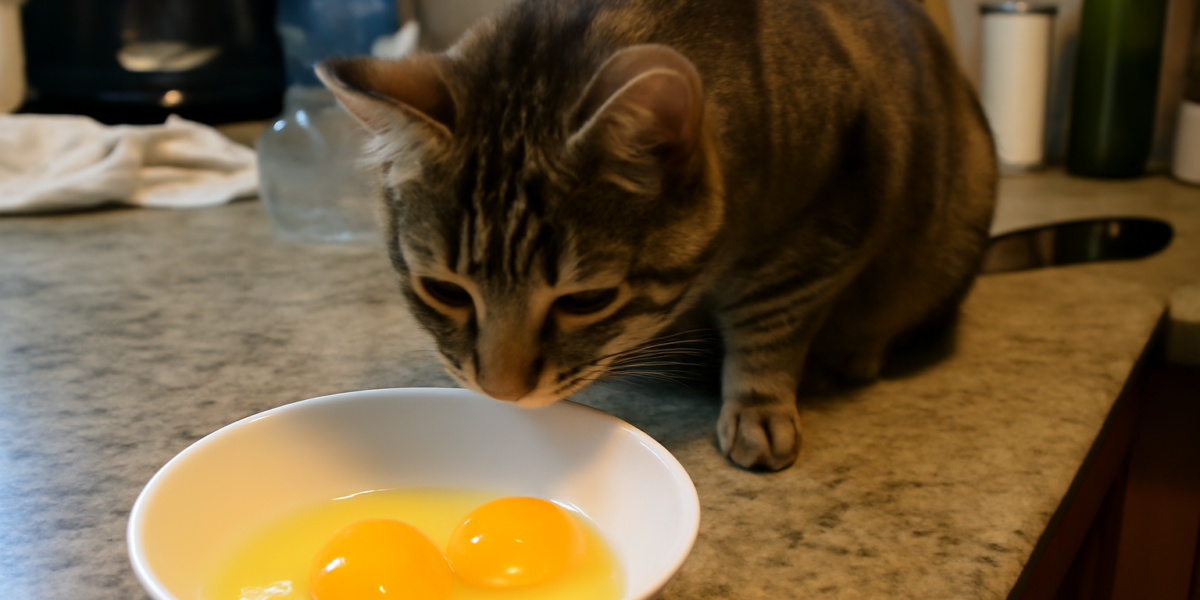
The Short Answer: Yes, Cooked and in Small Amounts
Can cats eat egg yolks? Yes, cats can eat cooked egg yolks in small amounts as an occasional treat. Egg yolks are a good source of protein, healthy fats, and several vitamins and minerals cats can use. The caveat is that yolks should be cooked, not raw, and they should be offered in small portions because of the fat and calorie density. Raw egg yolks carry Salmonella and other bacterial risks, and raw egg whites contain avidin, which interferes with biotin absorption over time.
In this article
- The Short Answer: Yes, Cooked and in Small Amounts
- Nutritional Benefits of Egg Yolks
- Cooked Yolks: The Safer Choice
- Raw Yolks: Why They Are Risky
- Safe Portion Size
- Whole Egg vs. Yolk Only vs. White Only
- Signs of Trouble After Eggs
- What to Do If Your Cat Had Too Much Egg or Raw Egg
- Using Eggs Effectively
- Frequently Asked Questions
Eggs as a whole are one of the more cat-friendly human foods when prepared correctly. A spoonful of scrambled egg (no butter, no salt, no seasonings) is a reasonable treat and a useful appetite booster for many cats. Knowing the difference between safe preparation and the things to avoid keeps the treat on the right side of safe.
Nutritional Benefits of Egg Yolks
Egg yolks contain several nutrients that are useful for cats:
- High-quality protein with all essential amino acids
- Healthy fats including small amounts of omega-3 in pastured eggs
- Vitamin A supporting vision and immune function
- Vitamin D for bone health
- Vitamin B12 for nerve function
- Choline supporting brain and liver function
- Biotin for skin and coat health
- Selenium and other trace minerals
Cats on a complete commercial food already get adequate amounts of these nutrients, so egg yolks are a supplement rather than a necessity. The real value is in the flavor, the novelty, and the usefulness of eggs as a medication vehicle or appetite encourager.
Cooked Yolks: The Safer Choice
Cooking egg yolks thoroughly eliminates the risk of Salmonella and other bacterial contamination. It also makes the yolk easier to digest for most cats. Acceptable cooking methods for cat-safe egg yolks:
- Scrambled — cooked in a dry pan or with a tiny amount of water, no butter, salt, or seasoning
- Hard-boiled — boiled until the yolk is fully firm, then cooled and mashed or chopped
- Poached — cooked in plain water until the yolk is firm
- Baked — as part of a plain egg muffin or baked egg preparation with no added ingredients
Methods to avoid: fried (too greasy), omelets with cheese or vegetables (often contains onion or garlic), eggs cooked in butter (unnecessary fat), or any preparation with salt, pepper, or seasonings. The simplest approach is plain scrambled egg cooked in a dry nonstick pan.
Raw Yolks: Why They Are Risky
Raw egg yolks carry several concerns for cats:
- Salmonella — bacterial contamination can cause vomiting, diarrhea, fever, and systemic illness
- E. coli and other pathogens — similar risks, particularly from eggs with damaged shells
- Cross-contamination — raw egg handling can also make humans in the household sick
- Biotin interference — raw egg whites contain avidin, which binds biotin and can cause deficiency if raw whites are fed regularly over time
Some raw feeders include raw eggs in feline diets, and the risks are lower when eggs come from reliable sources and are handled carefully. However, for most households, the benefits of raw feeding do not outweigh the risks, and cooked eggs are the straightforward safe choice.
If you already buy pastured eggs and feed a raw diet under veterinary guidance, raw yolks in moderation may be part of that plan. For everyone else, cook the egg.
Safe Portion Size
Egg yolks are calorie-dense and fatty, so portions should be small. Guidelines:
- Up to a quarter or half of a cooked yolk for an average adult cat
- No more than once or twice a week
- Part of the 10 percent treat allowance in daily calories
- Always offered as a treat, never as a meal replacement
Smaller cats should get smaller portions. Overweight cats, cats with pancreatitis history, or cats with inflammatory bowel disease should have eggs cleared by a vet before adding to their treat rotation because of the fat content.
If this is your cat’s first taste of egg, start with a tiny amount and watch for any GI upset in the 24 hours that follow before offering again.
Whole Egg vs. Yolk Only vs. White Only
Some guidance distinguishes between yolks, whites, and whole eggs:
- Yolks — higher in fat and calories, higher in fat-soluble vitamins and choline
- Whites — mostly protein, lower in calories and fat, safe when cooked
- Whole cooked eggs — the simplest option, provides a balanced ratio of both
For most cats, a whole scrambled egg offered in small portions is the easiest and most balanced option. There is no strong reason to prefer yolks only or whites only for a healthy cat. If you are specifically managing fat intake, cooked egg white is the leaner choice.
Signs of Trouble After Eggs
Most cats tolerate small portions of plain cooked egg without issue. Watch for these signs in the 24 hours after feeding, especially the first time you offer egg:
- Vomiting or diarrhea
- Loss of appetite for regular food
- Lethargy or hiding
- Skin itching, facial swelling, or hives — possible allergic reaction
- Abdominal discomfort
Egg allergies in cats are uncommon but possible. If you see any signs of an allergic reaction, stop feeding eggs and call your vet. A cat that has had eggs without issue in the past is unlikely to develop a sudden problem, but any food can trigger a reaction.
What to Do If Your Cat Had Too Much Egg or Raw Egg
A cat who got into a carton of raw eggs or ate a large portion of cooked egg from a counter is usually going to be uncomfortable but not in danger. Steps to take:
- Remove any remaining egg and clean up thoroughly.
- Identify whether the egg was raw or cooked and whether it was plain or seasoned.
- Offer fresh water and skip the next meal if the cat has vomited.
- Watch for GI signs over 24 hours.
- Call your vet if raw eggs were involved and you are concerned about Salmonella, or if any significant symptoms develop.
- Go to an emergency vet if you see severe vomiting, bloody diarrhea, lethargy, or signs of dehydration.
Most cats recover quickly from a single egg overindulgence. The risks are higher with raw eggs because of bacterial contamination, with seasoned preparations because of toxic ingredients, or with cats who have underlying GI conditions.
Using Eggs Effectively
Eggs are useful in a few specific situations. They can tempt a picky or sick cat to eat when nothing else works. They can be used as a medication vehicle — a pill crushed into scrambled egg is often accepted when pills in a pill pocket are refused. They can add interest to a cat’s treat rotation without the risks of many other human foods.
What eggs cannot do is fix a cat’s diet. If your cat needs more protein, more fat, or better coat health, talk to your vet about a diet adjustment or supplement rather than relying on eggs as an add-on.
For more cat feeding content, see our guides on chicken skin safety, salmon skin preparation, and baby food as a treat. The cat care blog covers feline nutrition topics, and the cat adoption hub helps new cat owners with first-week feeding.
Frequently Asked Questions
Can kittens eat egg yolks?
Older kittens (12 weeks and up) can have small amounts of plain cooked egg yolk as an occasional treat. Kittens need a complete kitten food as their main diet, and treats should be minimal.
Is it okay to give a cat a whole egg?
A whole cooked egg is too much food for a single cat treat. Offer a small portion — a spoonful or less — and save the rest for yourself or refrigerate it for later.
What about eggshell for calcium?
Ground eggshell is used in some homemade cat diets as a calcium source, but this should only be done under veterinary guidance as part of a balanced diet plan. Casual addition of eggshell to a commercial food is not recommended.
Can cats have eggs cooked in butter or oil?
No. Butter and cooking oils add unnecessary fat and can cause GI upset. Cook eggs plain in a dry nonstick pan when preparing them for your cat.
How often can I give my cat eggs?
Once or twice a week is plenty for a healthy adult cat. More frequent feeding can add too many calories and potentially disrupt the balance of a complete commercial diet.


