
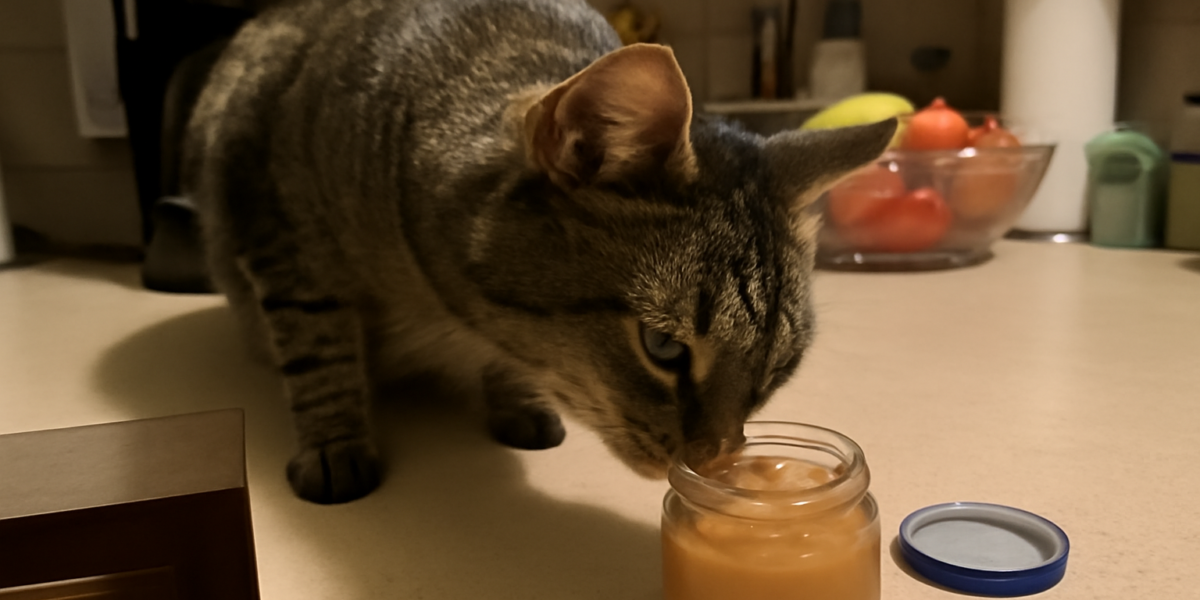
The Short Answer: Yes, in Moderation and Only Plain Meat Varieties
Can cats eat baby food? Yes, but only certain kinds and only as an occasional treat or short-term appetite booster. Plain, single-ingredient meat baby foods — think pureed chicken, turkey, or beef with no added seasonings — are generally safe and are sometimes even recommended by vets for sick cats who have stopped eating. What is not safe is any baby food containing onion, onion powder, garlic, garlic powder, added sugar, salt, or vegetable fillers, all of which can be harmful to cats and are extremely common in commercial baby food blends.
In this article
- The Short Answer: Yes, in Moderation and Only Plain Meat Varieties
- Why Vets Sometimes Recommend Baby Food for Cats
- Ingredients to Absolutely Avoid
- Safe Portion Size
- Nutritional Context: Why It Cannot Replace Cat Food
- Signs of Trouble After Baby Food
- What to Do If Your Cat Ate Baby Food With Onion or Garlic
- Better Uses for Baby Food in a Cat’s Life
- Frequently Asked Questions
Baby food should never replace a complete and balanced cat food. It is nutritionally incomplete for cats and missing key nutrients like taurine, which cats cannot produce themselves and must get from their diet. Use baby food the way you would use chicken broth or plain tuna juice: as a small, occasional addition that helps with appetite or hydration, not as a regular meal.
Why Vets Sometimes Recommend Baby Food for Cats
Plain meat baby food has a long history as an emergency food for cats who are recovering from illness or dental procedures. It is soft, warm-serving friendly, strongly flavored with meat, and easy to syringe feed if needed. Cats who have refused their regular food for more than a meal or two will sometimes accept baby food when nothing else works, and that can be the difference between a smooth recovery and a case of hepatic lipidosis (fatty liver disease), which cats can develop from going without food for just a few days.
The appeal for at-home use is similar. A tablespoon of plain chicken baby food stirred into regular wet food can coax a picky cat into finishing a meal, and it is easy to mix medications into for cats who spit pills.
Ingredients to Absolutely Avoid
Many commercial baby food varieties contain ingredients that are harmful or outright toxic to cats. Check the label every single time, even on brands you have used before, because formulations change.
- Onion and onion powder — toxic to cats; damages red blood cells
- Garlic and garlic powder — same mechanism as onion, slightly more potent
- Chives and leeks — all Allium family ingredients are dangerous
- Added salt or sodium broth — cats have low sodium tolerance
- Sugar, corn syrup, or fruit purees — unnecessary and can cause GI upset
- Tomato or other nightshades — can cause digestive problems
- Spices — cinnamon, nutmeg, rosemary, and others can be irritating or toxic
- Wheat or grain thickeners — not toxic but not appropriate for feline nutrition
The safest choices are baby foods labeled Stage 1 or Stage 2 with a single ingredient such as “chicken and chicken broth” or “turkey and turkey broth” and nothing else. Gerber Stage 1 chicken, Gerber Stage 1 turkey, and Beech-Nut Stage 1 meats are commonly recommended by vets because they are typically available with very short ingredient lists. Always read the label on the specific jar you are buying.
Safe Portion Size
Treat baby food the way you would any treat: small portions and infrequent. A general guideline is one to two teaspoons mixed into a regular meal, or up to a tablespoon offered on its own as a special snack. This should not happen more than a few times a week for a healthy cat.
For a sick cat being syringe-fed or encouraged to eat, your vet will give you specific quantity and frequency instructions. Follow those exactly. Home judgment about “how much is enough” is not reliable for a cat in recovery because metabolic needs shift during illness.
Kittens under 12 weeks should not be given baby food as a primary food. Their nutritional needs are very specific, and kitten formula or vet-approved weaning food is the right choice for early transitions.
Nutritional Context: Why It Cannot Replace Cat Food
Cats are obligate carnivores with specific nutrient requirements that commercial cat foods are formulated to meet. Baby food is formulated for human infants, whose nutritional needs are completely different. The most important missing piece is taurine, an amino acid cats must get from animal sources and cannot synthesize in adequate amounts on their own. Taurine deficiency over weeks to months can cause heart disease (dilated cardiomyopathy) and vision problems.
Baby food is also low in calcium and phosphorus relative to cat needs, missing several vitamins and minerals, and often too low in fat for feline metabolism. A cat eating baby food as its main food source for even a few weeks is at risk of nutritional deficiency. Use baby food as a bridge or a topper, never as the main course.
Signs of Trouble After Baby Food
If the baby food was pure meat and the cat ate a small portion, problems are uncommon. Watch for these signs in the 24 hours after feeding:
- Vomiting or repeated gagging
- Diarrhea or loose stool
- Lethargy or hiding
- Loss of appetite for regular food
- Pale gums — a possible sign of onion or garlic toxicity
- Dark or reddish urine — also a possible sign of Allium toxicity
- Rapid breathing or weakness
Any of those signs is a reason to call your vet, especially if you later check the label and realize the baby food contained onion or garlic. Allium toxicity can take a day or two to become obvious, so do not assume a cat is in the clear just because they seem fine right after eating.
What to Do If Your Cat Ate Baby Food With Onion or Garlic
Accidental exposure to onion-containing baby food is one of the most common ways cats end up with Allium toxicity. If you discover after the fact that your cat ate baby food containing onion or garlic, do the following:
- Stop feeding immediately and remove the jar from the cat’s reach.
- Note the exact product, ingredient list, and approximate amount eaten.
- Call your veterinarian or an animal poison control line right away. Do not wait for symptoms.
- Follow the professional advice you receive. This may include bringing your cat in for bloodwork or beginning monitoring at home.
Onion and garlic toxicity in cats can cause a delayed destruction of red blood cells (Heinz body anemia) that becomes obvious only a few days after exposure. Early intervention with supportive care can improve outcomes significantly.
Better Uses for Baby Food in a Cat’s Life
Plain meat baby food has several legitimate uses beyond just a snack. Pill pocketing is one of the most popular: stir a pill into a spoonful of chicken baby food, and many cats will lap it up without noticing. Rehydrating a picky cat is another — warm the baby food slightly and offer it on a saucer for a cat who is drinking and eating less than usual.
It can also be useful as a high-value lure for medication training, carrier practice, or nail trims. A dab of baby food on a lick mat keeps many cats still and distracted long enough for a quick grooming session.
For more feeding safety topics, see our guides on cats and tuna water, chicken broth for cats, and salmon skin. Our cat care blog has more on feeding sick and senior cats, and if you are welcoming a new cat, the cat adoption hub covers first-week feeding tips.
Frequently Asked Questions
Can kittens eat baby food?
Very young kittens should be on kitten formula or appropriate weaning food. Older kittens (12 weeks and up) can have small amounts of plain meat baby food as an occasional treat or appetite booster, but it should never replace a complete kitten food.
Is Gerber Stage 1 chicken safe for cats?
Gerber Stage 1 chicken with only chicken and broth listed is generally considered a safer choice. Always read the label on the specific jar because formulations can vary. Avoid any version with added ingredients.
How much baby food can I mix with my cat’s medication?
Half to one teaspoon is usually enough to disguise a pill. Use only plain meat varieties and only for short-term medication administration.
Can I feed baby food to a cat with kidney disease?
Ask your vet first. Cats with kidney disease often need controlled phosphorus and protein levels, and baby food may not fit their specific diet plan. Your vet can tell you whether it is okay as a treat or appetite booster in your cat’s case.
Is organic baby food better for cats?
Organic status does not change whether the ingredients are safe for cats. What matters is the ingredient list. A non-organic single-ingredient chicken baby food is safer than an organic blend containing onion and spices.


